
Whenever someone asks me what the best apples are for making homemade apple butter, I always give the same answer.
There isn’t just one perfect apple.
Some apples bring incredible sweetness. Others add just the right amount of tartness. Some cook down into an unbelievably smooth texture, while others contribute bold apple flavor that really shines after hours of slow cooking.
Over the years, I’ve found that the very best apple butter usually comes from combining two or three different varieties rather than relying on just one.
If you’re new to making apple butter, I recommend reading What Is Apple Butter? Everything You Need to Know first. It explains exactly what apple butter is, how it’s made, and why it’s remained a favorite in farm kitchens for generations.
What Makes an Apple Great for Apple Butter?
Apple butter is different from applesauce because it cooks for hours.
During that time, water slowly evaporates while the natural sugars become more concentrated. The apples darken, the flavor deepens, and the finished spread develops the rich consistency that makes apple butter so special.
Because of that long cooking process, I usually look for apples that have:
- Plenty of natural sweetness.
- Good apple flavor.
- A little acidity.
- Soft flesh that breaks down easily.
- Plenty of juice.
- Excellent aroma.
When those qualities come together, the result is a rich, smooth apple butter that tastes far better than simply using whatever apples happen to be available.
Why I Prefer Mixing Apple Varieties
One thing we’ve learned over the years is that nature rarely grows identical fruit.
Every variety has strengths.
Fuji is wonderfully sweet.
Jonathan brings bright tartness.
Golden Delicious creates a silky texture.
When you combine several varieties, you end up with a much more balanced apple butter than you would by using only one type.
It’s very similar to making a great pie. The finished product often becomes even better when several flavors work together.
1. Fuji Apples
If I had to recommend one apple to almost anyone making apple butter, Fuji would be near the top of my list.
They’re naturally sweet, juicy, and develop outstanding flavor during long cooking.
Because Fuji apples already contain plenty of natural sweetness, many recipes require less added sugar.
If you’ve ever considered growing your own apples, our Fuji apple trees are an excellent choice for home orchards. There’s something especially satisfying about making apple butter from fruit you’ve harvested in your own backyard.
2. Honeycrisp Apples
Honeycrisp has earned its reputation for good reason.
They’re incredibly crisp, juicy, and packed with flavor.
While many people think of Honeycrisp as a fresh eating apple, it also creates wonderfully rich homemade apple butter.
If you’d like to grow your own harvest every fall, take a look at our Honeycrisp apple trees.
3. Golden Delicious
Golden Delicious has been a favorite for generations.
Its mild sweetness pairs beautifully with cinnamon, cloves, and nutmeg without overpowering the natural apple flavor.
We also grow Golden Delicious apple trees for homeowners looking to plant a productive backyard orchard.
4. Jonathan Apples
Jonathan apples provide something every great apple butter recipe needs.
Balance.
They’re sweet enough to enjoy fresh but contain enough acidity to keep homemade apple butter from tasting overly sugary.
Our Jonathan apple trees remain one of my favorite recommendations for anyone wanting an excellent all-around apple.
5. Winesap Apples
If you enjoy old-fashioned apple flavor, Winesap deserves a place near the top of your list.
It develops a rich, complex taste that reminds many people of traditional farmhouse apple butter.
If you’re planning to grow your own fruit, our Winesap apple trees are another excellent choice.
6. Granny Smith Apples
Granny Smith usually isn’t the apple I’d choose by itself.
It’s simply too tart.
However, mixed with sweeter apples like Fuji or Golden Delicious, it adds exactly the kind of brightness that keeps apple butter from tasting flat.
Our Granny Smith apple trees make an excellent addition to mixed orchards.
7. Gala Apples
Gala apples are one of the easiest varieties to find across the country.
They’re dependable, naturally sweet, and produce smooth apple butter that’s always family friendly.
Although they may not have quite the complexity of Winesap or Jonathan, Gala remains an excellent choice.
8. McIntosh Apples
McIntosh apples soften very quickly during cooking.
That makes them especially useful when you want a silky smooth finished texture.
Many people combine McIntosh with firmer apples to create outstanding homemade apple butter.
9. Rome Apples
Rome apples maintain excellent flavor throughout several hours of cooking.
They’re another variety that works especially well when blended with sweeter apples.
10. Liberty Apples
Liberty apples deserve more attention than they often receive.
They’re productive trees that create flavorful apples well suited for preserving.
If you’re thinking about planting fruit trees, our Liberty apple trees are another variety worth considering.
Fresh Apples Make Better Apple Butter
One thing I’ve learned is that fresh apples almost always produce better apple butter.
Fresh fruit generally has:
- Better texture
- Better flavor
- More juice
- Stronger aroma
- Better natural sweetness
That’s one reason I enjoy growing fruit so much.
Harvesting apples at their peak ripeness makes a noticeable difference in the finished product.
If you’re interested in planting your own backyard orchard, browse our collection of fruit trees for sale. We grow a wide variety of apple, pear, pawpaw, blueberry, blackberry, honeyberry, and many other fruit-producing plants that can provide fresh harvests for years to come.
Don’t Forget About the Spices
Even the perfect apples benefit from traditional baking spices.
Most homemade apple butter recipes include:
- Cinnamon
- Nutmeg
- Cloves
- Allspice
These spices shouldn’t overpower the apples.
Instead, they should simply enhance the rich fruit flavor that develops during slow cooking.
Choosing Apples Based on Your Taste
Everyone enjoys apple butter a little differently.
If you prefer sweeter apple butter, Fuji, Gala, and Golden Delicious are excellent choices.
If you enjoy a little more tartness, Jonathan and Granny Smith add wonderful balance.
Personally, I almost always mix several varieties together because I think it creates a much richer finished product than relying on just one apple.
Apple Butter Starts Long Before Harvest
One thing many people don’t think about is that great apple butter actually begins years before you ever start cooking.
It starts when you choose the right apple tree.
Planting quality fruit trees today means you’ll enjoy fresh apples for pies, applesauce, cider, baking, and homemade apple butter for decades to come.
That’s one of the reasons we continue growing fruit trees at Weaver Family Farms Nursery. Helping families enjoy their own harvest is every bit as rewarding as enjoying homemade apple butter after the fruit finally ripens.
In the next section, I’ll compare these apple varieties side by side, explain which combinations produce my favorite batches of apple butter, answer common questions, and share a few mistakes I’ve learned to avoid.
My Favorite Apple Combinations for Homemade Apple Butter
Although every family eventually develops their own favorite recipe, there are a few apple combinations I come back to again and again.
Sweet and Smooth
If you enjoy sweeter apple butter that’s perfect on toast or biscuits, try combining:
- Fuji
- Golden Delicious
- Gala
This mixture creates a rich, naturally sweet apple butter that usually requires very little added sugar.
Rich Old-Fashioned Flavor
For a deeper, more traditional flavor, I like using:
- Jonathan
- Winesap
- Golden Delicious
This combination develops incredible depth after several hours of slow cooking.
Balanced Flavor
If I were making apple butter for friends who had never tried it before, I’d probably choose:
- Fuji
- Honeycrisp
- Jonathan
It offers sweetness, acidity, and outstanding apple flavor all in one batch.
Should You Peel Apples Before Making Apple Butter?
People have debated this for years.
Some recipes call for peeling every apple.
Others leave the peels on during cooking before running everything through a food mill.
Either approach works.
Personally, I don’t think peeling or not peeling is nearly as important as choosing high-quality apples in the first place.
Fresh fruit will almost always make a bigger difference than whether the skins were removed before cooking.
Can You Use Store-Bought Apples?
Absolutely.
You don’t need your own orchard to make delicious apple butter.
Fresh apples from grocery stores, farmers markets, roadside stands, or local orchards can all produce excellent results.
That said, one of the biggest advantages of growing your own fruit is being able to harvest apples at their absolute peak.
If you’ve ever dreamed about walking into your backyard and picking apples for pies, applesauce, cider, or homemade apple butter, it’s easier than many people realize.
At Weaver Family Farms Nursery, we grow a wide variety of apple trees for home orchards that can provide fresh fruit for years to come.
Don’t Forget About Pollination
One mistake some new gardeners make is planting only a single apple tree.
Many apple varieties produce much better harvests when another compatible variety is planted nearby for pollination.
If you’re planning your first backyard orchard, it’s worth spending a little time choosing varieties that bloom around the same time.
You’ll usually enjoy healthier trees and much larger harvests.
Apple Butter Is Just One Reason to Grow Apples
Making homemade apple butter is one of my favorite ways to enjoy fresh apples, but it’s certainly not the only one.
A productive apple tree can also provide fruit for:
- Applesauce
- Apple pie
- Apple crisp
- Apple cider
- Apple jelly
- Apple jam
- Fresh eating
- Drying apple slices
- Freezing for baking
That’s one reason I think planting fruit trees is such a worthwhile investment.
One healthy tree can provide years of harvests for your family.
Apple Butter vs. Applesauce
People often assume apple butter is simply thick applesauce.
While they begin with the same fruit, the finished products are surprisingly different.
Applesauce is cooked just long enough for the apples to soften before being blended.
Apple butter continues cooking for several more hours.
During that extra cooking time:
- Moisture evaporates.
- Sugars become more concentrated.
- Flavor deepens.
- Color darkens.
- Texture becomes thick and spreadable.
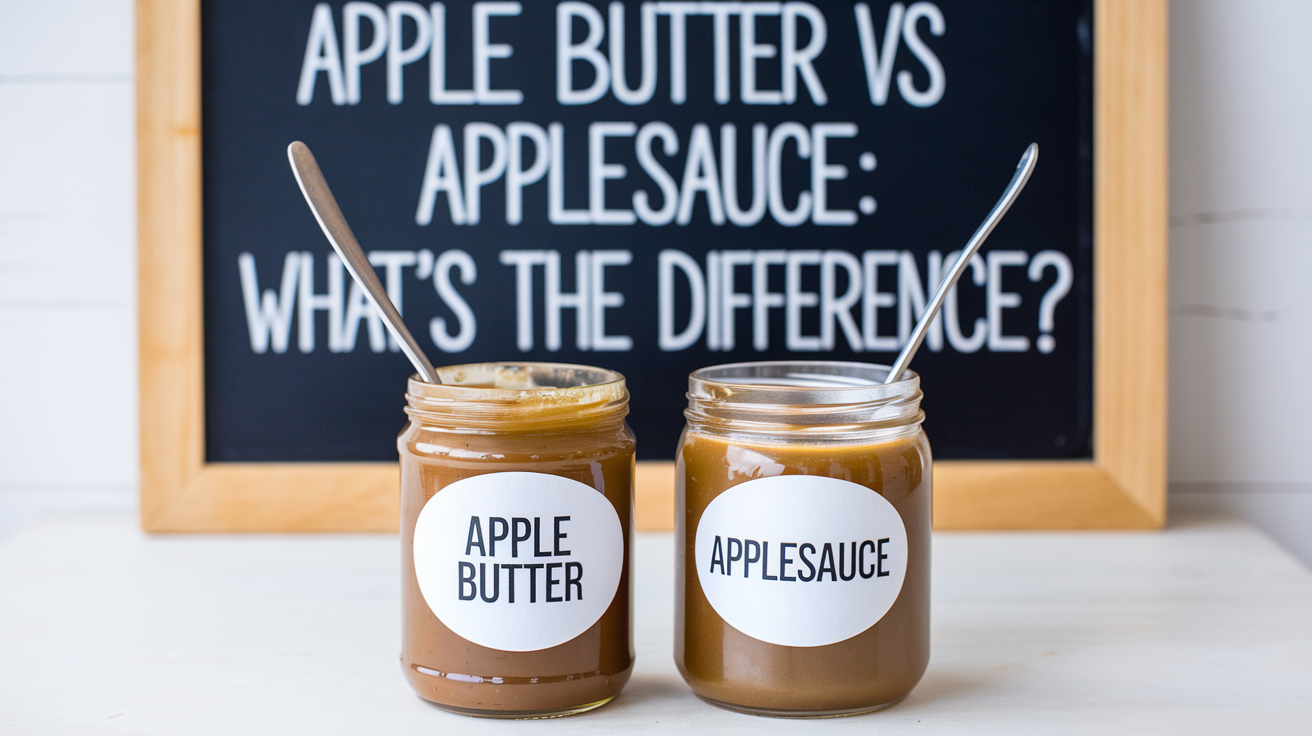
If you’d like a complete comparison, don’t miss our guide to Apple Butter vs. Applesauce: What’s the Difference?.
Apple Butter vs. Apple Jam and Apple Jelly
Another question I hear regularly is whether apple butter is basically the same thing as apple jam or apple jelly.
Not quite.
Apple butter is made from cooked apple puree that’s slowly reduced over several hours.
Apple jam usually contains crushed fruit suspended throughout the spread.
Apple jelly is made from strained fruit juice and has a much smoother, translucent appearance.
Each has its own place in the kitchen, and each offers a different texture and flavor.
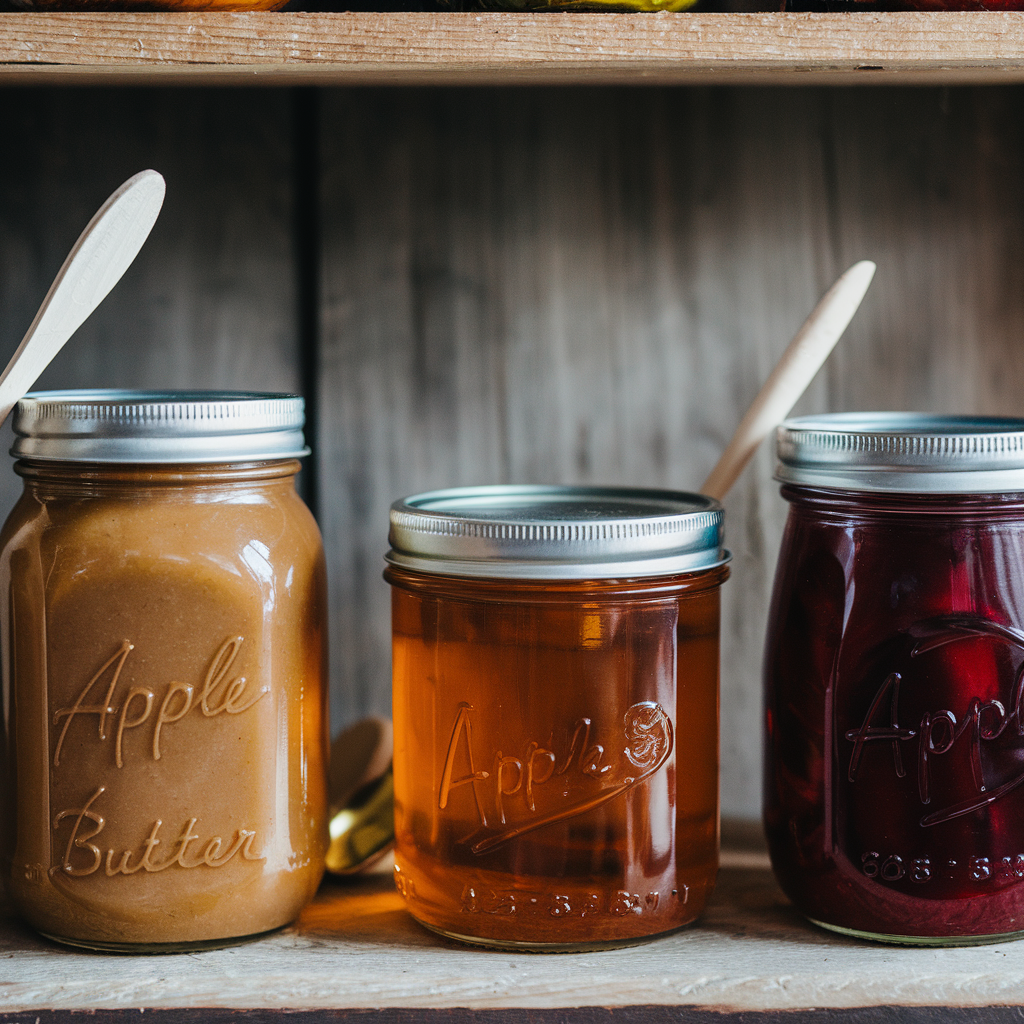
If you’re curious about all the differences, take a look at The Differences Between Apple Butter, Apple Jelly & Apple Jam.
What Should You Eat Apple Butter With?
One of the reasons apple butter has remained popular for centuries is because it’s incredibly versatile.
Some of my favorite ways to enjoy it include:
- Fresh homemade biscuits
- Buttered toast
- English muffins
- Pancakes
- Waffles
- Bagels
- Oatmeal
- Yogurt
- Vanilla ice cream
- Pork chops
- Ham
- Turkey sandwiches
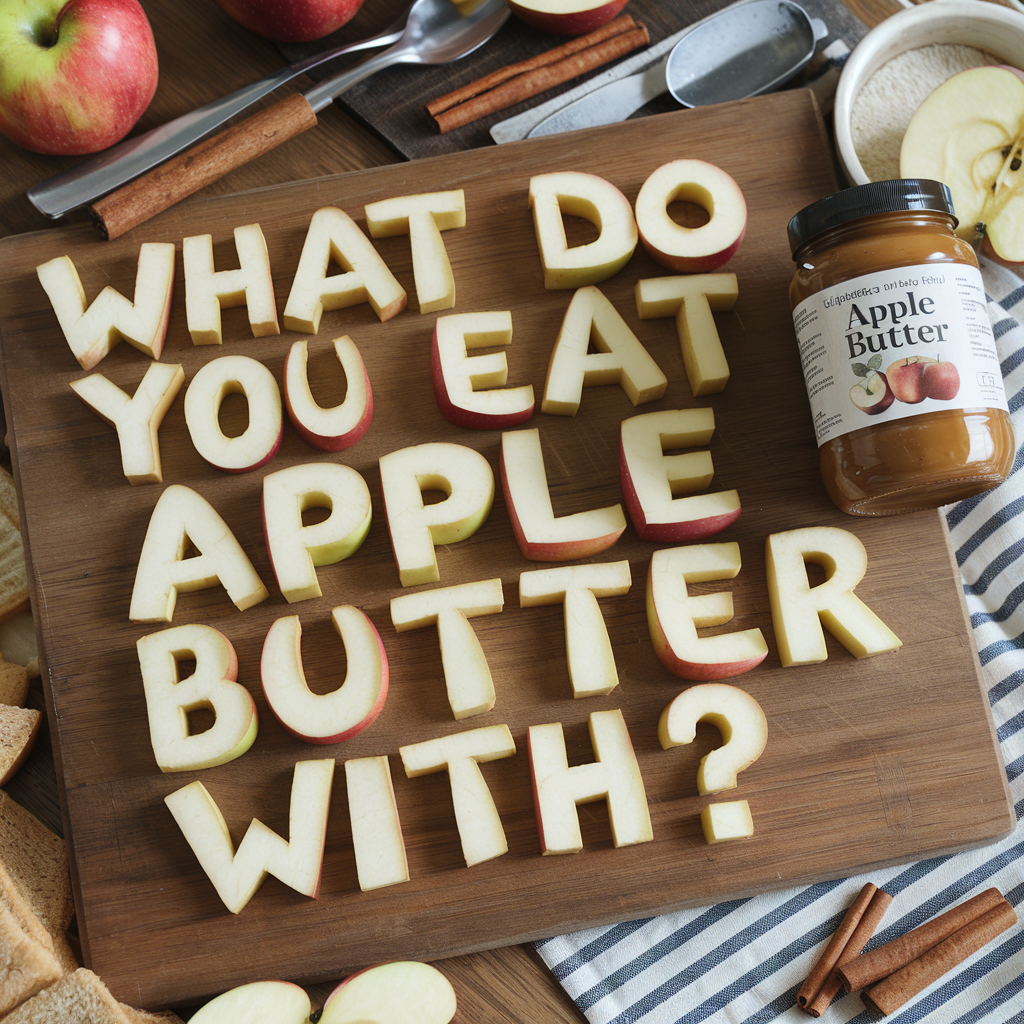
If you’re looking for even more serving ideas, I’ve put together an entire guide covering what foods pair best with apple butter.
Homemade Always Wins for Me
One thing I appreciate most about homemade apple butter is knowing exactly what went into every jar.
I can choose the apple varieties.
I can adjust the spices.
I can control the sweetness.
I can cook it until it’s exactly the consistency I enjoy.
That’s difficult to duplicate with mass-produced products.
The same is true for many homemade fruit spreads, which is why I generally prefer them whenever possible. I explain my reasons in Homemade vs. Store Bought Jam: Why Farm Fresh Always Wins.
My Final Thoughts
If someone asked me for the single biggest secret to making incredible apple butter, I wouldn’t start with the spices or the recipe.
I’d start with the apples.
Quality fruit makes all the difference.
Whether you’re picking apples from a local orchard or harvesting them from your own backyard, choosing flavorful varieties like Fuji, Honeycrisp, Jonathan, Golden Delicious, and Winesap will give you a richer, smoother, and better-tasting apple butter.
If you’ve been thinking about planting fruit trees, there’s never been a better time to start. At Weaver Family Farms Nursery, we grow a wide selection of apple trees that can provide fresh harvests for many years. There’s something incredibly rewarding about making homemade apple butter from apples you grew yourself.
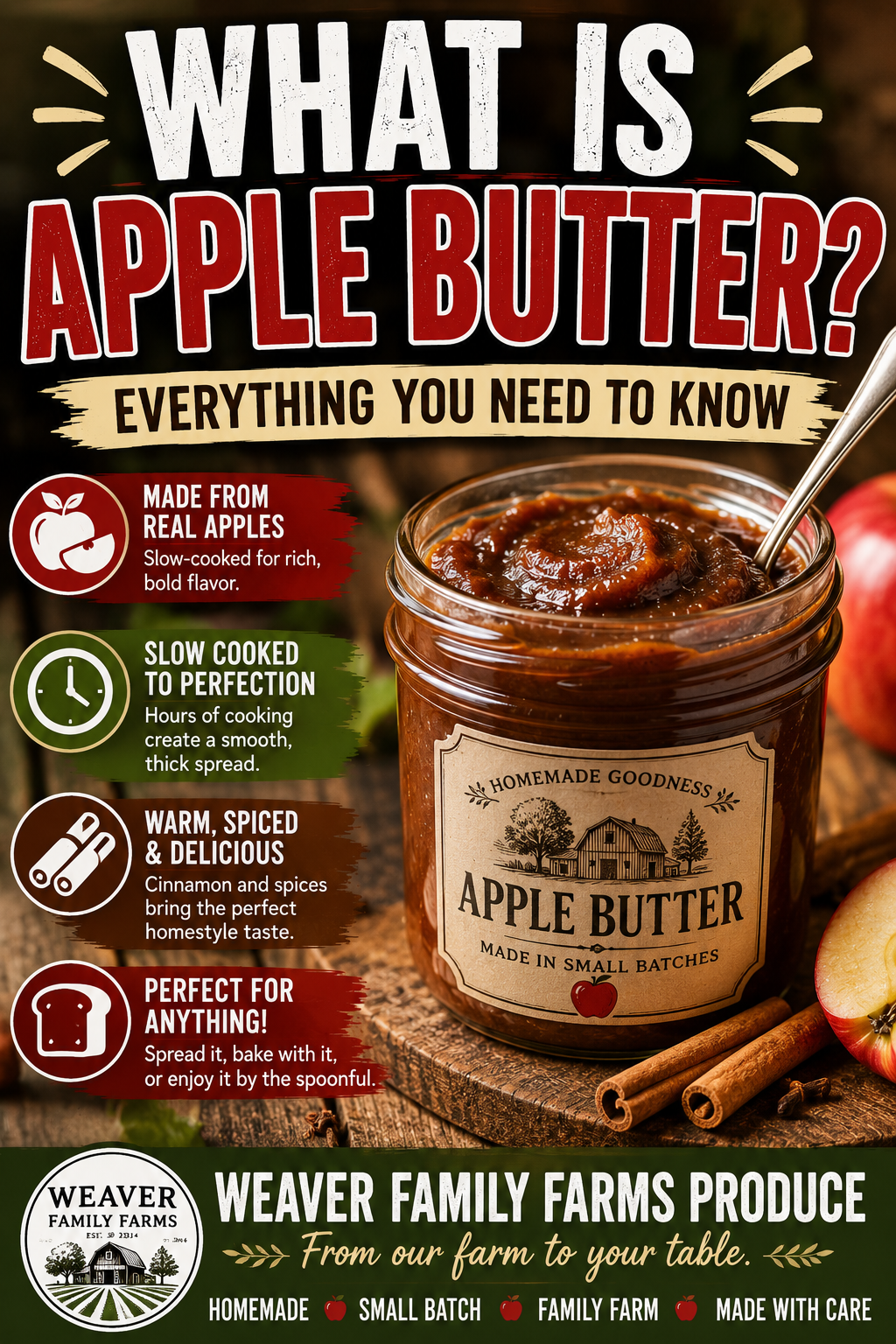
If you’re continuing to explore homemade fruit spreads, I also recommend reading What Is Apple Butter? Everything You Need to Know, Apple Butter vs. Applesauce, and What Does Apple Jam Taste Like?. As we continue sharing more about growing fruit, preserving harvests, and enjoying homemade foods, I hope you’ll find plenty of ideas to inspire your own kitchen and backyard orchard.