The first time I cut open a ripe pawpaw, I honestly didn’t know what to expect.
I’d seen pictures of the outside of the fruit, but very few people show what it actually looks like once you slice it open.
When I finally cut into one from our own trees here on our Missouri farm, I immediately understood why people compare it to tropical fruit.
The bright yellow flesh.
The large glossy seeds.
The soft, creamy texture.
It doesn’t look anything like an apple, peach, or pear.
If you’ve just opened your first pawpaw and are wondering whether it looks normal, here’s exactly what I’ve learned after harvesting and eating them from our own orchard. Readers curious about other unusual produce can browse farm-grown fruit guides next.
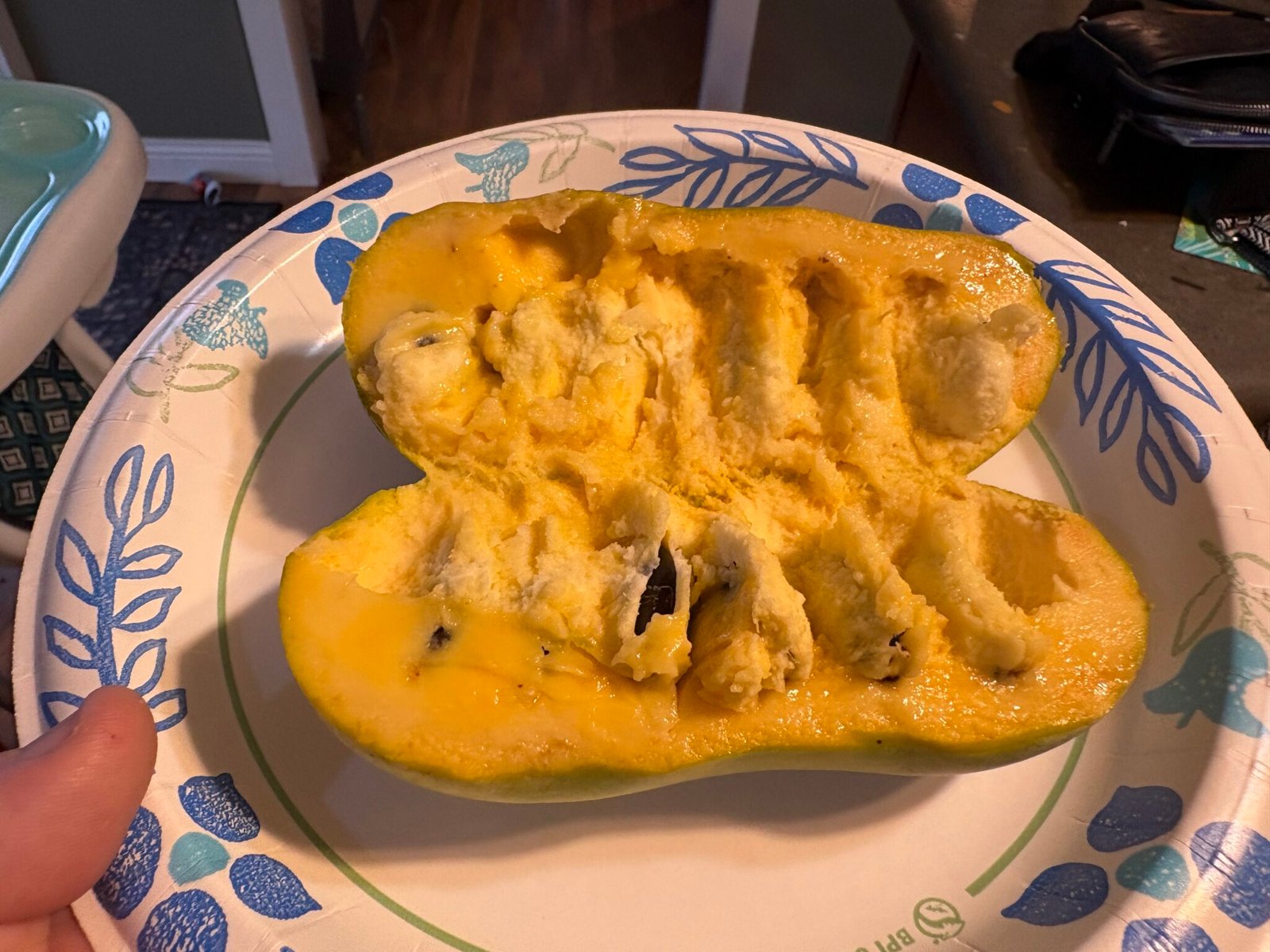
A Ripe Pawpaw Should Have Bright Yellow to Orange Flesh
The first thing I notice when opening a ripe pawpaw is the color.
Instead of white or pale flesh like many fruits, a ripe pawpaw has rich yellow to golden-orange flesh.
Some varieties are slightly lighter.
Others develop a deeper orange color.
The pawpaw in the photo above had just naturally fallen from our tree and was perfectly ripe.
When I split it open, the flesh was exactly what I hoped to see.
Bright.
Creamy.
Soft.
That’s usually a very good sign the fruit is ready to enjoy.
The Texture Is More Like Custard Than Fruit
This surprises almost everyone.
If you’ve never eaten a pawpaw before, don’t expect something crisp.
It’s nothing like biting into an apple.
Instead, the inside reminds me much more of a thick custard.
The flesh is soft enough that I usually scoop it out with a spoon.
It’s one of the reasons pawpaws bruise so easily after they’re ripe.
That creamy texture is also why they’re difficult to ship to grocery stores.
Large Seeds Run Through the Middle
Another thing that catches people off guard is the size of the seeds.
They’re much larger than apple seeds.
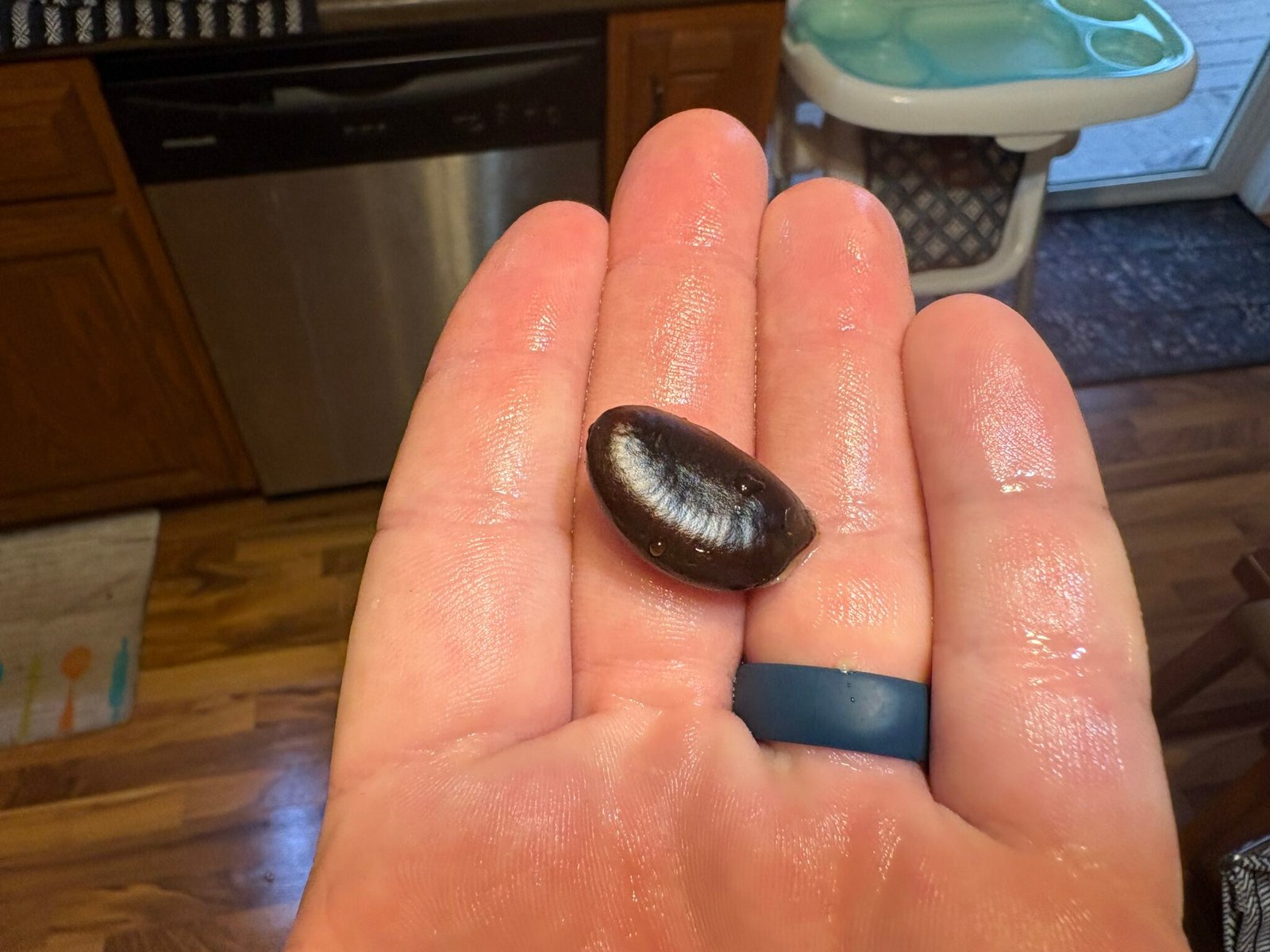
Instead of being hidden inside a small core, they’re arranged in a row through the center of the fruit. The appearance and size of those seeds are described in this guide to pawpaw seed identification.
When I eat a pawpaw, I simply scoop around the seeds until all of the creamy flesh has been removed.
Afterward, I’m left with several large, smooth, dark brown seeds.
If you’d like a closer look, I also put together What Do Pawpaw Seeds Look Like? Identification Guide using one of the freshly cleaned seeds from this same harvest.
There Is More Edible Flesh Than You Might Think
Looking at all those seeds, some people assume there isn’t much fruit to eat.
That hasn’t been my experience.
Yes, pawpaws have several large seeds.
But there’s still a surprising amount of creamy flesh surrounding them.
Once I start scooping with a spoon, there’s usually much more edible fruit than people expect.
It’s definitely worth the effort.
Should the Flesh Be This Soft?
Yes.
In fact, that’s exactly what I look for.
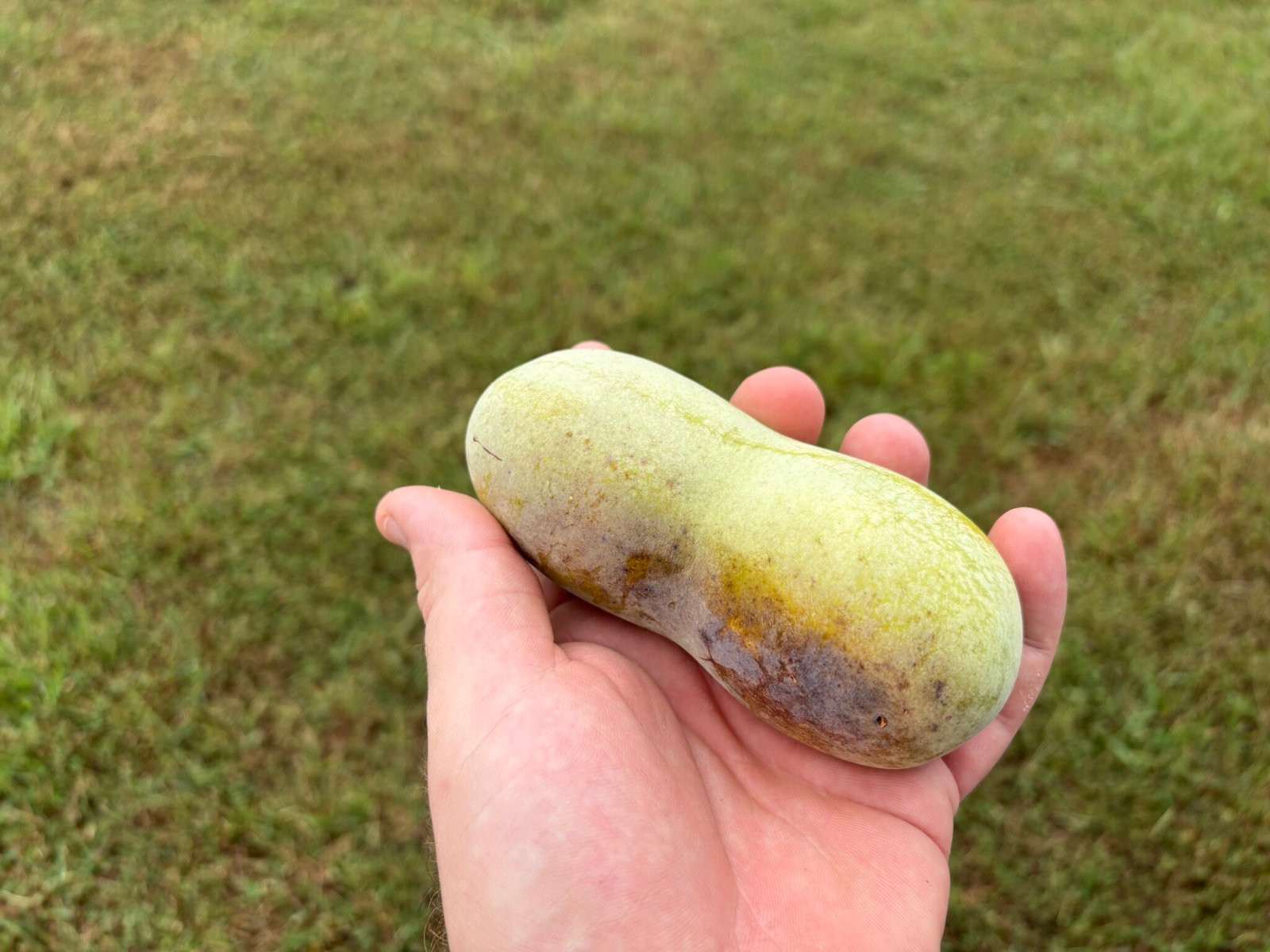
A ripe pawpaw should give easily when you press on it, and the inside should feel soft and creamy. Before cutting into one, use this ripe pawpaw identification guide to check whether the fruit is ready.
If the flesh is hard or difficult to scoop, the fruit probably wasn’t fully ripe yet.
On the other hand, if it has become watery, fermented, or has an unpleasant smell, it’s likely past its best.
The pawpaw in the photo above was right in that sweet spot where it was soft but still held together nicely.
Is It Normal for the Flesh to Stick to the Seeds?
Absolutely.
I’ve noticed this with nearly every pawpaw we’ve harvested.
Some flesh naturally clings to the seeds.
Rather than trying to scrape every tiny bit away, I simply enjoy the larger sections and move on.
It’s just part of eating fresh pawpaw.
Don’t Eat the Skin
One mistake I could see someone making is assuming the entire fruit is edible.
It isn’t.
I only eat the creamy flesh.
The thick outer skin gets discarded.
The seeds should also be removed before eating.
That leaves the rich yellow flesh in between, which is the part everyone talks about.
Why Doesn’t It Look Like Fruit From the Grocery Store?
That’s one of the things I love about pawpaws.
They’re different.
The inside doesn’t resemble apples, peaches, pears, or bananas.
It has its own look.
Its own texture.
Its own flavor.
Every time I cut one open, it still feels like opening something a little unusual.
That’s part of the fun.
What Does a Healthy Pawpaw Look Like Inside?
When I’m checking a freshly opened pawpaw, here’s what I hope to see.
- Bright yellow to orange flesh.
- Large, glossy brown seeds.
- Smooth, creamy texture.
- No mold or unusual discoloration.
- A pleasant fruity aroma.
If I see those things, I know I’m probably about to enjoy a really good pawpaw.
My Favorite Way to Eat One
Once the fruit is ripe, I don’t think it needs much.
I simply cut it in half lengthwise, remove the seeds as I eat, and scoop out the flesh with a spoon.
That’s it.
No peeling.
No complicated preparation.
Just fresh fruit straight from the tree.
For me, that’s still the best way to enjoy a pawpaw.
Every Pawpaw Tells You When It’s Ready
One thing I’ve learned is that pawpaws don’t need much guessing.
The best ones usually let you know they’re ready by naturally falling from the tree.
That’s exactly what happened with the fruit in this photo.
I picked it up shortly after it fell, brought it inside, sliced it open, and found exactly what I hoped to see.
Bright golden flesh.
Creamy texture.
Healthy seeds.
Moments like that remind me why I planted pawpaw trees in the first place.
They’re unlike anything else growing in our orchard, and every harvest still feels a little special.
About the Author
Daxon Weaver is the owner of Weaver Family Farms Produce, where he shares firsthand experiences growing pawpaws, jujubes, apples, peaches, pears, berries, and other fruits on his family’s Zone 6a Missouri farm.