When you finally see your jujube tree covered with tiny fruit, it’s exciting.
You’ve waited through winter.
You watched the tree leaf out later than everything else.
The tiny flowers finally appeared.
Then little green jujubes started forming.
Everything seems to be going perfectly.
Then one morning you walk outside and notice fruit scattered on the ground.
Your first thought is probably the same one I would have.
“What happened?”
Fortunately, fruit dropping from a jujube tree doesn’t always mean something is seriously wrong.
In fact, some fruit drop is completely normal.
The challenge is figuring out when it’s part of the tree’s natural process and when it’s trying to tell you something needs attention.
If you’re still learning about growing jujubes, I’d recommend reading Why Is My Jujube Tree Not Leafing Out? Don’t Panic Yet sometime after this article. It’s another common concern that catches almost every new jujube grower at least once.
Some Fruit Drop Is Completely Normal
This was one of the biggest surprises for me.
Most fruit trees naturally produce more fruit than they can realistically mature.
Instead of trying to grow every single one, the tree sheds part of the crop so it can put more energy into the fruit that remains.
This natural thinning process happens with many fruit trees and usually isn’t a reason to worry. The same pattern of normal fruit shedding is explained in natural berry drop.
If only a small percentage of your tiny jujubes fall, your tree may simply be doing exactly what nature intended.
Young Trees Often Drop More Fruit
A newly planted tree has two priorities.
First, it wants to establish a healthy root system.
Second, it wants to grow strong branches.
Producing a heavy fruit crop takes a tremendous amount of energy.
Because of that, young jujube trees may shed more fruit than mature trees.
Personally, I’d rather see a young tree spend its energy becoming stronger than exhausting itself trying to ripen every fruit.

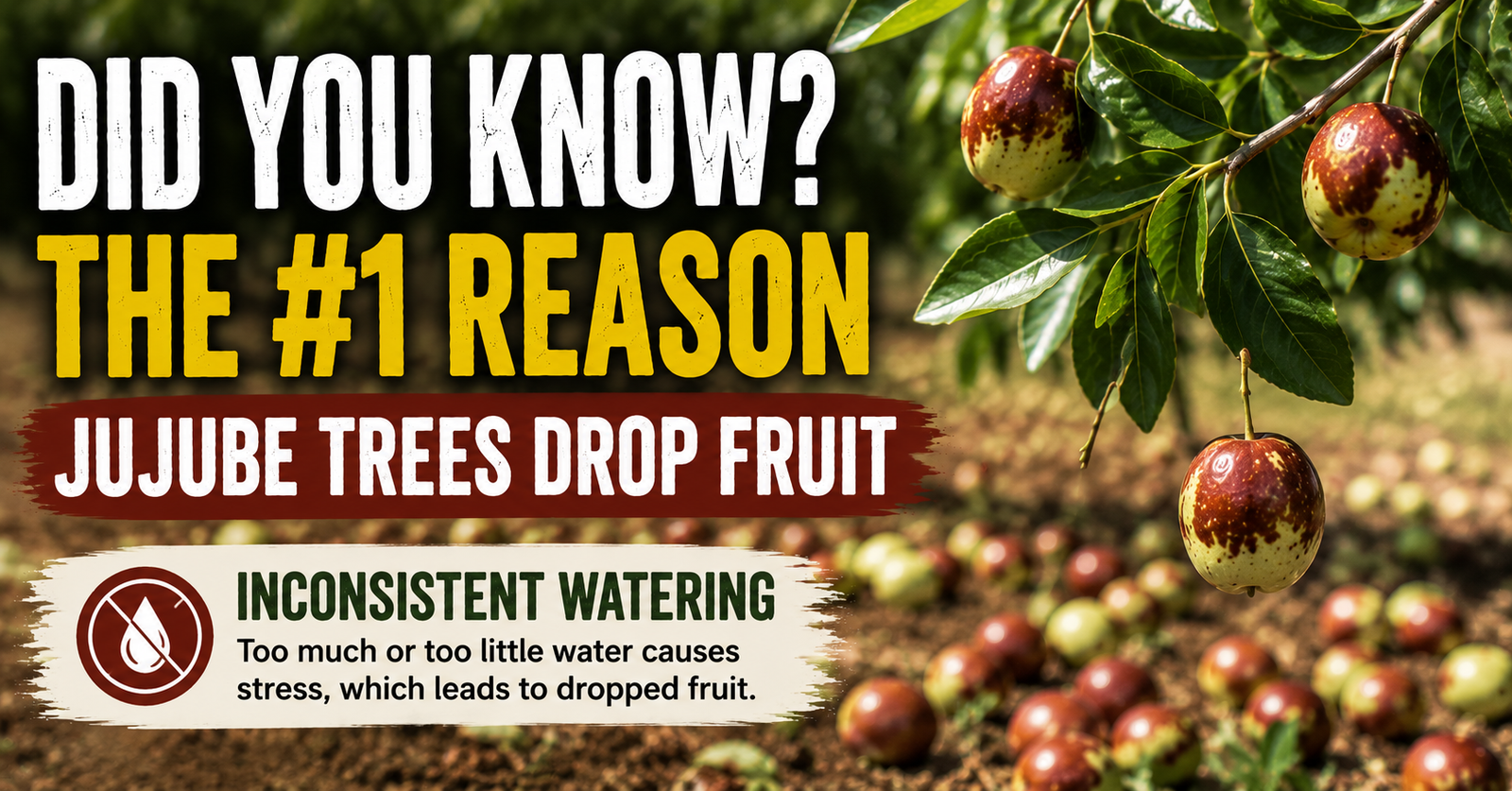
Inconsistent Watering Can Cause Fruit Drop
One thing I’ve learned growing fruit is that consistency usually matters more than extremes.
A long dry spell followed by a soaking rain can stress many fruit trees.
Even though established jujubes are impressively drought tolerant, prolonged stress during flowering and early fruit development can increase fruit drop.
For young trees on our farm, I try to water deeply when they need it instead of giving them a little water every day.
Too Much Water Can Be Just as Bad
It’s easy to think that if some water is good, more must be better.
I’ve learned that’s rarely true with fruit trees.
Jujubes like well-drained soil.
If roots remain waterlogged for long periods, the tree can become stressed.
Healthy roots are one of the biggest keys to holding fruit through the growing season.
Weather Can Change Everything
Every growing season teaches me something new.
Some years are cooler.
Some are hotter.
Some seem unusually dry.
Others bring weeks of rain.
Those changing conditions affect every fruit tree on our property, including the jujubes.
Strong winds, unusually high temperatures during bloom, or sudden weather swings can all reduce fruit retention even when you’ve done everything else right.
That’s one reason I try not to compare one harvest too closely with the previous year.
Pollination Still Matters
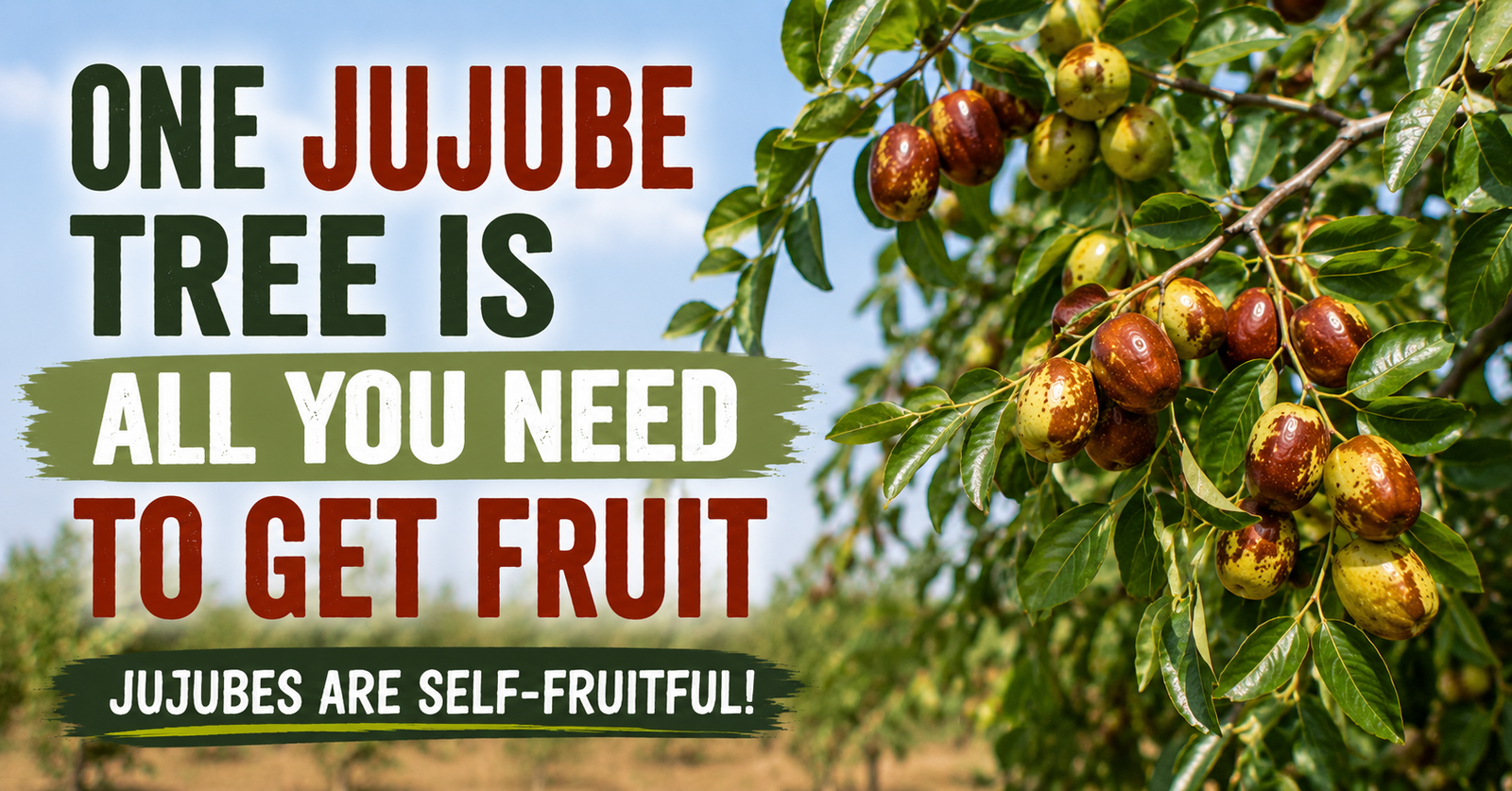
One reason we planted both Honey Jar and Sugar Cane jujube trees was to give ourselves two compatible varieties blooming around the same time.
Many jujubes will produce fruit on a single tree, but cross-pollination often improves fruit set and overall production.
If you’re wondering how that works, I explain it in much more detail in Do Jujube Trees Need Two Trees to Produce Fruit?.
Poor pollination doesn’t always prevent fruit from forming.
Sometimes tiny fruit begins developing before eventually dropping because it wasn’t fully pollinated.
Too Much Nitrogen
This one surprises a lot of people.
It’s tempting to feed a fruit tree heavily because you want it to grow faster.
But too much nitrogen often encourages leafy growth instead of helping the tree mature fruit.
Heavy applications of quick-release nitrogen have also been associated with increased fruit drop in jujubes.
I’ve found it’s usually better to avoid trying to force rapid growth.
Healthy, steady growth tends to reward you over the long run.
Pests Can Play a Role
Thankfully, jujubes have been one of the easier fruit trees on our farm when it comes to insect problems.
That doesn’t mean they’re immune.
Stink bugs, birds, and other pests may damage developing fruit, and injured fruit is more likely to fall before it ripens.
Whenever I notice fruit dropping, I also spend a few minutes looking for signs of chewing, punctures, or other damage before assuming something is wrong with the tree itself.
Don’t Judge the Harvest Too Early
One thing I’ve had to learn is patience.
Early fruit drop can look alarming.
Then a few weeks later the tree is still carrying dozens or even hundreds of healthy jujubes.
It’s easy to focus on what’s lying on the ground.
Instead, I remind myself to look at what’s still hanging on the branches.
That’s the fruit that matters most.
What I Would Do If My Tree Started Dropping Fruit
If one of our trees suddenly began dropping a lot of fruit, this is the order I’d work through.
First, I’d ask whether the drop seems light or unusually heavy.
Next, I’d check the soil moisture instead of guessing.
Then I’d inspect the fruit for insect damage.
After that, I’d think back over the weather during the last couple of weeks.
Finally, I’d remind myself how old the tree is.
Many times, the answer isn’t one dramatic problem but several small factors happening at once.
My Biggest Lesson So Far
Growing jujubes has taught me that these trees don’t always behave like apples or peaches.
They leaf out later.
They bloom differently.
Their fruit changes dramatically as it ripens.
And yes, they may even shed some fruit before harvest.
That doesn’t automatically mean you’ve done something wrong.
In many cases, it’s simply part of growing one of the most interesting fruit trees I’ve ever planted.
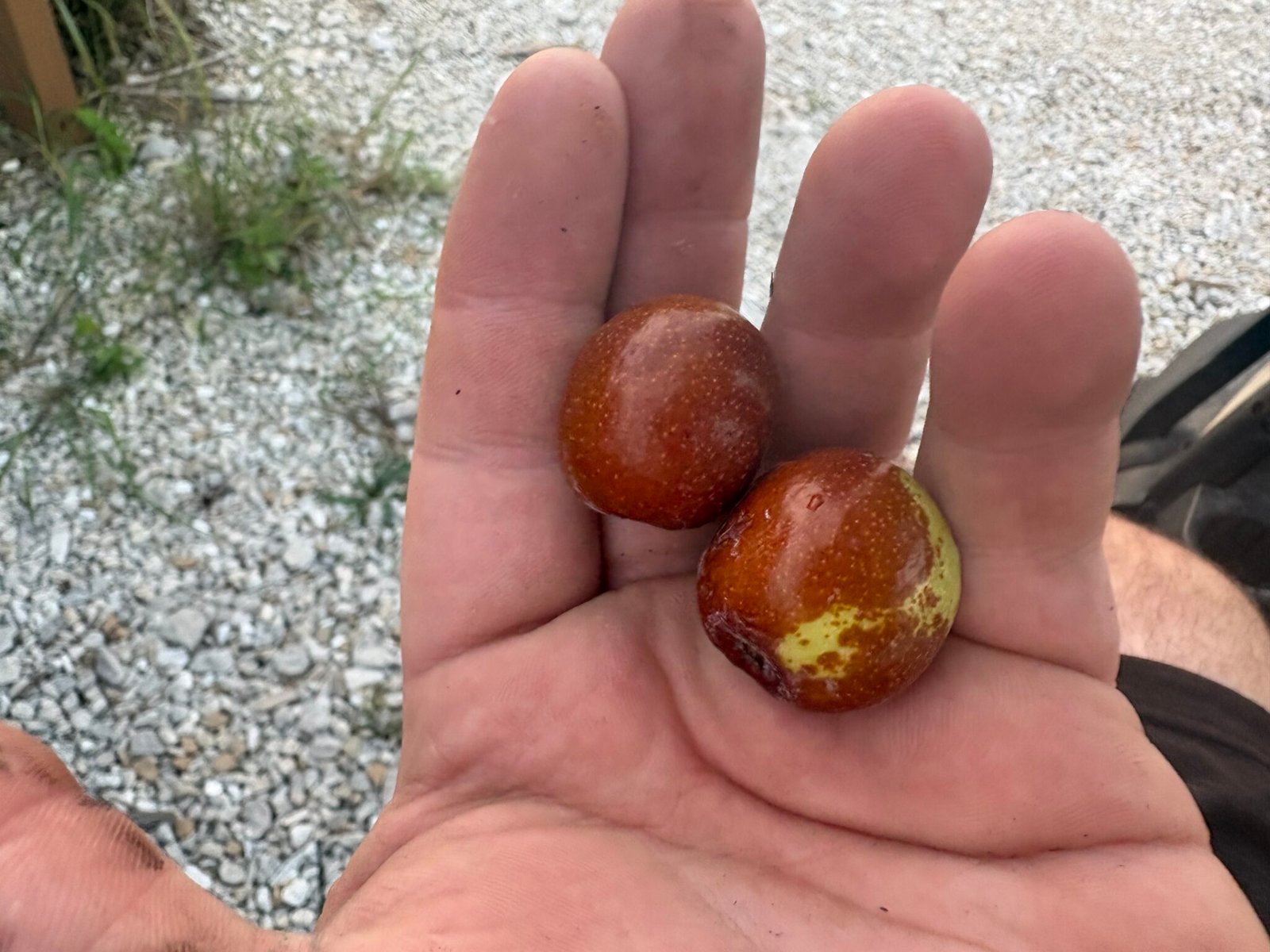
If this is your first season harvesting jujubes, I’d also recommend reading How Do You Know When a Jujube Is Ripe? Signs It’s Ready. Knowing when to harvest the fruit that stays on the tree is just as important as understanding why a few fall off along the way.
About the Author
Daxon Weaver is the owner of Weaver Family Farms Produce, where he shares firsthand experiences growing fruit, harvesting seasonal crops, and helping others enjoy the rewards of homegrown food from his family’s Missouri farm.