When we planted our first jujube trees, I expected to see them take off almost immediately.
After all, I’d read plenty of articles describing jujubes as fast-growing trees.
So I waited.
And waited.
Then I compared them to some of our other fruit trees.
Our peaches seemed to put on growth quickly.
Our pears were making noticeable progress.
Even our apples looked like they were filling out faster.
Meanwhile, the jujubes were…well…being jujubes.
If you’ve found this article because you’re standing in your yard wondering why your jujube tree doesn’t seem to be doing much, I completely understand.
I’ve asked myself that same question.
After growing Honey Jar and Sugar Cane jujubes here on our family farm in northeast Missouri, I’ve learned that slow growth doesn’t necessarily mean something is wrong. While you're evaluating your tree, what to expect from jujube trees can help you understand another practical part of growing them.
Sometimes it simply means the tree is doing exactly what it should.
If you’re just getting started with jujubes, I’d recommend reading What I Wish I Knew Before Planting a Jujube Treeafter this article. It’s everything I wish someone had told me before we planted ours.
My Trees Didn’t Grow Nearly as Fast as I Expected
One thing that surprised me was the difference between what I read online and what I actually saw in our orchard.
Many articles make it sound like jujube trees shoot up several feet every year.
That simply hasn’t been our experience.
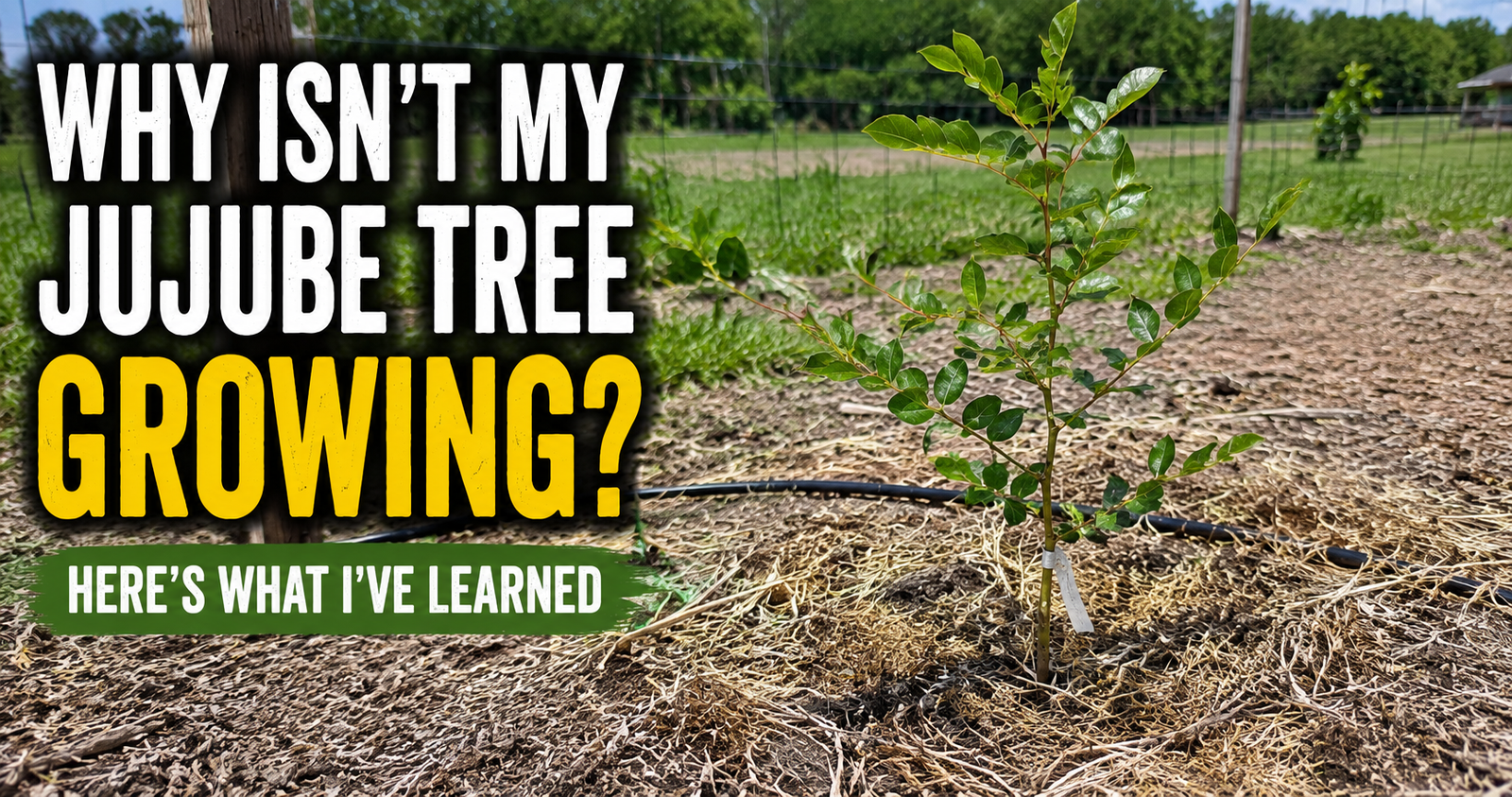
Here in USDA Zone 6a, once our trees became established, they’ve generally averaged around a foot of new growth each year.
Some years have been a little better.
Some have been a little slower.
But overall, that’s been a realistic expectation for us.
Could someone growing jujubes in a hotter climate see faster growth?
Absolutely.
Longer growing seasons, warmer temperatures, and different soils can all make a difference.
I’m simply sharing what we’ve observed growing them here in Missouri.
I’d much rather give you an honest expectation than make it sound like you’ll have a massive tree in just a couple of years.
The First Few Years Are Mostly About Roots
This is probably the biggest lesson I’ve learned.
When you plant a young fruit tree, most of the exciting work happens where you can’t see it.
Before the tree can support lots of branches and fruit, it needs a strong root system.
That takes time.
During those early years, it may feel like almost nothing is happening above ground.
Meanwhile, below the surface, the tree is investing energy into becoming established.
Once I started thinking about it that way, I became much more patient.
The slow top growth didn’t bother me nearly as much because I knew the tree was still making progress.
Don’t Compare a Jujube to a Peach Tree
I made this mistake more than once.
I’d walk through the orchard looking at everything growing.
Our peaches seemed full of long, vigorous new shoots.
The apples were filling out nicely.
Then I’d stop beside the jujube and wonder why it wasn’t doing the same thing.
Eventually I realized I wasn’t making a fair comparison.
Different fruit trees simply grow differently.
Jujubes have their own pace.
Just because another species grows faster doesn’t mean your jujube is struggling.
Once I accepted that, I stopped worrying every time another tree seemed to outgrow it.
Sunlight Makes a Bigger Difference Than Many People Realize
If there’s one thing I wouldn’t compromise on, it’s sunlight.
Jujubes love full sun.
The more direct sunlight they receive, the better they generally perform.
Our trees are planted where they receive sunshine for most of the day, and I think that’s one reason they’ve remained healthy even if they haven’t grown as quickly as I originally expected.
If a jujube is planted where larger trees or buildings cast shade for much of the day, I wouldn’t expect it to perform at its best.
That’s true for many fruit trees, but I think it’s especially important with jujubes because they thrive in warm, sunny conditions.
Watering Matters, Especially Early On
One thing I’ve tried not to do is overwater.
Young trees definitely need consistent moisture while they’re becoming established.
But I’ve also learned that constantly keeping the soil soaked isn’t helping anything.
Instead, I prefer watering deeply when the tree actually needs it.
That encourages the roots to grow deeper instead of staying near the surface.
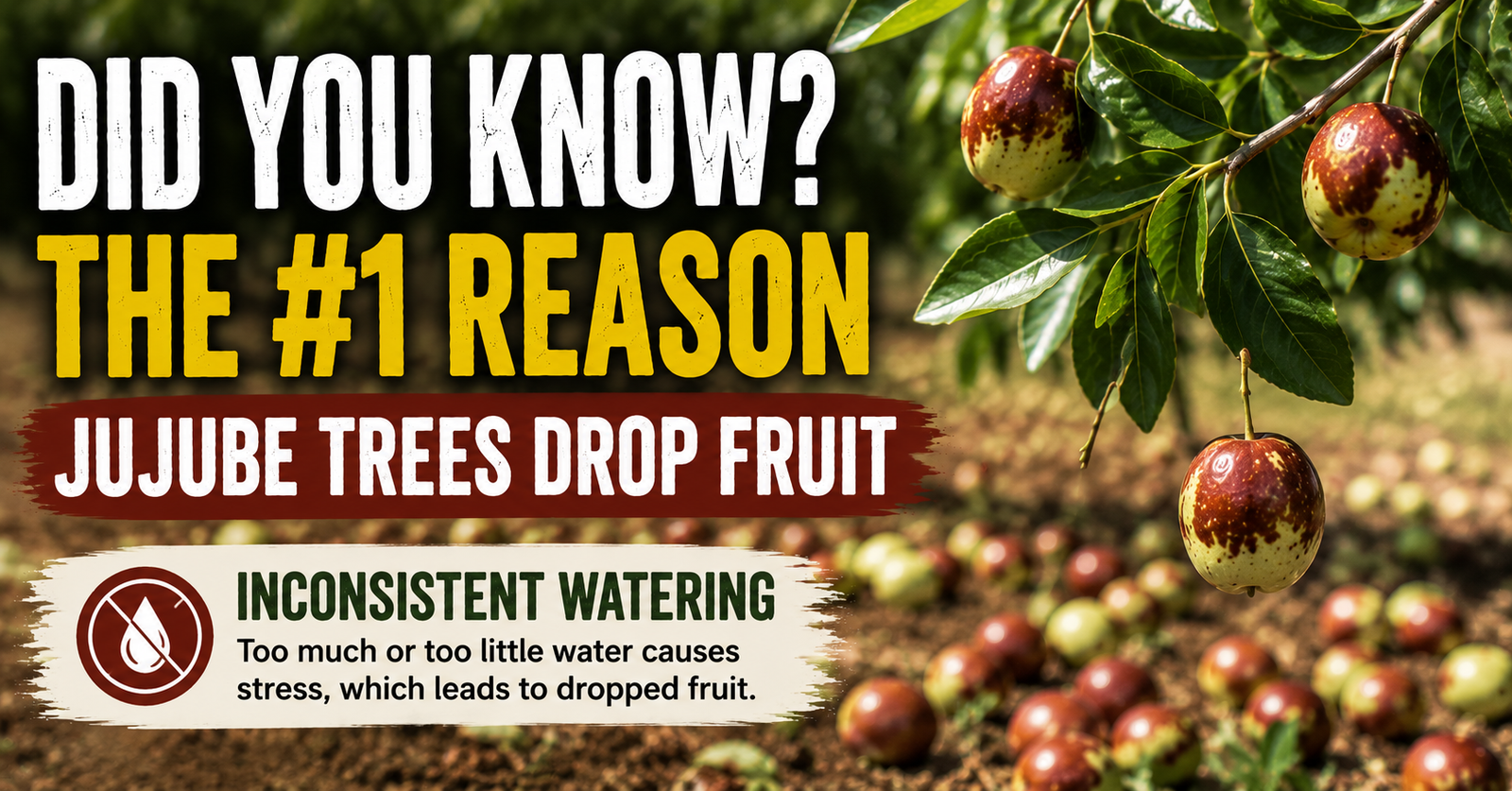
Once established, jujubes become impressively drought tolerant compared to many other fruit trees, but young trees still benefit from steady care during their first few growing seasons. Water stress is also one of the situations discussed in jujube fruit drop causes.
Fertilizer Isn’t a Magic Solution
I’ll admit it.
There were times I wondered if my trees simply needed more fertilizer.
It would have been an easy explanation.
Slow growth?
Just feed the tree.
Over time, I realized fruit trees rarely work that way.
If a tree is healthy but naturally growing at a moderate pace, dumping on extra fertilizer isn’t going to transform it overnight.
In fact, too much nitrogen often encourages excessive leafy growth at the expense of healthy structure and fruit production later on.
I’ve found that steady, healthy growth is much more valuable than trying to force rapid growth.
Transplant Shock Is More Common Than I Expected
Looking back, I think one of the biggest reasons people worry about slow-growing jujube trees is because of transplant shock.
When you buy a tree from a nursery, it has spent its life growing in a very controlled environment.
Then one day it’s dug up, loaded on a truck, carried home, planted in completely different soil, and expected to immediately start growing like nothing happened.
That’s asking a lot from any tree.
The first year after planting, I try to remind myself that the tree has one main job.
Grow roots.
Everything else comes second.
University extension publications make this point repeatedly. Newly planted trees often devote much of their energy to becoming established below ground before you see much growth above ground, especially after transplanting.
Sometimes the Tree Is Growing…You Just Can’t See It
This is probably the biggest mindset shift I’ve had.
For a long time I judged the tree by how much taller it got each year.
Now I don’t.
Instead, I look for other signs.
Is the foliage a healthy green?
Did it produce another flush of leaves?
Are the branches filling out?
Does the tree look healthy overall?
Those things tell me just as much as measuring new shoots with a tape measure.
It’s easy to forget that a tree can spend an entire season building a stronger root system without looking dramatically different above ground.
Don’t Make the Mistake of Trying to Force Faster Growth
I understand the temptation.
You look at the tree.
It doesn’t seem much bigger than last year.
So you think…
Maybe it needs more fertilizer.
Maybe it needs more water.
Maybe I should do something.
I’ve learned that sometimes the best thing you can do is…nothing.
Healthy trees have their own pace.
Trying to force rapid growth often creates new problems instead of solving the original one.
I’d much rather have a sturdy tree that’s growing steadily than one that’s pushed too hard early in life.
Think About the Whole Orchard, Not Just One Tree
One thing that’s helped me keep realistic expectations is growing several different kinds of fruit trees. You can explore more farm-grown fruit articles for practical perspective on growing and enjoying different produce.
On our farm we have apples, peaches, pears, apricots, almonds, persimmons, pawpaws, mulberries, strawberries, raspberries, blackberries, blueberries, honeyberries, kiwi, Saskatoon serviceberries, Che fruit, and of course our Honey Jar and Sugar Cane jujubes.
Watching all of those grow has taught me something important.
Every species has its own personality.
Our peaches seem eager to grow.
Some of the berries establish quickly.
The jujubes are more patient.
That doesn’t make them worse.
It just means comparing one species to another usually isn’t fair.
I’ve stopped expecting every fruit tree to follow the same timeline.
Don’t Forget How Late They Wake Up
Another thing that tricks people into thinking their tree isn’t growing is the late leaf-out.
For weeks it looks like absolutely nothing is happening.
Meanwhile, the tree is simply waiting for consistently warm weather.
Every spring I have to remind myself of that.
Eventually those tiny green buds appear, and before long the tree is growing like it always does.
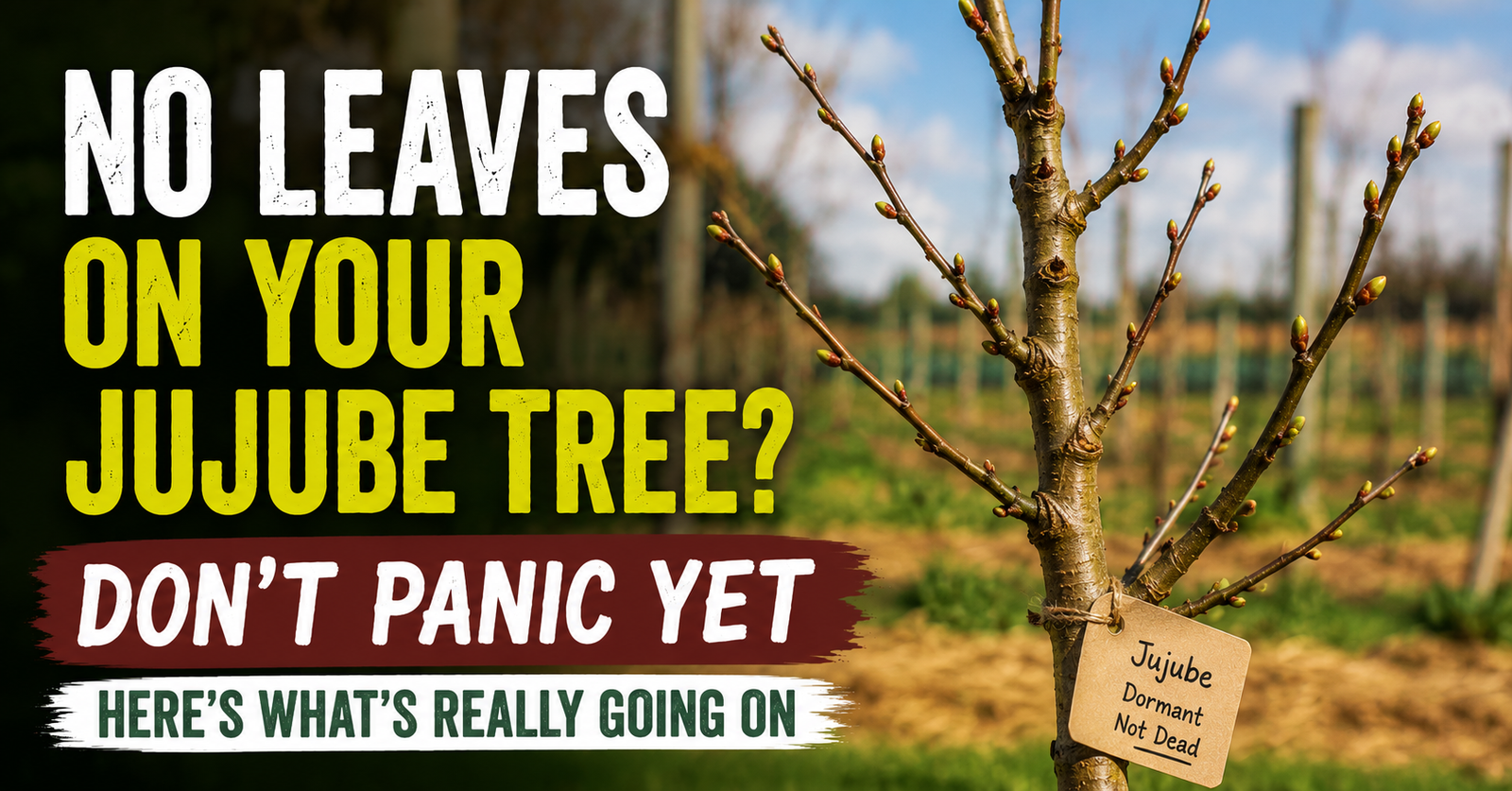
If your tree is still bare while everything else has leaves, I’d encourage you to read Why Is My Jujube Tree Not Leafing Out? Don’t Panic Yet. It’s one of the first concerns I had after planting our own trees, and now it’s something I almost expect every year.
Could Something Actually Be Wrong?
Most of the time, slow growth isn’t an emergency.
But there are situations where I’d look a little closer.
For example, I’d pay attention if the tree:
- Produces very little new growth year after year.
- Has branches that continue dying back.
- Develops yellow leaves without another obvious explanation.
- Has obvious trunk damage.
- Stays weak while other nearby jujubes of a similar age are thriving.
In those situations, I’d start evaluating watering, drainage, planting depth, and the health of the root system instead of simply assuming the tree is “slow.”
One Thing That Changed My Expectations
I think the biggest change happened when I stopped measuring success by inches of growth.
Instead, I started asking different questions.
Did the tree survive another Missouri winter?
Did it produce healthy leaves?
Did it bloom?
Did it hold fruit?
Did it look stronger than last year?
Those answers tell me much more than whether it grew another six inches.
Eventually the height comes.
Fruit trees are a long-term investment, and jujubes are no different.
If I Were Planting Another Jujube Tomorrow
Knowing everything I know now, I wouldn’t hesitate to plant another one.
In fact, I’d probably worry less than I did the first time.
I’d know it might not explode with growth.
I’d know it would probably leaf out later than every other fruit tree in the orchard.
I’d know the first few years require patience.
And I’d also know that, eventually, I’d be standing under that tree in late summer eating sweet fruit straight from the branches.
That’s a trade I’d make again without thinking twice.
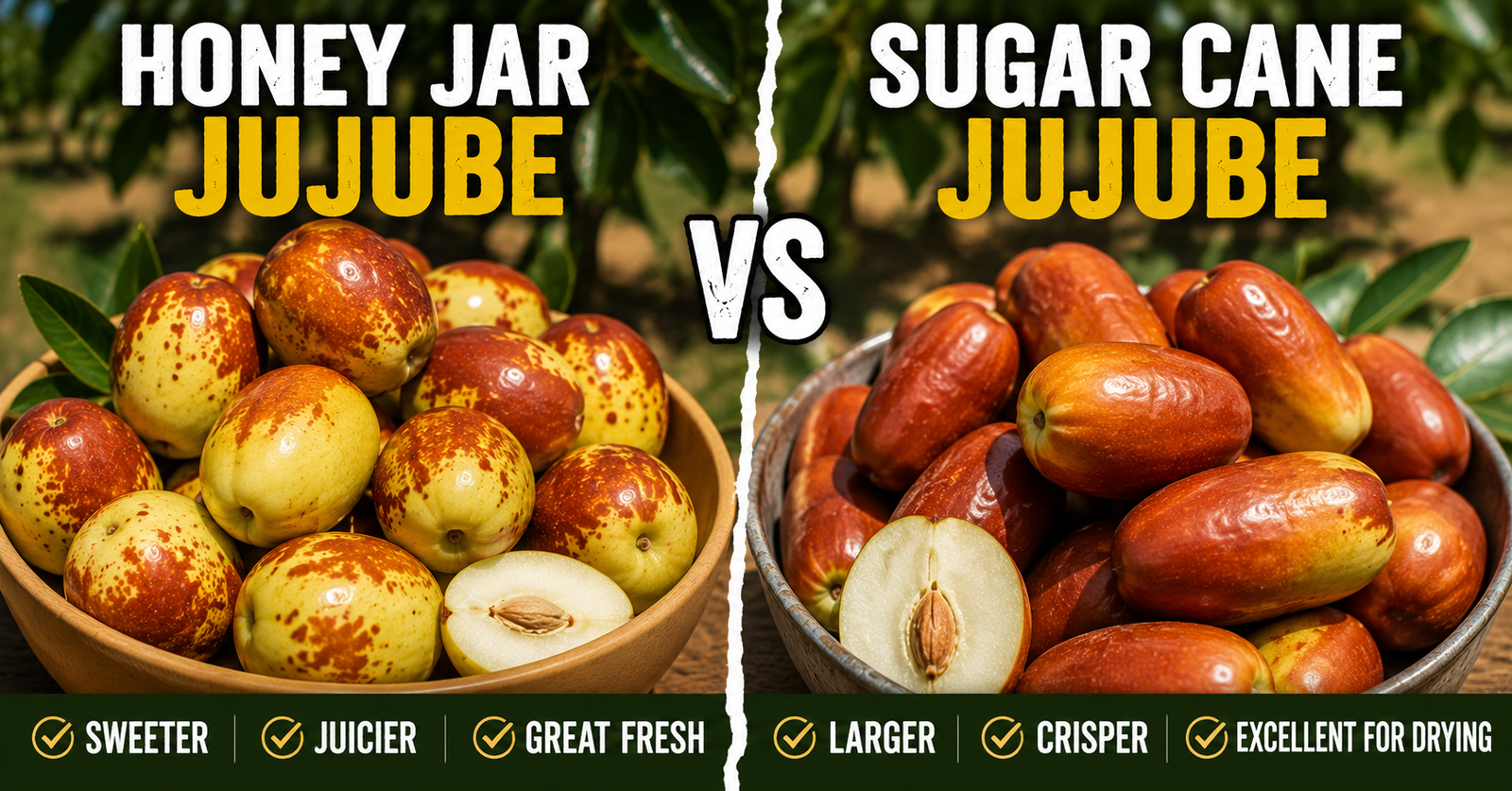
If you’re still deciding whether Honey Jar or Sugar Cane is the better fit for your yard, you may also enjoy Honey Jar Jujube vs. Sugar Cane Jujube: Which Is Better?. Growing both side by side has given me a good appreciation for what each variety brings to the orchard.
Slow Doesn’t Mean You’re Failing
If there’s one message I hope you take away from this article, it’s this.
A slow-growing jujube tree isn’t automatically an unhealthy jujube tree.
Some of the best lessons these trees have taught me have nothing to do with fruit.
They’ve taught me to stop expecting instant results.
They’ve reminded me that healthy roots usually come before rapid top growth.
And they’ve shown me that patience often pays off.
When I planted our Honey Jar and Sugar Cane trees, I wanted quick progress.
Today, I appreciate the steady progress they’ve made instead.
Every new branch, every spring leaf-out, and every basket of fruit reminds me that some of the best trees in an orchard are the ones that take their time.
About the Author
Daxon Weaver is the owner of Weaver Family Farms Produce, where he shares firsthand experiences growing apples, peaches, pears, jujubes, pawpaws, persimmons, berries, and other fruits while documenting what works on his family’s Zone 6a Missouri farm.