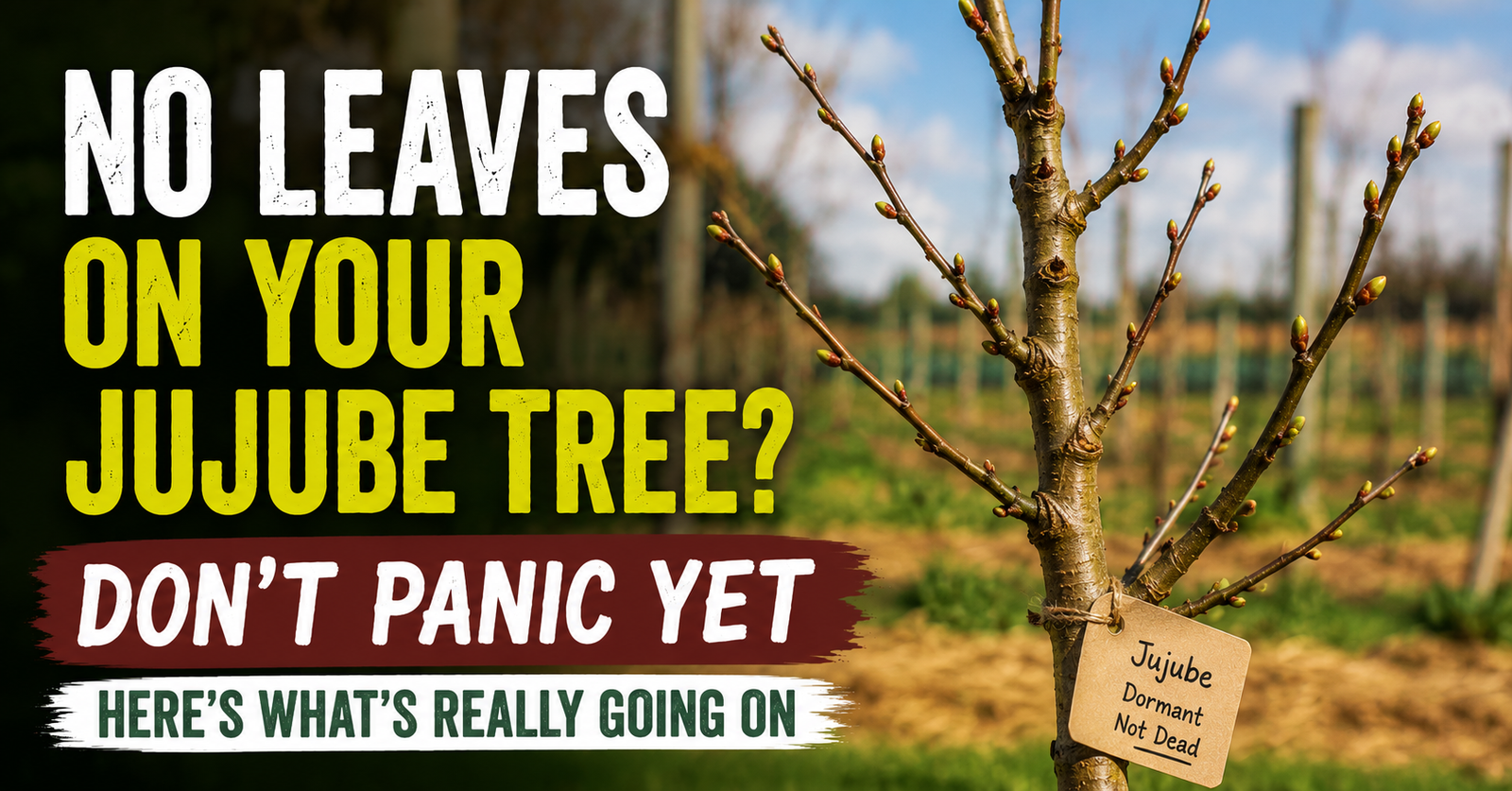
Every spring, there comes a moment when I look out across our property and start questioning one particular tree.
Our apples have leaves.
The peaches are waking up.
The pears are green.
Even the pawpaws are beginning to come alive.
Then I look over at the jujube tree.
Nothing.
No leaves.
Bare branches.
It honestly looks dead.
If you’ve found this article because your jujube tree still looks like a stick in the ground while everything else in your yard is growing, I completely understand.
I’ve been there.
In fact, I still have that thought almost every spring.
The good news is that, most of the time, there’s nothing wrong with your tree at all.
If you’re new to growing jujubes, I’d recommend reading What Is a Jujube Fruit and What Does It Taste Like? after this article. It’ll give you a better idea why I think these unusual fruit trees are worth the wait every year.
Jujubes Wake Up Much Later Than Most Fruit Trees
This is probably the single biggest surprise for new jujube growers.
Almost every other fruit tree on our farm begins showing signs of life well before the jujubes do.
The first year I noticed this, I honestly wondered whether our tree had made it through the winter.
Week after week it stayed completely bare.
Meanwhile, everything around it kept getting greener.
Then, almost like someone flipped a switch, tiny green buds finally appeared.
Since then, I’ve learned that this is simply how jujubes behave.
They naturally require more warm weather before breaking dormancy than many other fruit trees, which is why they’re known for leafing out so late. That late start also helps them avoid damage from late spring freezes.
Our Experience in Missouri Zone 6a
Growing fruit in northeast Missouri means learning that every spring is different.
Some years warm weather arrives early.
Other years winter seems determined to hang around.
One thing that hasn’t changed, though, is our jujube trees.
They’re always among the last trees in our orchard to wake up.
By the time I start wondering if something is wrong, I’ve learned to remind myself that this is exactly what they did last year.
And the year before that.
If your tree is healthy, patience is often the hardest part of growing jujubes.

The Scratch Test Gives Me Peace of Mind
When I really start wondering whether a tree is alive, I don’t guess.
I perform what’s commonly called a scratch test.
Using my fingernail or a small knife, I gently scratch a tiny section of young bark.
If I see bright green tissue underneath, that’s usually a very encouraging sign that the tree is still alive even though it hasn’t leafed out yet.
I always keep the scratch as small as possible.
There’s no need to peel off large sections of bark.
One tiny spot is enough to tell me what I need to know.
Young Trees Can Take Even Longer
I’ve noticed something else over the years.
Young jujube trees seem to make me worry even more than older ones.
When a tree is still getting established, every little delay feels like something is wrong.
But once it’s been in the ground for a few seasons, I find myself worrying less because I’ve already watched it repeat the same pattern year after year.
That doesn’t mean every tree grows at exactly the same pace.
It just means young trees sometimes ask us to be a little more patient.
Don’t Dig It Up Too Soon
This is probably the biggest mistake I hope people avoid.
I’ve read stories from gardeners who became convinced their jujube had died, dug it up, and replaced it.
Weeks later, the replacement tree was still bare too.
The original tree may have been perfectly healthy all along.
Jujubes have earned a reputation for waking up late, so unless you have strong evidence that the tree has died, I think patience is usually the better choice. Growers across different climates often report that their jujubes don’t leaf out until weeks after apples, peaches, and many other fruit trees. Readers comparing other farm-grown crops can browse fruit and produce articles.
Could Something Actually Be Wrong?
Absolutely.
Late leaf-out is normal.
No leaf-out at all isn’t.
If your tree has gone well beyond the normal growing season, fails a scratch test in multiple places, has brittle branches throughout the canopy, or shows signs of severe trunk damage, then it’s worth investigating further.
Poor drainage, root damage, transplant shock, drought during establishment, or winter injury can all affect a young tree.
The key is looking at the whole picture rather than assuming every bare jujube is dead.
Why Late Leaf-Out Is Actually a Good Thing
After watching our jujube trees for several years, I’ve actually started looking at their late leaf-out as an advantage instead of a problem.
Think about what often happens in spring.
We get a warm stretch in March.
Every fruit tree starts waking up.
Then, just when everything looks beautiful, another hard freeze rolls through.
I’ve seen that happen more than once.
Our peaches and other fruit trees can end up losing blossoms or taking frost damage.
Meanwhile, the jujubes are still asleep.
They haven’t committed to spring yet.
By waiting until the weather is consistently warmer, jujubes naturally avoid many of the late frosts that damage earlier blooming fruit trees. That’s one of the reasons they’re considered such a dependable fruit tree in many climates.
Once I realized that, I stopped wishing they would wake up sooner.
What I Look For While I’m Waiting
Instead of staring at the branches every day hoping to see leaves, I usually pay attention to a few other things.
First, I look at the bark.
Healthy bark should still look normal without large sections peeling away or obvious signs of damage.
Next, I’ll gently bend a small twig.
A living branch usually has a little flexibility.
A completely dead twig often snaps very easily.
Finally, if I’m still unsure, I’ll do the small scratch test I mentioned earlier.
Those three things usually tell me far more than whether leaves have appeared yet.
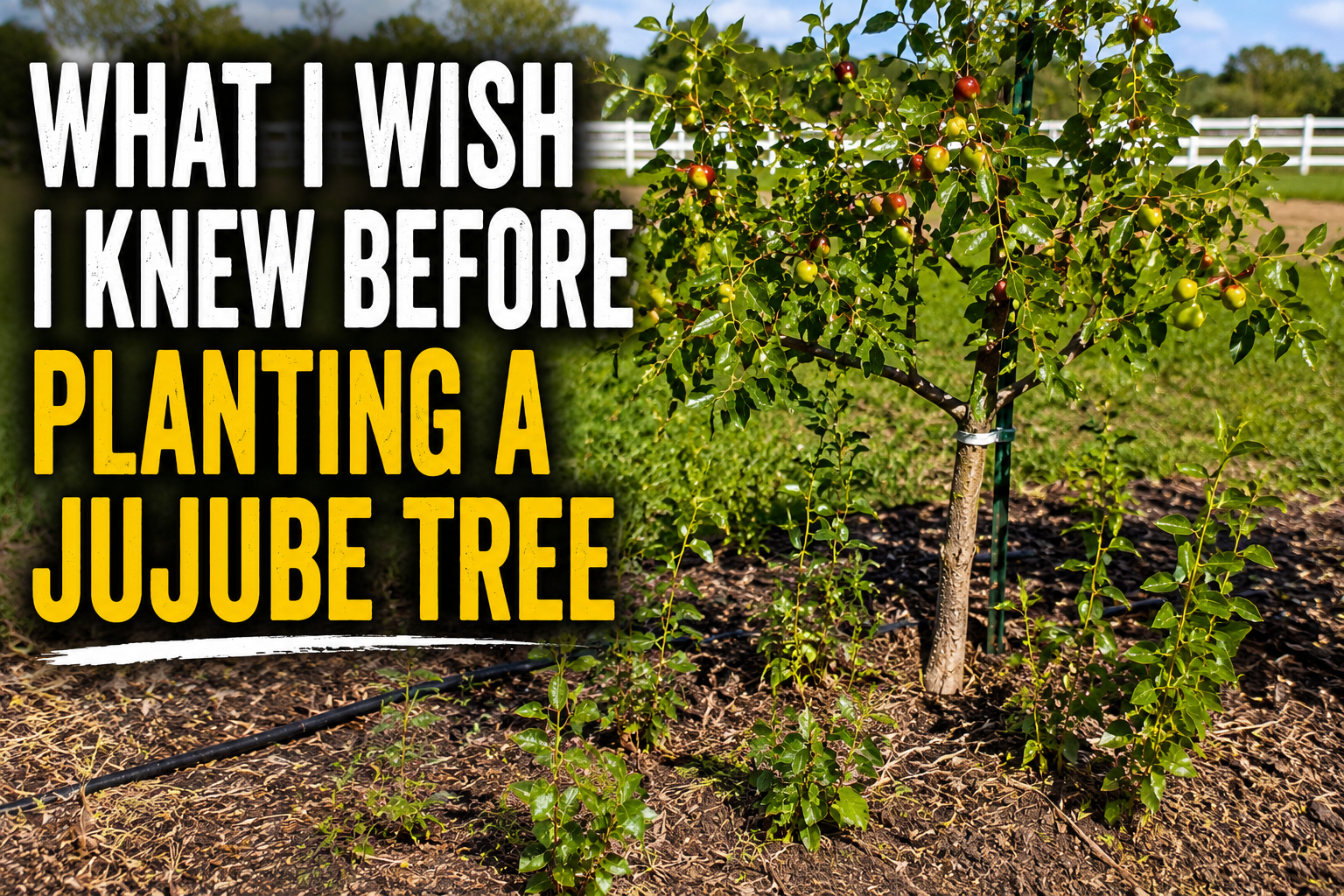
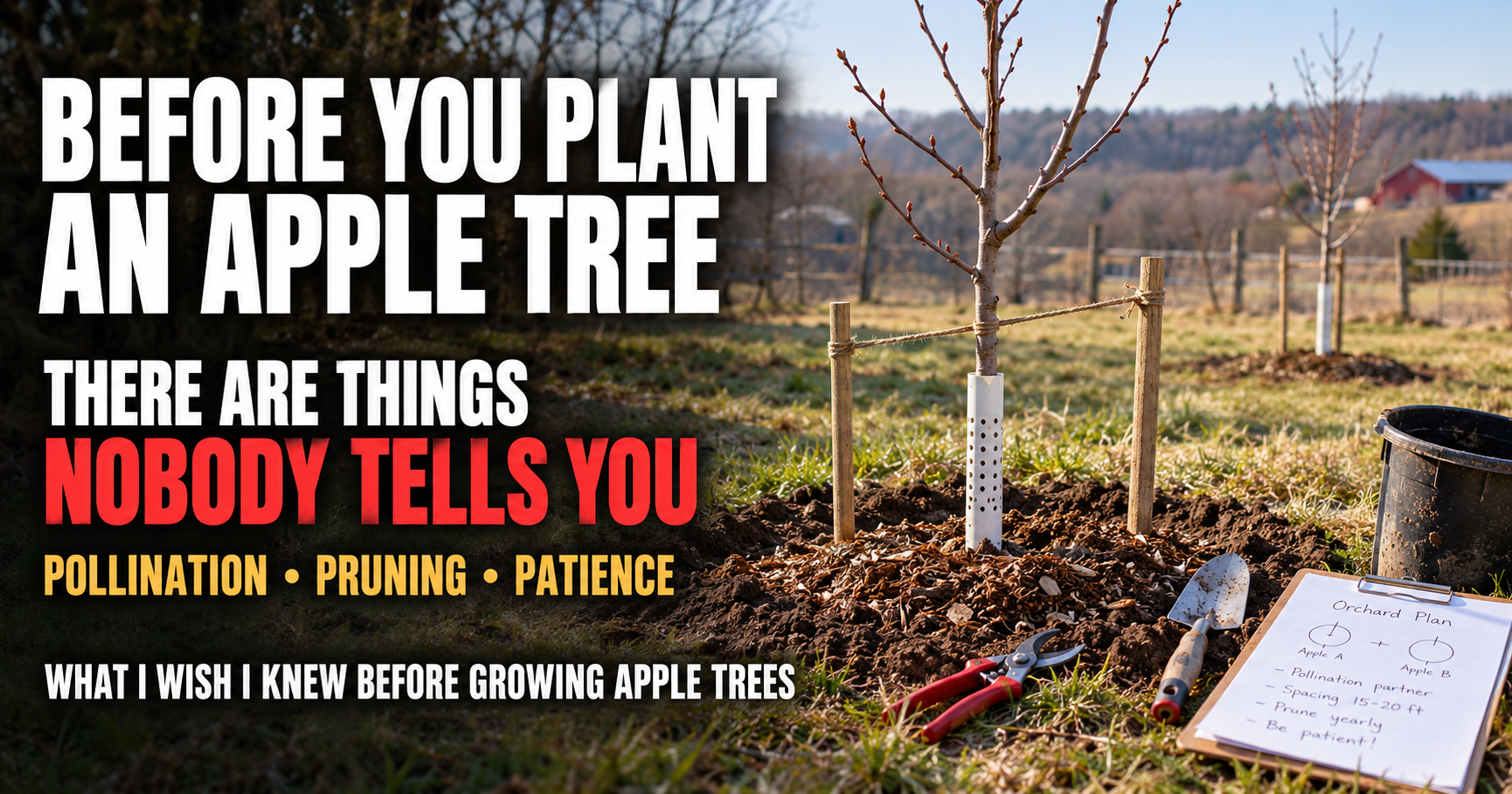
Don’t Fertilize Just Because It Looks Dead
I can understand the temptation.
You look at a bare tree while everything else is green and think maybe it just needs more fertilizer.
Personally, I don’t think that’s the right approach.
If the tree is simply doing what jujubes naturally do, adding extra fertilizer isn’t going to convince it to wake up sooner.
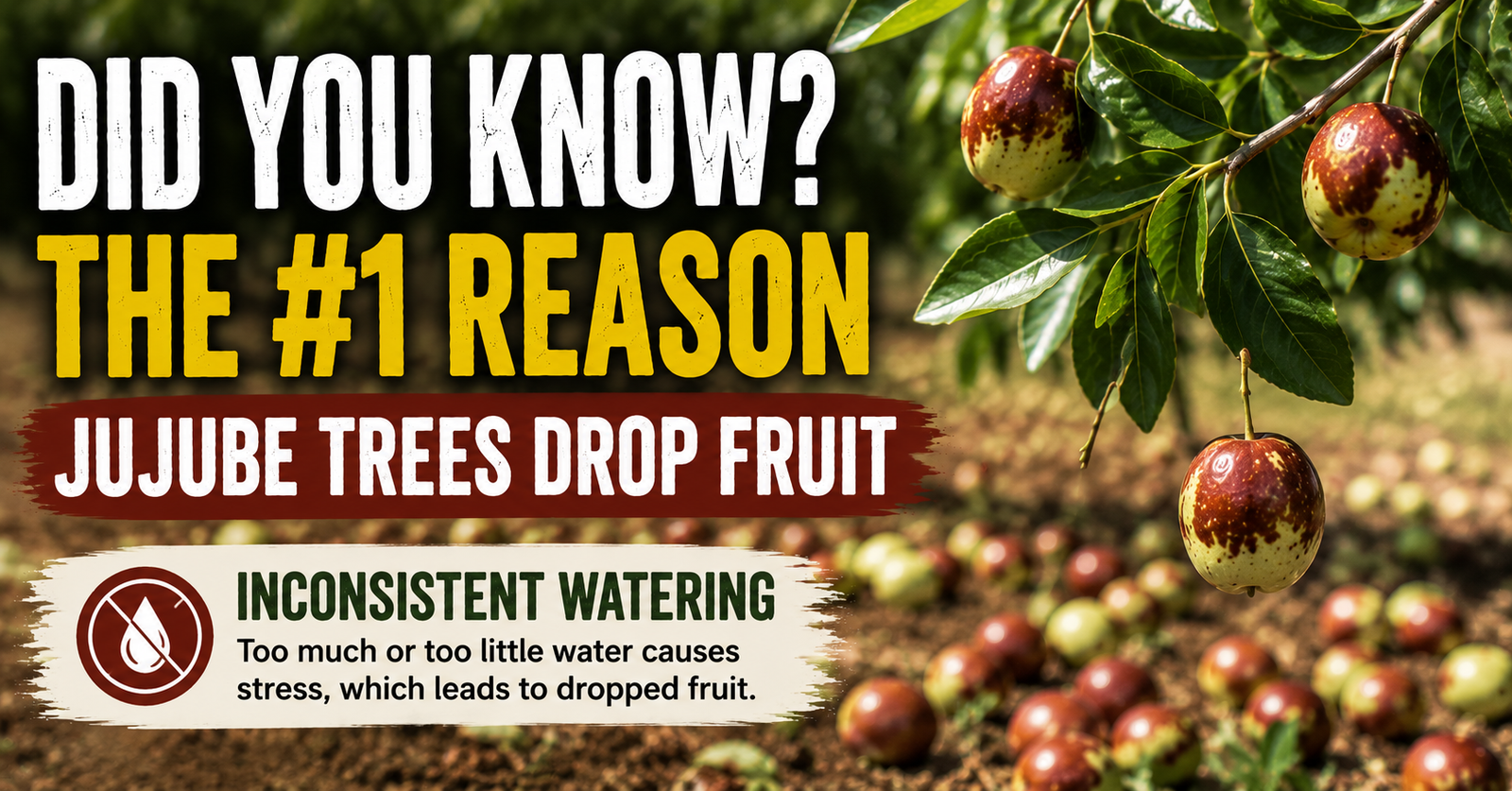
In fact, excessive nitrogen isn’t generally recommended for jujubes because it can encourage excessive vegetative growth and may even contribute to fruit drop later in the season.
I prefer letting the tree follow its normal schedule.
Watering While You’re Waiting
This is another area where I think people accidentally create problems.
A leafless tree doesn’t use nearly as much water as one that’s actively growing.
For young trees, I still make sure the soil doesn’t become bone dry because they’re getting established.
Once a jujube tree is established, though, it’s remarkably drought tolerant.
I’d rather water deeply when it’s actually needed than keep the soil constantly wet.
Good drainage has always seemed much more important than constantly adding water.
What If Only Part of the Tree Leafs Out?
I’ve seen people worry when one branch starts growing while another still looks dormant.
That doesn’t automatically mean something is seriously wrong.
Sometimes different parts of the tree simply wake up at slightly different times.
However, if one large section never leafs out while the rest of the tree grows normally, it’s worth checking those branches more closely with the scratch test.
Dead wood can be pruned away once you’re confident it isn’t coming back.
Our Honey Jar and Sugar Cane Trees Follow the Same Pattern
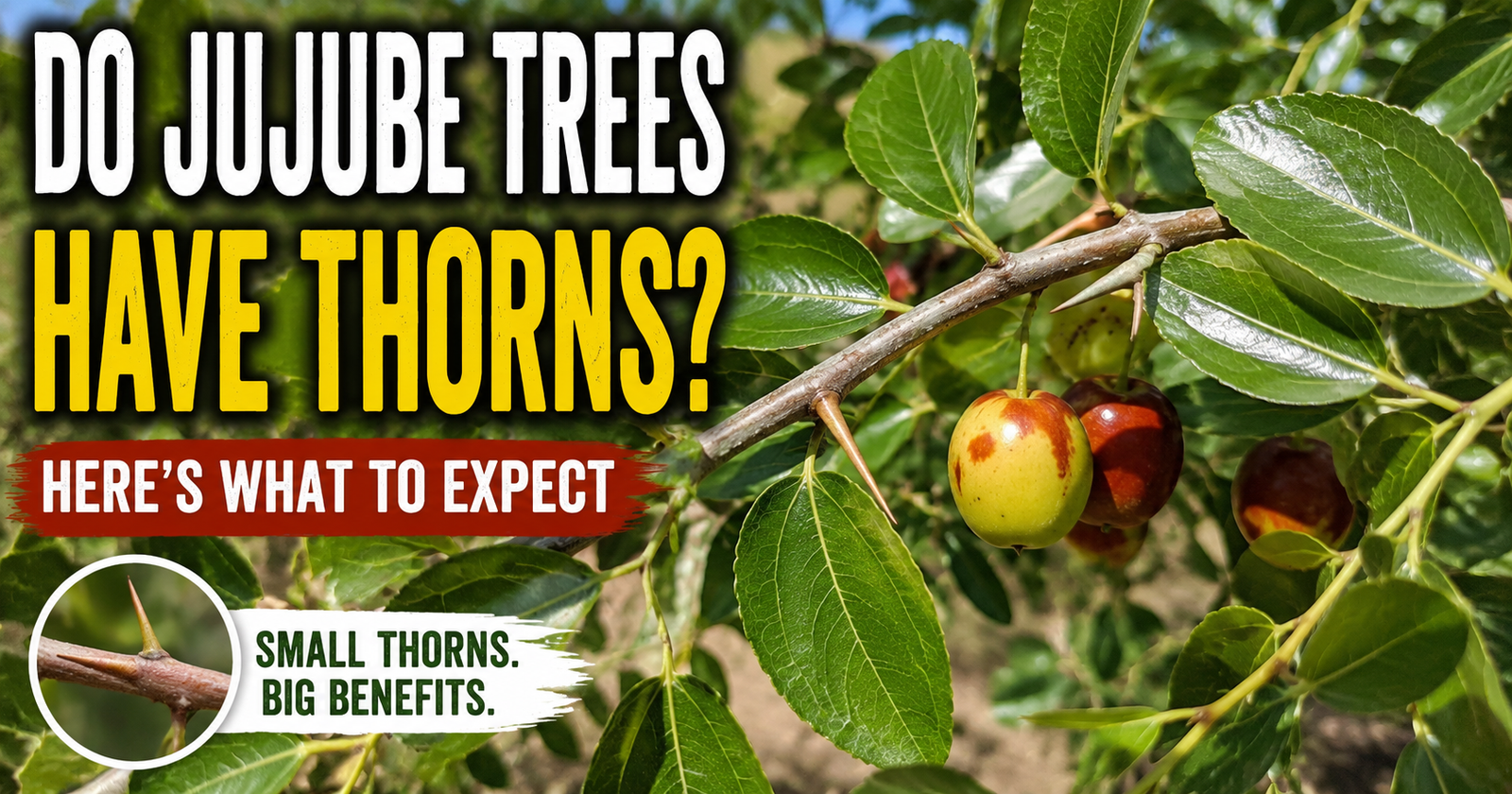
Since we grow both Honey Jar and Sugar Cane jujubes, I’ve had the chance to watch two different varieties side by side. Those variety differences also matter when considering jujube varieties and their thorns.
One thing that’s surprised me is how similar their spring behavior has been.
Neither one rushes into the growing season.
Every year they seem content to let the apples, pears, peaches, and other trees get a head start before finally deciding it’s their turn.
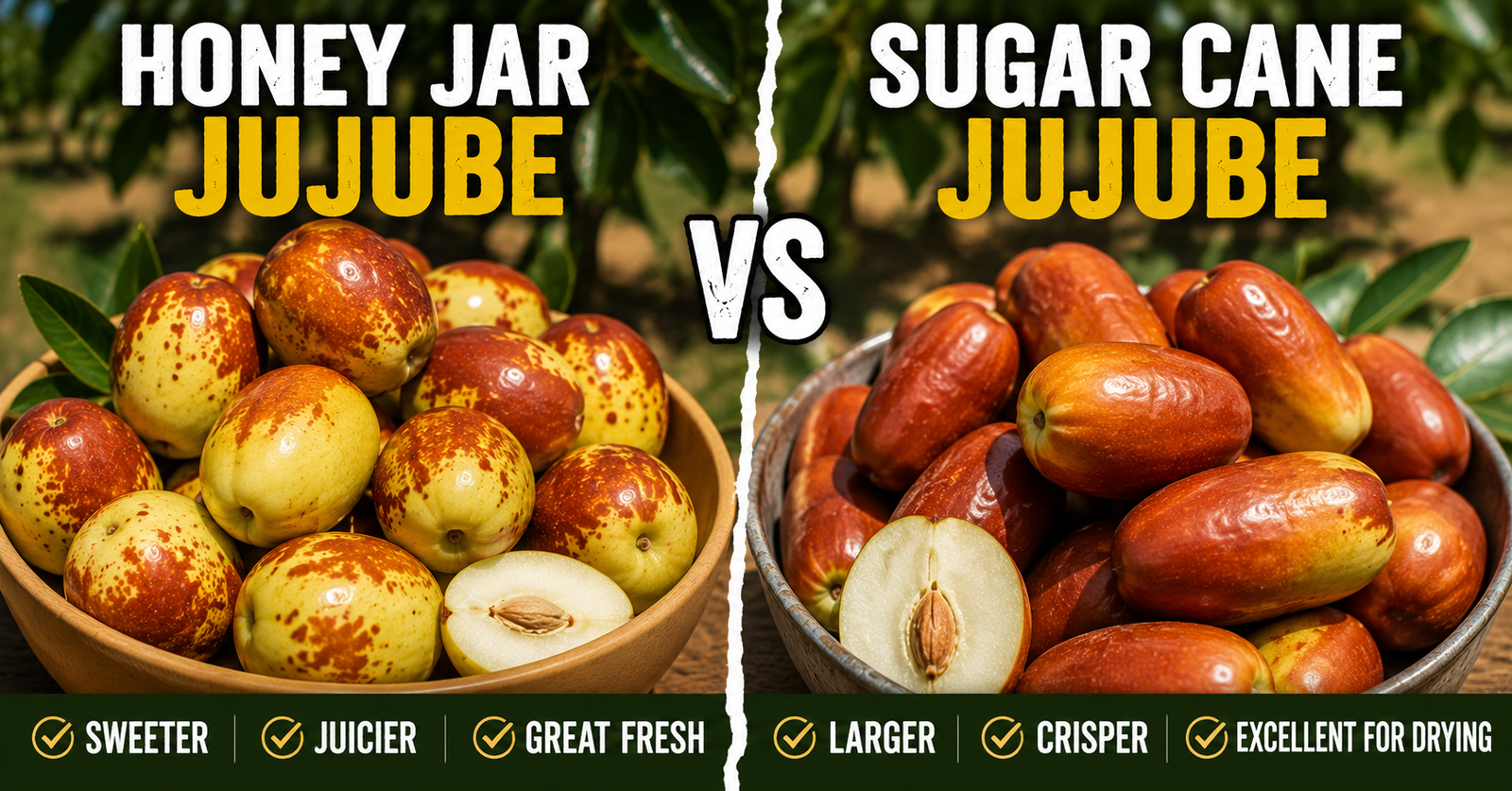
If you’re curious how these two varieties compare once the fruit starts ripening, I shared our experience in Honey Jar Jujube vs. Sugar Cane Jujube: Which Is Better? after growing both on our farm.
Questions Friends Have Asked Me
Once people know we grow jujubes, I get a lot of the same questions every spring.
One of the most common is, “Are you sure that tree is still alive?”
I usually laugh because I asked myself that exact same question when we first planted ours.
Now I just smile and tell them to give it another couple of weeks.
Almost every time, the tree proves us both wrong by suddenly filling with fresh green leaves.
When I Would Actually Start Worrying
Even though late leaf-out is normal, there is a point where I’d investigate further.
I’d become more concerned if:
- The scratch test shows brown, dry tissue in several places.
- The branches become brittle throughout the entire tree.
- The trunk has obvious cracks, severe damage, or signs of disease.
- Every nearby jujube has fully leafed out and yours still hasn’t shown any sign of life well into the growing season.
Those situations deserve a closer look.
But a bare jujube in early or even mid-spring?
That’s usually just being a jujube.
One Lesson This Tree Has Taught Me
If there’s one thing our jujube trees have taught me, it’s patience.
Every year they seem to ignore what every other fruit tree is doing.
They wake up on their own schedule.
They bloom on their own schedule.
Then, by late summer, they’re loaded with fruit while I’m already thinking about the harvest.
If I had given up on them that first spring because they looked dead, I would’ve missed out on one of my favorite fruit trees on the farm.
So if you’re standing in your yard looking at a bare jujube while everything else is green, my advice is simple.
Give it time.
There’s a good chance your tree is doing exactly what nature designed it to do.
And when those first little green leaves finally appear, you’ll probably smile the same way I do every spring.
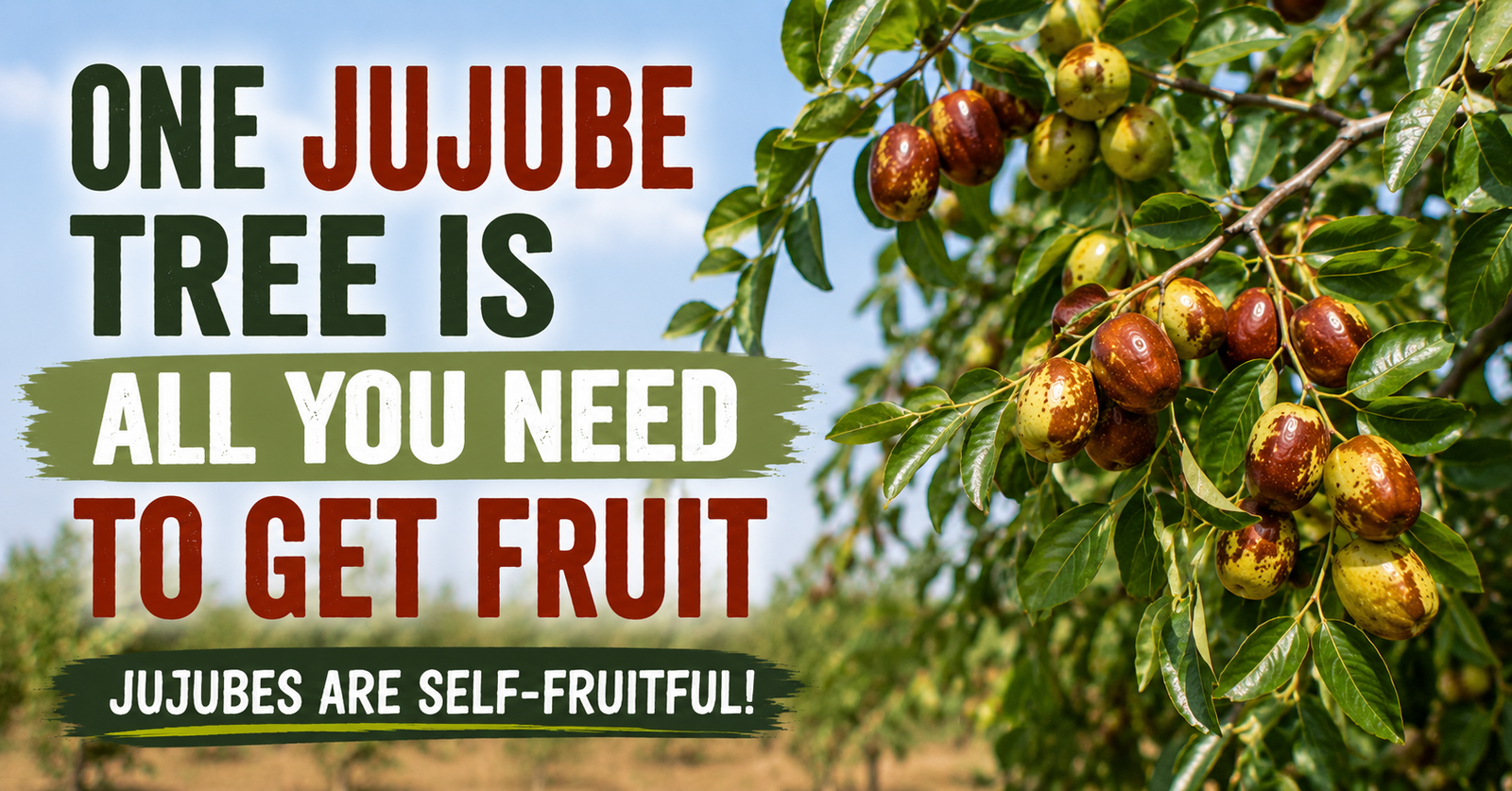
If this is your first year growing a jujube tree, I’d also recommend reading Do Jujube Trees Need Two Trees to Produce Fruit? sometime after you’re finished here. It answers another question I had before planting our Honey Jar and Sugar Cane trees, and understanding pollination makes the whole growing process a little less mysterious.
About the Author
Daxon Weaver is the owner of Weaver Family Farms Produce, where he shares firsthand experiences growing fruit, harvesting seasonal crops, and helping others enjoy the rewards of homegrown food from his family’s Missouri farm.