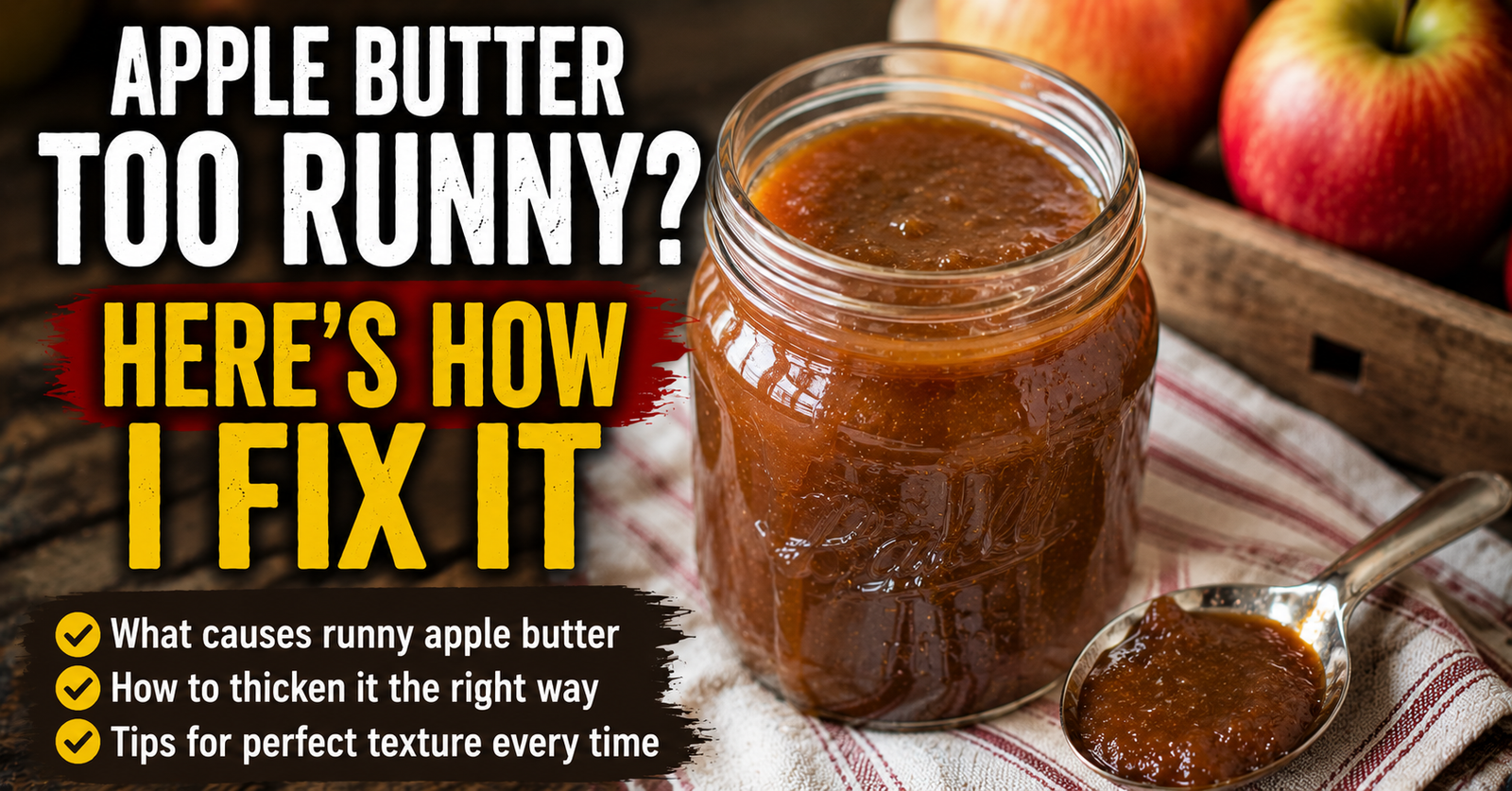
The first time you make homemade apple butter, there’s a good chance you’ll wonder if it’s ever going to thicken.
You stir.
You wait.
You cook it a little longer.
Then you look into the pot and think…
“This still looks like applesauce.”
If you’ve found yourself asking why your apple butter is still runny, you’re definitely not alone.
It’s one of the most common questions people have, especially when making apple butter for the first time.
The good news is that, most of the time, runny apple butter is easy to fix.
Over the years, I’ve learned that patience is usually the secret ingredient.
If you’re still learning the basics of apple butter, I’d recommend reading What Is Apple Butter? Everything You Need to Know after this article. Understanding how apple butter is made makes troubleshooting much easier.
The Most Common Reason Is Simple
In my experience, apple butter is usually too runny because it hasn’t cooked long enough.
Apple butter thickens as moisture slowly evaporates.
If too much water is still trapped in the mixture, it simply won’t develop that rich, spreadable consistency.
This is especially common when using a slow cooker with the lid on for the entire cooking time.
The apples may be fully cooked, but the extra moisture has nowhere to escape.
Many apple butter recipes recommend removing the lid during the final stage of cooking specifically to allow excess moisture to evaporate.
Remember That Apple Butter Thickens as It Cools
This surprised me the first time I made it.
Apple butter that’s still hot will almost always seem thinner than it does after cooling.
Before assuming you’ve done something wrong, let a small spoonful cool on a plate for a few minutes.
You may discover it’s already much closer to the consistency you’re hoping for.
I try not to judge the finished texture while it’s still bubbling away in the pot.
The Apples You Use Matter
Not all apples behave the same.
Some contain more water.
Others naturally contain more pectin.
That means two batches made with different apples can require very different cooking times.
Juicier apples often need additional time to cook down, while apples with more natural pectin may thicken sooner. Using a mixture of apple varieties often produces the best flavor and texture.
If you’re curious which apples I like best, take a look at Best Apples for Apple Butter: 15 Varieties Ranked for Flavor.
Resist the Urge to Turn Up the Heat
I know it’s tempting.
You want the apple butter to thicken faster.
So you think about turning the burner up.
Personally, I don’t.
Apple butter develops its rich flavor by cooking low and slow.
High heat increases the risk of scorching the bottom of the pot before enough moisture has evaporated.
Once apple butter burns, that smoky flavor usually affects the entire batch. Slow simmering with frequent stirring is widely recommended to prevent scorching while allowing the mixture to reduce properly.
Stir More Often Near the End
One thing I’ve noticed is that the thicker the apple butter becomes, the more attention it needs.
Early in the cooking process, stirring every so often is usually enough.
Toward the end, though, I stir much more frequently.
The thicker mixture doesn’t circulate as easily, so it’s more likely to stick to the bottom if ignored for too long.
A few extra minutes with a spoon are much easier than trying to rescue a scorched batch.
Should You Add Cornstarch?
This is one shortcut I’d avoid.
Apple butter doesn’t need cornstarch, flour, gelatin, or other thickeners.
Its texture comes from reducing the apples until enough moisture has evaporated.
Adding thickeners changes both the texture and the flavor.
If my apple butter is too thin, I’d much rather give it another hour than change the recipe.
How I Tell When It’s Done
After making a few batches, you start recognizing the signs.
When I drag a spoon across the bottom of the pot, the apple butter doesn’t immediately rush back together.
Instead, it leaves a trail for a second or two.
Another trick I like is placing a spoonful on a cold plate.
If it stays mounded instead of spreading out like applesauce, it’s usually ready.
These simple tests are more reliable than watching the clock because every batch cooks a little differently.
What If It Becomes Too Thick?
Believe it or not, that can happen too.
If I’ve reduced it a little more than I intended, I don’t panic.
A small amount of apple cider, apple juice, or even water can usually loosen the consistency.
The important thing is to add only a little at a time and stir well before deciding whether it needs more.
Don’t Judge Homemade Apple Butter by the Grocery Store
One thing I’ve noticed is that homemade apple butter doesn’t always look exactly like the jars on supermarket shelves.
Commercial producers have very consistent equipment and recipes.
Every homemade batch is a little different.
Some people like it extremely thick.
Others prefer it easier to spread.
There’s no single “perfect” consistency.
As long as it spreads well and tastes good, you’ve probably done just fine.
What I Learned From My First Batch
Looking back, I worried far more than I needed to.
I kept thinking something had gone wrong because the apple butter looked thinner than I expected.
In reality, it simply needed more time.
That’s one of the things I enjoy about making apple butter now.
It reminds me that some foods can’t be rushed.
The slow cooking is exactly what creates that deep apple flavor and smooth texture that makes apple butter so special.
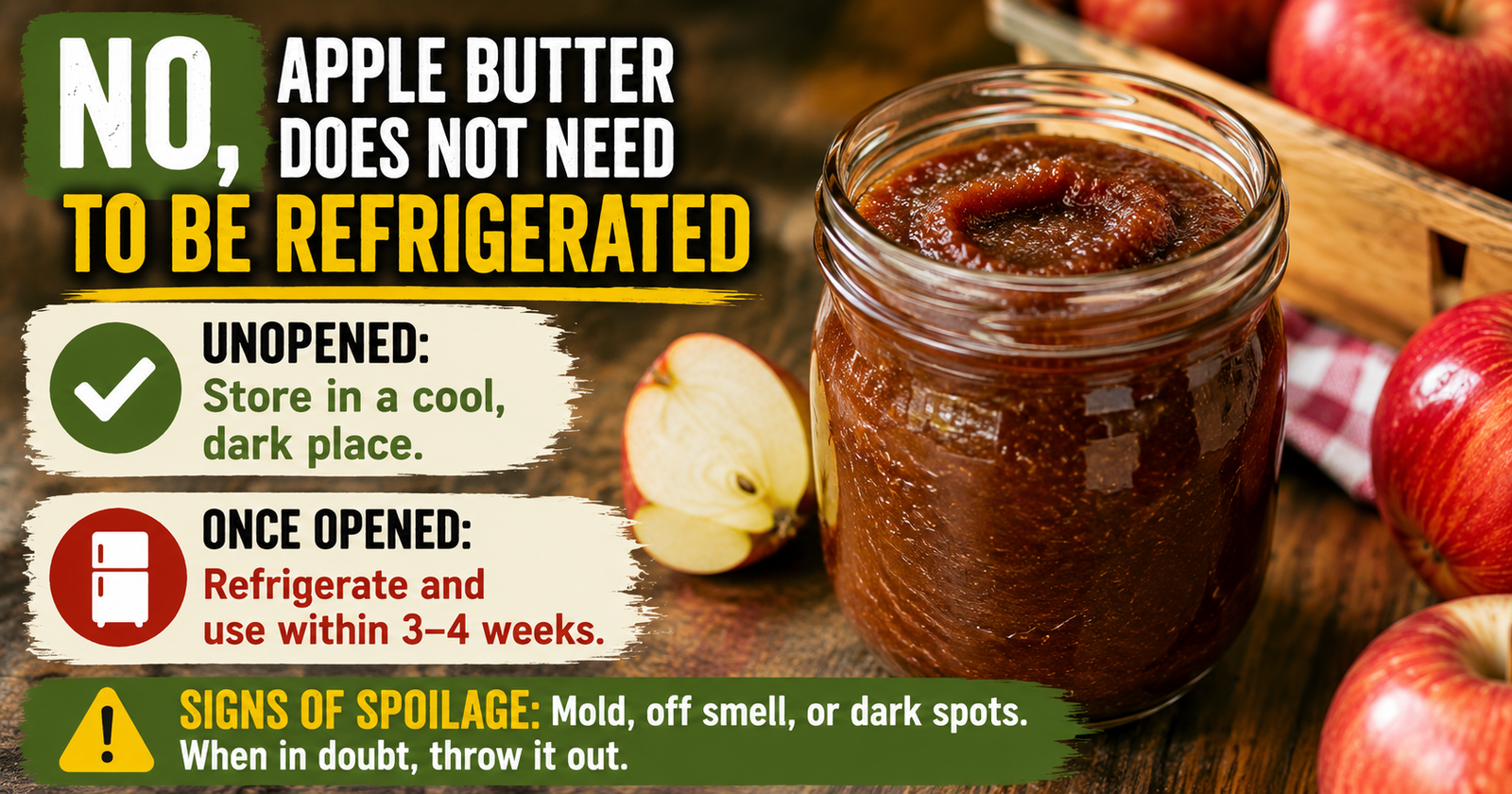
If you’re storing your finished batch, you may also want to read Does Apple Butter Need to Be Refrigerated? Here’s the Truth. Proper storage helps preserve all the work you’ve put into making it.
About the Author
Daxon Weaver is the owner of Weaver Family Farms Produce, where he shares firsthand experiences growing fruit, preserving seasonal harvests, and helping others enjoy homegrown foods from his family’s Missouri farm.