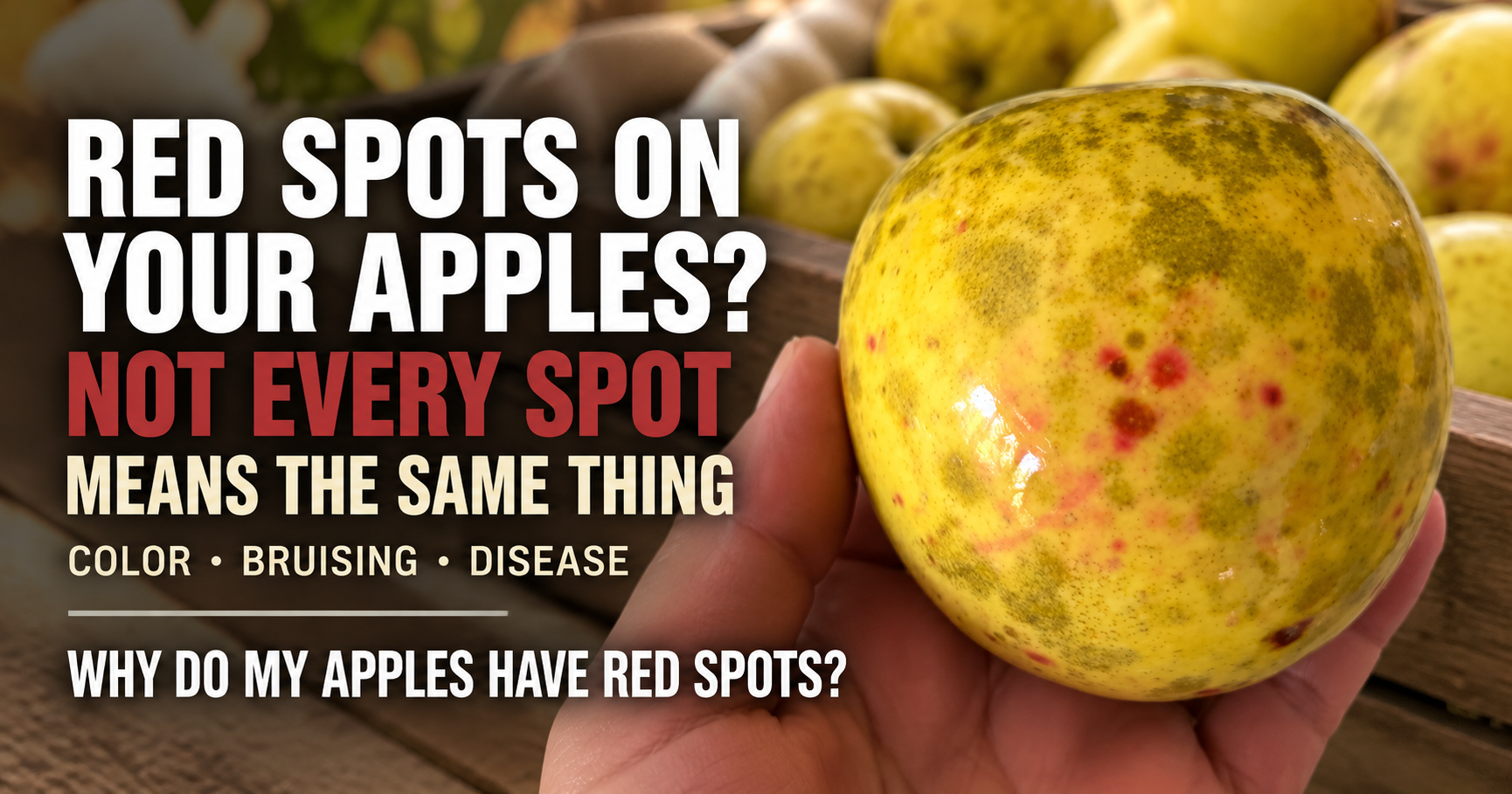
The first time I noticed small red spots showing up on some of the apples growing on our trees, I wasn’t exactly sure what I was looking at.
Some spots were tiny.
Others looked darker.
A few apples had several scattered across the skin while neighboring fruit looked perfectly normal.
Naturally, my first thought was the same one most people probably have.
“Is something wrong with my apples?”
After spending time learning about common apple diseases, insects, weather damage, and other problems that affect backyard orchards, I realized there isn’t one simple answer.
Several completely different issues can leave apples with red spots.
Some are almost entirely cosmetic.
Others deserve a closer look.
Here’s how I work through the possibilities when I find apples like the one pictured above.
Start by Looking at the Entire Apple
One thing growing fruit has taught me is not to jump to conclusions after seeing one symptom.
Instead of focusing only on the red spots, I take a step back and look at the whole apple.
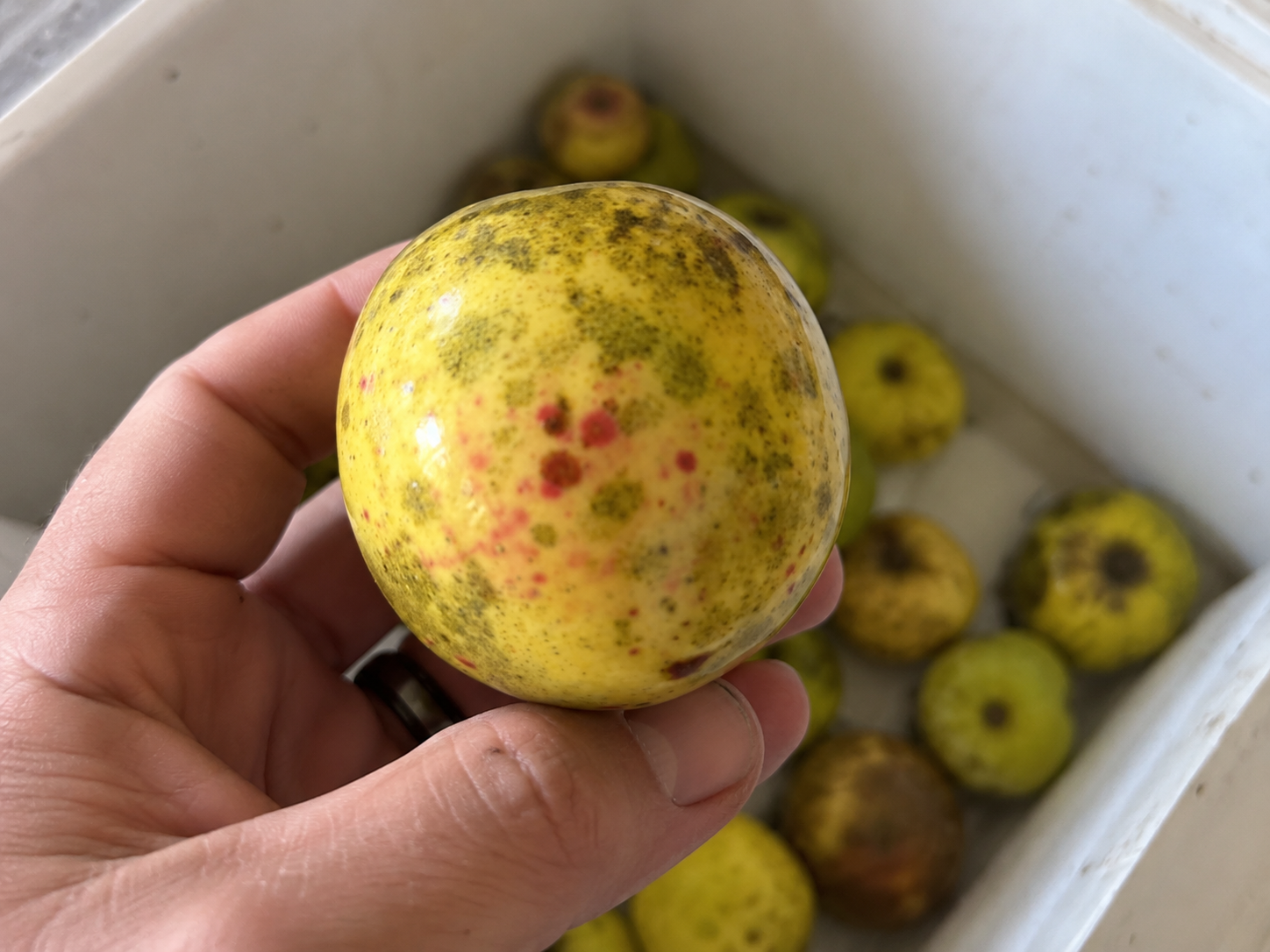
I ask myself questions like:
- Are the spots raised or flat?
- Is the fruit still firm?
- Are there holes from insects?
- Is the skin cracked?
- Do nearby apples look the same?
- Are the leaves showing problems too?
Those answers usually tell me much more than the color alone.
Insect Feeding Is One Possibility
One of the first things I look for is insect damage.
Several insects feed by piercing the skin of developing apples.
As the fruit continues growing, those tiny feeding wounds can become small red or reddish-brown spots.
Depending on the insect, you might also notice shallow dimples or tiny puncture marks.
If I see insects on the tree along with the spots, I start paying much closer attention.

Apple Scab Doesn’t Always Look the Same
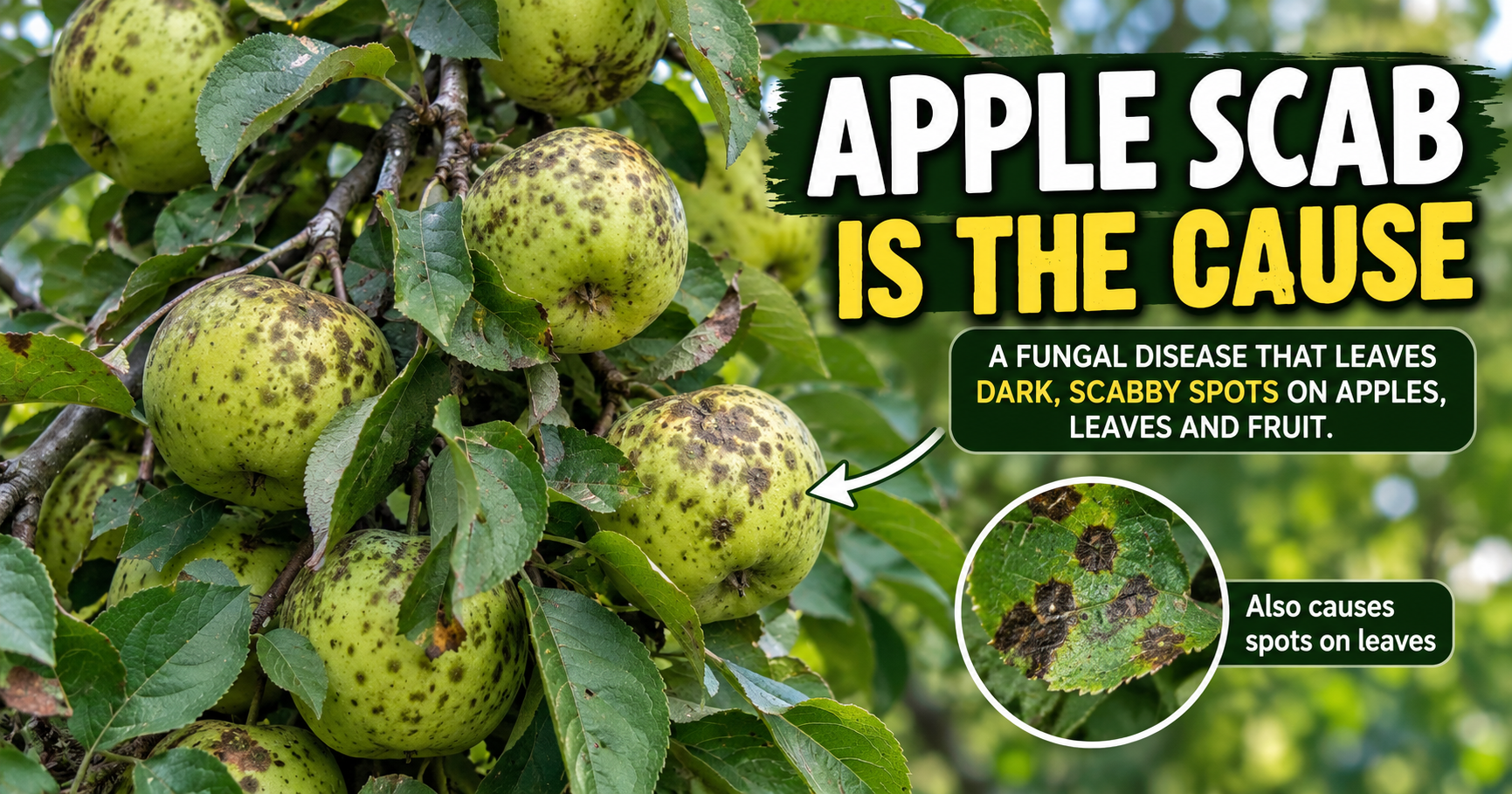
Many people picture apple scab as black, rough patches.
Sometimes that’s exactly what it looks like.
Other times, especially as the fruit matures or depending on the apple variety, the affected area may develop reddish or brown discoloration around the lesions.
That’s why I don’t diagnose apple scab from color alone.
I also look for rough, corky patches and check whether the leaves are showing similar symptoms.
If you’re already dealing with darker blemishes, you might also find What Are These Black Spots on My Apples? Common Causes Explained helpful because several different diseases can overlap in appearance.
Cedar Apple Rust Can Affect the Fruit Too
Most people associate cedar apple rust with bright orange spots on apple leaves.
What surprised me is that the disease can also affect the fruit.
On apples, cedar apple rust may produce small orange, reddish, or slightly sunken spots that become more noticeable as the fruit develops. The exact appearance varies depending on the apple variety and how severe the infection becomes. Cedar apple rust is especially common where apple trees grow near eastern red cedars or ornamental junipers, which the fungus uses to complete its life cycle. (extension.umn.edu)
Hail Damage Can Leave Lasting Marks
Weather doesn’t always leave obvious broken branches.
Sometimes the fruit tells the story.
Small hail can bruise young apples without knocking them from the tree.
As the fruit continues growing, those tiny injuries often become reddish, brown, or corky spots.
If I remember a hailstorm passing through earlier in the season, I always keep that possibility in mind.
Tiny Injuries Become More Noticeable
Apples continue expanding for months.
A tiny scratch from a branch, a thorn, or another apple rubbing against it may seem insignificant at first.
Later in the season, those little injuries become much easier to see.
One thing I’ve learned is that not every mark on an apple is caused by disease.
Sometimes it’s simply the result of growing outdoors through wind, storms, and changing weather.
Check the Leaves Too
Whenever I notice unusual fruit, I also spend a few minutes looking at the leaves.
If both the leaves and fruit show similar symptoms, that often points toward a disease rather than simple physical damage.
Healthy-looking leaves don’t automatically eliminate disease, but they definitely provide another clue.
Growing fruit has taught me that it’s usually better to examine the entire tree than focus on one apple.
Are the Apples Still Safe to Eat?
This is usually the question people care about most.
The answer depends on what’s causing the spots.
If the apple is still firm, smells fresh, and only has minor cosmetic blemishes, it’s often perfectly usable after peeling away the affected skin.
On the other hand, if the spots are accompanied by soft rot, mold, leaking juice, or a fermented smell, I don’t take chances.
When I’m uncertain, I simply cut the apple open.
The inside usually tells me much more than the outside.
Don’t Assume Every Spotted Apple Is Ruined
This is probably the biggest lesson I’ve learned.
When I first started growing fruit, I expected every apple to look like something from the grocery store.
Nature doesn’t work that way.
Some of the sweetest apples we’ve harvested have had minor blemishes on the skin.
A perfect-looking apple isn’t always the best-tasting one.
Likewise, an apple with a few spots isn’t automatically headed for the compost pile.
What I Usually Do
When I come across apples with small red spots, I don’t immediately throw them away.
Instead, I:
- Inspect the outside.
- Check nearby fruit and leaves.
- Cut one open.
- Smell the flesh.
- Decide based on the condition of the entire apple.
That simple routine has saved plenty of perfectly good fruit over the years.
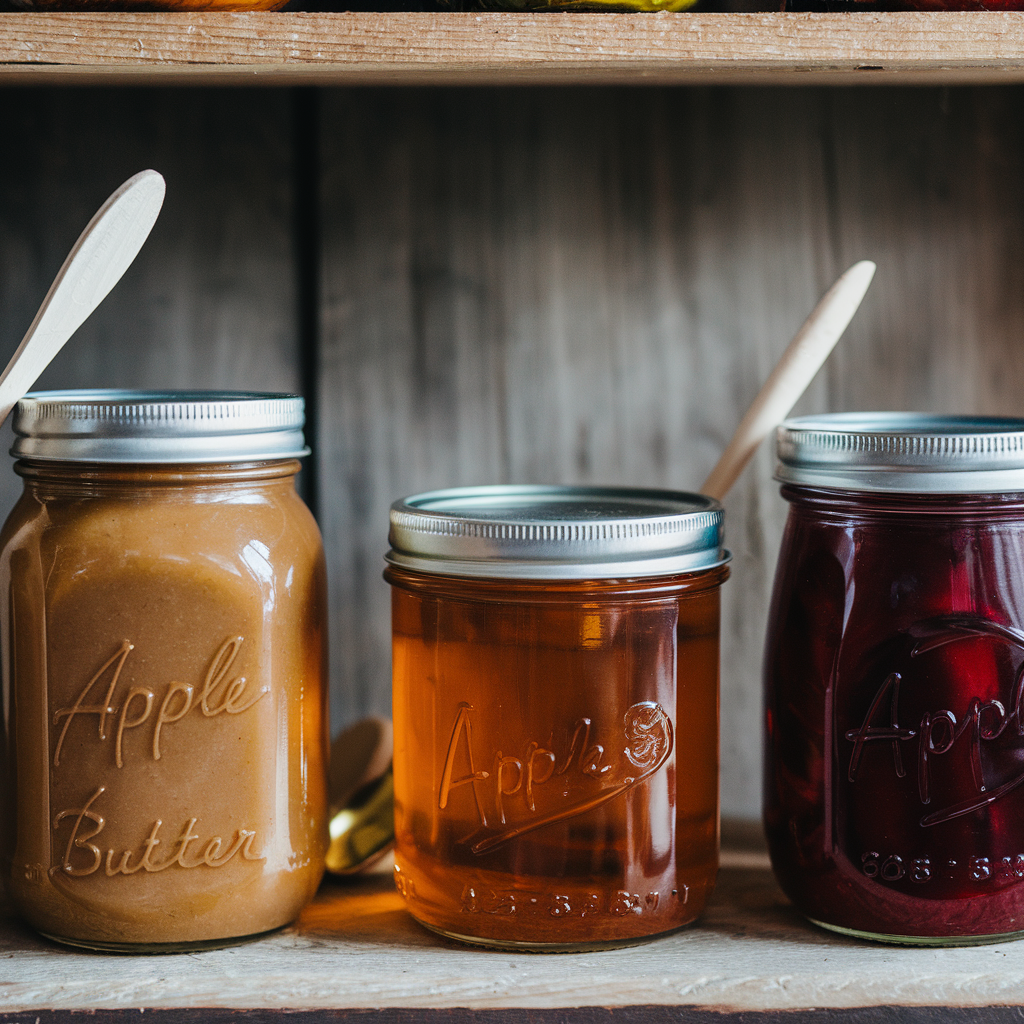
Can You Still Use Them for Apple Butter?
Many times, yes.
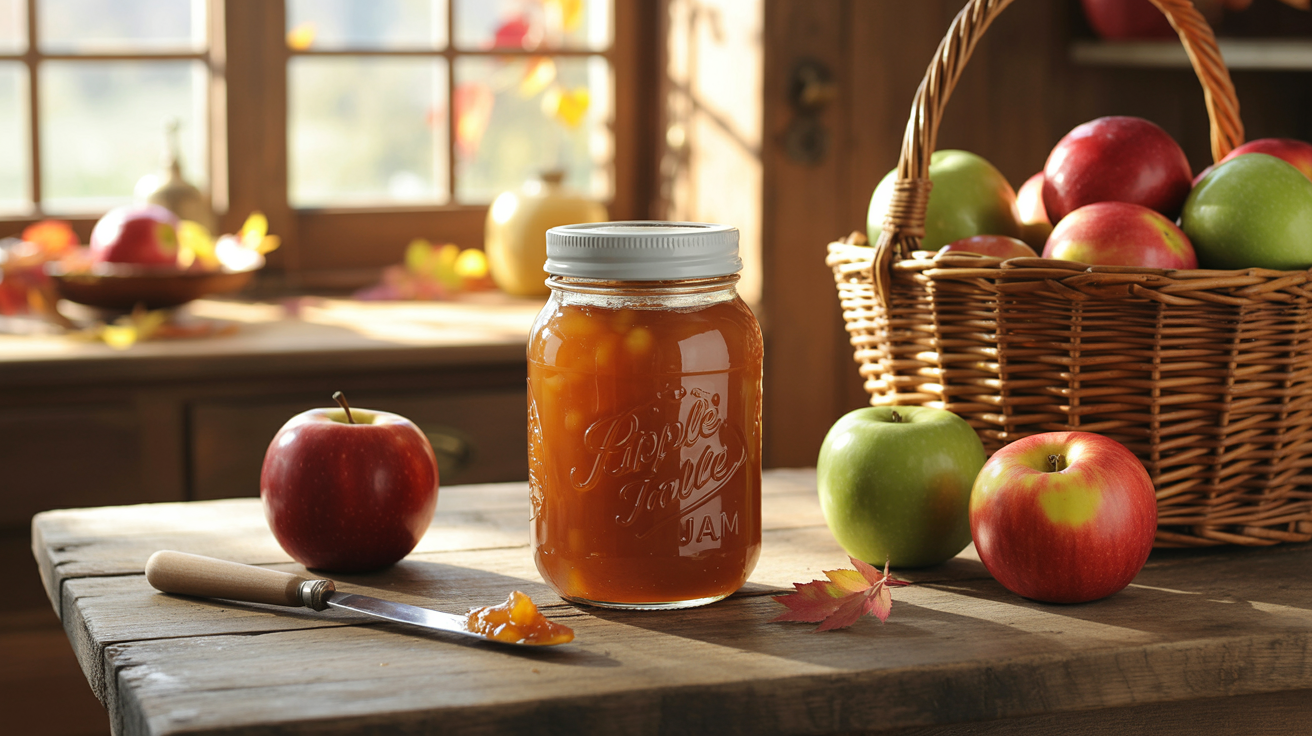
If the blemishes are only on the skin and the flesh underneath is healthy, those apples can still become applesauce, apple butter, pies, crisps, and many other recipes after trimming away any damaged areas.
That’s one reason I don’t let a few spots discourage me.
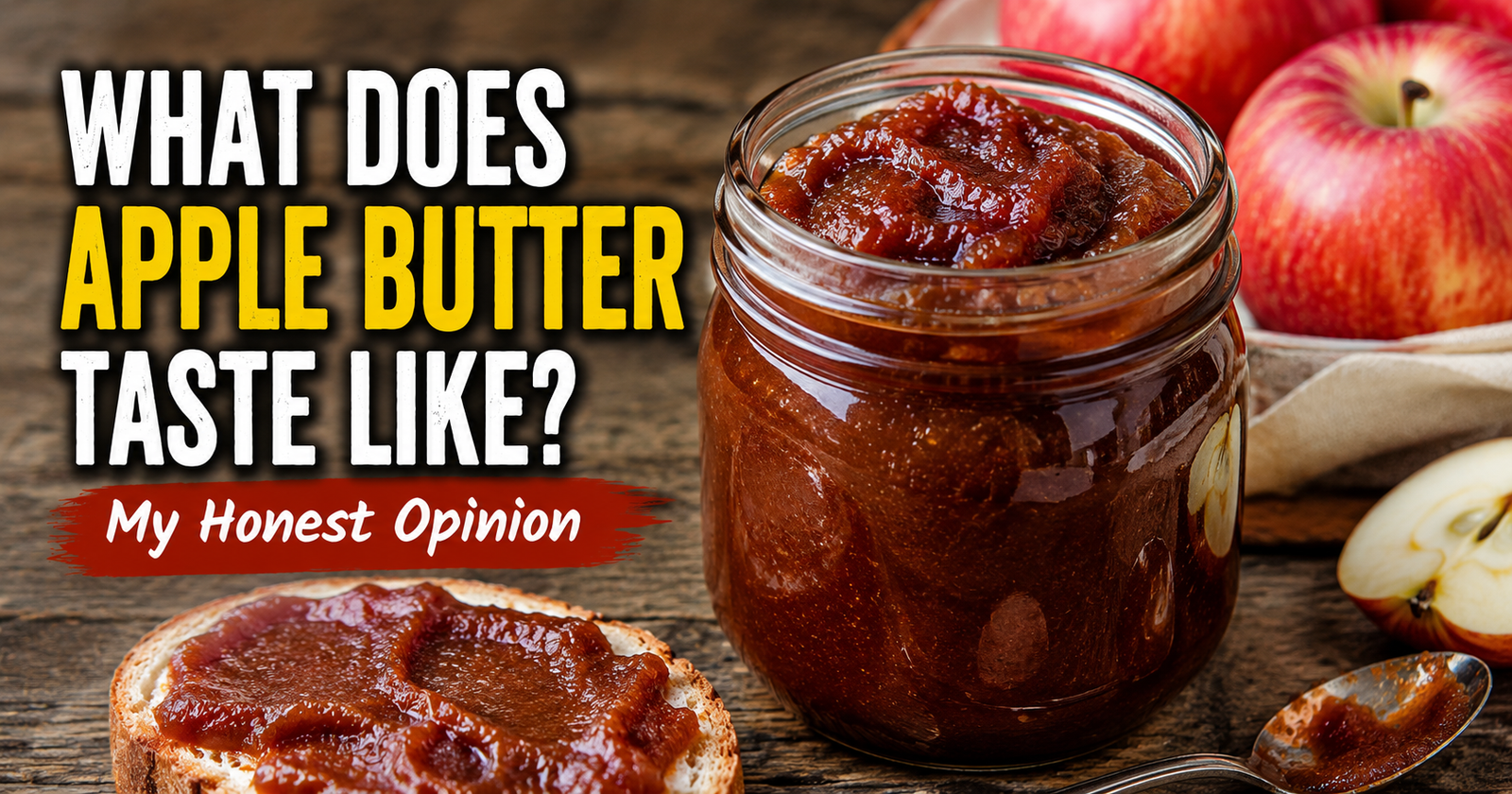
If you’re making homemade preserves, you may also enjoy What Does Apple Butter Taste Like? My Honest Opinionor Best Apples for Apple Butter: 15 Varieties Ranked for Flavor.
My Honest Opinion
The apple in the photo above reminded me of something that’s true for almost everything we grow.
Appearances only tell part of the story.
Before I decide whether an apple is good or bad, I always look a little closer.
Sometimes the spots point toward a disease that needs attention.
Other times they’re nothing more than cosmetic blemishes that never affect the fruit inside.
Growing apples has taught me to slow down, investigate before making assumptions, and remember that some of the best fruit in the orchard doesn’t always look picture-perfect.
About the Author
Daxon Weaver is the owner of Weaver Family Farms Produce, where he shares firsthand experiences growing apples, pawpaws, Honey Jar and Sugar Cane jujubes, peaches, pears, berries, black walnuts, and other homegrown foods on his family’s Zone 6a Missouri farm.