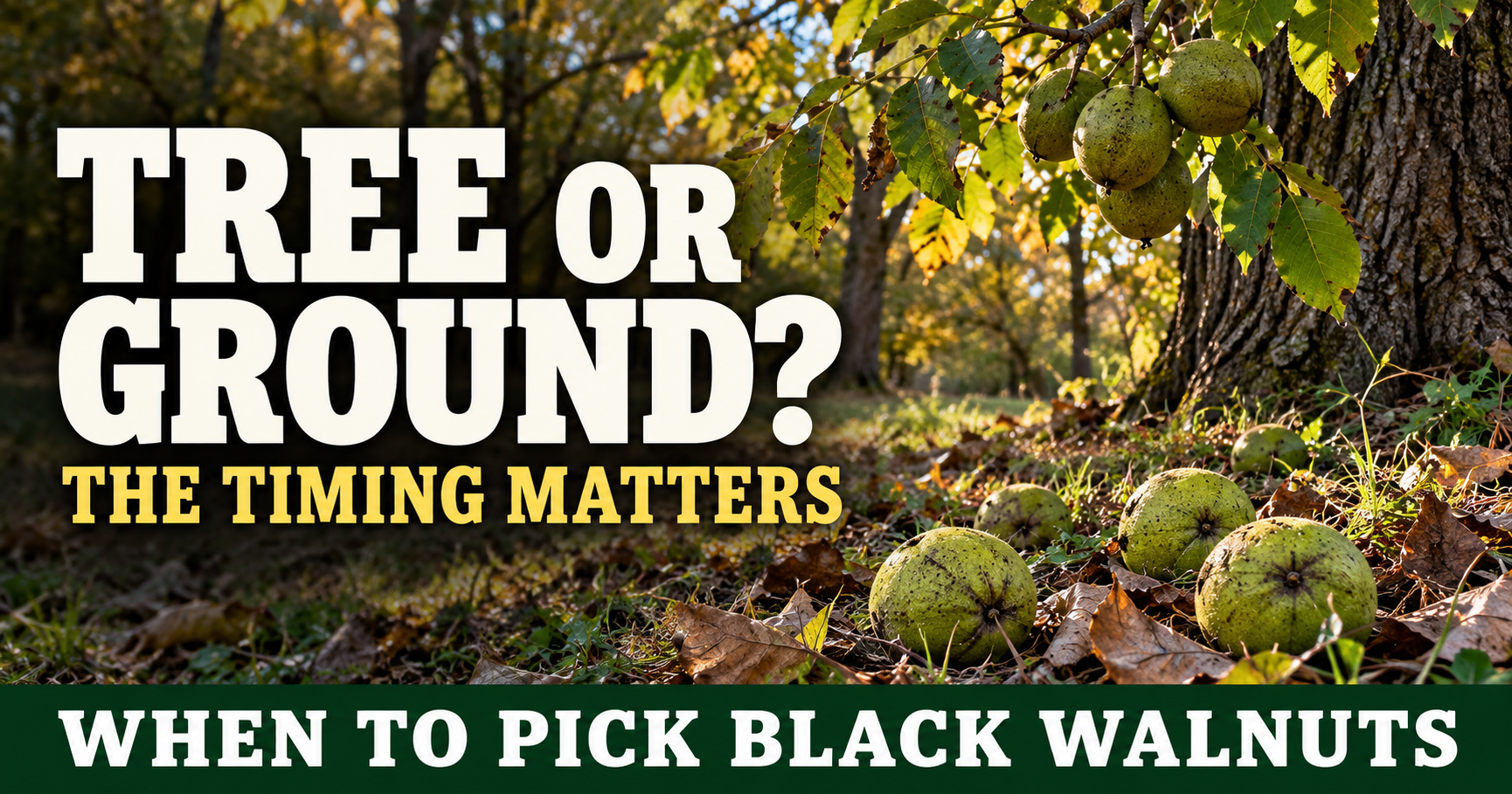
One of the first questions I had after paying more attention to the black walnut trees around our farm was surprisingly simple.
Should I pick the walnuts while they’re still hanging on the tree, or should I wait for them to fall?
At first, I assumed picking them from the tree would always be better.
After all, apples are usually picked.
Peaches are picked.
Pears are picked.
Black walnuts turned out to be different.
Over time, I realized the tree usually does a pretty good job of telling me when the nuts are ready.
Now, instead of trying to beat nature, I pay attention to what the tree is doing.
If you’re harvesting black walnuts for the first time, here’s what I’ve learned from watching the trees on our Missouri farm.
I Usually Let the Tree Decide
These days, I rarely pick black walnuts directly from the tree.
Instead, I wait until they begin falling naturally.
A healthy black walnut tree has spent months developing those nuts.
When they’re mature, the tree eventually starts letting them go.
That’s usually my signal that harvest season has arrived.
Walking beneath the trees after a windy day is often much more productive than trying to reach high branches with a pole or ladder.
Why I Don’t Rush the Harvest
One mistake I could easily see someone making is harvesting too early simply because the walnuts look large enough.
Appearance can be misleading.
The green hull may look fully developed while the nut inside is still maturing.
Leaving the walnuts on the tree a little longer gives them more time to fully develop before harvest.
Patience almost always pays off.

A Windy Day Can Save a Lot of Work
One thing I’ve learned is that Mother Nature is often the best helper during black walnut season.
After a good breeze or a passing storm, I’ll usually find fresh walnuts scattered beneath the trees.
Instead of shaking branches or climbing ladders, I simply walk the area and gather what’s already fallen.
It’s quicker.
It’s easier.
And I don’t have to worry about damaging branches.
I Don’t Leave Them on the Ground for Long
Even though I prefer letting the walnuts fall naturally, I don’t leave them sitting there for weeks.
Black walnut hulls hold moisture.
If they remain on wet ground too long, they begin breaking down.
Squirrels, insects, and other wildlife also discover them pretty quickly.
Whenever possible, I like collecting fallen walnuts every day or two during peak harvest.
That keeps the hulls in better condition and gives wildlife less opportunity to carry them away.
Green Hulls Don’t Always Mean They’re Ready
This confused me the first time I harvested black walnuts.
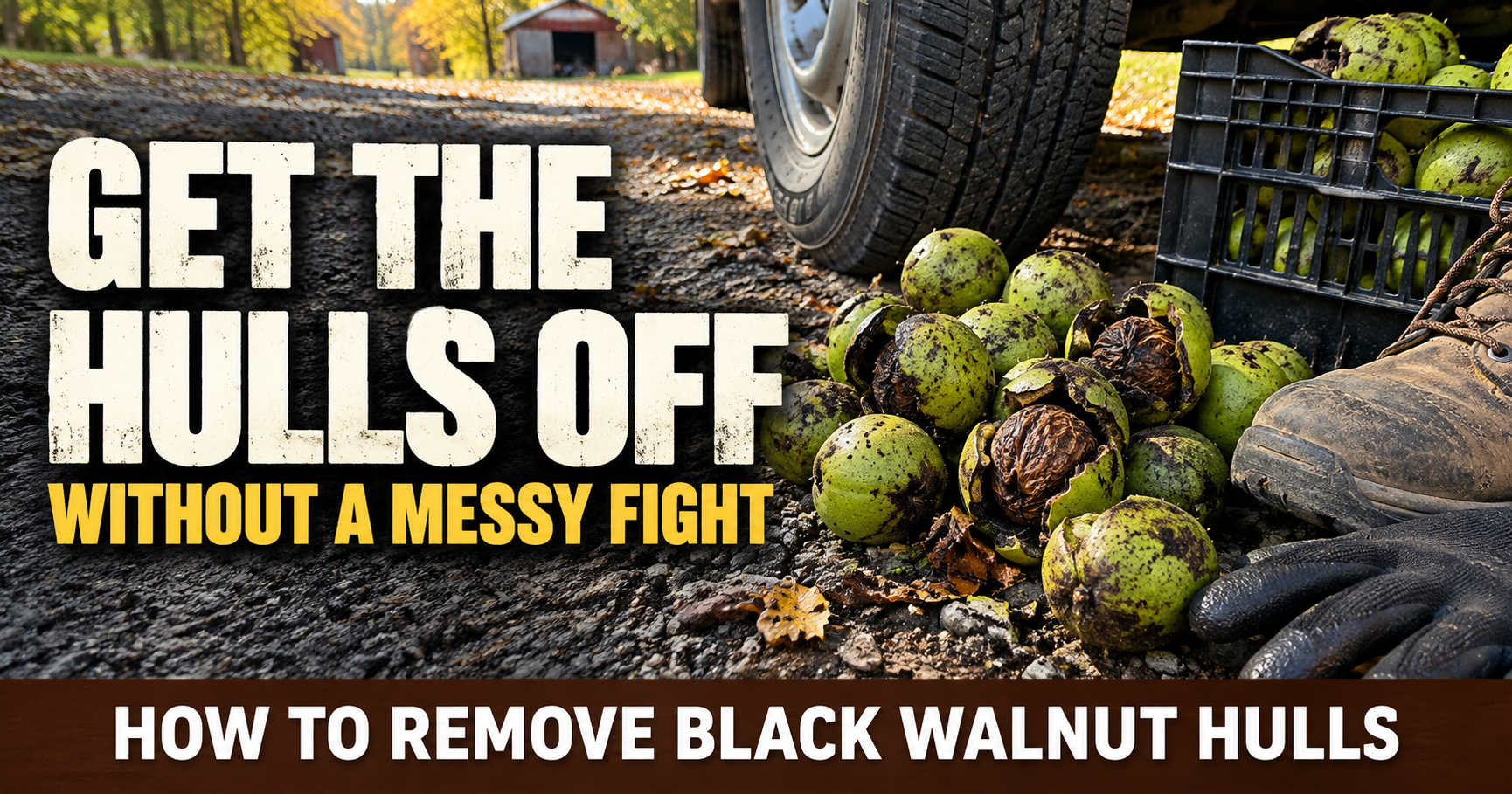
Even after falling from the tree, many walnuts still have bright green hulls. Once they're gathered, the next step is removing fresh black walnut hulls, while the hulls are still fresh.
That’s perfectly normal.
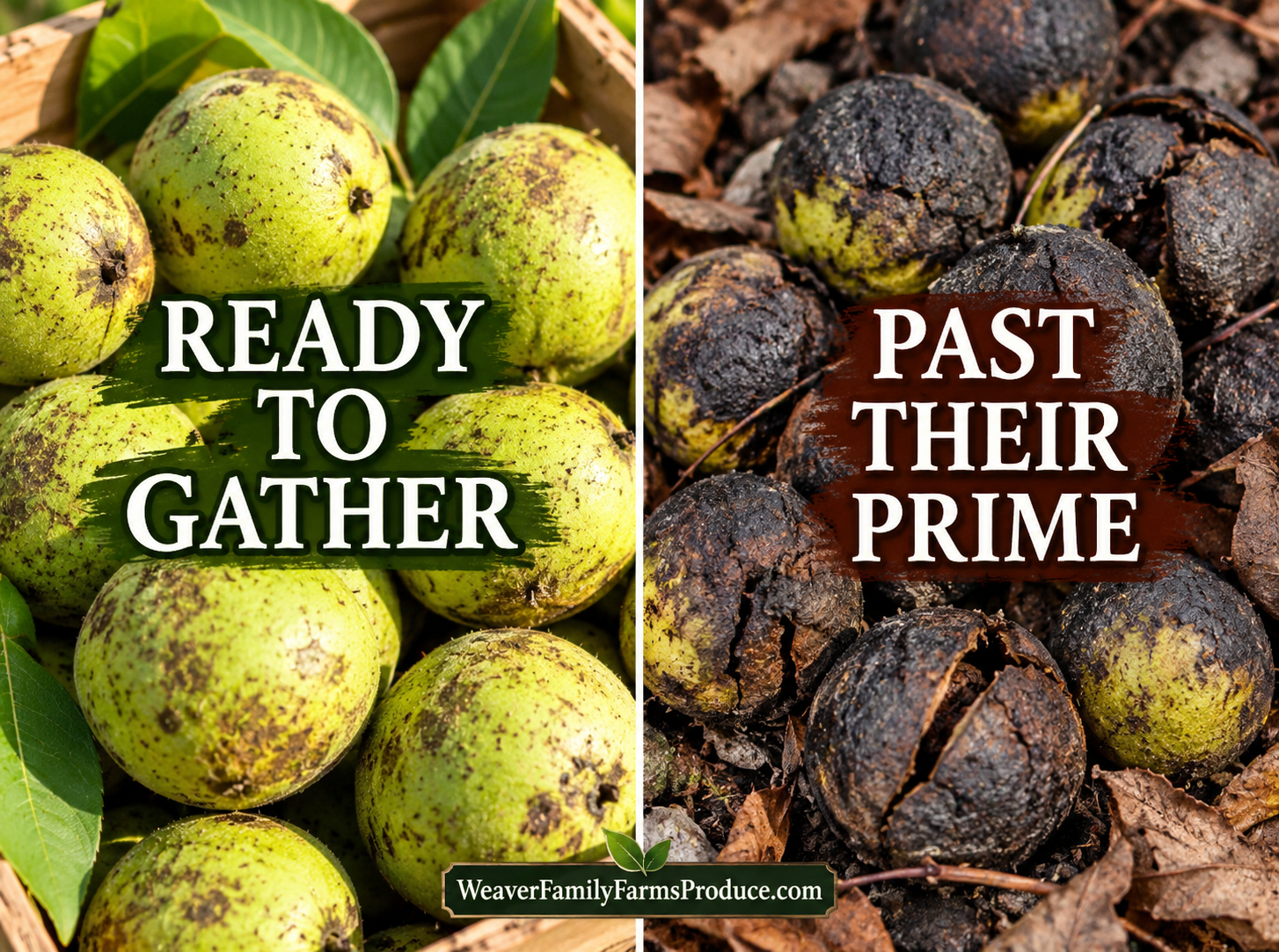
Unlike many fruits, black walnuts don’t need the hull to turn black before harvesting.
In fact, waiting for every hull to become completely black often makes processing much messier.
The important part is whether the nut has naturally reached maturity, not whether the outside has changed color.
Should You Ever Pick Them From the Tree?
Sometimes.
If severe storms are forecast or you notice mature walnuts beginning to loosen naturally, it may make sense to harvest a few directly from lower branches.
I just don’t make that my normal routine.
For me, the easiest harvest has almost always come from gathering fresh walnuts that recently dropped on their own.
How I Know Harvest Has Started
Instead of watching the calendar, I watch the tree.
When I begin finding several fresh walnuts beneath it, I know harvest season has begun.
From that point on, I check beneath the tree regularly.
Some days there are only a handful.
Other days there are dozens.
Every season is a little different, but the tree does a pretty good job letting me know when it’s ready.
What About Squirrels?
They’re probably my biggest competition.
If you’ve ever grown black walnuts, you already know squirrels seem to have an incredible sense for when the nuts are ready.
Sometimes they’ll beat me to the best ones.
That’s another reason I don’t like leaving freshly fallen walnuts on the ground very long.
The longer they sit there, the better the chance something else will decide they’re dinner.
Don’t Judge Every Walnut by the Hull
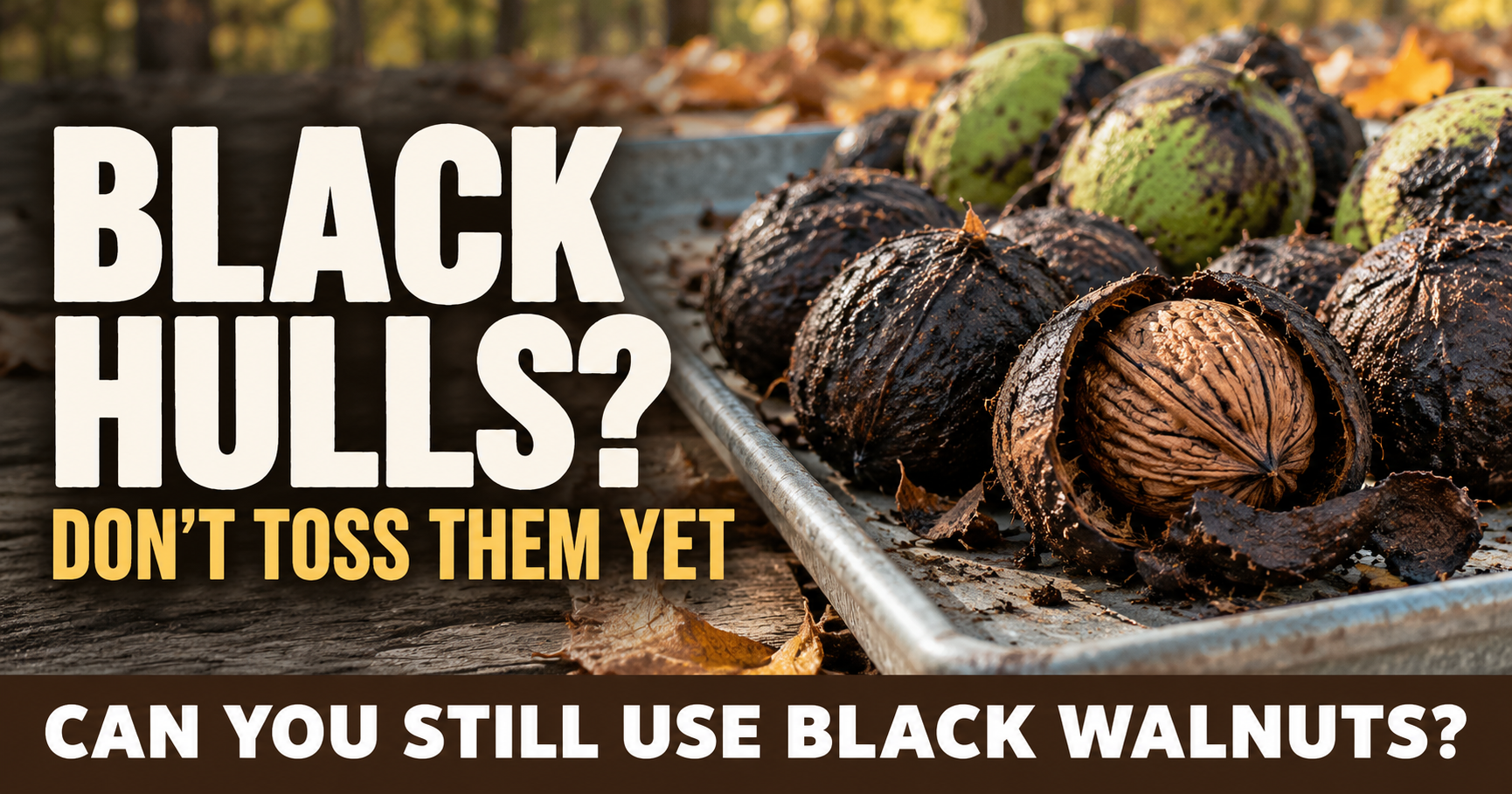
One thing I’ve learned is that the hull doesn’t always tell the whole story. That question is worth exploring further when deciding whether black hulls mean bad walnuts.
I’ve picked up walnuts with beautiful green hulls that weren’t worth saving.
I’ve also found walnuts with slightly blemished hulls that contained perfectly healthy nuts.
That’s why I don’t throw walnuts away based only on appearance.
I process them first and let the nut itself make the final decision.
My Harvest Routine
When black walnut season arrives, I keep things pretty simple.
I’ll walk beneath the trees every couple of days carrying a bucket.
I gather the freshly fallen walnuts that still look healthy.
Once I’ve collected enough, I begin removing the hulls while they’re still relatively fresh.
I’ve found that’s much easier than letting them sit for too long.
I’ll be sharing exactly how I remove black walnut hulls in another article because it’s one of the messiest parts of the entire process.
Every Tree Is a Little Different
One thing farming has taught me is not to expect every tree to follow the exact same schedule.
Some black walnut trees seem eager to start dropping nuts.
Others take a little longer.
Weather also plays a role.
Hot summers.
Dry spells.
Heavy rain.
Strong winds.
All of those can influence when the harvest begins.
Instead of chasing a specific date, I let the tree tell me when it’s ready.
My Honest Opinion
If someone asked me whether they should pick black walnuts from the tree or the ground, my answer would be simple.
Most of the time, I’d let the tree make that decision.
A naturally fallen walnut is often the tree’s way of saying it’s ready.
That approach has made harvest easier, saved me time, and taken a lot of the guesswork out of knowing when to begin collecting nuts.
Growing food has taught me that nature usually has pretty good timing.
Black walnuts have reminded me of that every single fall.
About the Author
Daxon Weaver is the owner of Weaver Family Farms Produce, where he shares firsthand experiences growing fruit, harvesting nuts, preserving seasonal harvests, and helping others enjoy homegrown food on his family’s Zone 6a Missouri farm.