
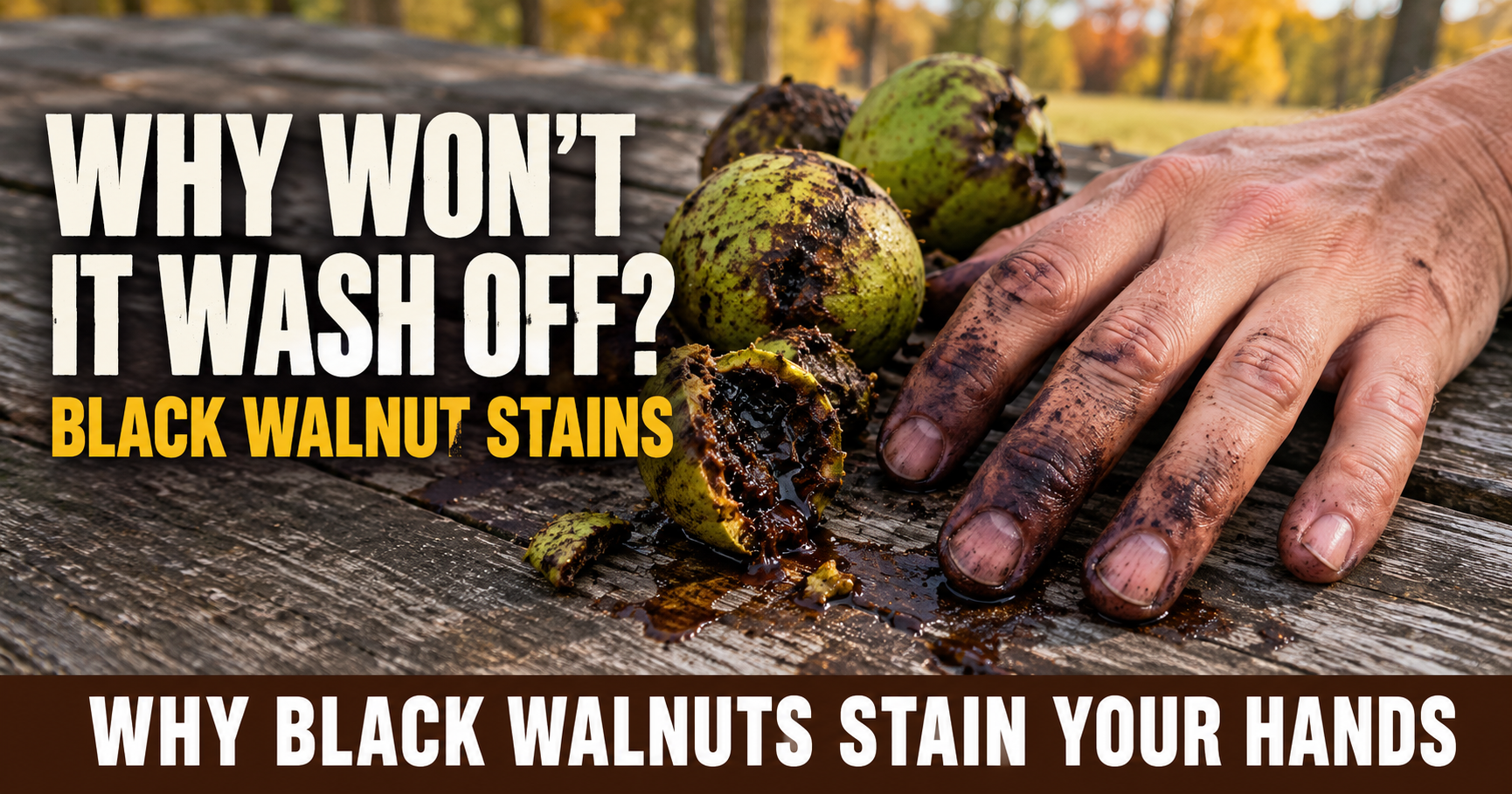
The first time I handled fresh black walnuts without gloves, I figured I’d end up a little dirty.
I wasn’t expecting my hands to stay stained for days.
At first, the juice looked like nothing more than a little yellowish-green liquid from the hull.
Then, as time passed, my fingers gradually turned dark brown.
By the end of the day, they looked like I’d been working with wood stain instead of harvesting walnuts.
If you’ve had the same experience, you’re definitely not the first.
Black walnut hulls are famous for leaving stubborn stains, and once you’ve harvested them once, it’s a lesson you probably won’t forget.
It’s the Hull, Not the Nut
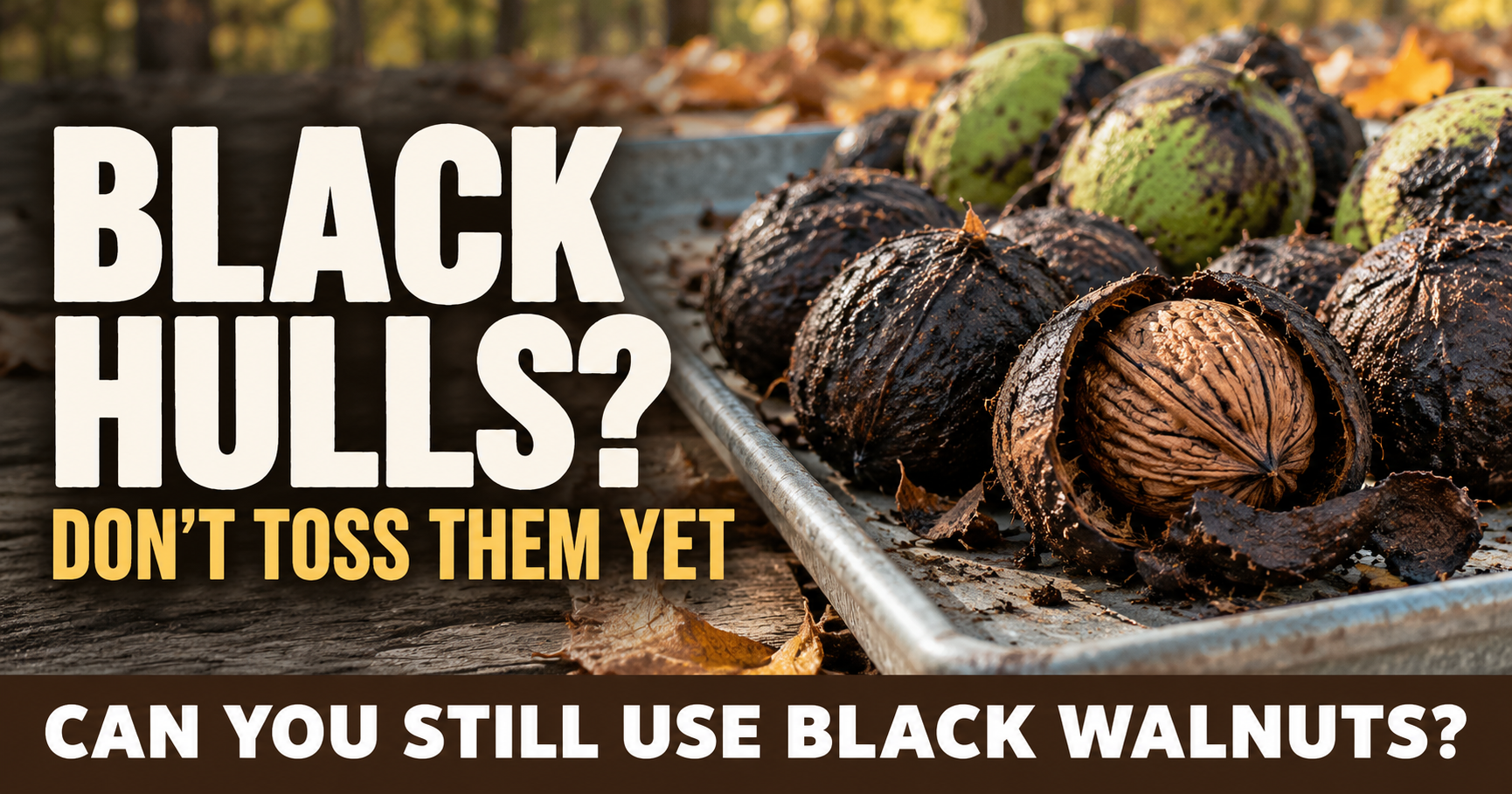
One thing that surprised me is that the stain doesn’t come from the hard shell or the walnut itself.
It comes from the thick outer hull.
While the hull is green, it contains a natural compound called juglone.
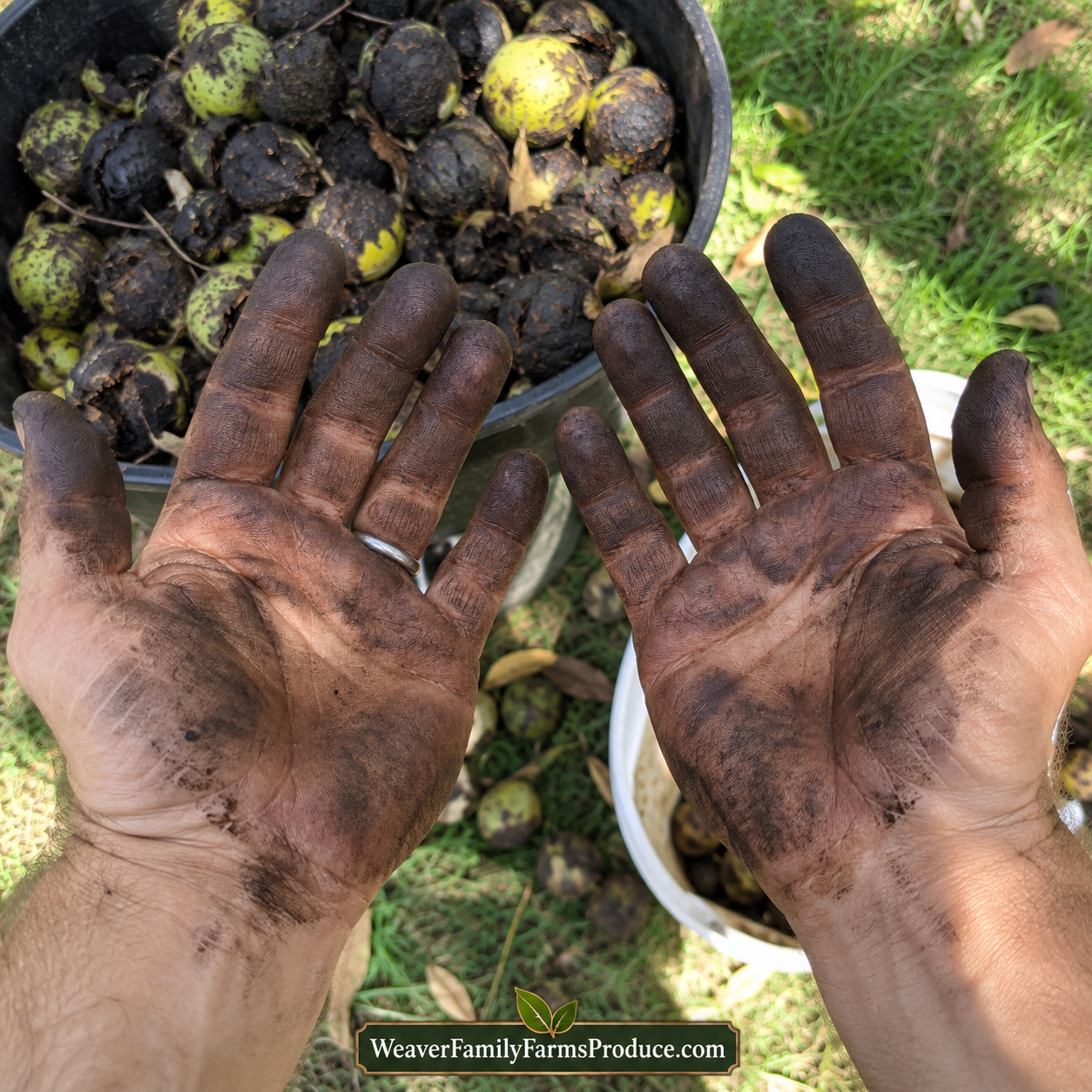
When the hull is crushed, cut, or begins breaking down, juglone reacts with oxygen and can permanently stain clothing and temporarily stain skin.
That’s why your hands may not darken immediately.
The stain often develops over the next several hours.
The Stain Doesn’t Wash Off Like Dirt
This isn’t ordinary mud.
Juglone actually bonds with proteins in the outer layer of your skin in a way that’s similar to how henna stains skin. That’s why soap and water remove the surface residue but usually don’t erase the color once it develops.
The good news is that the stain isn’t permanent.
The bad news is that it usually has to wear away naturally as your skin sheds.
Some People Notice More Than Stains
For many people, the only issue is brown hands.
Others develop skin irritation, itching, or even blistering after prolonged contact with fresh black walnut hulls because juglone can be an irritant.
If you know your skin is sensitive, gloves are well worth wearing.
Gloves Save a Lot of Scrubbing
I learned this lesson quickly.
Now, whenever I’m removing black walnut hulls, I wear gloves before I even pick up the first walnut.
It’s much easier to prevent the stain than try to remove it afterward.
If the gloves get stained, that’s a lot better than my hands.

Don’t Forget About Your Clothes
Hands aren’t the only thing black walnuts stain.
Hull juice can permanently stain:
- Clothing.
- Shoes.
- Concrete.
- Wood.
- Driveways.
- Decks.
I’ve learned to wear old clothes whenever I’m processing black walnuts because splashes happen whether I plan for them or not.
Can You Remove the Stains?
The sooner you wash after handling fresh hulls, the better.
Once the stain develops, though, there’s no magic cleaner that instantly removes it.
I’ve heard people recommend everything from lemon juice to baking soda.
In my experience, time works better than almost anything else.
The stain gradually fades as your skin naturally sheds over the following weeks.
Don’t Let the Stains Scare You Away
The first time your hands turn brown, it can be a little alarming.
Mine certainly were.
Now I almost expect it every black walnut season.
It’s simply part of harvesting one of the most unique nuts growing on our property.
A good pair of gloves usually solves the problem before it starts.
My Honest Opinion
If someone asked me the biggest surprise about harvesting black walnuts, I’d probably say it wasn’t the hard shells.
It was the stains.
They’re memorable.
They’re messy.
And they seem to appear almost by magic a few hours after you’ve finished working.
Now I know exactly why it happens, and I don’t worry about it anymore.
I simply grab my gloves before heading out to gather another bucket of walnuts.
About the Author
Daxon Weaver is the owner of Weaver Family Farms Produce, where he shares firsthand experiences harvesting black walnuts, growing fruit, and helping others enjoy homegrown food on his family’s Zone 6a Missouri farm.