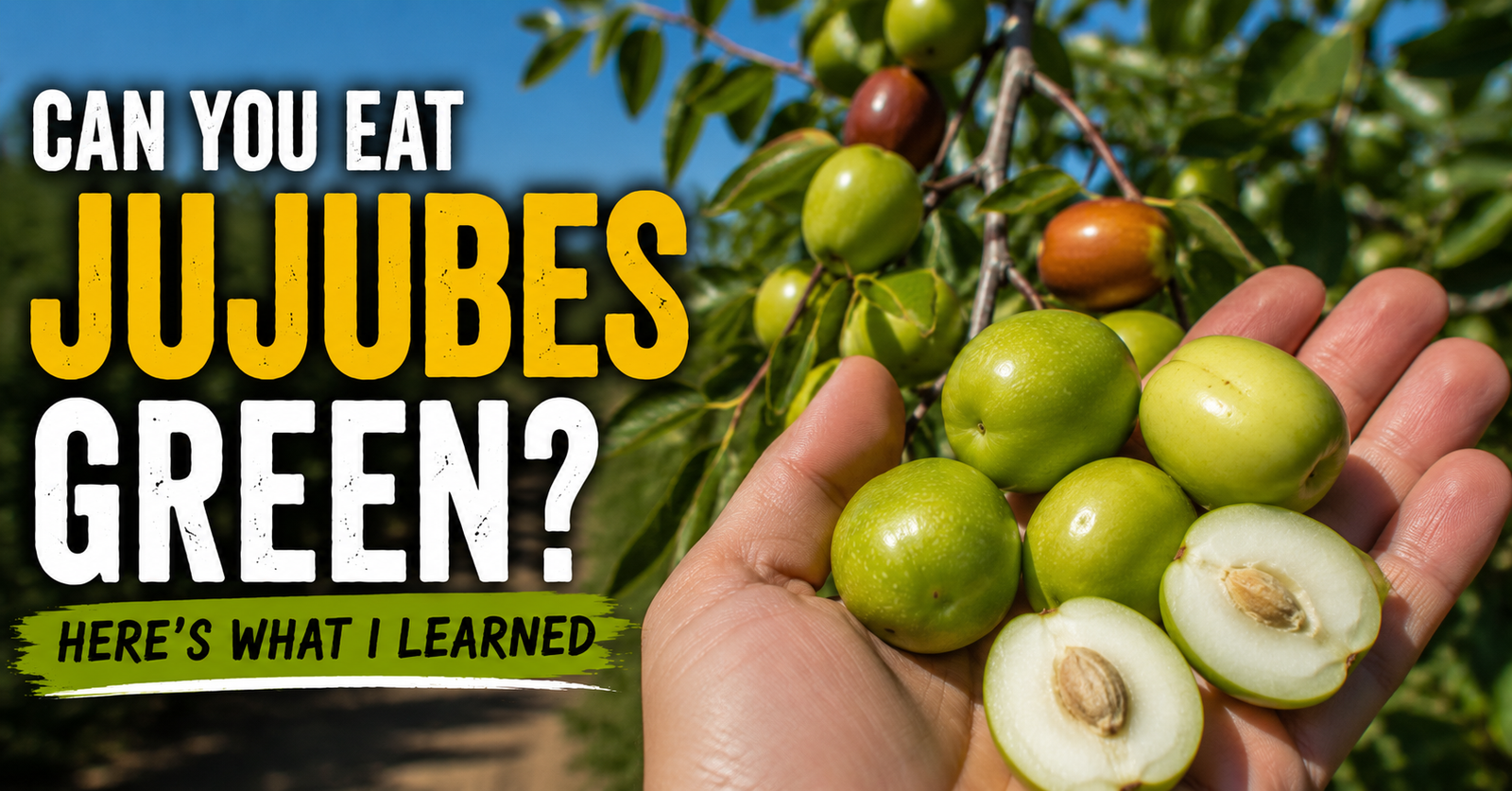
One of the most common questions I hear from people growing jujube trees for the first time is whether the fruit is safe to eat while it’s still green.
The answer is yes.
Green jujubes are perfectly safe to eat.
The bigger question isn’t whether you can eat them.
It’s whether you’ll actually enjoy them.
After growing jujubes here on our family farm for several seasons, I’ve tasted them at just about every stage imaginable. Bright green. Half brown. Mostly brown. Fully brown. Even those that have started wrinkling while still hanging on the tree.
I’ve found that every stage has its own flavor, but if I’m being honest, green is my least favorite.
If you’re completely new to this unique fruit, I’d recommend starting with What Is a Jujube Fruit and What Does It Taste Like? before reading further. It explains why jujubes surprise almost everyone who tries one for the first time.
Yes, They’re Safe to Eat
One thing that surprises many first-time growers is how early jujubes reach their full size.
You’ll often see large green fruit hanging on the tree weeks before they’re fully ripe. For a useful comparison, the guide to picking green tomatoes explains how growers judge mature-green fruit and decide when to pick it.
Naturally, that makes people wonder if they’re ready.
Unlike some fruits that shouldn’t be eaten before they’re mature, green jujubes are completely edible.
I still pick one or two every season just to see how they’re progressing.
What Do Green Jujubes Taste Like?
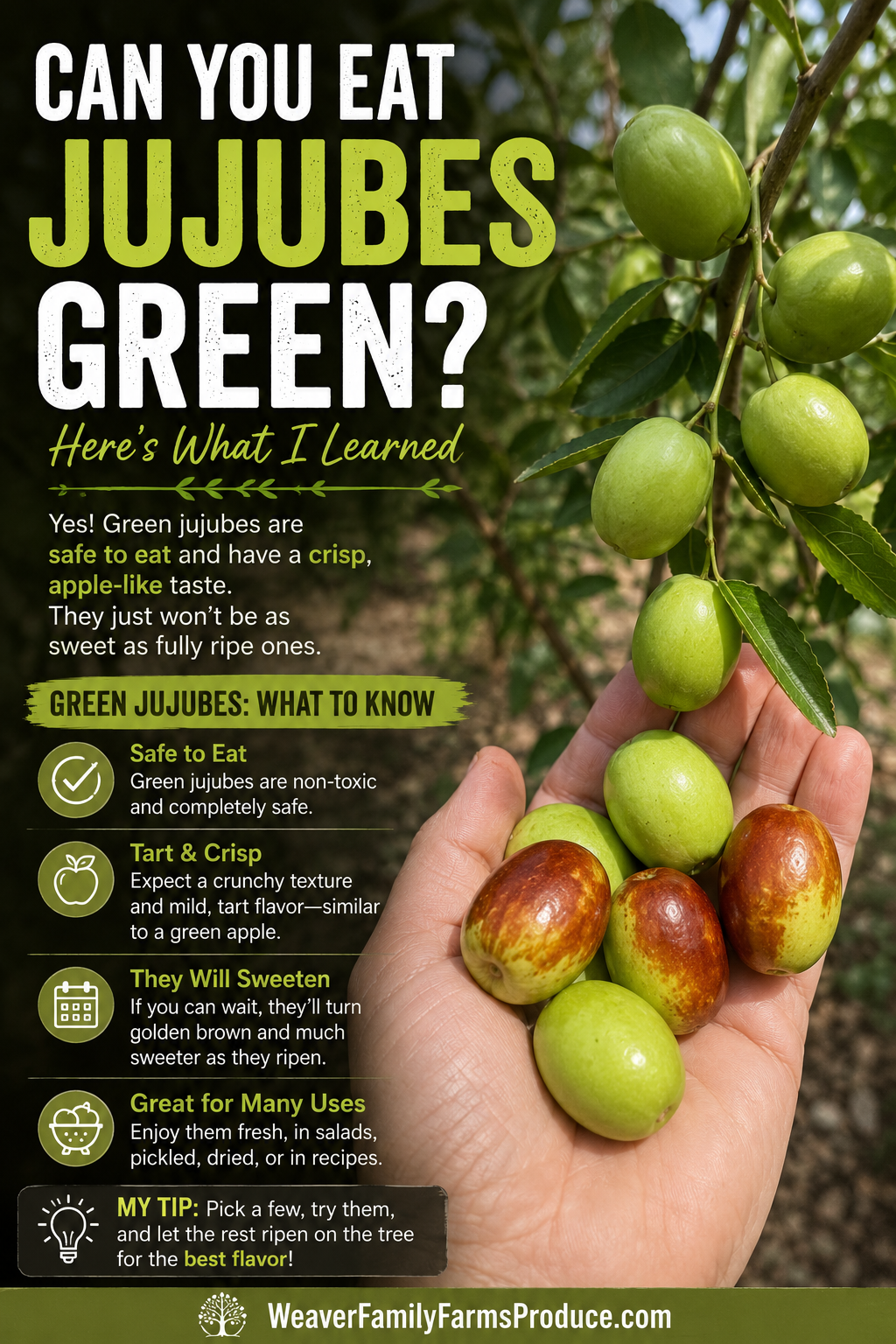
If I had to compare a green jujube to something most people have eaten before, I’d say it’s very similar to a crisp apple.
The texture is firm.
The flesh is crunchy.
The sweetness is there, but it’s fairly mild.
There’s also a little tartness that disappears as the fruit continues ripening.
It’s refreshing, but I wouldn’t describe it as the best stage.
For me, green jujubes taste more like they’re full of potential than fully developed.
Why I Usually Leave Them on the Tree
Whenever I taste a green jujube, I remind myself why patience pays off.
Every few days the fruit changes.
The sugars continue developing.
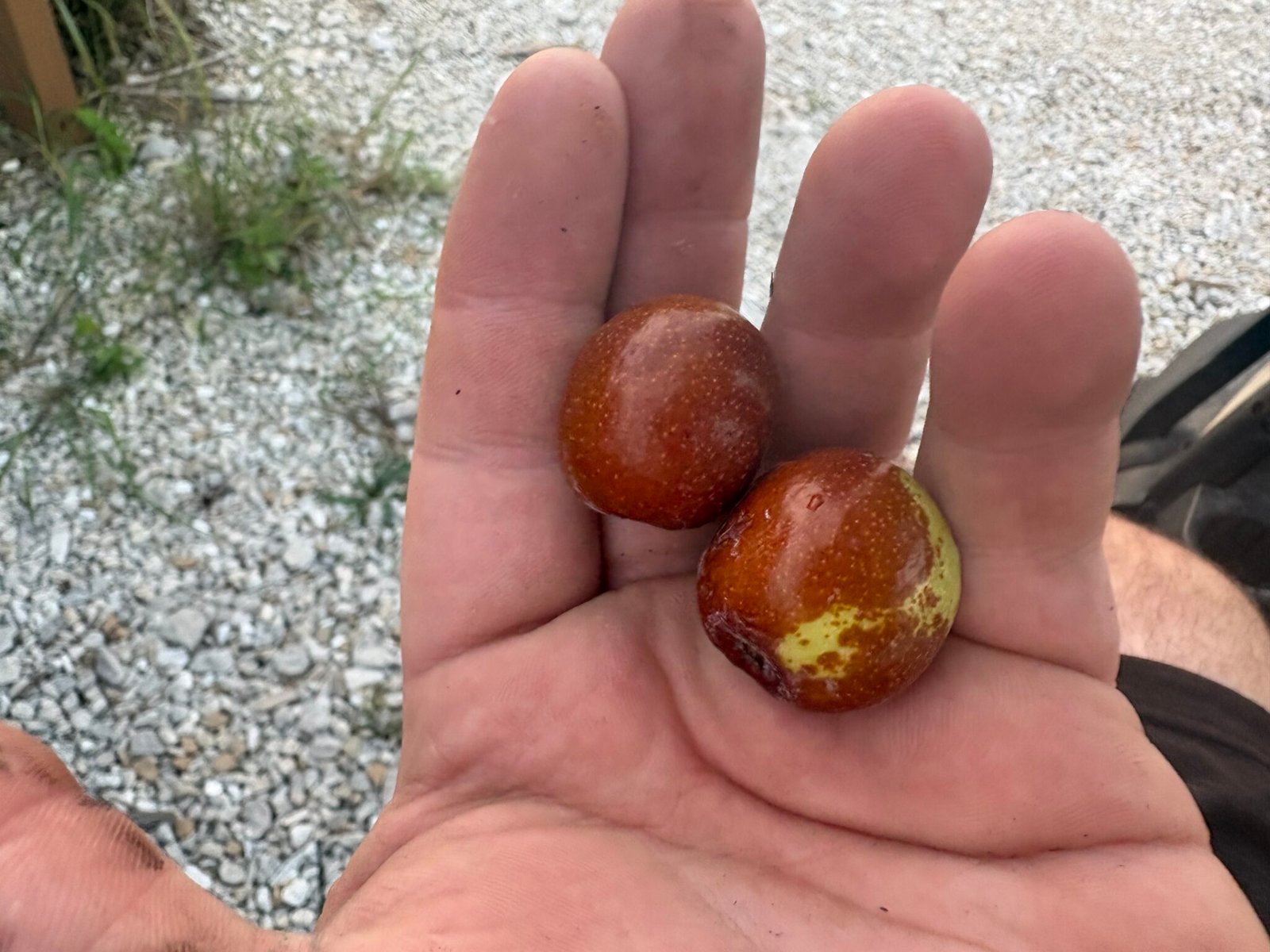
The skin slowly begins turning brown.
The flavor becomes richer.
By the time the fruit reaches the stage I enjoy most, it hardly tastes like the same fruit I picked a week earlier.
That’s why I rarely harvest green jujubes unless I’m simply checking how the crop is progressing.
If you’re wondering exactly when I think they’re ready, be sure to read How Do You Know When a Jujube Is Ripe? Signs It’s Ready. I walk through every ripening stage using examples from the fruit growing here on our farm.
Watching the Flavor Develop Is Part of the Fun
One thing I enjoy about growing jujubes is that you don’t have to guess which stage you’ll like best.
Taste them yourself.
Pick one while it’s green.
Leave another until it’s half brown.
Wait for another to become mostly brown.
Then let one stay on the tree long enough to wrinkle slightly.
That’s exactly how I figured out my own favorite.
It also made me appreciate how unusual jujubes really are.
Most fruit has a fairly small harvest window.
Jujubes give you several completely different eating experiences from the same tree.

My Favorite Stage
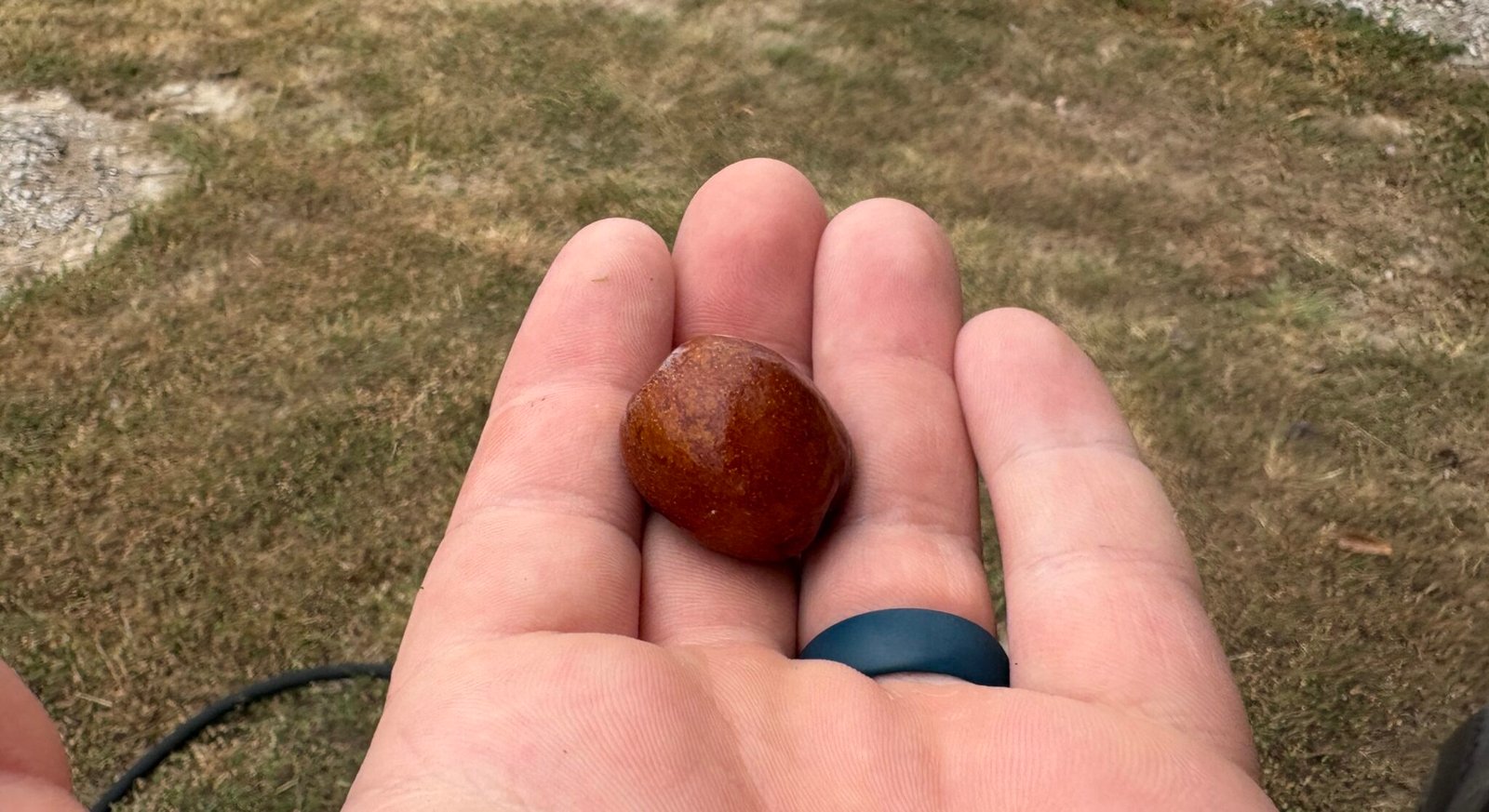
If I could only eat jujubes at one stage, I’d wait until they’re mostly brown and just beginning to soften.
That’s when I think the flavor becomes something special.
The apple-like taste is still there.
But now I also notice hints of dates, caramel, and even a little molasses.
That’s the stage I look forward to every year.
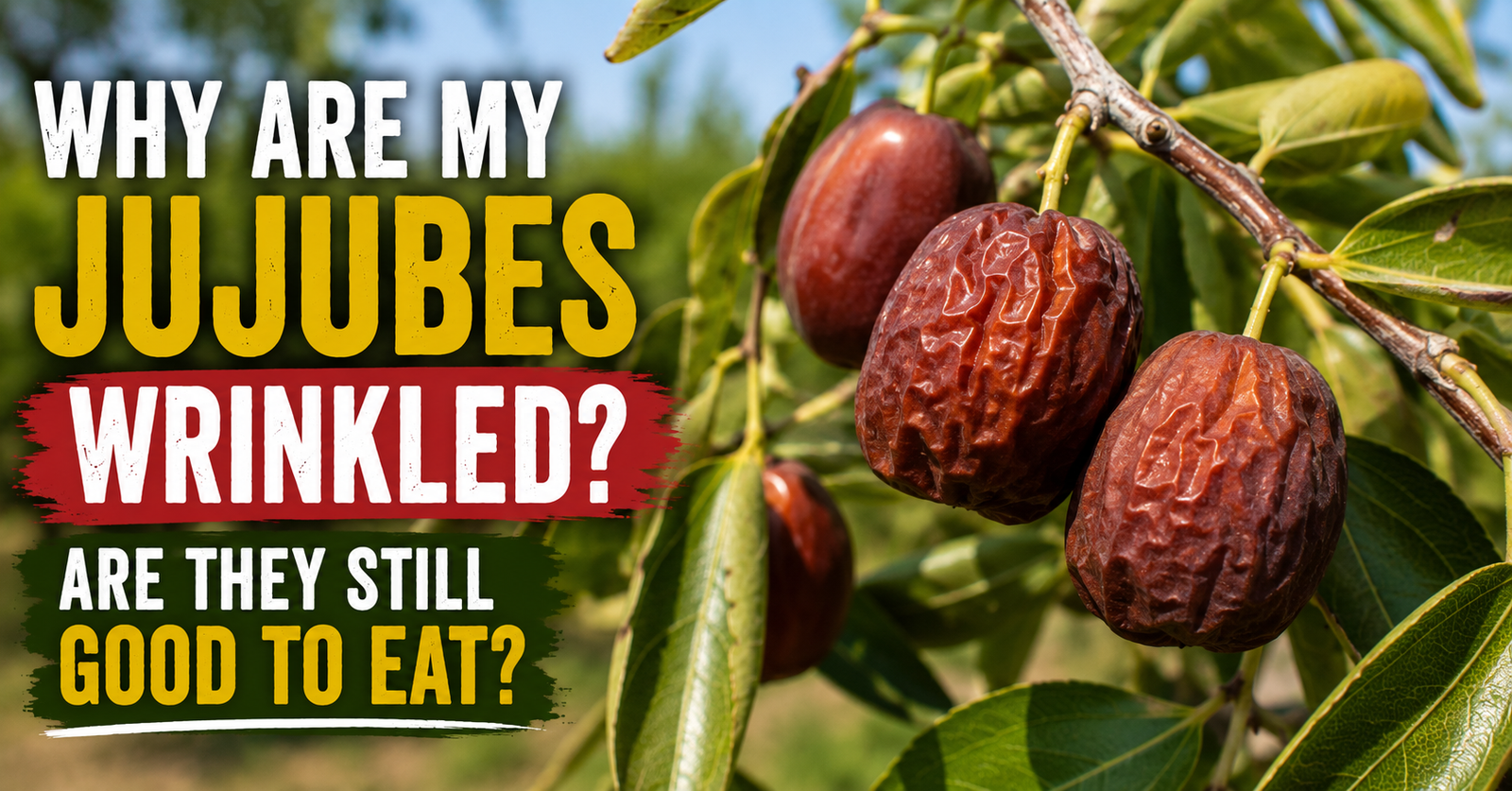
If you’ve ever wondered why some jujubes wrinkle while hanging on the tree, don’t assume they’re ruined. In fact, I actually explain why I often reach for those first in Why Are My Jujubes Wrinkled? Are They Still Good to Eat?.
Green Doesn’t Mean It’s Time to Harvest Everything
One mistake I see people make is picking every fruit as soon as they notice one turning color.
Instead, I harvest our tree a little at a time.
Every few days I’ll walk out, look through the branches, and pick only the fruit that’s reached the stage I want.
That lets the remaining jujubes continue developing even more sweetness.
It also stretches the harvest across several weeks, which is one of the things I enjoy most about growing them.
If You’re Growing Jujubes for the First Time
Don’t be afraid to experiment.
That’s honestly the best advice I can give.
Taste one green.
Taste another when it’s half brown.
Taste another after it’s fully brown.
Then leave a couple until they wrinkle slightly.
You may end up with a favorite stage that’s completely different from mine.
That’s part of what makes growing your own fruit so enjoyable.
As we continue harvesting fruit here on our farm, I’ll keep sharing what we’re learning about jujubes, unusual fruit, and the little things that make each harvest unique.
If you’d like to explore more of our fruit-growing articles, take a look around Weaver Family Farms Produce where I share firsthand experiences from our orchard and garden throughout the growing season.
Do Green Jujubes Ripen After You Pick Them?
This is a question I had myself when we first started growing jujubes.
With some fruits, you can pick them a little early and let them finish ripening on the kitchen counter.
Jujubes don’t really work that way.
From what I’ve experienced, they don’t improve nearly as much after picking as they do while they’re still attached to the tree.
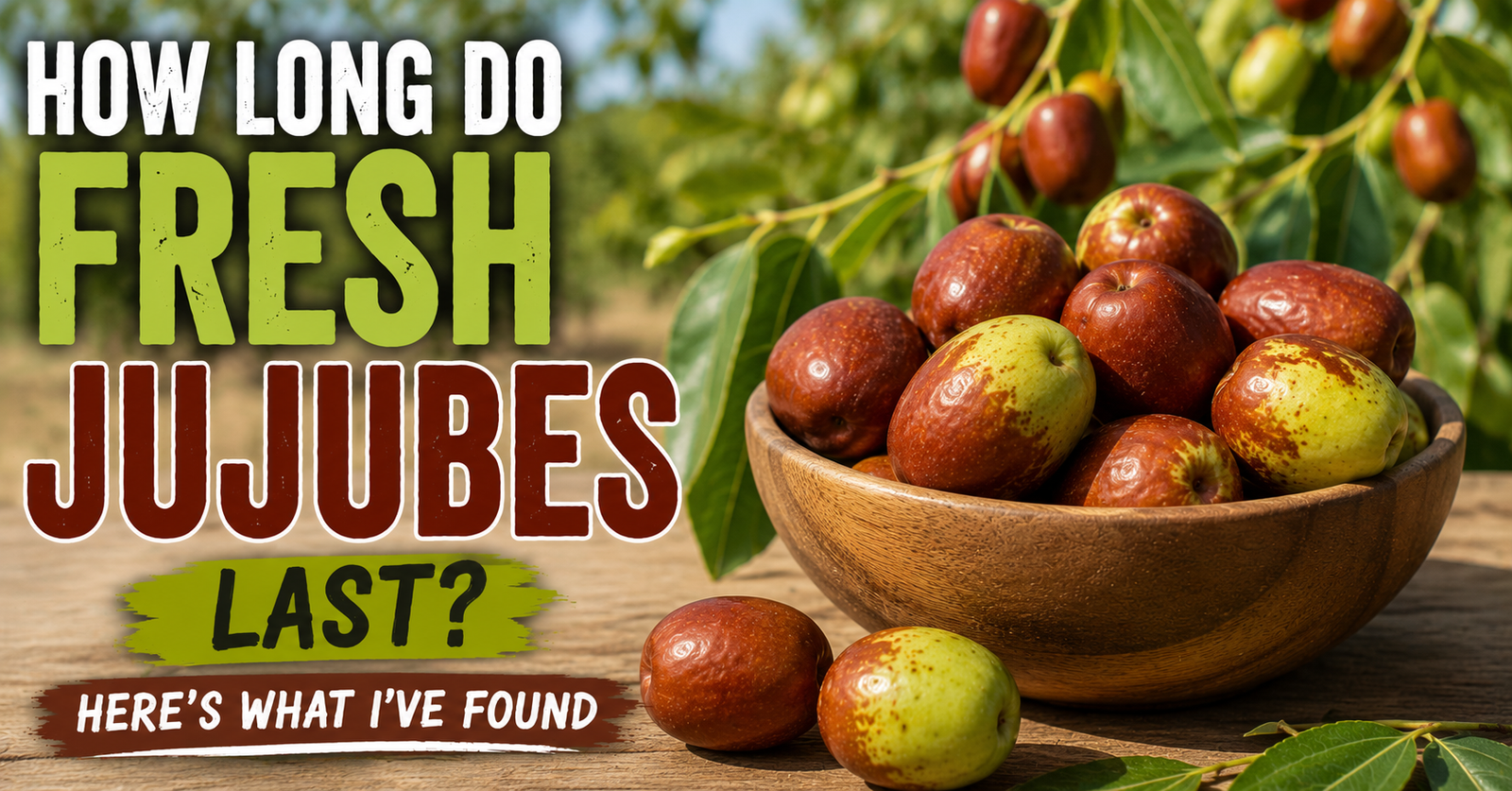
If I pick a green jujube today and leave it on the counter for several days, it may soften a little and lose some moisture, but it never develops the same rich sweetness as fruit that stayed on the tree until it was mostly brown. For practical guidance on keeping harvested fruit in good condition, see how long fresh jujubes last.
That’s one reason I almost always leave them hanging as long as possible.
The tree simply does a better job of finishing the fruit than my kitchen ever can.
Why Patience Pays Off
Every year I catch myself wanting to start harvesting too early.
After waiting all season, it’s exciting to finally see fruit hanging on the branches.
But I’ve learned that another week can make a huge difference.
The sugars continue increasing.
The flavor becomes richer.
The fruit develops more of those caramel-like notes that make ripe jujubes so unique.
When I compare a green jujube to one that’s mostly brown, it’s honestly hard to believe they came from the same tree.
That’s why I encourage anyone growing jujubes for the first time to be patient.
You’ll be rewarded for waiting.
My Kids Even Notice the Difference
One thing that surprised me was how quickly my family developed their own preferences.
Some of us enjoy the crisp, apple-like texture that comes before the fruit is fully ripe.
Others wait until they’re darker and beginning to soften.
It’s actually become a fun part of harvest season.
We’ll pick a handful at different stages and compare them.
Even though we’re eating fruit from the same tree, everyone has a slightly different favorite.
That’s one of the things I enjoy about growing unusual fruit.
Can Birds and Wildlife Tell When They’re Ripe?
They certainly seem to.
I’ve noticed birds pay much more attention once the fruit begins changing color.
The sweeter the fruit becomes, the more attractive it seems to wildlife.
Because of that, I try to keep a close eye on the tree once ripening begins.
Waiting too long sometimes means sharing more of the harvest than I planned.
Can You Cook With Green Jujubes?
Technically, yes.
Personally, I wouldn’t.
Green jujubes simply don’t have the sweetness that makes ripe fruit so enjoyable.
If I’m going to use jujubes in recipes later, I’d much rather start with fruit that’s fully mature.
It gives you better flavor without needing nearly as much added sugar.
Don’t Judge Jujubes Like Other Fruit
I think one reason so many people get confused is because we naturally compare jujubes to apples, peaches, pears, or plums.
Jujubes don’t really behave like any of those.
Green doesn’t necessarily mean they’re ready.
Brown doesn’t mean they’re overripe.
Wrinkled doesn’t mean they’re spoiled.
They have their own ripening process, and once you understand it, they’re actually one of the easiest fruits to judge.
Every Harvest Teaches Me Something
One thing I enjoy about growing fruit is that I’m still learning.
Every season is a little different.
Some years the first ripe jujubes show up earlier.
Some years they’re a little later.
Weather changes.
Rainfall changes.
Even the fruit itself seems a little different from year to year.
That’s one reason I enjoy sharing what we’re seeing here on our farm instead of simply repeating what a textbook says.
The tree growing in my yard doesn’t always follow the book perfectly, and I think readers appreciate hearing real observations from someone who grows the fruit every season.
About the Author
Daxon Weaver is the owner of Weaver Family Farms Produce, where he shares firsthand experiences growing fruit, harvesting unique crops, preserving homegrown food, and helping others enjoy the rewards of a family farm.