
When we planted our jujube trees, I expected to spend most of my time watching the branches.
Instead, I found myself looking at the ground.
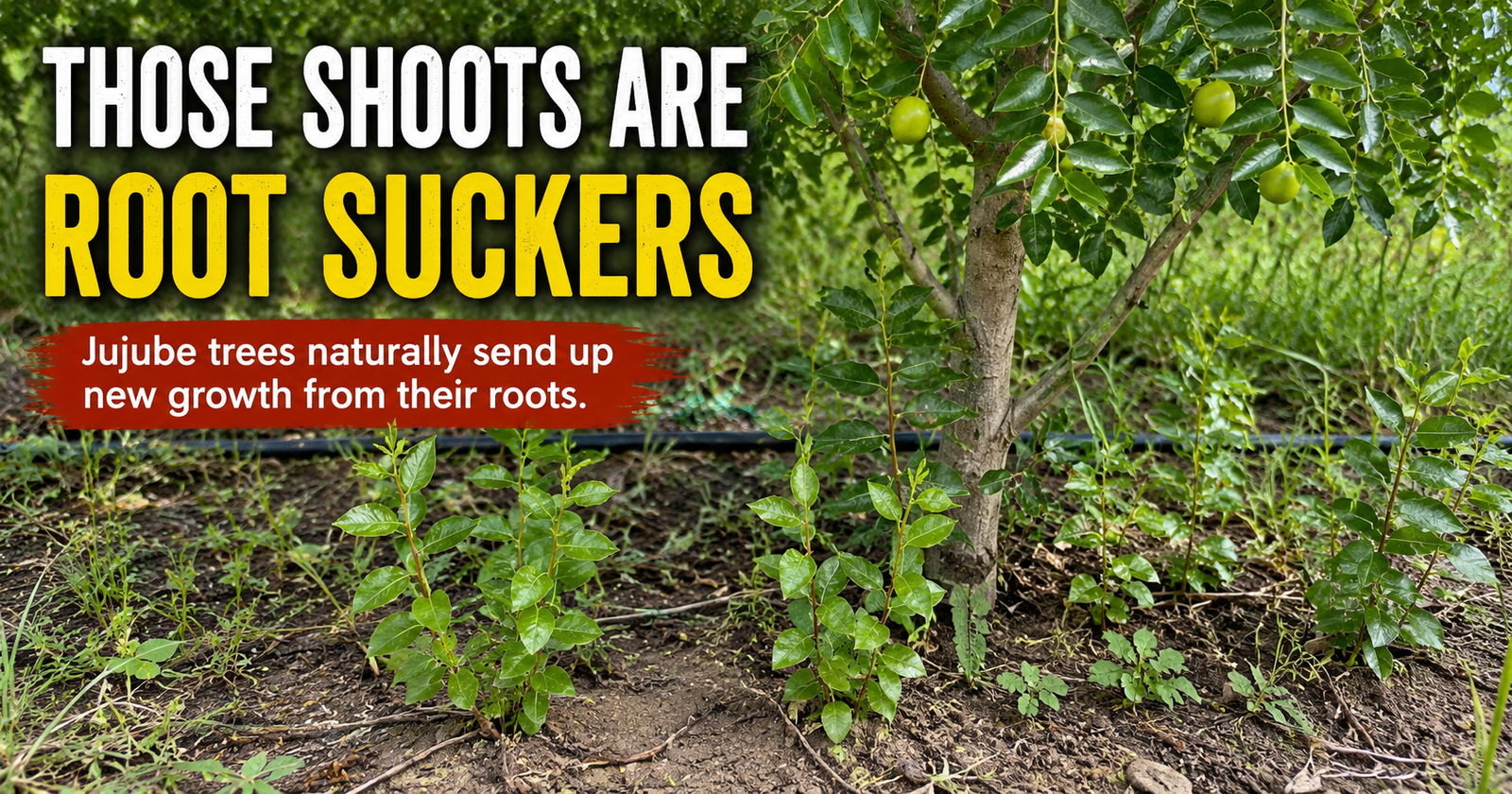
One spring I noticed several little shoots popping up around the base of one of our trees.
At first, I wasn’t even sure what they were.
Were they weeds?
New seedlings?
Or was something wrong with the tree?
After learning more about jujubes and watching our own Honey Jar and Sugar Cane trees over the years, I realized this is actually one of the most common things jujube owners experience.
Those little shoots are usually called root suckers, and while they can look alarming at first, they don’t necessarily mean your tree has a problem.
If you’re new to growing jujubes, I’d recommend reading What Is a Jujube Fruit and What Does It Taste Like? after this article. It gives a great introduction to one of my favorite fruit trees on our farm.
What Are Jujube Suckers?
A sucker is simply a new shoot that grows from the tree’s root system or from the trunk below the graft.
Instead of growing from one of the main branches, it emerges from below ground and pushes its way to the surface.
The first time I saw one, I honestly thought I had another little tree starting on its own.
In a way, that’s exactly what it was.
Jujubes naturally have a suckering growth habit, and it’s common for new shoots to appear several feet away from the original tree.
Why Do Jujube Trees Produce Suckers?
One thing I’ve learned is that jujubes simply like to do this.
Some tree species almost never send up suckers.
Jujubes often do.
That doesn’t automatically mean you’ve watered too much, fertilized incorrectly, or done something wrong.
Sometimes it’s just part of being a jujube.
That said, stress can increase sucker production.
Root disturbance.
Heavy pruning.
Drought.
Damage from lawn equipment.
All of those things may encourage additional shoots to develop.

Are They New Jujube Trees?
Technically, yes.
But here’s where things become important.
If your tree was grafted, those suckers usually grow from the rootstock, not from the Honey Jar or Sugar Cane variety you planted.
That means if you let them grow, the fruit may be completely different from the fruit you’re expecting.
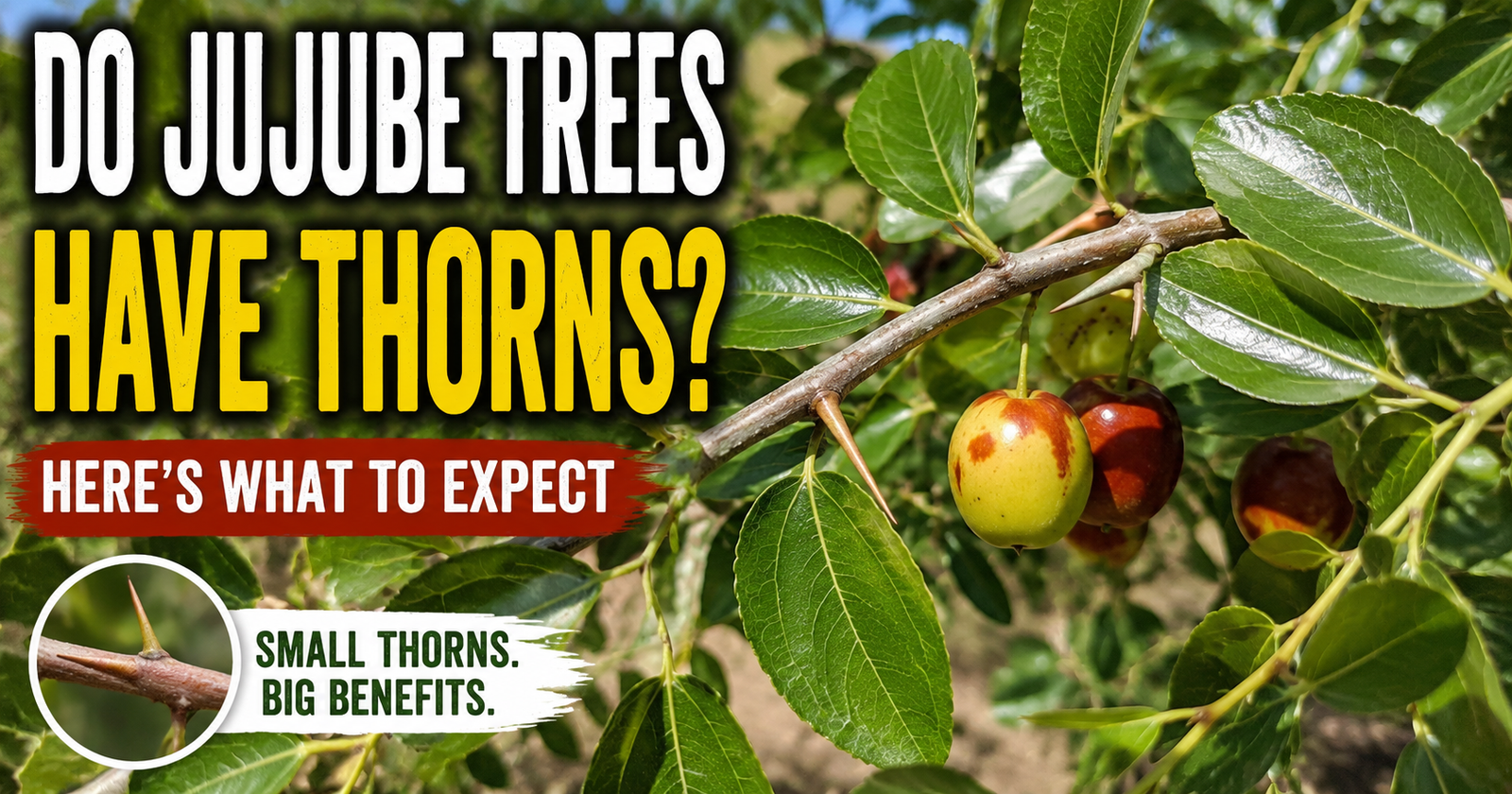
Some rootstocks produce very small, thorny fruit that isn’t nearly as desirable as the named variety growing above the graft.
That’s why I always like to know whether a shoot is growing above or below the graft before deciding what to do with it.
Should You Remove Jujube Suckers?
For most home growers, I’d say yes.
That’s generally what I plan to do with ours.
Every sucker is using water and nutrients that could otherwise go into the main tree.
They’re also capable of becoming surprisingly large if ignored.
University extension specialists generally recommend removing suckers as soon as they’re noticed because they compete with the main tree for resources and can eventually become difficult to manage.

How I Remove Them
When I find a new sucker, I don’t just snap it off at ground level.
If you only remove the top, it often comes right back.
Instead, I gently pull the mulch or soil away until I can see where the sucker originates.
Then I use a clean pair of hand pruners to cut it as close to the root as I reasonably can.
Afterward, I cover the area back up.
It only takes a few minutes, and I’ve found it’s much easier to remove them while they’re small than to wait until they’ve become thick, woody stems.
Don’t Mistake Suckers for Healthy New Growth
One mistake I could easily see someone making is celebrating every new shoot they see.
Fresh growth in the canopy is exactly what you want.
Shoots coming from the roots are a different story.
They’re serving a different purpose, and if left alone they can gradually change the shape of the tree and create unnecessary competition.
Knowing the difference makes routine maintenance much easier.
What If You Want Another Tree?
This is actually one situation where a sucker might be useful.
Some gardeners intentionally dig and transplant suckers to start additional trees.
Whether that’s a good idea depends largely on whether your tree is grafted.
If the sucker came from the rootstock, you’re probably not propagating your Honey Jar or Sugar Cane tree.
You’re propagating the rootstock instead.
For that reason, I’d much rather buy or graft the variety I actually want than rely on random suckers.
My Honey Jar and Sugar Cane Trees
So far, one thing I’ve appreciated about our trees is how little maintenance they’ve required overall.
Compared to several other fruit trees we grow, jujubes have been remarkably easy.
That doesn’t mean I ignore them.
Whenever I notice a sucker starting, I take care of it before it has a chance to become a larger problem.
It’s one of those five-minute jobs that can save much bigger headaches later.
If you’ve recently planted your first tree, I’d also recommend reading Why Is My Jujube Tree Not Leafing Out? Don’t Panic Yet. That article answers another question nearly every new jujube owner has during the first few springs.

A Few Minutes of Maintenance Goes a Long Way
One thing I enjoy about growing jujubes is that they really don’t ask for much.
They tolerate heat.
They handle dry weather well once established.
They’ve produced excellent fruit for us.
Checking for suckers every now and then is simply part of routine care.
For me, it’s no different than walking through the orchard to see what’s ripening or looking over the trees after a storm.
Those little inspections usually help me catch small issues before they ever become big ones, and that’s one of the reasons I’ve enjoyed growing Honey Jar and Sugar Cane jujubes so much.
About the Author
Daxon Weaver is the owner of Weaver Family Farms Produce, where he shares firsthand experiences growing fruit, harvesting seasonal crops, and helping others enjoy the rewards of homegrown food on his family’s Missouri farm.