One of the questions I hear most often about apple butter has nothing to do with how it tastes.
It’s how to store it.
Someone buys a jar at a farmers market.
Maybe they make a batch at home.
Then they get it home and start wondering…
“Does this need to go in the refrigerator?”
The answer depends on one very important detail.
Has the jar been opened?
That’s where a lot of the confusion comes from. Some jars are perfectly safe sitting on a pantry shelf, while others should go straight into the refrigerator.
Here’s what I’ve learned over the years and how I store apple butter myself.
If you’re new to apple butter, I’d recommend reading What Is Apple Butter? Everything You Need to Know first. It’ll help explain why this thick fruit spread stores differently than fresh apples.
Unopened Apple Butter Usually Doesn’t Need Refrigeration
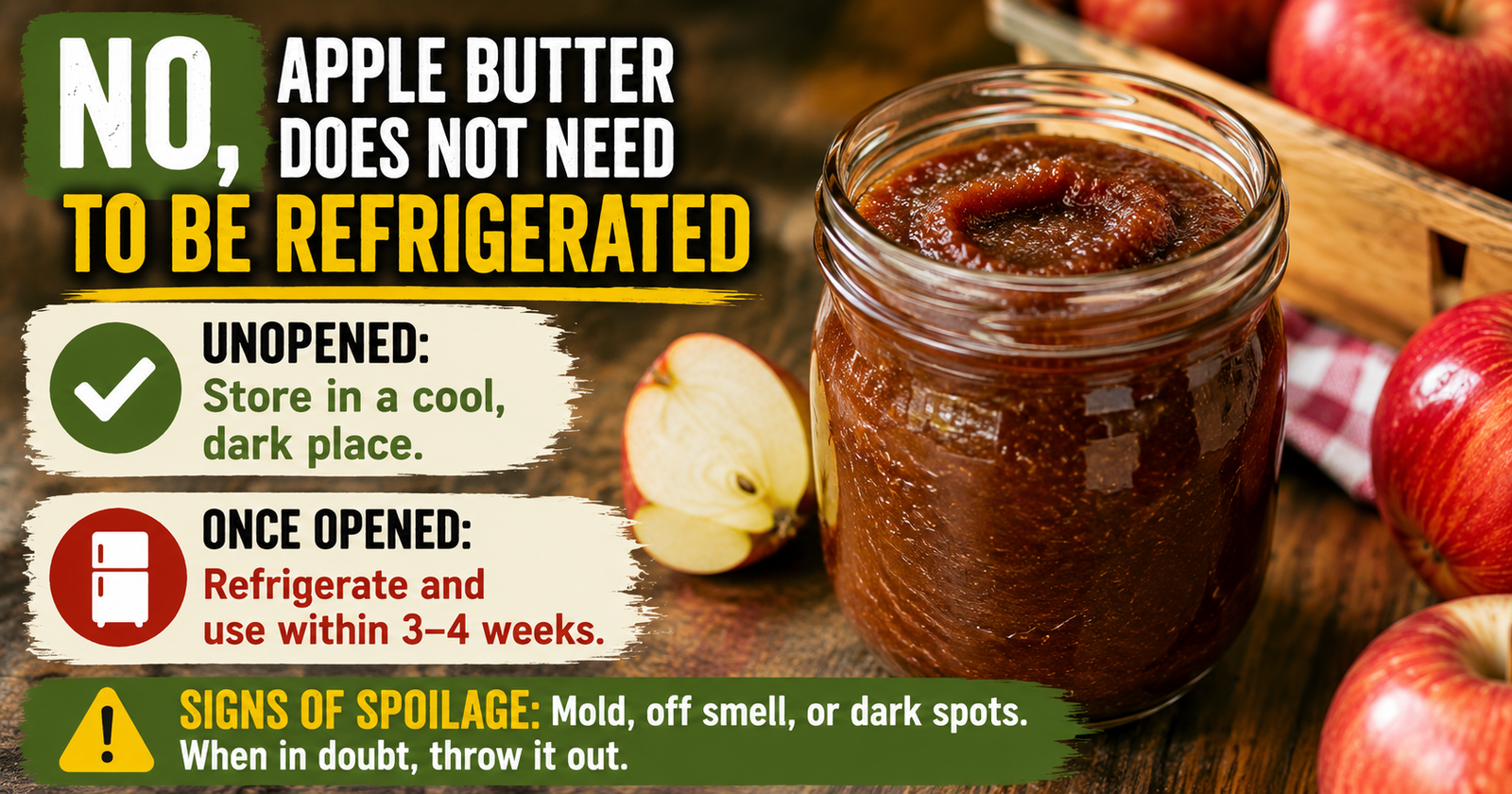
If you buy a commercially sealed jar of apple butter or you’ve safely canned homemade apple butter using a tested canning recipe, the unopened jar is designed to be shelf stable.
That means you can normally keep it in a cool, dry pantry until you’re ready to use it.
The key word there is unopened.
As long as the vacuum seal remains intact and the jar hasn’t been damaged, refrigeration usually isn’t necessary before opening. Properly processed jars should be stored in a cool, dark place for best quality.
Once You Open the Jar, Refrigerate It
This is where the answer changes.
The moment you break that seal, the refrigerator becomes the best place for your apple butter.
Every time you dip a knife or spoon into the jar, you’re introducing tiny amounts of bacteria and yeast from the air and from the utensil itself.
Refrigeration slows their growth and helps preserve both quality and safety.
Whether it’s homemade or store bought, I always refrigerate apple butter after opening.
That’s exactly what food preservation experts recommend for home-canned apple butter as well.

Homemade Apple Butter Isn’t Always Shelf Stable
This is something I think catches a lot of people off guard.
Just because you made apple butter at home doesn’t automatically mean it’s safe to store in the pantry.
There’s a big difference between:
- Homemade apple butter that was properly processed using a tested water bath canning recipe
- Homemade apple butter that was simply cooked and poured into jars
Those are not the same thing.
If your homemade apple butter wasn’t processed using an approved canning method, it should be refrigerated or frozen rather than stored on a shelf. Hearing the lid “pop” by itself doesn’t make a jar shelf stable.
What About Apple Butter From a Farmers Market?
I get this question fairly often.
If you buy apple butter from a local farm, orchard, or farmers market, the first thing I do is read the label.
If it’s sold as a shelf-stable canned product, it’s generally fine to keep unopened in your pantry.
If it’s labeled “Keep Refrigerated” or sold from a refrigerated display, follow those instructions.
When in doubt, ask the seller.
A reputable producer should be happy to explain how their apple butter was preserved.


Where Should You Store an Unopened Jar?
Even shelf-stable apple butter has ideal storage conditions.
I like keeping unopened jars somewhere that’s:
- Cool
- Dry
- Out of direct sunlight
- Away from large temperature swings
A pantry, basement pantry, or kitchen cabinet usually works well.
I avoid storing jars above the stove or next to the oven because constant heat isn’t ideal for preserving flavor over time.
How Long Does Unopened Apple Butter Last?
One thing people often assume is that canned food lasts forever.
Not exactly.
Properly canned apple butter can remain safe much longer if the seal stays intact, but for the best flavor and texture, it’s generally recommended to use home-canned fruit products within about one year.
Personally, I don’t like letting jars sit around that long anyway.
Apple butter is too good to leave forgotten on a shelf.
How Long Does Apple Butter Last After Opening?
This depends on the recipe, but refrigeration makes a huge difference.
An opened jar that’s kept cold and handled with clean utensils will stay fresh much longer than one that’s repeatedly left on the kitchen counter.
I always recommend checking the manufacturer’s label on store-bought jars because different brands may have slightly different recommendations.
For home-canned apple butter, food preservation experts generally recommend refrigeration after opening and using it within about a month for the best quality.
Can You Leave Apple Butter Out Overnight?
If someone accidentally leaves a jar on the counter overnight, the safest answer depends on several factors, including how warm your kitchen was and how long it sat out.
Personally, I don’t like taking chances with preserved foods.
If I’m ever unsure about how something has been stored, I’d rather replace a jar than risk getting sick.
Compared to the time and effort that goes into making homemade apple butter, buying or making another batch is much easier than dealing with foodborne illness.


Signs Apple Butter Has Gone Bad
Fortunately, spoiled apple butter usually gives you clues.
Here are a few things that would make me throw away a jar immediately.
- Mold growing anywhere on the surface.
- A broken or bulging lid before opening.
- An unusual fermented or sour smell.
- Bubbling that shouldn’t be there.
- Obvious discoloration or signs of spoilage.
If something seems off, trust your instincts.
When it comes to preserved food, I don’t believe it’s worth gambling.
Does Refrigeration Change the Texture?
A little.
Cold apple butter becomes slightly firmer than it is at room temperature.
That isn’t a bad thing.
If I want it softer for spreading, I simply take the jar out of the refrigerator a few minutes before breakfast.
Within a short time, it’s much easier to spread across toast or biscuits.
The flavor doesn’t disappear.
It just becomes a little less soft until it warms up.
Can You Freeze Apple Butter Instead?
Absolutely.
Freezing is an excellent option if you have several jars or know you won’t finish one anytime soon.
Apple butter freezes surprisingly well because of its thick consistency.
If you decide to freeze it, leave a little room for expansion if it’s in a glass container.
I’ll be covering the freezing process in much more detail in an upcoming guide because there are a few simple tips that help preserve the best texture.
My Simple Rule
Over the years, I’ve settled on one easy rule that keeps everything straightforward.
If the jar is unopened and was properly canned or commercially sealed, it belongs in the pantry.
Once I twist that lid open, it goes into the refrigerator.
That simple habit removes all the guesswork.
It’s easy to remember, helps preserve the quality of the apple butter, and gives me confidence that every spoonful tastes just as good as the first.
Whether you’re enjoying apple butter on warm biscuits, homemade bread, or fresh toast, proper storage means you’ll get to enjoy every last bite without worrying about whether it’s still good.
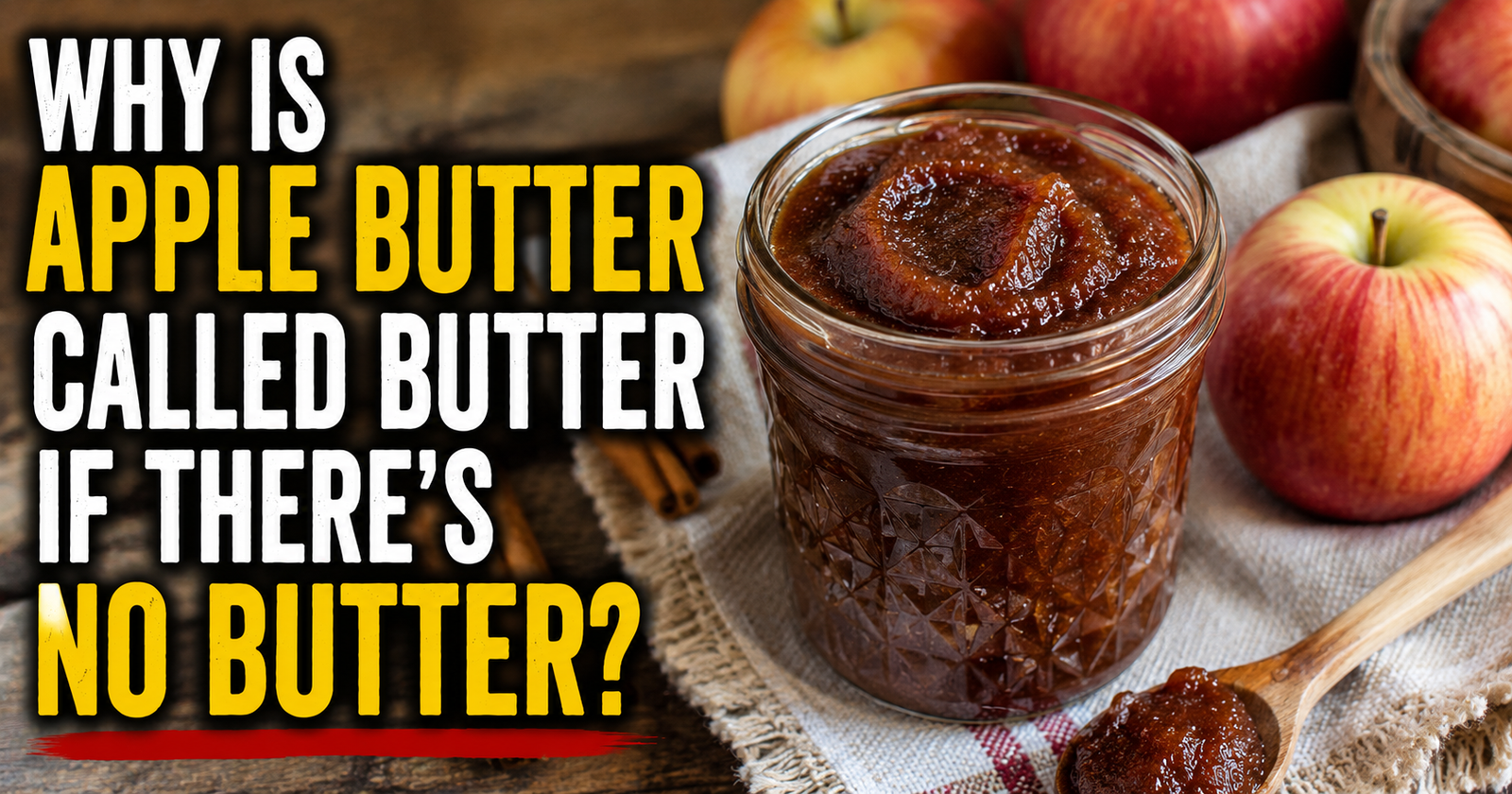
If you’re curious what makes apple butter so different from other fruit spreads, you might also enjoy Why Is Apple Butter Called Butter If There’s No Butter?. It’s one of the questions I hear almost as often as how to store it.
About the Author
Daxon Weaver is the owner of Weaver Family Farms Produce, where he shares firsthand experiences growing fruit, preserving family favorites, and helping others enjoy homegrown foods from his family’s Missouri farm.