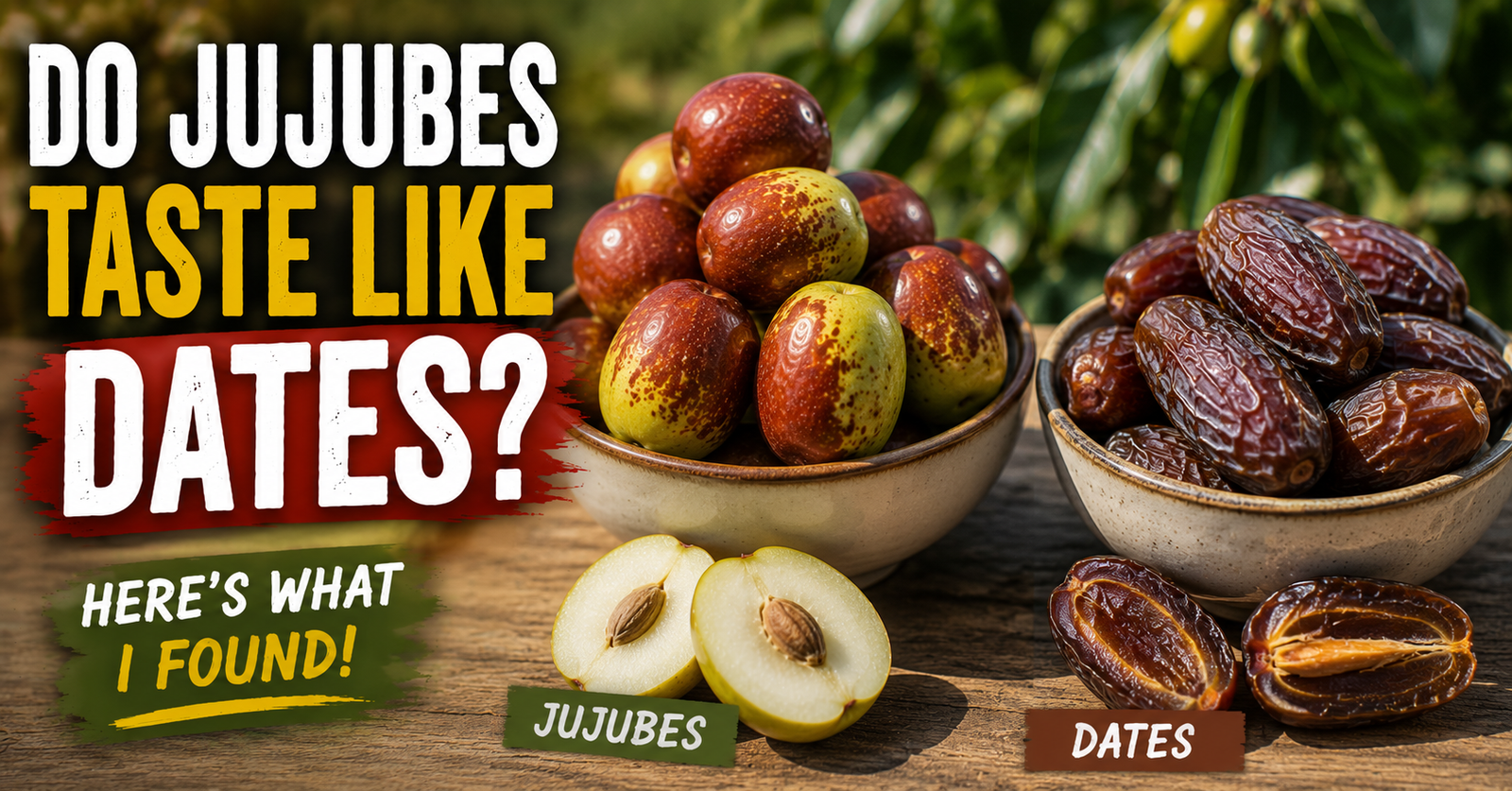
When people first hear the name Chinese date, one of the first questions they usually ask is whether jujubes actually taste like dates.
I wondered the same thing before we ever planted our first jujube tree.
Then the fruit finally ripened, I picked one straight from the tree, took a bite, and immediately realized something.
The answer isn’t as simple as yes or no.
After growing jujubes here on our family farm and tasting them at every stage of ripeness, I’ve found that the answer completely depends on when you eat them.
A bright green jujube tastes nothing like a date.
A fully ripe jujube starts developing some similarities.
A darker, slightly wrinkled jujube gets even closer.
That’s one of the things I enjoy most about this fruit. It’s almost like several different fruits growing on the same tree.
If you’re just learning about jujubes, I’d recommend starting with What Is a Jujube Fruit and What Does It Taste Like?. It explains what jujubes are, where they come from, and why they’ve become one of my favorite fruits to grow.
Why Are Jujubes Called Chinese Dates?
This is where a lot of the confusion begins.
Jujubes aren’t dates.
They don’t grow on palm trees.
They’re not even closely related botanically.
The nickname Chinese date comes mostly from what the fruit looks like after it matures and begins drying. As fresh jujubes change from green to reddish-brown and eventually wrinkle, they begin resembling dates in appearance much more than they do when they’re first picked.
That’s a reasonable comparison.
The problem is that many people hear the name before they’ve ever tasted one.
They expect something that tastes exactly like a Medjool date.
That’s not what they’re going to get.
My First Impression
I’ll never forget tasting our first homegrown jujube.
Based on the nickname, I expected something soft, sticky, and intensely sweet.
Instead, I bit into a fruit that was crisp enough to remind me of an apple.
Honestly, if someone had handed me that first greenish jujube without telling me what it was, I probably would have guessed it was some kind of tiny apple rather than anything related to a date.
That first bite completely changed my expectations.
It also taught me something important.
People who say jujubes taste like dates are usually talking about fruit that’s much farther along in the ripening process than the fruit I first picked.
Fresh Jujubes Taste Much More Like Apples
If someone asked me to compare a fresh jujube to another fruit, I’d never choose a date.
I’d choose an apple every single time.
Fresh jujubes are:
- Crisp
- Firm
- Refreshing
- Mildly sweet
- Slightly juicy
The texture is what surprises people the most.
It’s remarkably similar to biting into a crisp apple.
That’s why I often tell friends not to focus too much on the “Chinese date” nickname.
It creates the wrong expectation for fresh fruit.
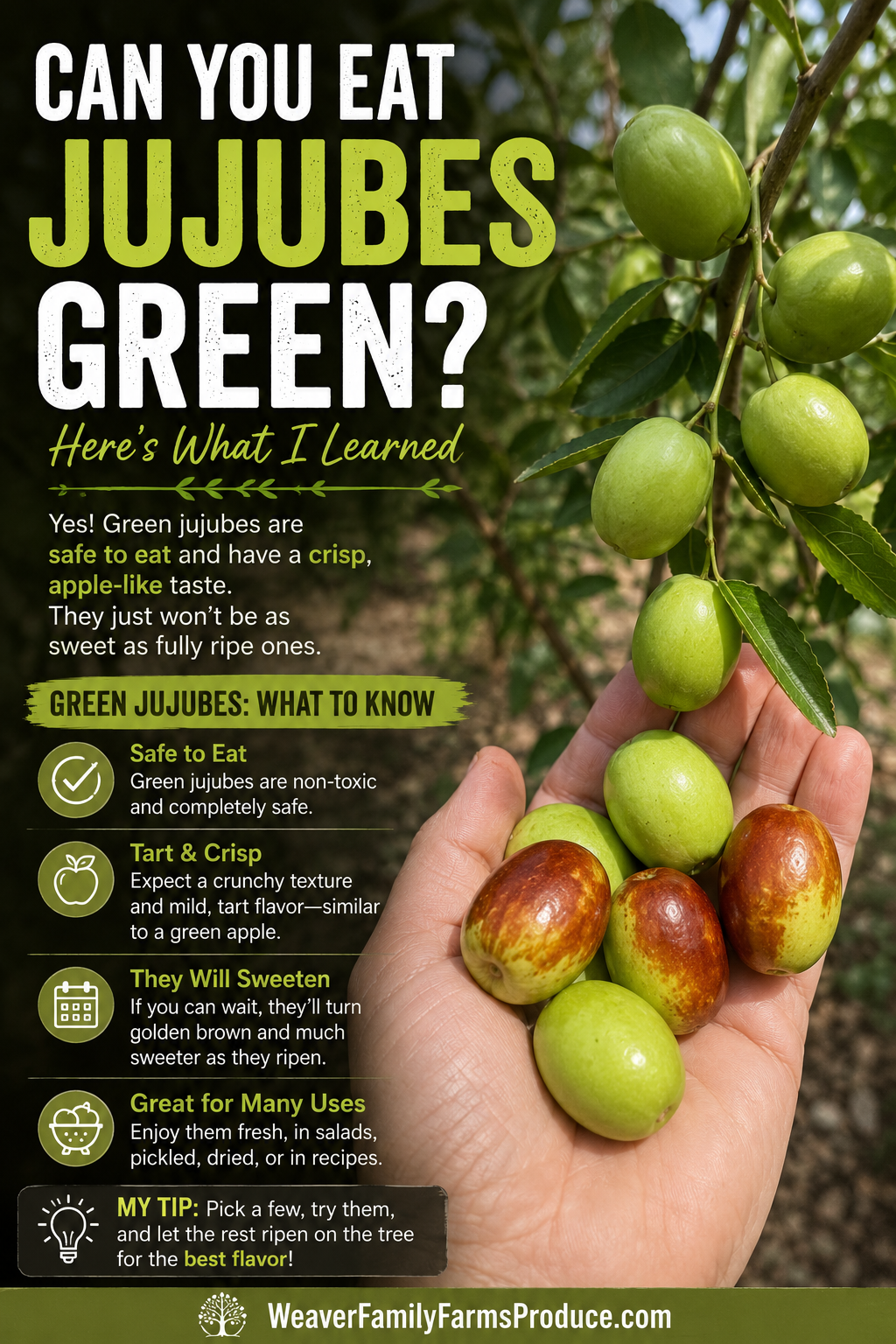
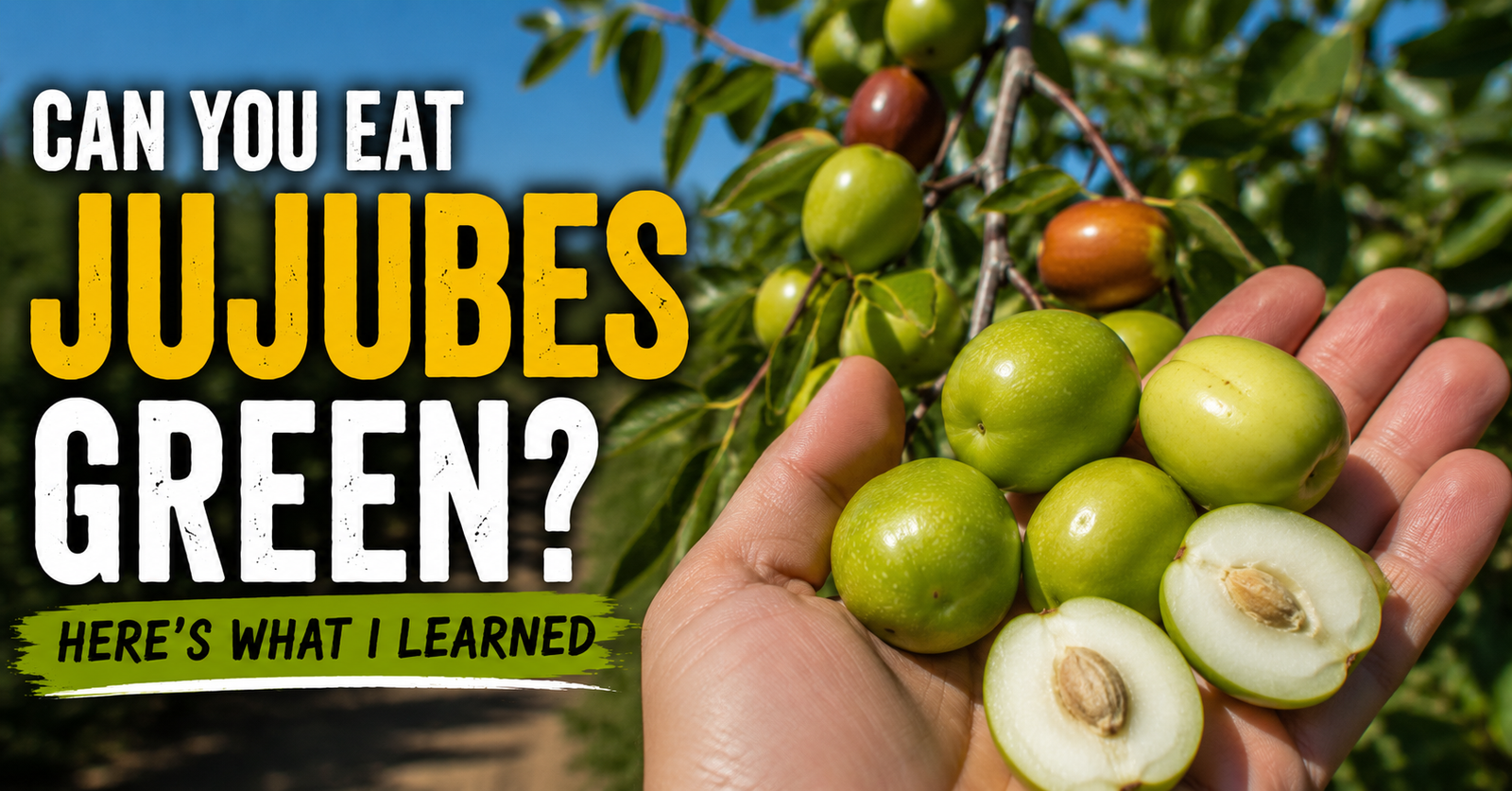
If you’re wondering whether green fruit is worth eating, I shared exactly what I learned in Can You Eat Jujubes Green? Here’s What I Learned.
Then the Flavor Starts Changing
This is where jujubes become fascinating.
Unlike many fruits that have one obvious ripe stage, jujubes keep changing.
Every few days the flavor becomes a little different.
As more brown develops on the skin, the sweetness increases.
The tartness begins disappearing.
The flesh slowly starts becoming less crisp.
That transformation is one of my favorite things about growing them.
Every trip to the tree is a little different.
Mostly Brown Is My Favorite Stage
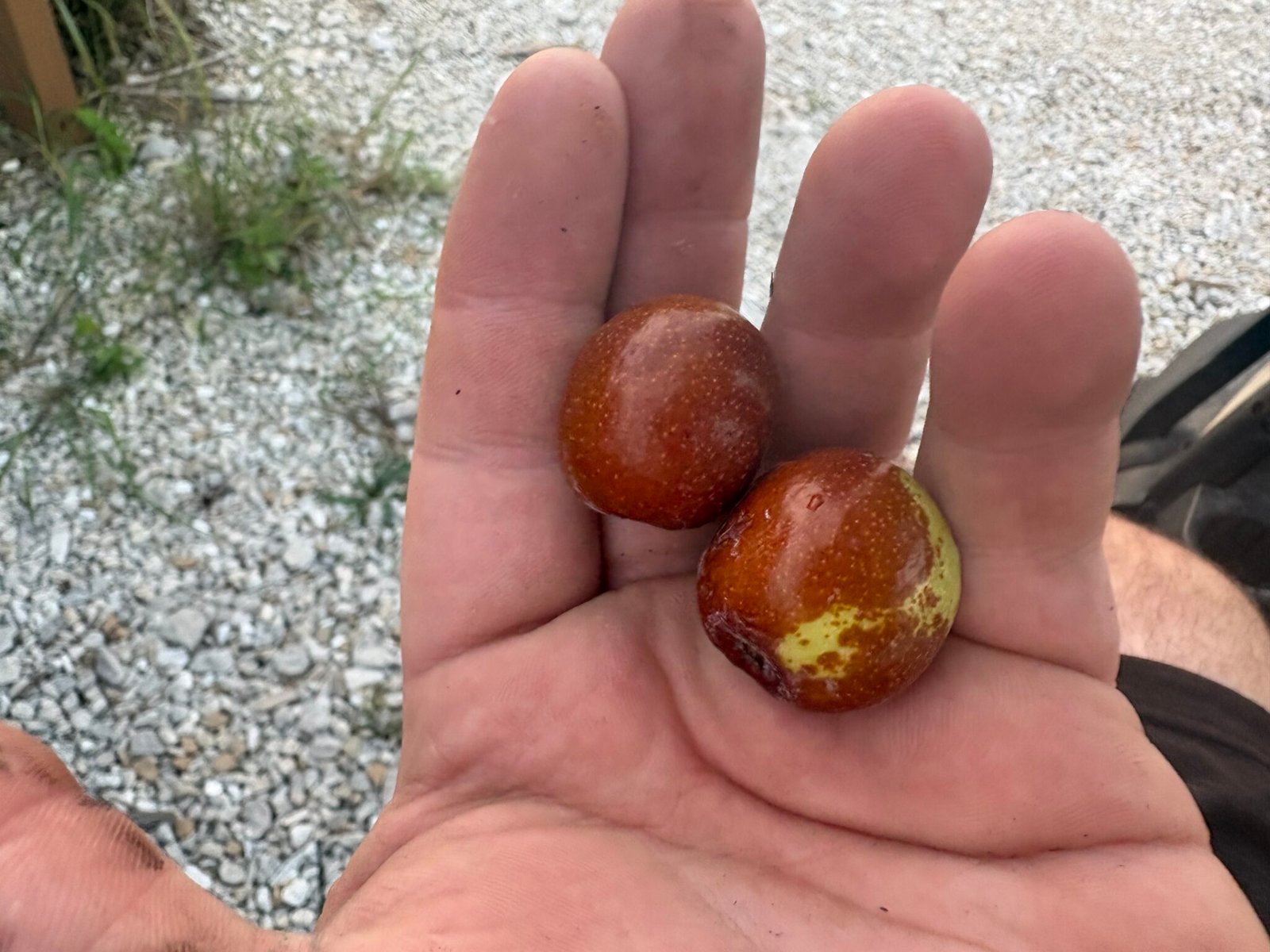
If I had to pick only one stage to eat fresh, I’d choose fruit that’s mostly brown but still hanging firmly on the tree.
To me, that’s when everything comes together.
The fruit still has enough firmness to keep that satisfying bite, but the sweetness has increased dramatically.
Instead of tasting like a plain apple, I begin noticing flavors that remind me of:
- Honey
- Caramel
- Brown sugar
- Dates
- A hint of molasses
It’s still unmistakably a jujube.
But now I can finally understand why people compare them to dates.
If you’re trying to decide exactly when to harvest yours, don’t miss How Do You Know When a Jujube Is Ripe? Signs It’s Ready. I explain the different ripeness stages using examples from the fruit growing on our farm.
The Wrinkled Ones Come Closest to Dates
If I wanted to convince someone that jujubes really can resemble dates, I wouldn’t hand them a green fruit.
I’d hand them one that’s become dark brown and slightly wrinkled.
As moisture slowly leaves the fruit, the sugars become more concentrated.
The sweetness intensifies.
The texture becomes softer and chewier.
That’s when the comparison finally starts making sense.
Even then, I still don’t think they taste exactly like dates.
A Medjool date is much stickier and significantly sweeter.
A wrinkled jujube keeps some of its own unique character.
It reminds me of a cross between a fresh apple and a date rather than a perfect copy of either one.
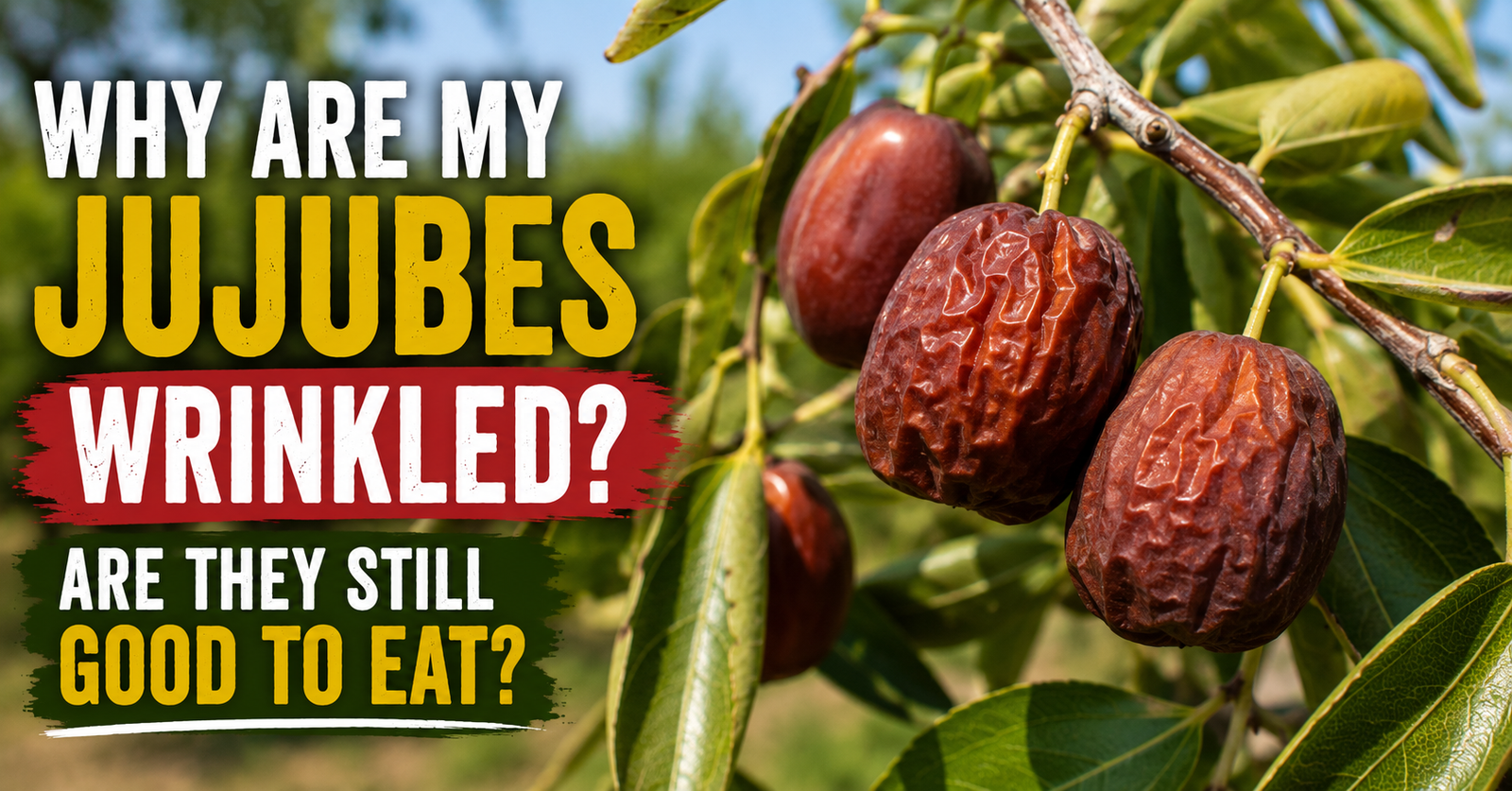
In fact, I usually look for those darker fruits first because they’re my favorite to snack on. If you’ve ever wondered why some of the best-looking fruit on the tree starts wrinkling, be sure to read Why Are My Jujubes Wrinkled? Are They Still Good to Eat?. That article explains why I actually look forward to that stage every season.
Jujubes and Dates Are Similar in Some Ways
After growing and eating both fruits, I think there are a few fair comparisons.
Both become sweeter as they mature.
Both can be eaten fresh or in a drier form.
Both develop richer flavors as moisture decreases.
And both make excellent snacks.
Those similarities are probably why the nickname has lasted for so many years.
But the differences are just as important, and in the next section I’ll compare fresh jujubes with Medjool and Deglet Noor dates, explain whether they can replace each other in recipes, share what the rest of my family thinks they taste like, answer the most common questions I receive, and explain why I think the nickname “Chinese date” is both helpful and a little misleading.
Can You Substitute Jujubes for Dates in Recipes?
This is another question I’ve been asked since we started growing jujubes.
The short answer is…
Sometimes.
If you’re eating fresh fruit, I don’t think they’re interchangeable at all.
Fresh jujubes are crisp, refreshing, and much lighter than dates.
A Medjool date is soft, sticky, and intensely sweet.
If a recipe depends on that soft, caramel-like texture, a fresh jujube simply isn’t going to give you the same result.
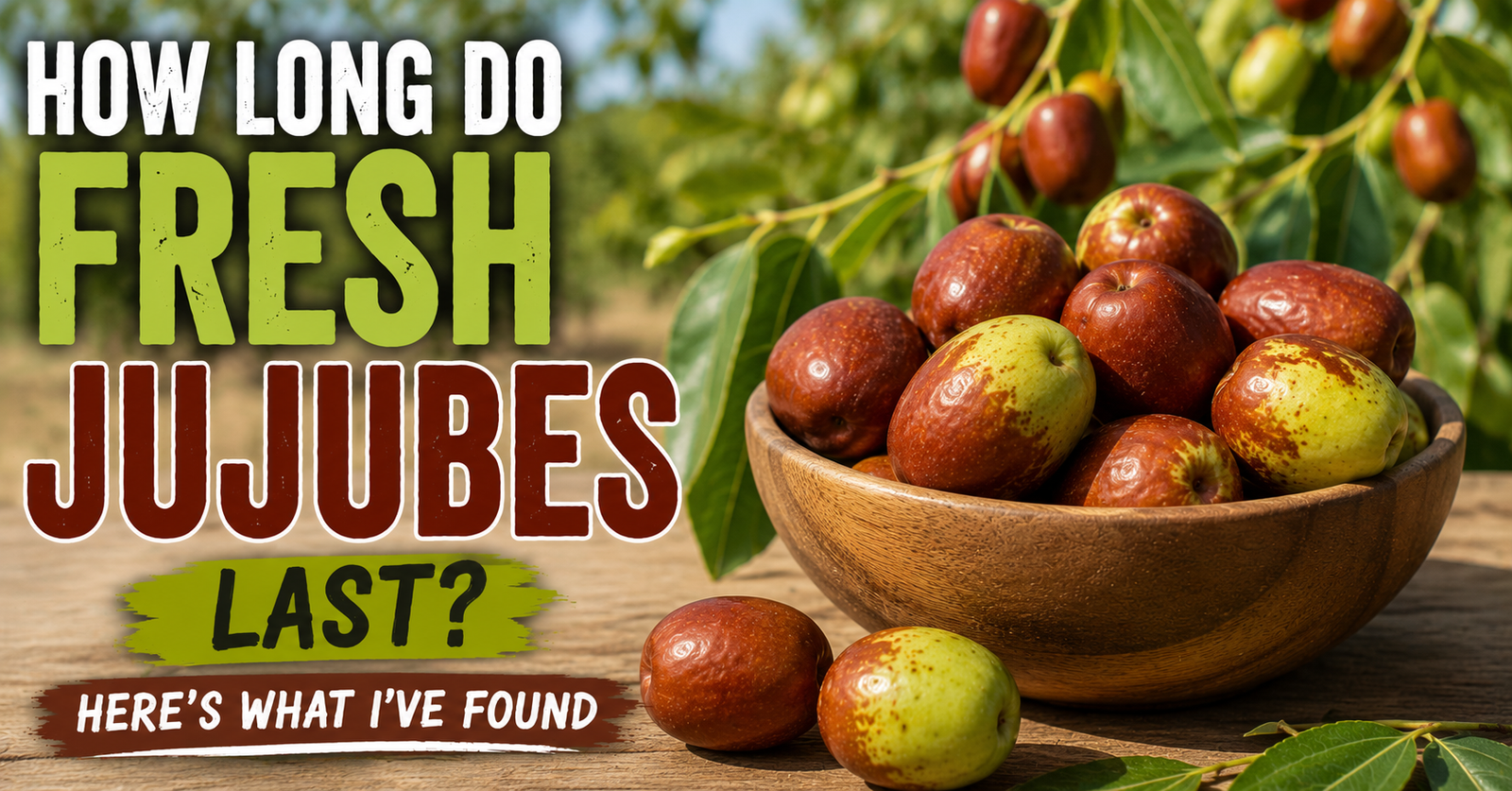
Once jujubes begin drying and losing moisture, though, the comparison becomes much more reasonable. To distinguish natural moisture loss from spoilage, see this guide to how fresh jujubes lose moisture after harvest.
Their sweetness becomes more concentrated, and the texture starts moving closer to a traditional date.
That’s why they’re often used in similar ways after drying.
Personally, I still think each fruit has its own place, and I wouldn’t automatically swap one for the other without considering what the recipe is trying to accomplish.
Honey Jar and Sugar Cane Changed My Opinion
One thing I should mention is that we don’t grow just one type of jujube.
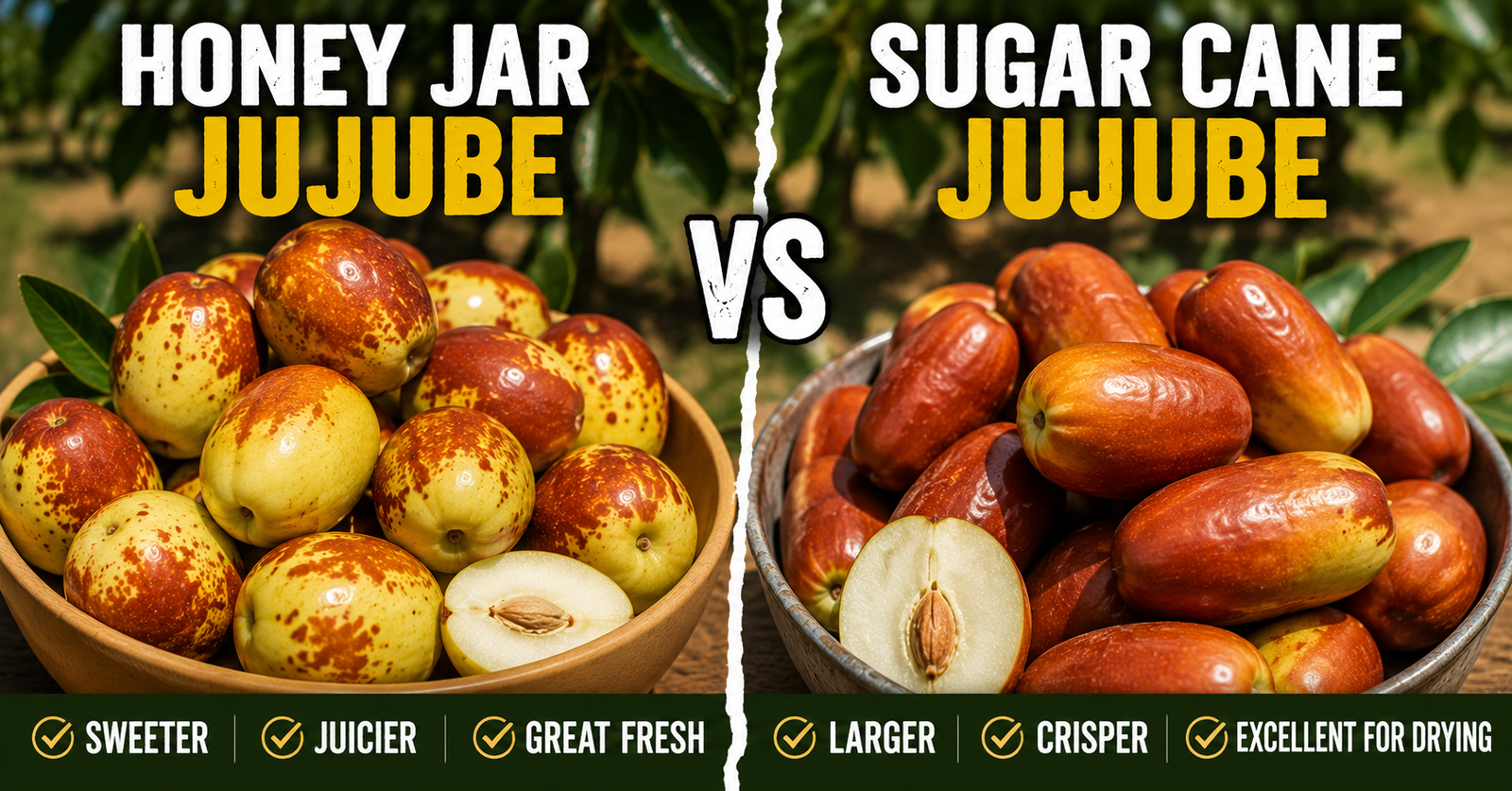
Our trees are Honey Jar and Sugar Cane, two varieties that are especially popular for fresh eating because of their sweetness and crisp texture.
Even between those two, I’ve noticed small differences.
Our Honey Jar jujubes tend to pack an incredible amount of sweetness into a smaller fruit.
They’re the kind you pop into your mouth one after another without realizing how many you’ve eaten.
The Sugar Cane jujubes are a little larger, and I think they have an incredibly refreshing bite when they’re picked at just the right stage.
Both are excellent, and I honestly wouldn’t want to give either one up.
Watching how the flavor changes from green to fully ripe on both varieties has been one of the most enjoyable parts of growing them.
What My Family Thinks They Taste Like
One thing I’ve learned is that everyone describes jujubes a little differently.
That’s part of what makes them such a fun fruit to share.
The first person might immediately say they taste like an apple.
The next person notices pear.
Someone else says they’re reminded of dates.
I’ve even heard people mention hints of brown sugar or honey.
There isn’t one perfect description because the flavor keeps changing as the fruit ripens.
That’s why I always encourage people to try more than one.
If you only eat a bright green jujube, you’ll come away with a completely different opinion than someone who picks a darker fruit that’s beginning to wrinkle.
The Texture Is Just as Important as the Flavor
When people compare jujubes to dates, they’re usually thinking about sweetness.
I think texture deserves just as much attention.
Fresh jujubes have a satisfying crunch that’s much closer to an apple than a date.
As they mature, that crunch slowly gives way to a softer bite.
By the time they’re dark brown and beginning to wrinkle, the flesh becomes noticeably denser and chewier.
Even then, I still don’t think they’re as sticky or rich as a Medjool date.
Instead, I’d describe them as sitting somewhere in the middle.
They’ve moved beyond the crispness of an apple but haven’t fully become a traditional date either.
That’s one reason I enjoy them so much.
They really are their own fruit.
Why I Think the Name “Chinese Date” Is Both Helpful and Misleading
After growing and eating jujubes myself, I understand why they’ve earned the nickname “Chinese date.”
It gives people a rough idea of what to expect once the fruit becomes darker, sweeter, and slightly wrinkled.
But I also think it sets up the wrong expectation for someone tasting a fresh jujube for the very first time.
If you expect a fresh Honey Jar or Sugar Cane jujube to taste exactly like a grocery store date, you’ll probably be disappointed.
If you expect it to be a unique fruit that changes dramatically as it ripens, I think you’ll appreciate it much more.
That’s why I usually tell friends to forget the nickname for a moment and simply enjoy the fruit for what it is.
After a few bites, especially from the darker fruit, they’ll understand why the comparison exists without expecting the two fruits to be identical.
If You’re Trying Jujubes for the First Time
If I could give one piece of advice, it would be this.
Don’t judge jujubes after eating just one fruit.
Pick one that’s still mostly green.
Try another that’s mostly brown.
Then let one stay on the tree until it’s just beginning to wrinkle.
Those three fruits may all come from the same Honey Jar or Sugar Cane tree, but they’ll give you three surprisingly different eating experiences.
That’s exactly why I look forward to jujube season every year.
Every walk to the tree is a little different, and every harvest reminds me why these have become some of my favorite fruit trees growing on our family farm.
About the Author
Daxon Weaver is the owner of Weaver Family Farms Produce, where he shares firsthand experiences growing unique fruits, harvesting seasonal crops, and helping others discover the rewards of homegrown food from his family’s Missouri farm.