The first year our jujube trees started producing fruit, I wasn’t sure exactly when to pick them.
Some were still green.
Others had started turning reddish-brown.
Then a few became completely brown and slightly softer.
At first, I assumed the brown ones were getting old.
It turns out they were actually becoming sweeter.
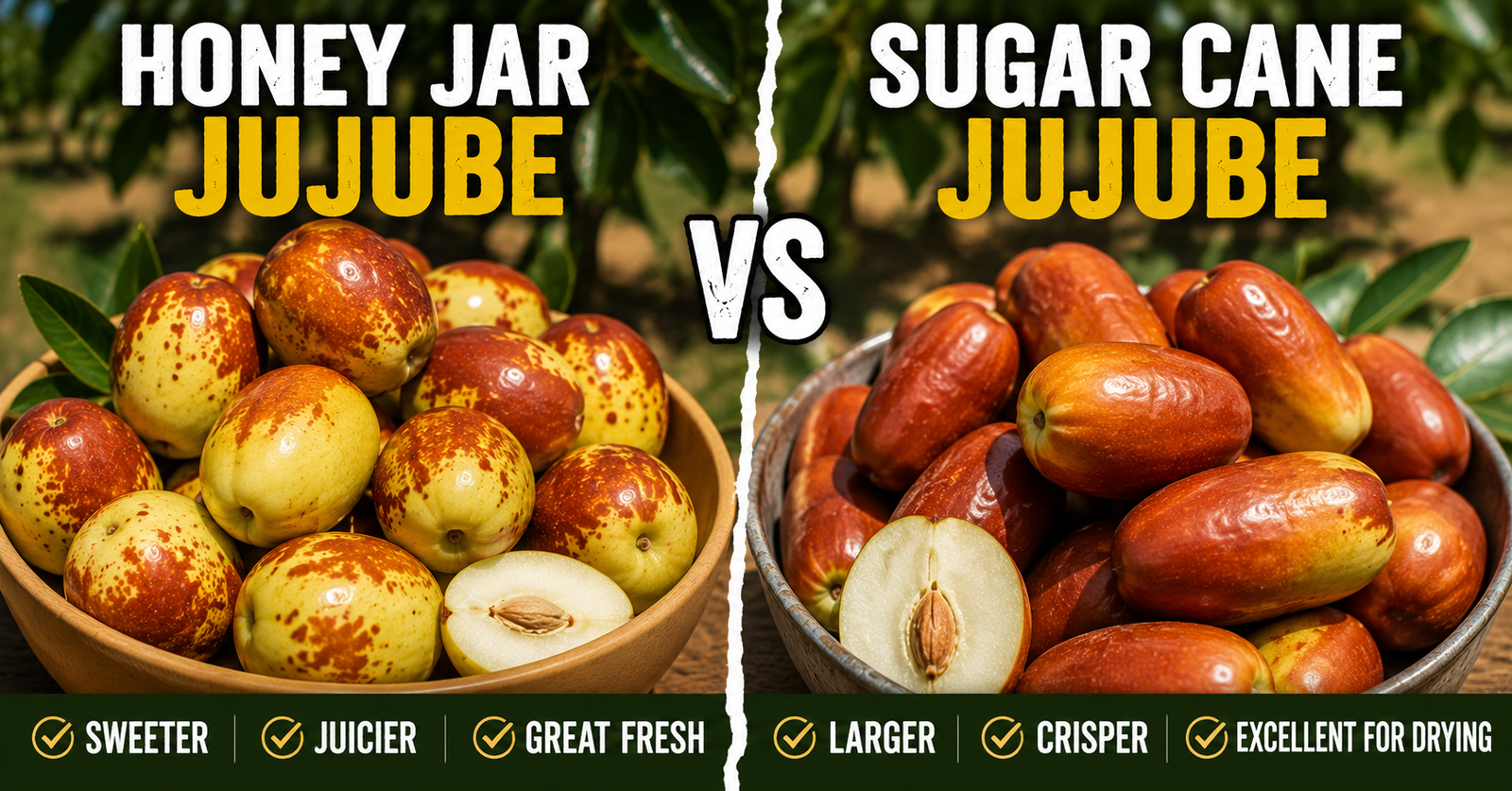
After growing Honey Jar and Sugar Cane jujubes on our Missouri farm, I’ve learned that a ripe jujube can look very different depending on exactly when you like to eat it.
If you’re standing under your tree wondering whether your fruit is ready, here’s what I look for.
A Ripe Jujube Doesn’t Always Stay Green
One thing that surprises most people is that ripe jujubes don’t remain bright green.
As they mature, they slowly change color.
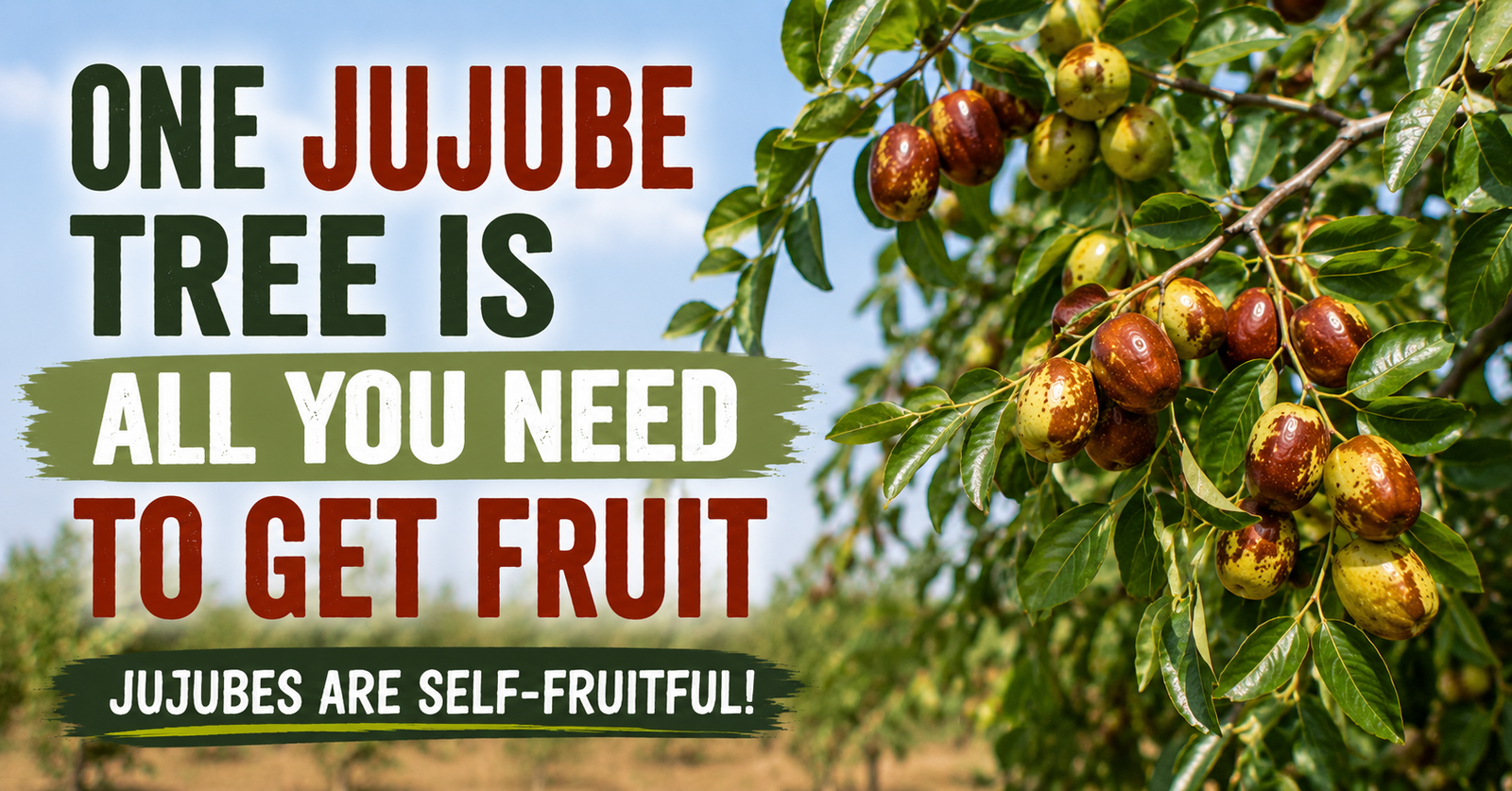
The fruit usually moves through several stages:
- Bright green.
- Yellow-green.
- Reddish-brown patches.
- Mostly brown.
- Fully brown.
- Wrinkled as they continue drying.
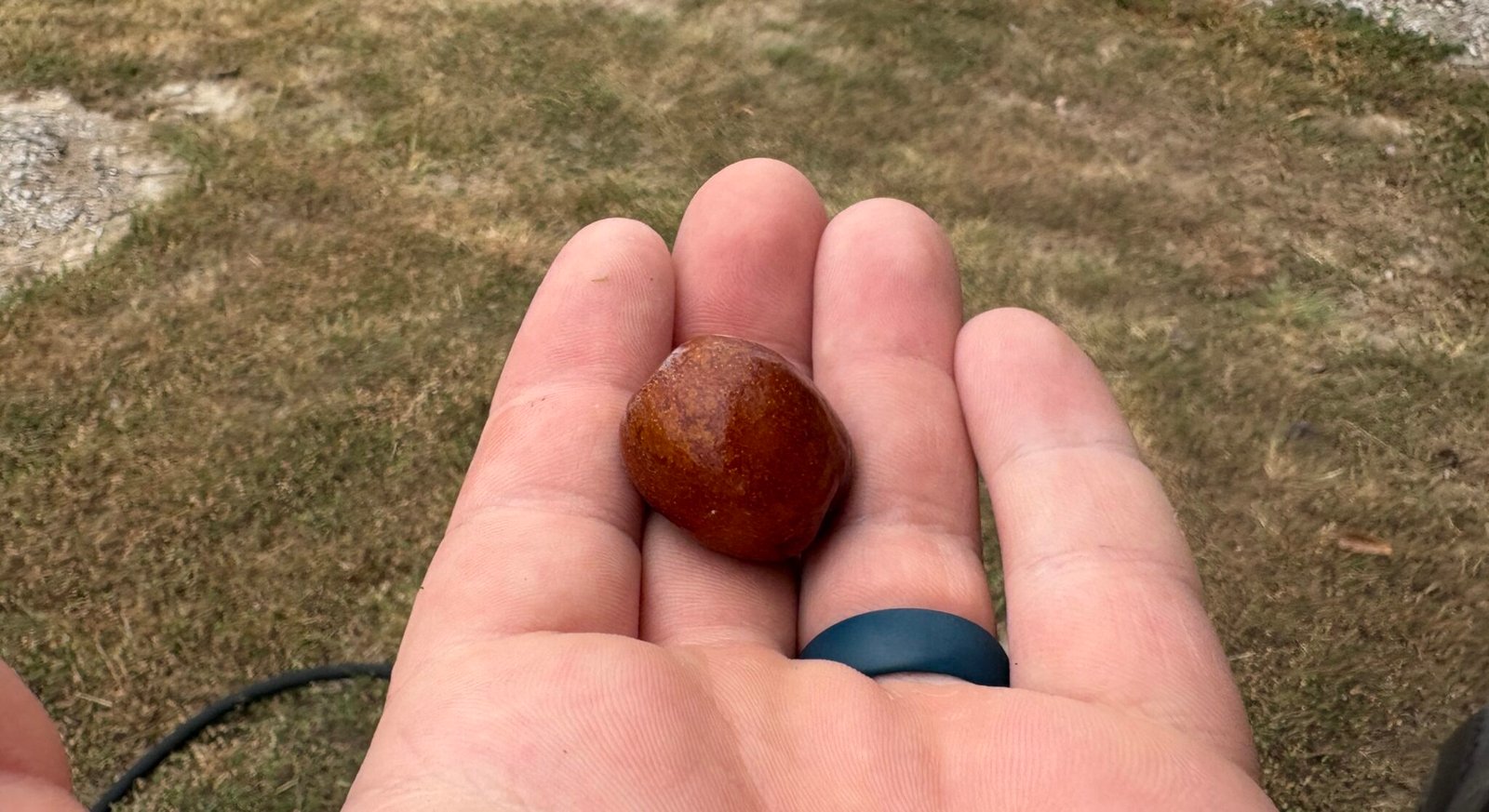
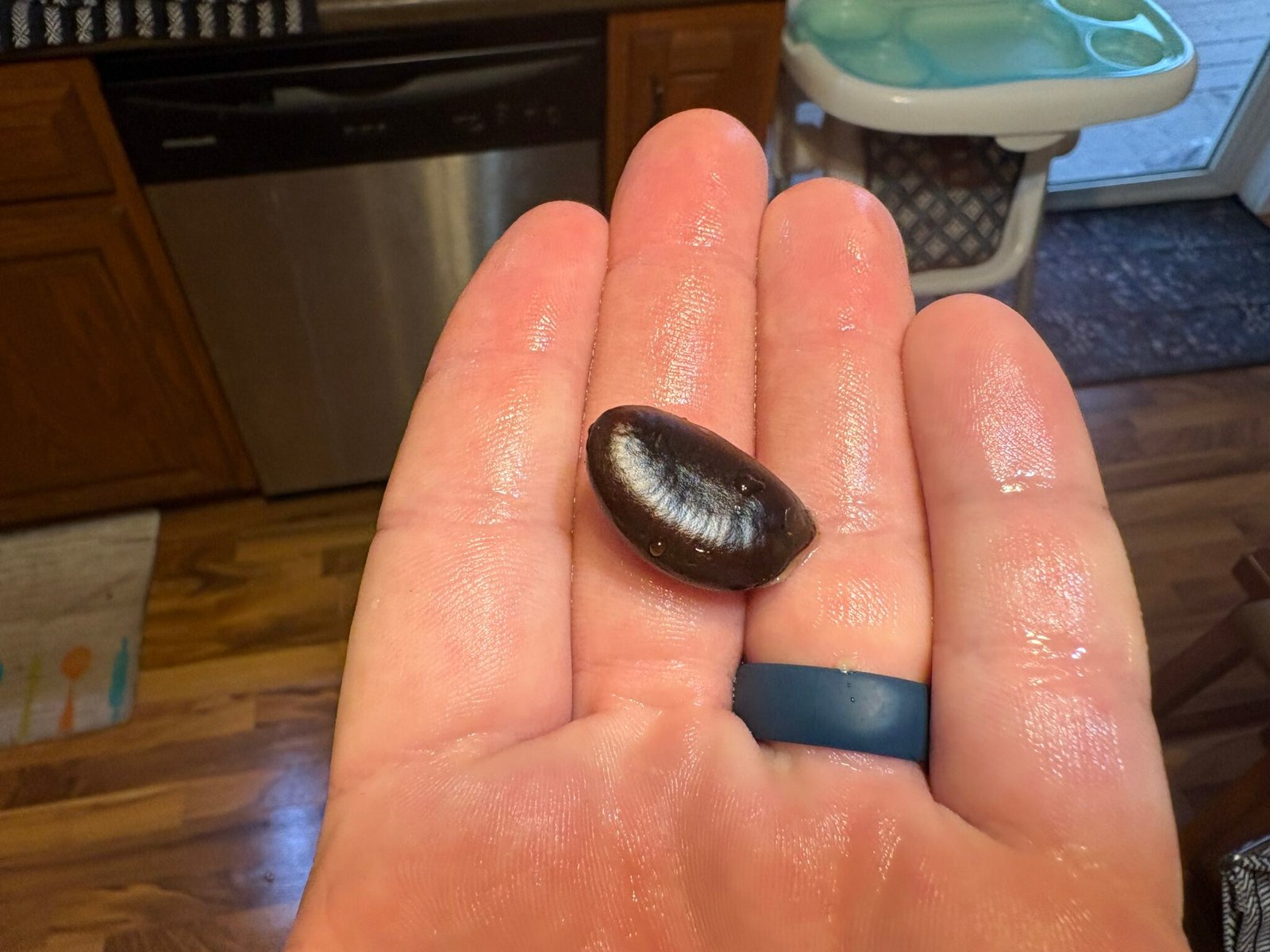
The photo above shows one of our fully ripe Honey Jar jujubes after it had reached the stage I personally enjoy eating the most.
I Actually Prefer Them Mostly Brown
This is where personal preference comes in.
Some people enjoy jujubes while they’re still crisp and mostly green.
There’s nothing wrong with that.
Personally, I wait a little longer. I LOVE them way more the more brown they get, even to where they wrinkle a bit they are much sweeter and rich!
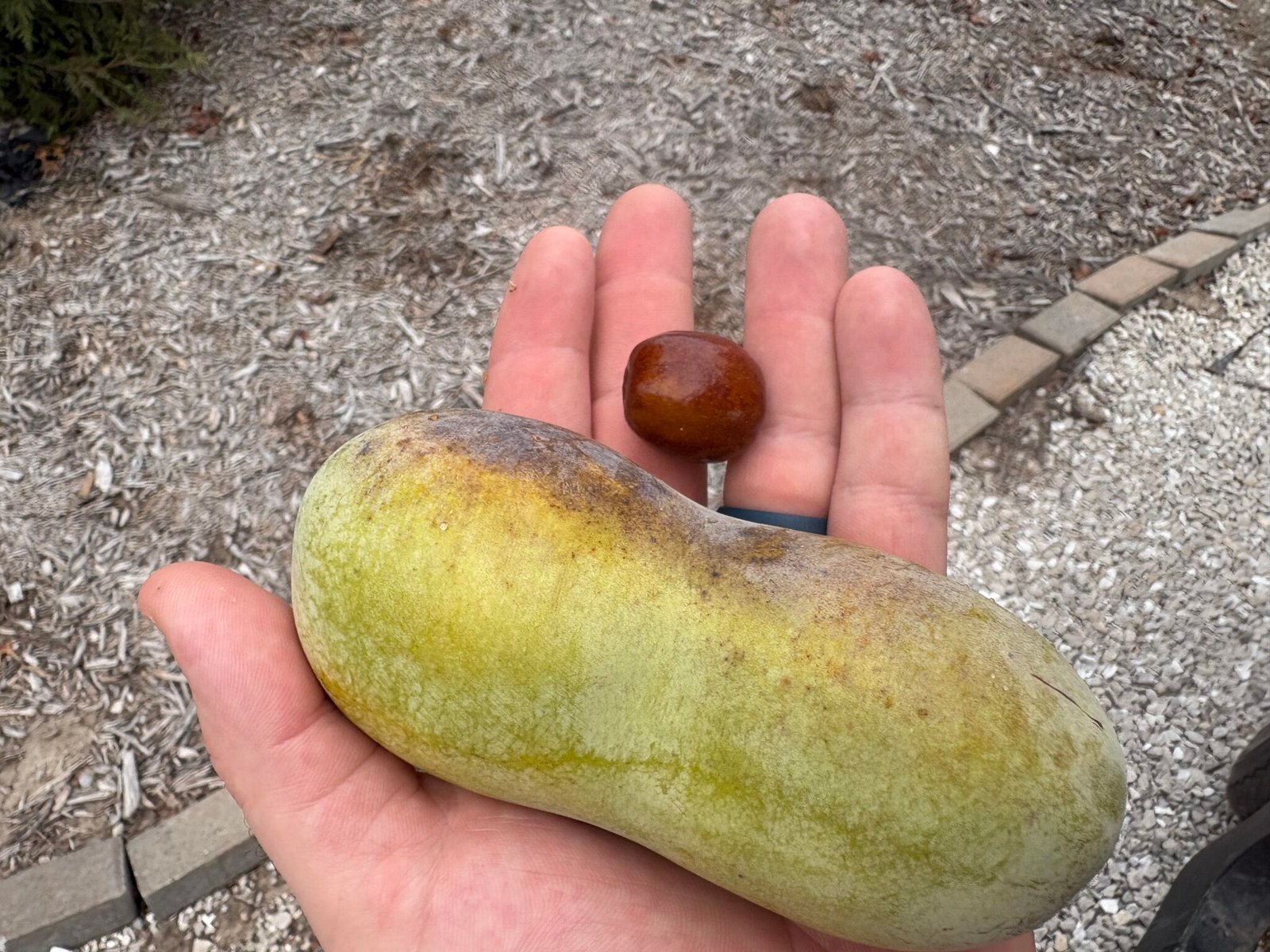
Once our Honey Jar jujubes turn mostly brown and begin softening just slightly, I think the flavor changes dramatically. That flavor profile becomes especially interesting when compared with another unusual orchard fruit in this Honey Jar jujube flavor.
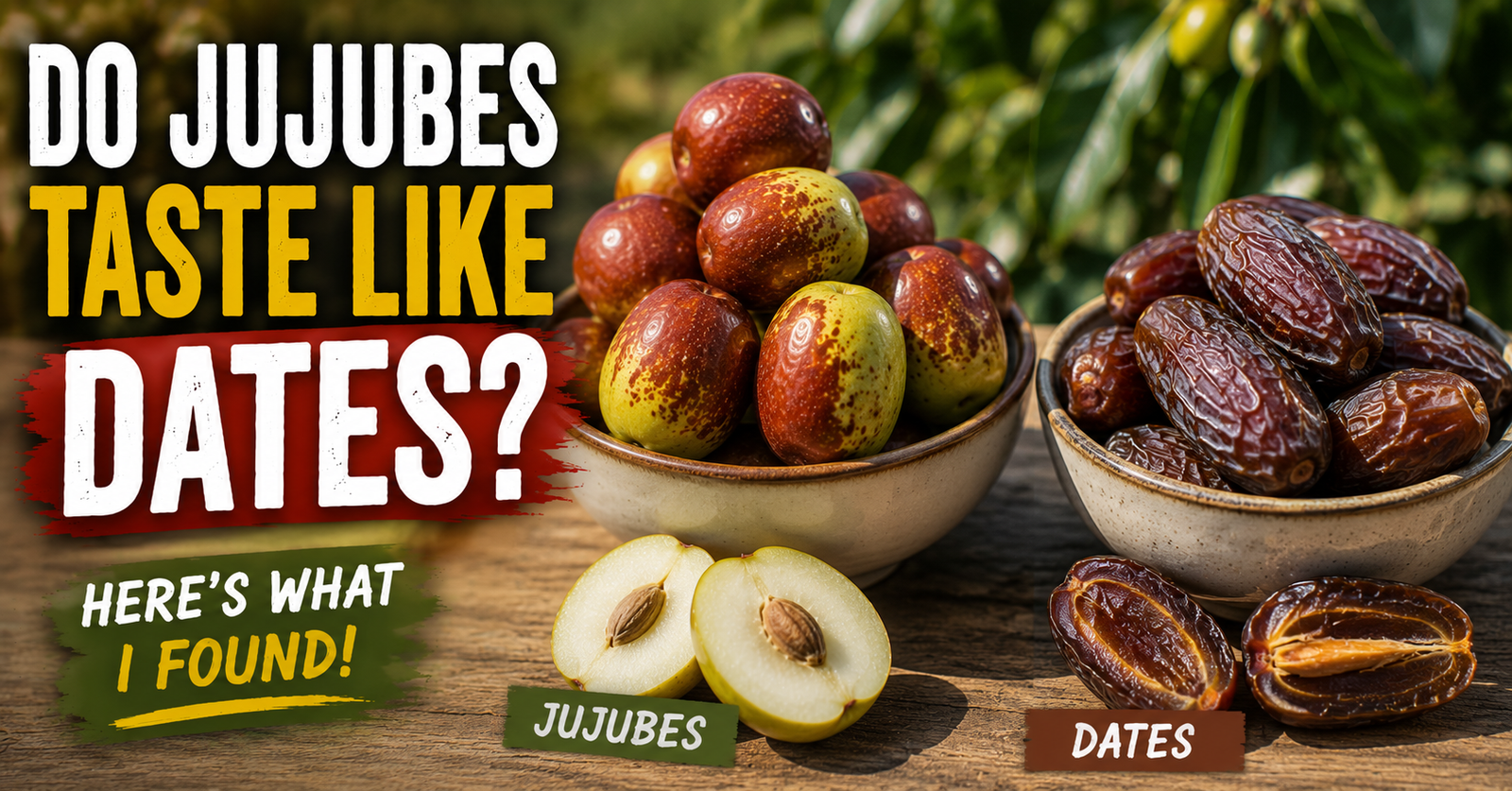
Instead of tasting mostly like a sweet apple, they begin developing richer notes that remind me of dates, brown sugar, and even a little molasses.
That’s when I start looking forward to harvest every morning.
The Skin Should Still Look Healthy
A ripe jujube should have smooth, healthy skin.
The brown color itself isn’t a problem.
In fact, it’s often exactly what you’re hoping to see.
What I don’t want to see is mold, large damaged areas, or signs that insects have gotten into the fruit.
A healthy ripe jujube should still feel firm enough to hold its shape while looking glossy and clean.
Size Isn’t the Best Way to Judge Ripeness
Early on, I found myself paying too much attention to fruit size.
I’ve learned that’s not the best indicator.
Some jujubes naturally grow larger than others.
Instead of looking at size, I focus on:
- Color.
- Firmness.
- Taste.
- How easily the fruit comes off the tree.
Those clues have been much more reliable for me.
Taste Changes As the Color Changes
One of the most interesting things about jujubes is that they almost seem like two different fruits depending on when you eat them.
Green fruit reminds me of a crisp apple.
Fully brown fruit becomes much richer.
That’s one reason I encourage people to taste them at different stages.
You may discover your favorite ripeness is completely different from mine.
For me, the fully brown stage wins every time.
Should They Feel Soft?
Only slightly.
A ripe Honey Jar jujube shouldn’t feel mushy.
It should still have some firmness.
Once ours reach full color, they begin giving just a little when gently squeezed.
That’s usually my signal that the sugars have developed nicely without the fruit becoming overripe.
If the fruit becomes extremely soft, leaking, or develops an unpleasant smell, it’s probably past its best.
Not Every Variety Ripens Exactly the Same
One thing I’ve noticed growing both Honey Jar and Sugar Cane jujubes is that every variety has its own personality.
They don’t all change color at exactly the same speed.
Some hold onto green longer.
Others seem to brown more quickly.
That’s why I don’t rely only on a calendar.
Instead, I let the fruit tell me when it’s ready.
After a season or two, you’ll start recognizing the pattern on your own trees.
Don’t Be Afraid to Taste One
Honestly, this is how I learned the most.
Every few days during ripening, I’d pick one and see how it tasted.
Some were still too apple-like for my preference.
Others had already reached that rich sweetness I was hoping for.
After doing that for a season, I stopped worrying so much about finding the “perfect” color.
The fruit itself taught me what I liked best.
What If My Jujubes Stay Green?
Don’t panic.
If your fruit is full size but still green, it may simply need more time.
Weather, sunlight, variety, and your local climate can all affect how quickly jujubes ripen.
I’ve found that patience usually pays off.
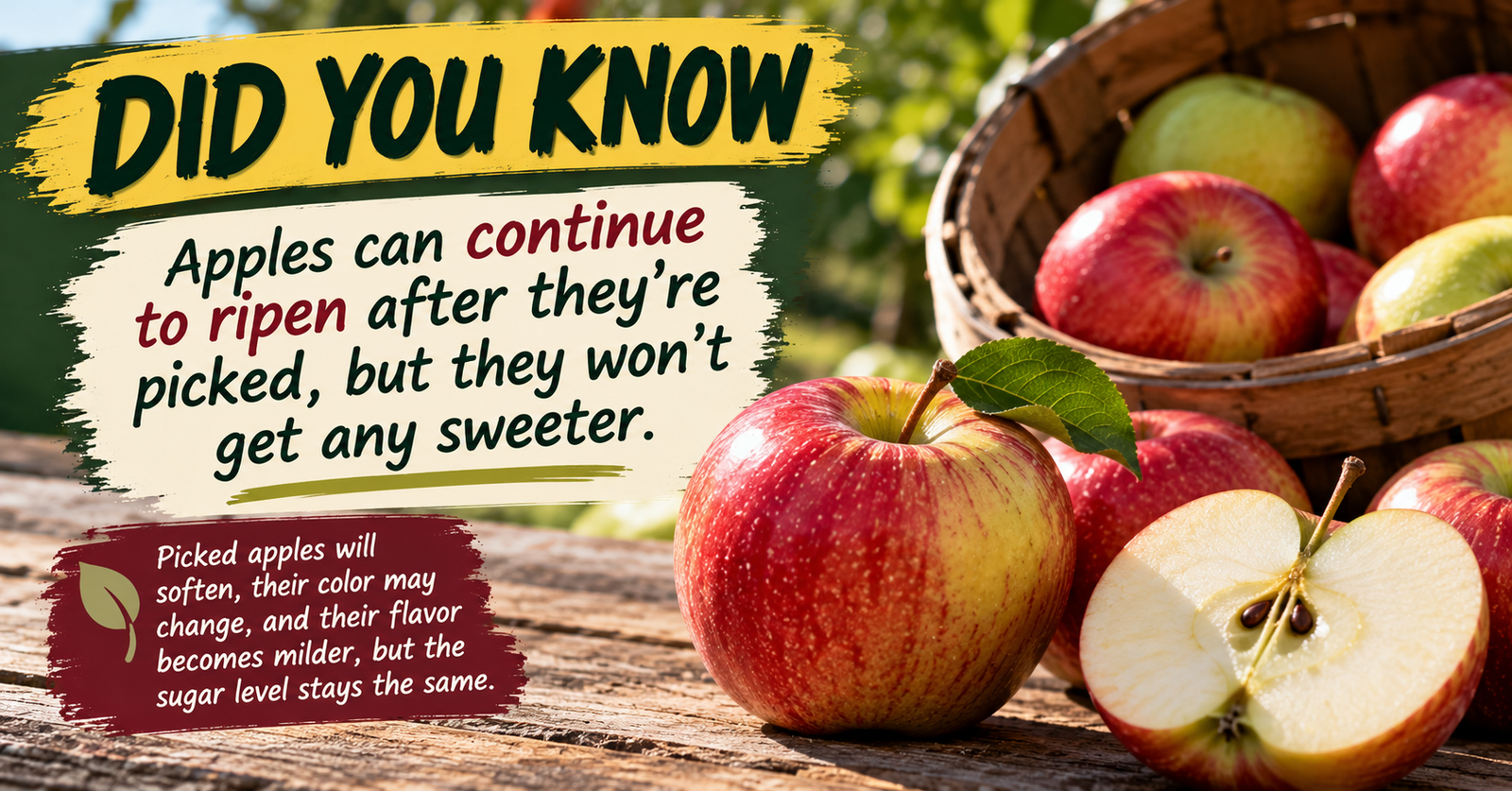
Picking them too early often means missing out on their sweetest flavor. Apples have a similar timing question, though whether apples ripen after picking follows a different pattern than jujubes.
Can You Pick Them Before They’re Fully Brown?
Absolutely.
Many people actually prefer them that way.
If you enjoy crisp fruit with an apple-like texture, you’ll probably like them before they’ve completely browned.
That’s one of the neat things about jujubes.
They’re enjoyable across several stages of ripeness.
There isn’t just one “correct” time to eat them.
My Honest Opinion
After watching our trees for several seasons, I’ve realized there isn’t one perfect ripe jujube for everyone.
There is, however, a perfect ripe jujube for me.
It’s the stage shown in the photo above.
Mostly brown.
Still smooth.
Just beginning to soften.
Sweet enough to remind me of dates while still holding onto that crisp texture that makes jujubes so unique.
Every year when I spot that first fully brown Honey Jar jujube hanging on the tree, I know one of my favorite harvests of the season has officially begun.
If you’re growing jujubes for the first time, don’t be afraid to sample them as they change color.
You might be surprised by how much the flavor evolves from week to week, and you may end up discovering your own favorite stage of ripeness.
About the Author
Daxon Weaver is the owner of Weaver Family Farms Produce, where he shares firsthand experiences growing Honey Jar and Sugar Cane jujubes, pawpaws, apples, peaches, pears, berries, and other fruits on his family’s Zone 6a Missouri farm.