One thing I’ve learned from growing different kinds of fruit on our Missouri farm is that knowing when something shouldripen and knowing when it’s actually ready to harvest aren’t always the same thing.
Some fruits practically announce when they’re ready. Our pawpaws, for example, can become soft and drop naturally from the tree. Jujubes gradually change from green to reddish-brown, and I personally enjoy them once they’re darker and beginning to soften.
Hardy kiwi berries are a little different.
They’re small, often stay green as they mature, and can look ready long before they’ve developed their best flavor. That’s something worth understanding before you start picking fruit from a backyard kiwi vine.
We’re growing hardy kiwi varieties here in USDA Zone 6a Missouri, including Ken’s Red, Issai, and Meader. Our vines are still developing (now in 2026), so I can’t give you an exact first-harvest date from our own plants yet. What I can do is explain what growers should expect in our climate, which signs actually matter, and how to avoid picking the berries before they’re mature enough to ripen properly.
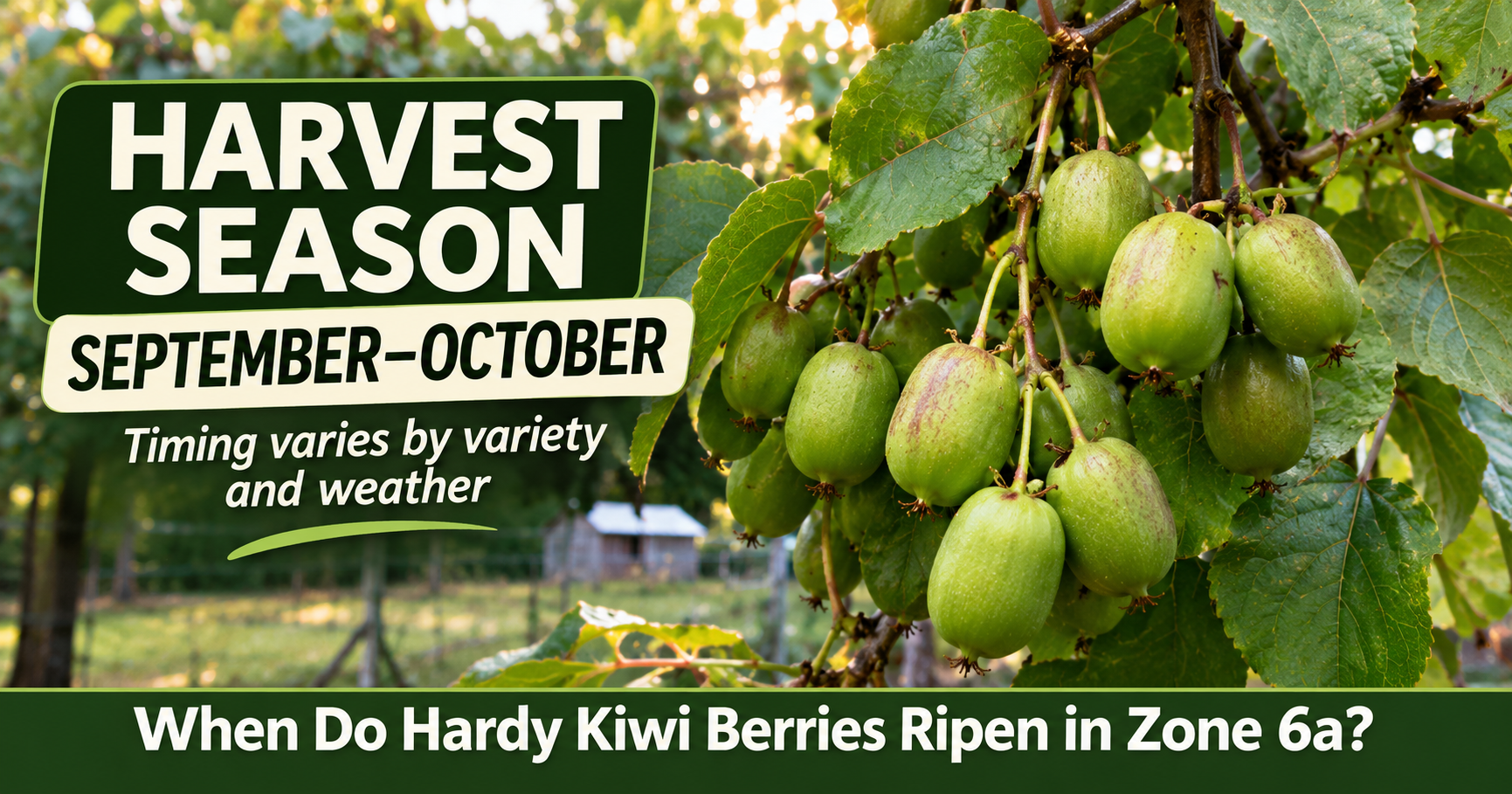
Most hardy kiwi berries ripen in late summer through fall, commonly September into October, depending on the variety and location. In Missouri Zone 6a, I’d begin watching for maturity in late summer and continue checking through fall rather than relying on a single harvest date.
The important thing is understanding what happens during those final weeks. A kiwi berry can reach its full size well before it’s ready to eat, and harvesting too early can leave you with fruit that never develops the flavor you were expecting.
When Is Hardy Kiwi Harvest Season in Zone 6a?
For home growers in Missouri and similar climates, the general hardy kiwi harvest window is late summer into fall.
That usually means paying closer attention as September approaches, although some varieties and growing conditions can move harvest earlier or later.
Oregon State University reports that hardy kiwi berries commonly ripen during September and October in its growing region, while Penn State Extension describes late summer and early fall as the general harvest season.
Those are useful reference points, but they’re not a guarantee for every Missouri planting.
Our growing conditions are different from those in Oregon.
We have hot, humid summers, cold winters, and occasional early fall temperature swings.
Those differences can affect how quickly fruit develops.
Why I Wouldn’t Pick Hardy Kiwi Based on the Calendar Alone
Let’s say you’ve read that your variety should ripen in September.
September arrives.
The berries look fully developed.
Naturally, you’re tempted to pick them.
But that doesn’t necessarily mean they’re ready.
Kiwi berries can reach their full size before completing the internal changes needed for good flavor.
That’s why I’d use the expected harvest window as a reminder to start checking fruit, not as permission to harvest everything.
Hardy Kiwi Berries Don’t Have to Change Color to Be Ripe
This is probably the biggest thing that surprises people who have never grown hardy kiwi.
Most of us are accustomed to fruit changing color as it ripens.
Strawberries turn red.
Many peaches develop a yellow background color.
Our jujubes gradually turn brown.
Hardy kiwi berries don’t always provide such an obvious signal.
Many remain green even when they’re ripe.
Some cultivars develop reddish coloring or a slight blush, but that depends on the variety.
A berry that’s green on the outside isn’t automatically unripe.
Likewise, a berry that’s developed its expected color isn’t necessarily at its best eating stage.
What Does a Ripe Hardy Kiwi Berry Look Like?
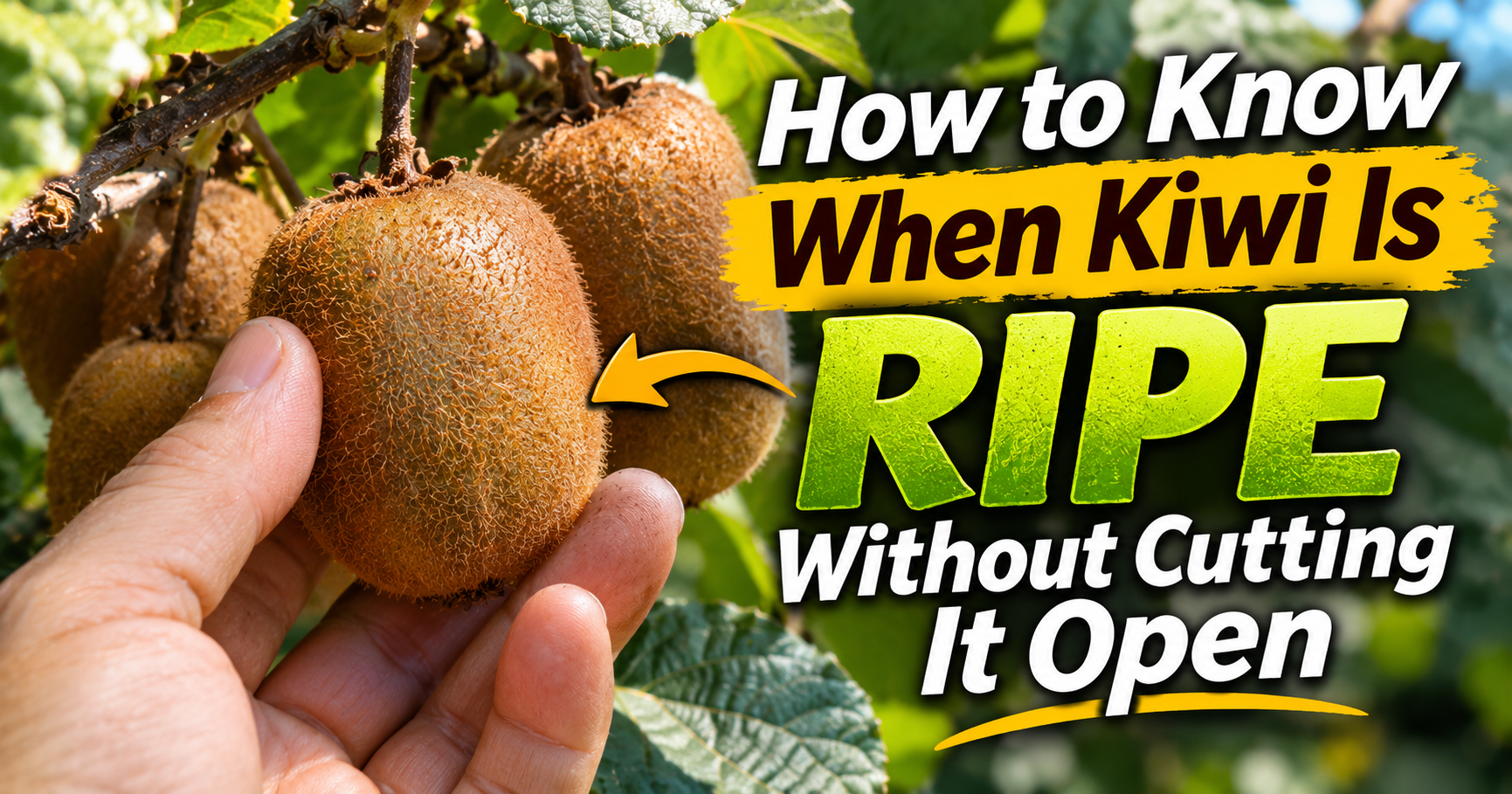
A ripe hardy kiwi berry generally has smooth, intact skin and develops a slightly soft texture.
Depending on the cultivar, you may notice:
- A little give when gently squeezed.
- A change from shiny to slightly dull skin.
- Greater translucency in some varieties.
- A sweeter, more developed aroma.
- A pleasant sweet-tart flavor when sampled.
Not every variety displays all those signs equally.
That’s why understanding the particular cultivar you’re growing matters.
How to Tell When Hardy Kiwi Is Ready to Pick
If I were checking a productive hardy kiwi vine, I wouldn’t rely on just one berry.
I’d examine several fruits growing in different areas of the plant.
Some fruit receives more sunlight than others.
Some clusters may develop faster.
And the berries won’t necessarily reach the same stage of ripeness at exactly the same time.
Check the Firmness
For fruit you’re planning to eat immediately, slight softness is an important clue.
A ripe kiwi berry should generally yield gently to light pressure without collapsing.
I wouldn’t squeeze hard.
They’re small fruits, and damaging the skin can shorten their storage life.
Check the Seeds
When you’re trying to determine whether firm hardy kiwi berries are mature enough to harvest and finish ripening indoors, seed color is useful.
As kiwifruit mature, the seeds generally change from pale colors toward brown and then black.
Oregon State University recommends checking seed color as part of evaluating fruit maturity.
That requires cutting open a sample berry, but it’s worth doing before harvesting a large amount of fruit for storage.
Dark seeds are a useful maturity sign, although they don’t replace checking soluble solids or cultivar-specific harvest guidance.
Taste a Sample
If the fruit has reached an appropriate stage of maturity, tasting a sample can help you judge flavor.
I’m especially interested in this approach once our hardy kiwi vines begin producing.
With our Honey Jar and Sugar Cane jujubes, I’ve already learned how much flavor changes during ripening.
Hardy kiwi has its own ripening characteristics, and sampling fruit at different stages should help us understand when each cultivar tastes best.
For now, I would recommend checking several berries rather than assuming one represents the entire crop.
Hardy Kiwi Can Ripen After Picking
Here’s something useful about hardy kiwi.
Mature hardy kiwi berries can continue ripening after harvest.
That means you don’t necessarily have to leave every berry on the vine until it’s completely soft.
In fact, harvesting mature but still-firm fruit can be beneficial if you’re planning to store it.
Penn State Extension explains that hardy kiwi can be harvested before reaching full eating ripeness and then allowed to ripen during storage.
However, there’s an important distinction.
A mature but firm berry can ripen.
An immature berry picked far too early may never develop the flavor or sweetness you’d expect.
That’s why I wouldn’t harvest fruit based only on size.
Is Vine-Ripened Hardy Kiwi Better?
For immediate eating, vine-ripened hardy kiwi can have excellent flavor.
Oregon State University notes that allowing kiwi berries to ripen on the vine can maximize sweetness and aroma.
But there’s a trade-off.
As they soften, the berries become more fragile.
They can bruise more easily, tear during harvesting, and deteriorate more quickly.
If I were picking just enough for the family to enjoy, I’d be inclined to allow the berries to develop their best eating texture.
If I were gathering a larger harvest for storage, I’d pay more attention to picking at the proper mature-but-firm stage.
When Do Ken’s Red Hardy Kiwis Ripen?
Ken’s Red is one of the varieties we’re growing, and it’s particularly interesting because of its fruit color.
Unlike many green-fleshed hardy kiwis, Ken’s Red can develop reddish coloring in the flesh.
The skin can also develop reddish-purple tones.
In Oregon State University’s cultivar observations, Ken’s Red is a fall-ripening variety, with harvested fruit documented in early October.
That doesn’t mean October 1 is the right harvest date in Missouri.
Our growing season and local conditions are different.
I would use that information as a starting point, then monitor fruit maturity as harvest approaches.
Does Ken’s Red Have to Turn Completely Red?
No.
I wouldn’t expect every Ken’s Red kiwi berry to become uniformly red before harvesting.
Color development can vary.
Sun exposure, fruit maturity, and growing conditions can influence appearance.
The internal flesh may develop reddish coloring even when the skin isn’t completely red.
I’d be more interested in maturity, sweetness, and firmness than achieving one perfect shade.
Does Ken’s Red Need a Pollinator?
Yes. Ken’s Red is a female cultivar, and a compatible male hardy kiwi is generally needed for reliable fruit production.
That’s worth checking before spending years waiting for a harvest.
A healthy vine with plenty of leaves doesn’t necessarily mean you’ll get fruit if pollination requirements aren’t being met.
When Does Issai Hardy Kiwi Ripen?
Issai is another cultivar we’re growing here on the farm.
It’s especially interesting because it’s commonly described as self-fertile.
That means it can produce fruit without requiring a separate male kiwi vine, although pollination from a compatible male may improve fruit production.
Issai is often described as an earlier-bearing cultivar compared with some other hardy kiwis, but that doesn’t mean every plant will produce immediately.
The vine still needs enough time to establish itself.
Is Issai Fruit Ready When It Turns Green?
Issai fruit is normally green.
That color alone doesn’t tell you whether it’s ready.
I’d look for maturity, a slight softening of the berries, and the development of the expected sweet-tart flavor.
Oregon State University has also noted that Issai can ripen unevenly within clusters.
That means you shouldn’t automatically expect every berry hanging together to be ready at once.
Why Issai Interests Me for a Home Orchard
One reason I like the idea of growing Issai is that it’s often considered more manageable than some of the extremely vigorous hardy kiwi cultivars.
That may make it attractive to someone who doesn’t have a huge amount of space.
Still, I wouldn’t mistake smaller growth for a vine that doesn’t need support.
Even Issai benefits from a proper trellis and regular care.
What About Meader Hardy Kiwi?
Meader is another name associated with hardy kiwi, but there is an important detail to confirm.
Meader can refer to male or female selections.
A male Meader plant produces pollen rather than edible fruit.
A female selection can produce fruit when properly pollinated.
Because of that, I wouldn’t automatically expect every vine labeled Meader to produce a harvest.
We need to confirm the sex of the particular Meader plant we’re growing here before documenting its fruiting behavior.
Why This Matters for Harvest Expectations
Imagine planting a kiwi vine, watching it grow beautifully, and waiting year after year for fruit.
If that vine is actually a male pollinizer, you could wait forever for a harvest from that plant.
It isn’t a problem with the vine.
It’s simply doing the job it was meant to do.
That’s one reason I think understanding male and female kiwi plants is just as important as knowing when the berries ripen.
Why Hardy Kiwi May Ripen Later in Some Years
One thing growing fruit in Missouri has taught me is that no two growing seasons are identical.
Some summers are especially hot.
Others are cooler or wetter.
We can experience long dry stretches followed by heavy rain.
All of those conditions can affect plant growth and fruit development.
Hardy kiwi is no exception.
Temperature and Summer Heat
Warm growing conditions help fruit development, but the total amount of warmth accumulated through the growing season matters.
A cooler season may delay maturity.
A warmer season may encourage earlier development, depending on the cultivar and other conditions.
Sunlight
Hardy kiwi vines generally perform best when they receive plenty of sunlight.
Heavy shade can affect vigor and fruit development.
If a vine is growing under dense tree cover or against a heavily shaded structure, I’d expect different performance than a vine receiving good sun exposure.
Crop Load
A heavily loaded vine has a large amount of fruit to mature.
Crop load can influence berry size, maturity, and fruit quality.
That’s one reason professional growers pay attention to pruning and overall vine management.
Water Stress
Hardy kiwi needs adequate moisture during active growth.
Although the vines are winter-hardy, they aren’t necessarily drought-proof.
Prolonged water stress can affect fruit development and overall plant health.
At the same time, consistently waterlogged soil can damage the roots.
Good drainage and appropriate watering both matter.
What Happens if Frost Arrives Before Hardy Kiwi Ripens?
This is one of the concerns I would take seriously here in Zone 6a.
A cold-hardy vine can survive winter without necessarily being able to mature fruit under every set of fall conditions.
If a hard freeze is approaching and your berries are still immature, you have to make a decision.
I’d first evaluate how mature the fruit actually is.
If the berries have reached a stage where they can continue ripening after harvest, picking before damaging weather may make sense.
If they’re still very immature, harvesting them early won’t automatically produce good-quality fruit.
Will Hardy Kiwi Ripen Indoors After an Early Frost Harvest?
Only if the fruit was sufficiently mature when picked.
Cold weather doesn’t magically complete the internal development needed for good flavor.
That’s why checking maturity before frost becomes much more valuable than simply harvesting everything and hoping for the best.
Should You Harvest Hardy Kiwi All at Once?
Not necessarily.
For home gardens, harvesting over several pickings can make sense.
Some berries may become soft and ready before others.
If you’re picking for immediate eating, I’d collect the fruit that’s ready and leave the remaining berries to continue developing when conditions allow.
For larger harvests intended for storage, growers may instead collect mature firm berries in batches.
The best approach depends on the cultivar and what you’re planning to do with the fruit.
Be Gentle With Soft Kiwi Berries
Ripe hardy kiwi berries are more delicate than they look.
Oregon State University warns that pulling very soft fruit can tear the skin around the stem.
That damage makes the fruit less suitable for storage.
I’d handle ripe berries gently and avoid squeezing or dropping them into deep buckets.
A shallow harvesting container makes more sense.
How to Ripen Picked Hardy Kiwi Berries Indoors
If you’ve harvested mature but firm kiwi berries, you can allow them to finish ripening indoors.
The process doesn’t need to be complicated.
Keep a Small Amount at Room Temperature
Take out the amount you plan to eat soon.
Place it in a shallow container away from direct sunlight.
Check the berries regularly.
They may soften over several days, depending on their maturity and temperature.
Use Ethylene Carefully
Kiwi responds strongly to ethylene, the natural plant hormone involved in ripening.
Apples and bananas release ethylene.
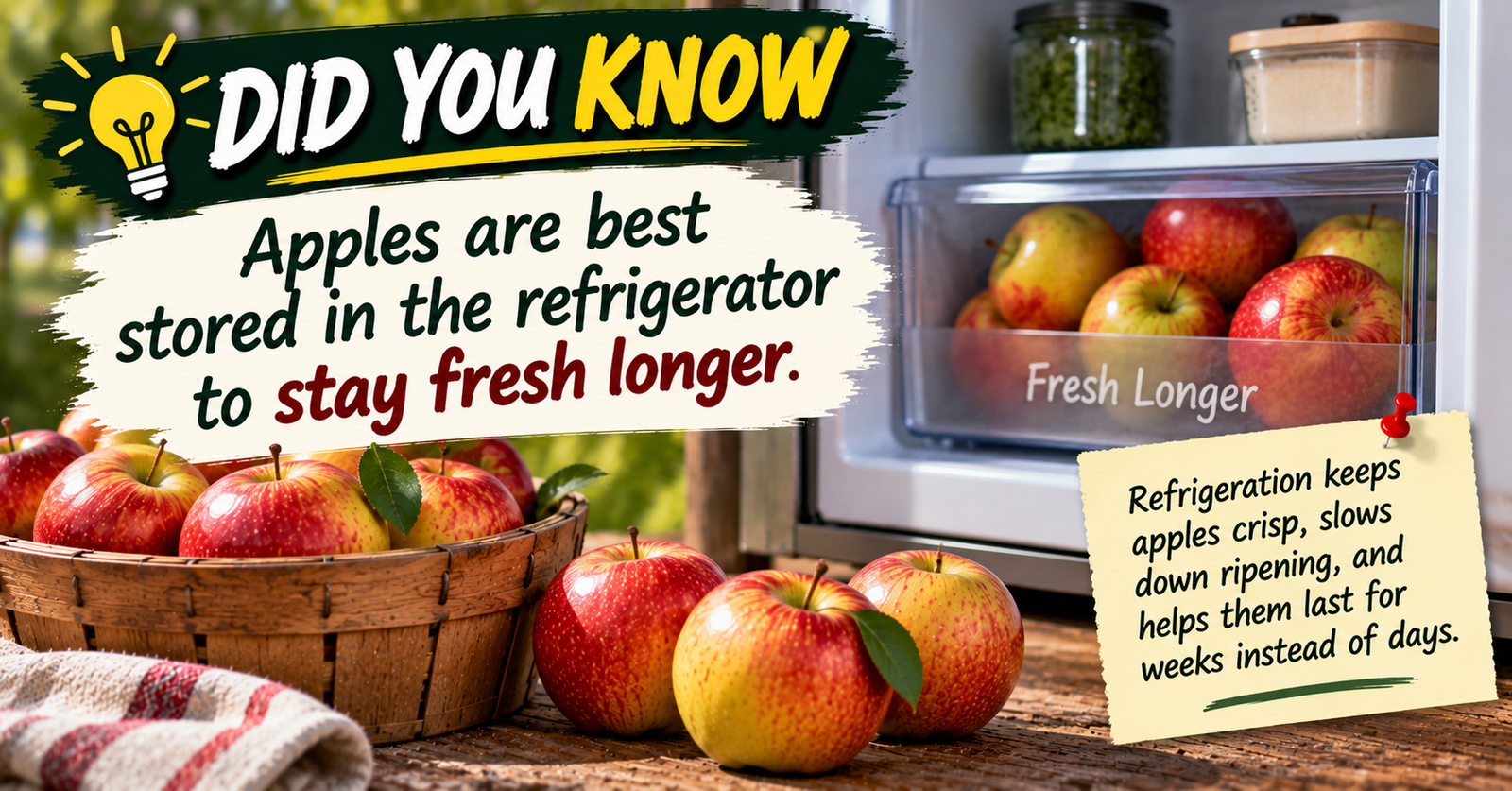
Placing mature kiwi berries near a ripe apple can speed up softening.
But I wouldn’t do this with an entire harvest unless I wanted everything ripening together.
It’s easy to end up with more soft fruit than you can eat.
Refrigerate the Remaining Harvest
If your goal is storage rather than immediate eating, refrigerate mature firm berries promptly.
Keep them separate from ethylene-producing fruit when you want to slow ripening.
Properly harvested and stored hardy kiwi can maintain quality for weeks under favorable cold-storage conditions.
At home, storage conditions are rarely as controlled as commercial facilities, so I’d inspect the fruit frequently.
How Long Do Ripe Hardy Kiwi Berries Last?
Fully ripe kiwi berries are much more perishable than firm fruit harvested for storage.
Once they become soft, I’d plan to eat them fairly quickly.
Refrigeration helps slow deterioration, but it doesn’t make ripe kiwi berries last indefinitely.
If you notice mold, leaking juice, fermentation, or slimy flesh, discard the affected fruit.
I also wouldn’t wash kiwi berries before storing them unless necessary.
Excess moisture can shorten storage life.
Rinse them under running water shortly before eating.
What Do Ripe Hardy Kiwi Berries Taste Like?
Ripe hardy kiwi berries are generally sweet, aromatic, and pleasantly tart.
The flavor varies depending on the cultivar.
Some growers describe pineapple-like notes.
Others notice tropical flavors reminiscent of traditional kiwi, strawberry, or banana.
That’s one reason I’m excited about growing more than one variety.
Ken’s Red and Issai may give us noticeably different eating experiences once our vines produce mature crops.
I don’t want to invent a side-by-side taste review before we’ve actually harvested enough fruit to compare them fairly.
For now, I can explain what these cultivars are known for and document our own results as they become available.
Common Questions About Hardy Kiwi Ripening
Do hardy kiwi berries have to turn brown before they’re ripe?
No. Most hardy kiwi berries do not turn fuzzy brown like the common grocery-store kiwi. Many remain green, while certain cultivars develop reddish coloring.
Are kiwi berries ripe when they’re still hard?
Firm kiwi berries may be mature enough to harvest and ripen indoors, but they’re generally not at their ideal eating stage until they soften.
Can you eat hardy kiwi berries straight from the vine?
Yes, when they’re ripe, sound, and properly washed. Hardy kiwi berries generally have smooth edible skin.
Do hardy kiwis ripen after picking?
Yes, provided they were harvested at sufficient physiological maturity.
Can I pick hardy kiwi in August?
Some varieties in warmer locations may approach maturity in late summer, but I wouldn’t assume August is the correct harvest month for every Zone 6a planting.
When do Ken’s Red kiwi berries ripen?
Ken’s Red is a fall-ripening cultivar. Its exact harvest timing depends on the growing region and season. October harvests have been documented in Oregon trials.
Does Issai ripen earlier than other hardy kiwi varieties?
Issai is often considered relatively early-bearing and may differ in harvest timing from other varieties, but local conditions and cultivar performance still determine the actual dates.
Will a male Meader kiwi produce berries?
No. A male Meader pollinizer produces flowers and pollen but not the edible fruit crop. Confirm the exact selection if your plant is labeled Meader.
What if my kiwi berries never ripen?
Possible reasons include insufficient growing-season heat, harvesting too early, heavy shade, crop load, water stress, or a cultivar poorly matched to the location.
Is hardy kiwi the same as regular fuzzy kiwi?
No. Hardy kiwi berries are generally smaller, smoother-skinned, and better adapted to cold winters than the common large fuzzy kiwifruit.
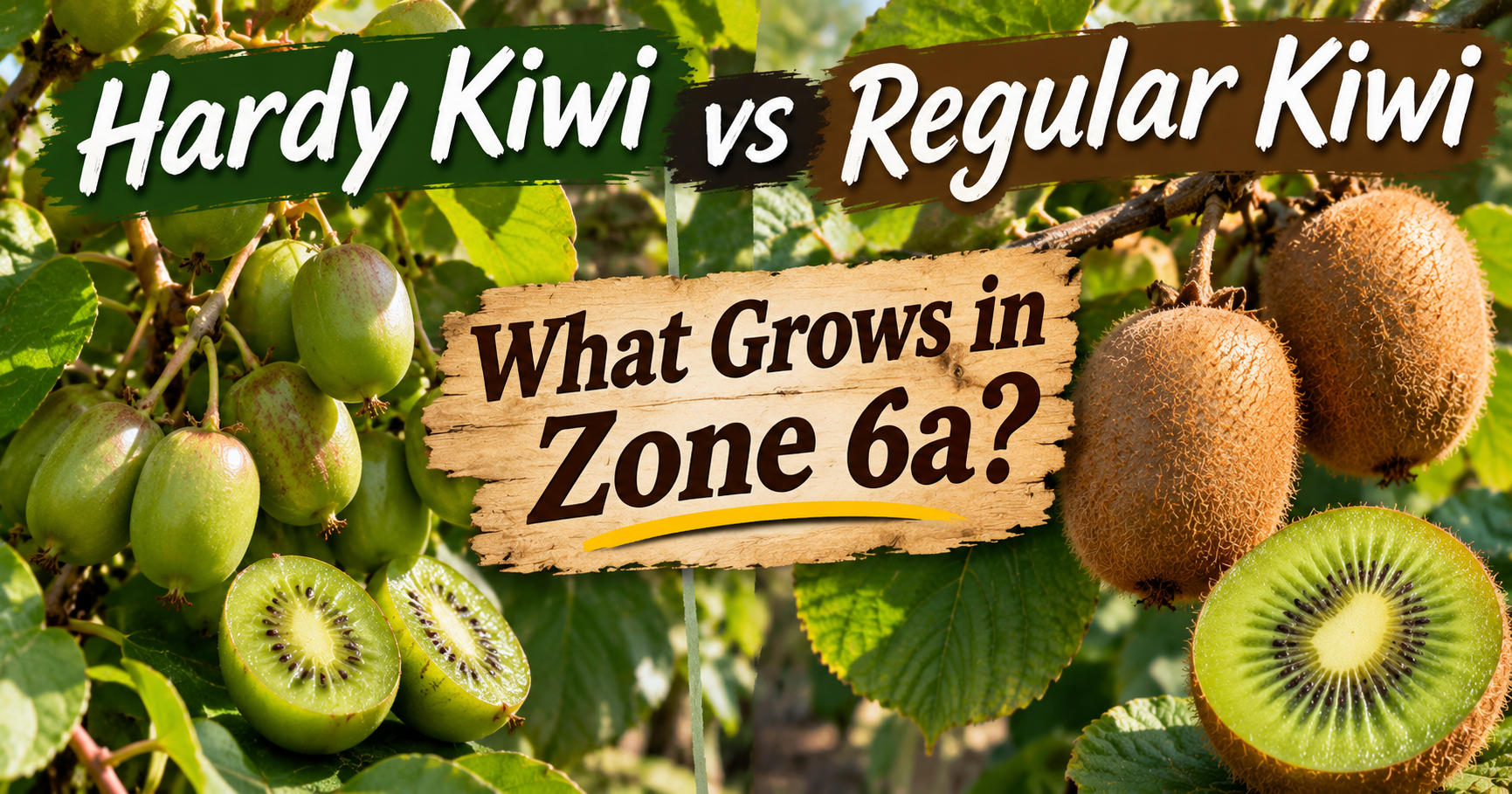
For a detailed comparison, I explain how hardy kiwi differs from regular kiwi in Zone 6a.
What I’m Watching for as Our Hardy Kiwi Vines Mature
One thing I appreciate about building our orchard is that there’s always another plant teaching us something new.
We’ve already learned quite a bit from growing and harvesting jujubes, pawpaws, apples, peaches, and several kinds of berries.
Hardy kiwi is one of the crops I’m looking forward to understanding better as our plants mature.
I’m particularly interested in seeing how Ken’s Red handles our Missouri growing season, whether Issai produces earlier, and how our Meader fits into the pollination setup once we’ve verified the plant’s exact selection.
As those vines develop, I’ll be paying attention to the dates they leaf out, when they flower, whether spring freezes affect them, and when the berries finally begin reaching harvest maturity.
Those are the details I think matter most to someone growing hardy kiwi in a climate like ours.
Not just hearing that a vine is cold-hardy.
But understanding what it actually takes to get edible fruit from that vine year after year.
For now, I would tell anyone growing hardy kiwi in Zone 6a to start watching the fruit as late summer approaches, expect the main harvest window to fall around September and October depending on the variety, and avoid harvesting based on fruit size or calendar dates alone.
If the berries are mature but still firm, they may be able to finish ripening indoors.
If they’re already soft and delicious on the vine, enjoy them while they’re at their best.
And if you’re just getting started, remember that the small smooth-skinned kiwi berries we’re growing here in Missouri aren’t the same as those large fuzzy kiwis sold in grocery stores.
Choosing the right kind of kiwi is the first step. Learning how its fruit ripens is what makes the harvest worthwhile.
About the Author
Daxon Weaver is the owner of Weaver Family Farms Produce, part of Weaver Family Farms in Missouri. He and his family grow apples, peaches, pears, pawpaws, Honey Jar and Sugar Cane jujubes, hardy kiwi varieties, berries, and other fruit crops in USDA Zone 6a. He shares firsthand farm observations alongside research-based growing, harvesting, and preserving advice, including what they’re learning as their younger fruit plantings mature.