You’ve probably done this before. Picked up a kiwi at the grocery store, gave it a squeeze, and wondered whether it was ready to eat or still needed a few days.
The outside doesn’t tell you much. Most grocery-store kiwis stay brown and fuzzy whether they’re hard as a rock, perfectly ripe, or already getting too soft.
And if you’re growing kiwi vines at home, things get even more interesting. The fruit can look fully developed while still being nowhere near its best eating stage.
Here on our Missouri family farm, we grow a variety of fruits, including kiwi vines. One thing I’ve come to appreciate about growing fruit is that you can’t judge everything by the same signs. Apples, peaches, pawpaws, and kiwis each have their own way of telling you they’re ready.
Kiwi is particularly tricky because the outside doesn’t always change much.
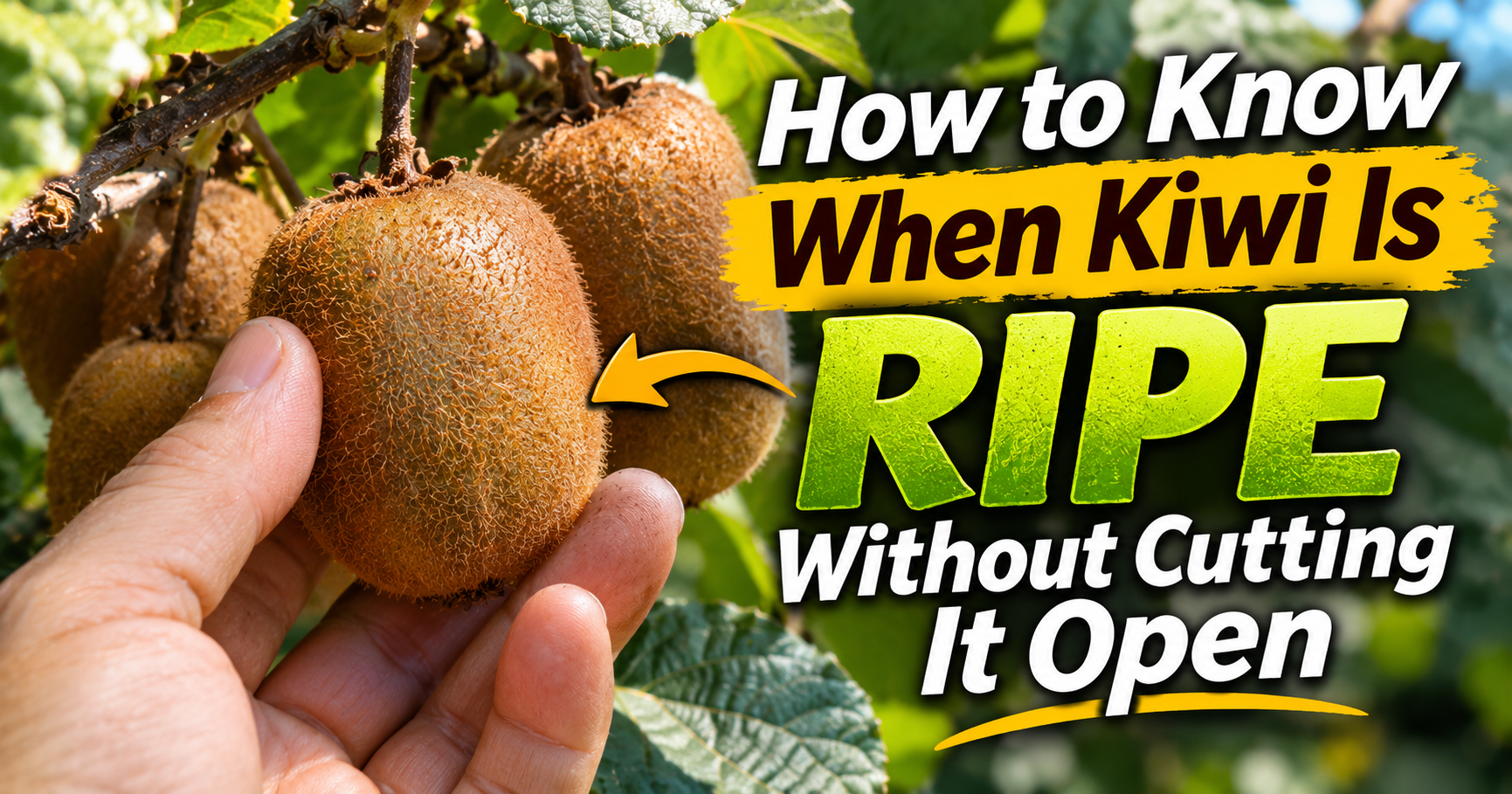
The easiest way to tell if a kiwi is ripe is to gently squeeze it. A ripe kiwi should give slightly under light pressure, somewhat like a ripe peach or avocado, without feeling mushy.
But there are a few other things worth checking before you cut it open, especially if you’re dealing with different kiwi varieties or fruit harvested from your own vines.
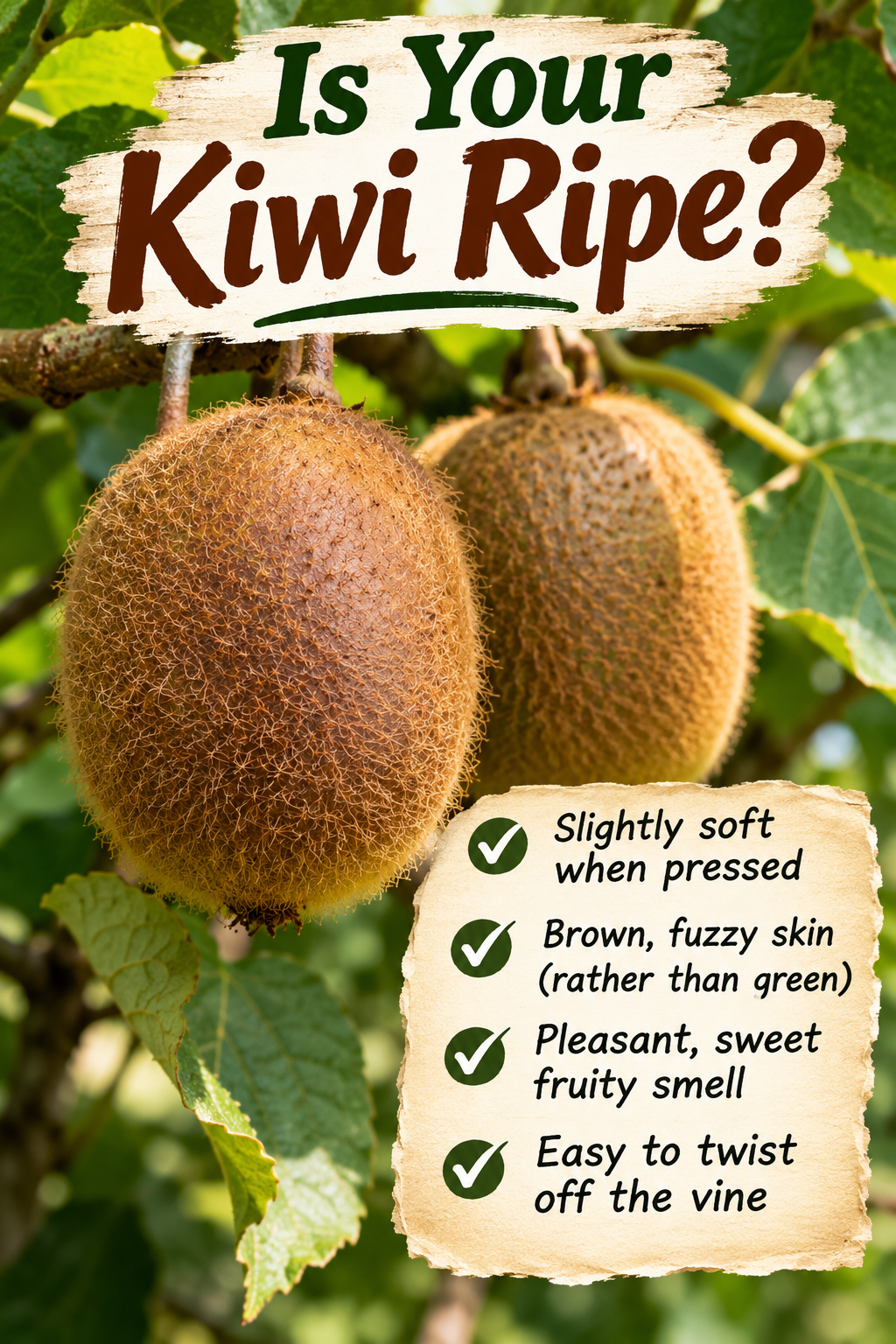
The Easiest Way to Tell if a Kiwi Is Ripe
I would start with the simplest test.
Pick up the kiwi and gently press it between your thumb and fingers.
Don’t squeeze hard enough to leave dents.
You’re only checking whether the flesh has started softening.
A typical ripe green kiwi should feel slightly soft while still holding its shape.
If it feels completely hard, it probably needs additional ripening time.
If your fingers sink into the fruit with almost no resistance, it may already be overripe.
That little difference in firmness tells you more than the color of the fuzzy brown skin.
What a Perfectly Ripe Kiwi Should Feel Like
Think about a peach that’s ready to eat.
It isn’t hard, but it doesn’t collapse when you pick it up.
That’s roughly the firmness I would look for in a ripe grocery-store kiwi.
The University of California’s postharvest guidance identifies flesh firmness as one of the best indicators of kiwi ripeness.
Commercial growers measure that using specialized equipment, but you don’t need expensive tools to check a few kiwis at home.
A gentle squeeze is usually enough.
What If the Kiwi Is Still Hard?
A hard kiwi isn’t necessarily bad.
In fact, grocery stores often sell kiwis while they’re still firm because they hold up better during shipping and storage.
If the fruit is mature enough, it can continue ripening after you bring it home.
The important thing is not mistaking firmness for spoilage.
Sometimes the kiwi simply needs a little more time.
Can You Tell if Kiwi Is Ripe by Its Color?
This is where people often get confused.
Unlike strawberries, which develop a noticeable red color, ordinary fuzzy kiwis don’t change dramatically on the outside as they ripen.
The skin generally remains brown and fuzzy.
You might notice small differences in appearance, but color alone isn’t a dependable test.
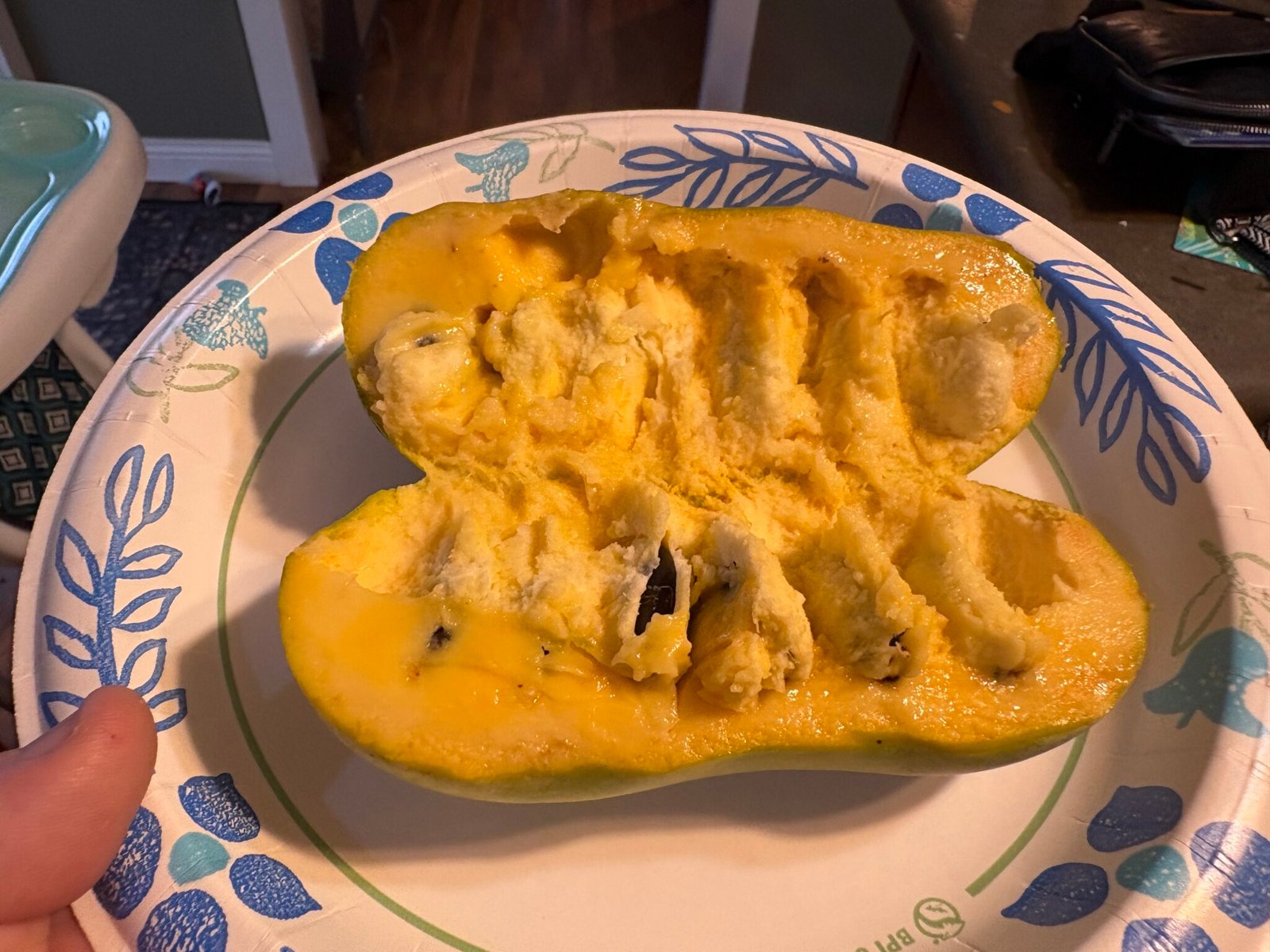
I’ve learned from growing different fruits that appearance can be misleading. Our pawpaws, for example, can remain mostly green on the outside even when the inside is soft and perfectly ripe.
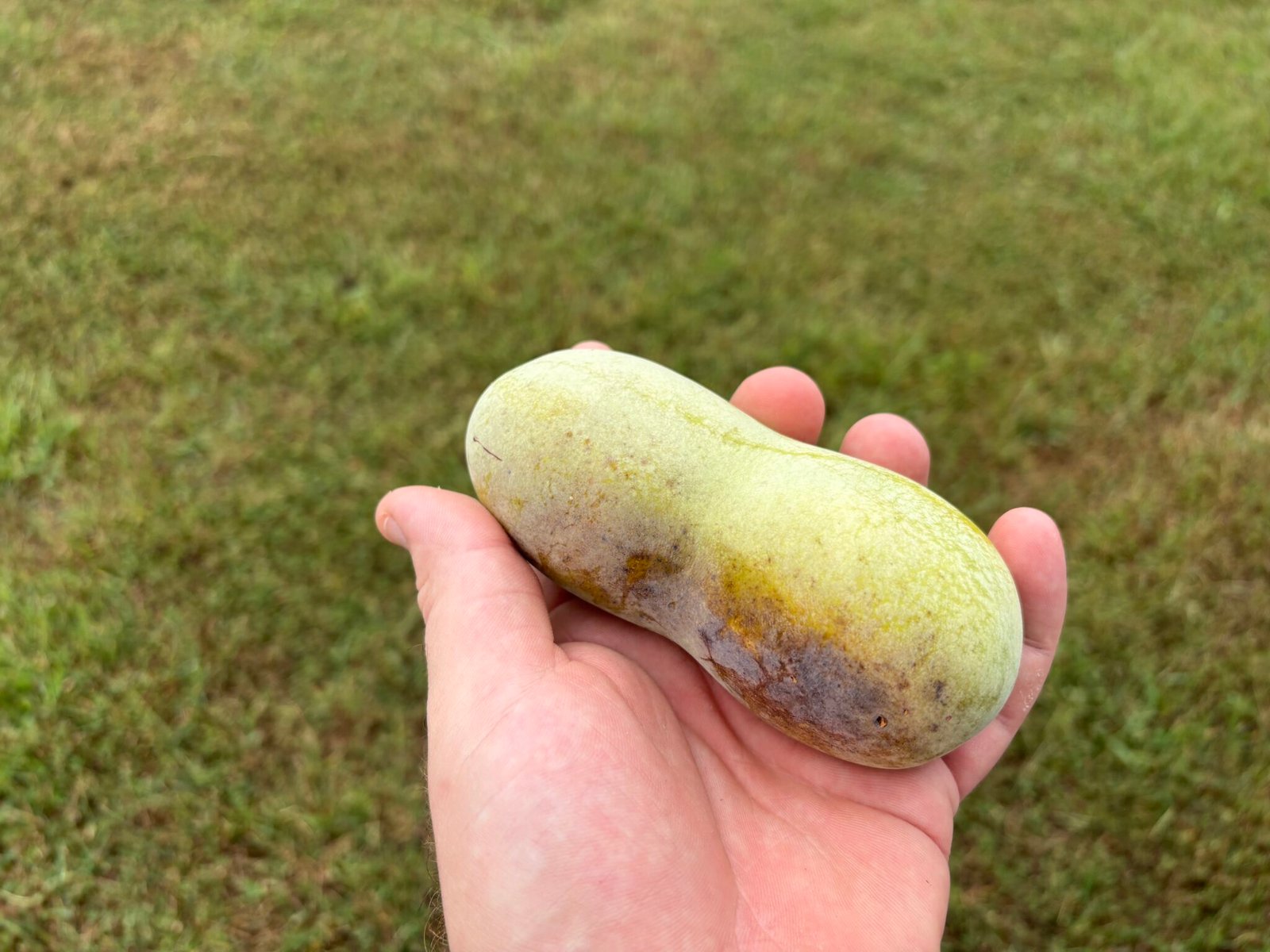
I documented that in our guide explaining what a ripe pawpaw looks like, using an actual fruit from our Missouri orchard.
Kiwi can present a similar challenge because the most important changes aren’t always visible from the outside.
Should a Ripe Kiwi Be Brown?
For the familiar fuzzy green kiwi, yes.
Brown skin is normal.
It doesn’t mean the fruit has gone bad.
The real concern would be unusual wet spots, mold, leaking juice, or skin that appears to be breaking down.
What About Golden Kiwi?
Golden kiwis are a little different.
They often have smoother, less fuzzy skin and yellow flesh.
Their skin appearance varies depending on the variety.
Some turn a golden-brown shade, while others remain relatively light.
I would still prioritize firmness over skin color when deciding whether a golden kiwi is ready to eat.

Does a Ripe Kiwi Smell Sweet?
Sometimes, but I wouldn’t make smell my only test.
A ripe kiwi may have a mild, pleasant fruity aroma.
However, many kiwis don’t develop an especially strong smell through the skin.
That’s different from certain other fruits.
A ripe peach can smell wonderful before you even take a bite.
A pawpaw often develops a distinctive tropical fragrance.
Kiwi aroma can be much more subtle.
If the fruit smells strongly fermented, sour, or alcoholic, I’d be concerned about spoilage rather than assuming it’s simply extra ripe.
What Does a Ripe Kiwi Taste Like?
A properly ripe kiwi should have a pleasant balance of sweetness and tartness.
Green kiwi is known for its bright flavor.
Some people compare it to strawberries, pineapple, or a combination of several tropical fruits.
Personally, I think kiwi is one of those fruits that’s difficult to compare perfectly to anything else.
The little black seeds add a subtle texture, but the flesh itself should be tender and juicy.
What Does an Unripe Kiwi Taste Like?
An unripe kiwi is usually much firmer.
It can also taste noticeably more tart.
Some are so firm that eating them isn’t particularly enjoyable.
The flavor may seem sharp rather than pleasantly sweet-tart.
As mature kiwis ripen, their sugars and other flavor components change.
The flesh softens, acidity becomes less prominent, and the fruit develops a more balanced eating quality.
What Does an Overripe Kiwi Taste Like?
An overripe kiwi may lose that fresh, bright flavor.
The flesh can become excessively soft or watery.
In some cases, the fruit develops an unpleasant fermented taste or odor.
I wouldn’t intentionally leave a kiwi sitting around until it’s extremely soft.
There’s a difference between ripe and spoiled.
How to Ripen Hard Kiwis at Home
If you’ve purchased several hard kiwis, you usually don’t need to do anything complicated.
The easiest method is allowing mature fruit to ripen at room temperature.
Step 1: Choose Healthy Fruit
Before setting kiwis aside, inspect them.
Look for intact skin without mold, leaking juice, or major bruises.
If one kiwi already has a damaged area, I would separate it from the others.
Damaged fruit can deteriorate before the rest has a chance to ripen.
Step 2: Leave Them at Room Temperature
Place the kiwis on a clean plate or in a shallow bowl.
Keep them out of direct sunlight.
A normal indoor temperature is usually fine.
You don’t need to set them on a hot windowsill or near a stove.
Excessive heat can encourage deterioration instead of producing better fruit.
Step 3: Check Them Every Day
This is probably the most important part.
Gently press each kiwi to see whether it’s beginning to soften.
Don’t assume every fruit in the bowl will ripen on the same day.
Some may be ready sooner than others.
Remove the ripe ones as you find them.
Step 4: Refrigerate the Ripe Kiwis
Once the fruit reaches the firmness you enjoy, move it into the refrigerator if you won’t be eating it immediately.
Cold temperatures slow further ripening.
This helps preserve the texture and keeps the fruit from becoming overly soft too quickly.
How Long Does It Take for Kiwi to Ripen on the Counter?
For mature but firm kiwis, ripening may take several days at room temperature.
Some fruit becomes ready in two or three days.
Other kiwis can take five days or longer, depending on how firm they were initially and the temperature of your kitchen.
I wouldn’t promise that every kiwi will ripen within an exact number of days.
The starting maturity makes a big difference.
A kiwi that’s already close to ripe may only need a short time.
One that’s very firm may take longer.
And fruit harvested before reaching sufficient physiological maturity may never develop good eating quality.
That’s why I’d use the squeeze test rather than the calendar.
How to Ripen Kiwi Faster With a Paper Bag
If you’re in a hurry, a paper bag can help speed up kiwi ripening.
Kiwis respond strongly to ethylene, a natural plant hormone involved in fruit ripening.
Ethylene is also released by fruits such as apples and bananas.
According to the University of Wisconsin Extension, placing kiwi near ethylene-producing fruit can help accelerate ripening.
The Paper Bag Method
- Place the hard, mature kiwis inside a clean paper bag.
- Add a ripe banana or apple if you want to encourage faster ripening.
- Fold the top loosely closed.
- Keep the bag at room temperature and away from direct sunlight.
- Check the fruit daily.
- Remove each kiwi once it becomes slightly soft.
I would avoid sealing everything inside an airtight plastic bag.
A paper bag allows some air exchange and helps reduce excess trapped moisture.
Does Putting an Apple Next to Kiwi Really Help?
Yes.
Apples naturally release ethylene gas.
That gas can encourage mature kiwis to soften and ripen faster.
It’s interesting how fruit interacts this way.
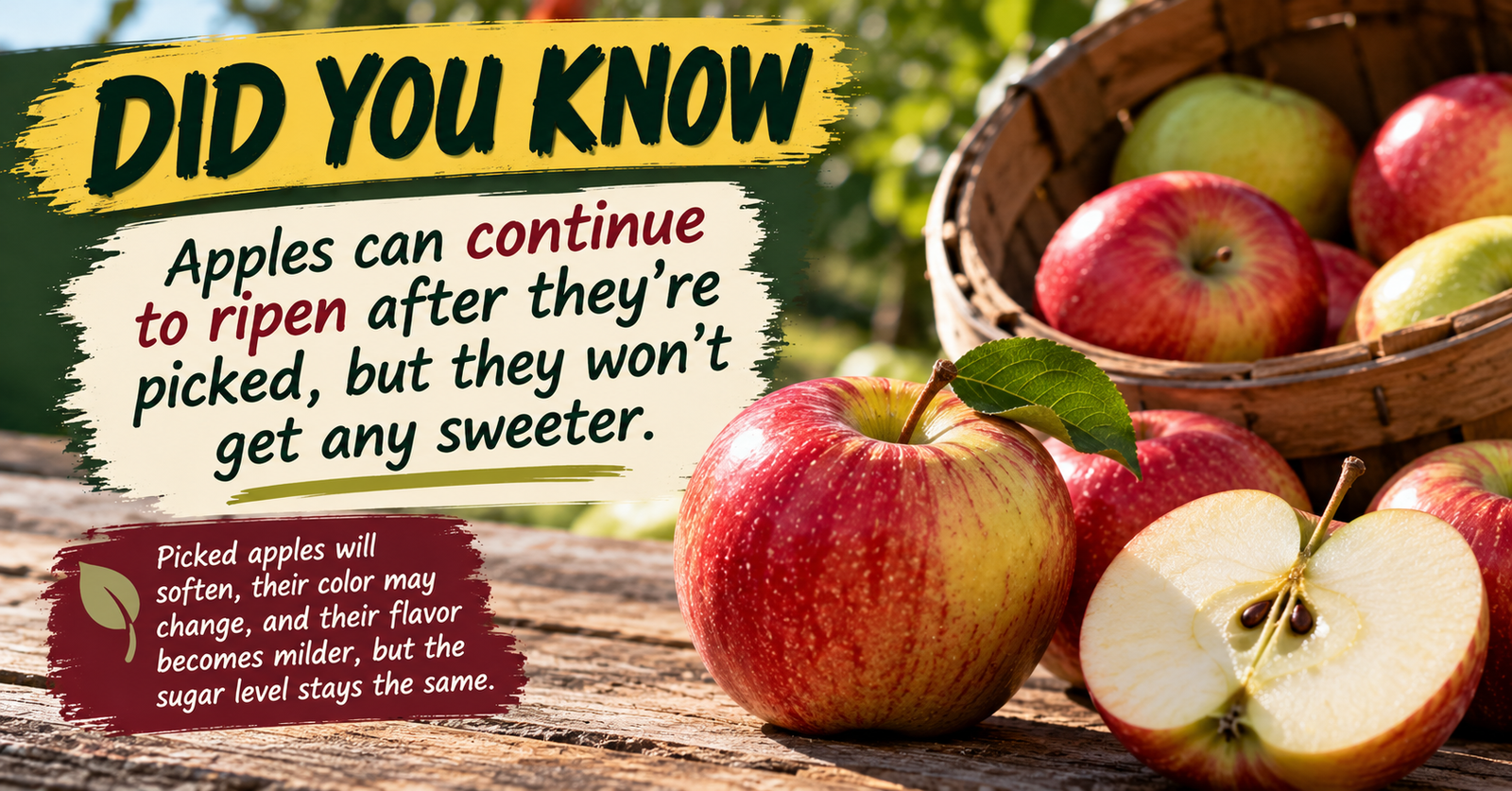
We’ve discussed how apples continue changing after harvest in our article about whether apples ripen after being picked.
With kiwis, ethylene exposure can be especially influential.
Should You Add a Banana Too?
You can, but it’s not necessary to add both an apple and a banana.
One ripe ethylene-producing fruit is usually sufficient for a small paper bag.
More importantly, keep checking the kiwis.
Once ripening gets underway, they can soften faster than expected.
Do Kiwis Continue Ripening After They’re Picked?
Yes.
Kiwis are climacteric fruits, meaning they can continue ripening after harvest when picked at the correct stage of maturity.
That’s one reason commercial growers can harvest kiwi while it’s still firm.
The fruit can be transported and stored before being ripened for eating.
However, there is an important difference between a mature but firm kiwi and fruit harvested much too early.
A very immature kiwi may never develop the flavor or sweetness you’d expect from properly mature fruit.
This is why growing kiwi at home requires more attention than simply waiting for the fruit to reach full size.
How to Tell When Homegrown Kiwi Is Ready to Harvest
Now we’re getting into something a little different.
If you’re growing kiwi vines in your backyard, you have to think about two stages.
Harvest maturity is when fruit is developed enough to ripen properly after picking.
Eating ripeness is when the fruit has softened and tastes good.
Those aren’t necessarily the same day.
With grocery-store kiwis, you’re usually trying to determine eating ripeness.
With homegrown kiwis, you’re also deciding when the fruit should come off the vine.
Why Fruit Size Isn’t Enough
A kiwi can reach nearly full size before it’s ready to harvest.
That’s why I wouldn’t use size alone.
Large fruit isn’t automatically mature fruit.
Why Softness Isn’t Always Enough
Some kiwifruit varieties are intentionally harvested while firm.
If you wait for every fruit to become completely soft on the vine, you may end up with fruit that’s difficult to handle or more vulnerable to damage.
Professional growers often use soluble-solids measurements, commonly called Brix, to assess maturity.
A refractometer measures soluble solids in fruit juice and can help determine whether kiwis have developed enough for harvest.
For the common fuzzy kiwi, UC Davis lists 6.5% soluble solids as a minimum maturity index at harvest, with higher soluble solids expected when the fruit is ready to eat.
Home growers don’t necessarily need to purchase equipment immediately, but it’s helpful to understand why commercial harvest decisions involve more than just appearance.
Hardy Kiwi Berries Are Different From Grocery-Store Kiwis
This deserves its own explanation because a lot of homeowners grow hardy kiwi rather than the familiar fuzzy fruit sold in grocery stores.
Hardy kiwi berries are typically smaller.
Many are about the size of a large grape.
Their skin is generally smooth rather than fuzzy, and they can often be eaten without peeling.
They also have slightly different ripening characteristics.
How to Tell When a Hardy Kiwi Berry Is Ripe
For hardy kiwi berries, I would look for several signs together.
- The fruit becomes slightly soft when gently squeezed.
- The skin may change to a deeper green.
- Some varieties develop a more translucent appearance.
- The fruit develops a sweeter aroma and taste.
- Fully ripe fruit may release easily from the vine.
The University of Minnesota notes that hardy kiwi berries can change from glossy, opaque green to a duller and more translucent appearance as they ripen.
That’s a useful distinction because you shouldn’t expect hardy kiwi berries to turn fuzzy brown like grocery-store kiwis.
Do Hardy Kiwis Ripen All at Once?
Not necessarily.
Fruit on the same vine can ripen unevenly.
That means a few berries may already be soft while others remain firm.
For a backyard grower, this can make harvesting a little more complicated.
The first ripe berries may signal that the crop is reaching maturity, but they don’t automatically mean every fruit is ready to eat.
Can You Pick Hardy Kiwi Berries While They’re Firm?
Yes, when they’ve reached sufficient maturity.
Hardy kiwi berries can continue ripening after harvest.
Penn State Extension explains that mature hardy kiwis may be harvested firm and then allowed to ripen during storage.
However, harvesting too early can result in disappointing flavor.
This is why I’d take variety and maturity into account rather than picking every green berry as soon as it reaches full size.
When Do Kiwi Vines Ripen in Zone 6a?
Here in Missouri Zone 6a, the exact ripening period depends heavily on which type of kiwi you’re growing.
Hardy kiwi varieties generally ripen from late summer into fall.
Some begin ripening earlier, while others may continue into September or October.
Weather can shift the schedule.
A warmer growing season may encourage earlier development.
Cooler conditions can delay maturity.
And different varieties can behave differently even when grown in the same general climate.
I wouldn’t tell someone in Zone 6a to harvest every kiwi on one exact date.
Instead, I’d recommend learning the expected harvest window for the specific cultivar and checking the fruit as that window approaches.
For our own kiwi vines, this is an area where I want to keep documenting development as the plants mature and begin producing.
There’s a big difference between general growing guidance and being able to report a specific harvest date from our own vines.
Can You Leave Kiwi on the Vine Until It’s Soft?
Sometimes, but there are trade-offs.
Hardy kiwis can develop excellent flavor when allowed to ripen on the vine.
However, soft fruit is more delicate.
It may bruise easily, drop, or become attractive to wildlife.
If you’re harvesting just a handful for immediate eating, vine-ripened fruit may be ideal.
If you’re trying to store a larger harvest, picking mature but still-firm fruit may be more practical.
This is similar to the decision growers face with peaches.
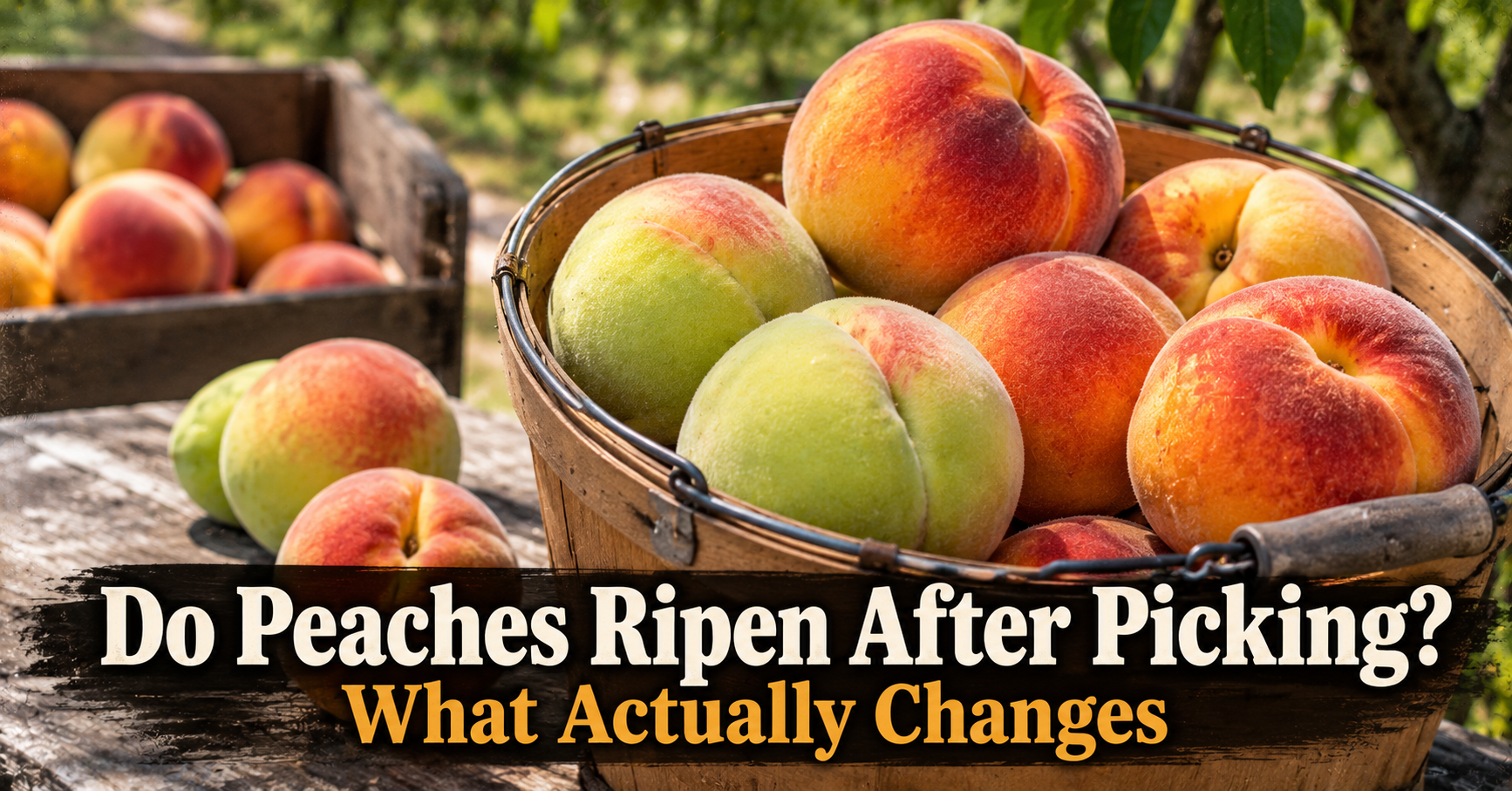
We covered that distinction in our article on how peaches ripen after picking, where harvest maturity and eating ripeness are also important.
Why Is My Kiwi Still Sour Even Though It’s Soft?
This can be frustrating.
You check the fruit.
It feels soft.
You cut it open.
Then the first bite is much more tart than expected.
There are several possibilities.
It Was Harvested Too Early
A kiwi may soften without developing its full eating quality if it was picked before reaching sufficient maturity.
This is one of the biggest reasons I wouldn’t rely on the squeeze test alone when deciding when to harvest homegrown fruit.
The Variety Is Naturally More Tart
Not every kiwi has identical sweetness.
Different cultivars vary in acidity, aroma, and sugar levels.
Some naturally taste sharper than others.
It Needs a Little More Ripening
A kiwi that’s only beginning to soften may not have reached its ideal eating stage.
If the fruit is healthy and mature, another short period at room temperature may improve the flavor.
But I’d keep checking it rather than letting it become mushy.
Why Is My Kiwi Hard in the Middle?
Sometimes the outside of a kiwi softens while the center remains noticeably firmer.
A kiwi has a central core, and its firmness may differ from the surrounding flesh.
However, an extremely hard center in fruit that otherwise seems ripe can occasionally reflect uneven ripening or storage-related problems.
UC Davis describes a hard-core disorder associated with certain commercial storage conditions involving ethylene and elevated carbon dioxide.
For a home grower or grocery shopper, the practical lesson is simple.
If the kiwi has a very hard center, don’t automatically assume leaving it on the counter indefinitely will fix the problem.
Check the overall condition of the fruit and discard it if it shows signs of spoilage.
How to Know if Kiwi Is Overripe
A kiwi can go beyond its best eating stage.
The skin may begin wrinkling from moisture loss.
The fruit may feel excessively soft.
You might notice wet spots or leaking juice.
The smell may become unpleasant or fermented.
Is a Wrinkled Kiwi Still Good?
Slight wrinkling doesn’t automatically prove that the fruit is unsafe.
But it can indicate moisture loss and declining quality.
I’d inspect it carefully.
If the fruit is moldy, leaking, slimy, or smells fermented, discard it.
If you’re unsure whether it’s been stored safely, I wouldn’t take the risk.
What If the Kiwi Is Mushy?
A very soft kiwi may simply be overripe.
However, mushiness accompanied by an unpleasant odor, mold, or visible decay is a reason to throw it away.
I wouldn’t try to rescue spoiled fruit by blending it into a smoothie.
Freezing or blending doesn’t reverse spoilage.
How to Store Kiwi So It Lasts Longer
Once you’ve got ripe kiwis, storage becomes the next question.
Unripe Kiwi
If you want the fruit to ripen soon, keep mature, firm kiwis at room temperature.
Check them regularly.
If you’re trying to delay ripening, refrigeration can help keep firm kiwis in good condition longer.
Ripe Kiwi
Once ripe, move the fruit to the refrigerator if you won’t be eating it immediately.
The California Department of Education’s produce guidance gives approximately five to ten days of refrigerated storage for ripe kiwi, depending on condition.
I would still inspect fruit regularly rather than assuming every kiwi will last the full period.
Keep Kiwi Away From Ethylene-Producing Fruit During Storage
Remember that apple or banana trick we discussed for speeding up ripening?
You don’t want the same thing happening when your goal is long-term storage.
Kiwis are highly sensitive to ethylene.
If you’re trying to keep them firm, storing them away from ripe bananas, apples, and other ethylene-producing fruit can help slow ripening.
Should You Wash Kiwi Before Refrigerating It?
I’d generally wash whole kiwis shortly before eating or preparing them rather than storing them wet.
Extra moisture on the surface may encourage deterioration.
When you’re ready to eat the fruit, rinse it under clean running water.
Can You Freeze Ripe Kiwi?
Yes.
Freezing is a practical way to preserve ripe kiwi that you won’t finish fresh.
For the best results, I’d peel and slice ordinary fuzzy kiwis before freezing, or prepare the fruit according to a reliable fruit-freezing guide.
Arrange slices on a freezer-safe tray so they freeze separately.
Once frozen, transfer them to freezer-quality bags or containers.
Remove as much excess air as practical.
Frozen kiwi is useful in smoothies, frozen desserts, and certain recipes.
However, don’t expect thawed kiwi to have the same firm texture as fresh fruit.
Freezing damages some of the fruit’s cell structure, so thawed slices can become softer and release more liquid.
Common Questions About Kiwi Ripeness
Should kiwi be hard or soft?
A kiwi that’s ready to eat should generally give slightly to gentle pressure. Completely hard fruit often needs more time, while excessively mushy fruit may be overripe.
Can you eat a hard kiwi?
Yes, provided it’s sound and suitable for eating, but it may be very tart and less enjoyable than a properly ripe kiwi.
How do I ripen kiwi overnight?
A paper bag with a ripe banana or apple may help speed ripening, but there’s no guarantee a hard kiwi will become perfectly ripe overnight.
Does kiwi ripen faster in the refrigerator?
No. Refrigeration generally slows ripening. Room temperature is better when your goal is to ripen mature, firm kiwi.
Can a kiwi be ripe while still green inside?
Absolutely. The familiar green kiwi remains green inside when ripe. Golden kiwi varieties naturally have yellow flesh.
Do kiwi seeds turn black when ripe?
Black seeds can be a useful maturity indicator in homegrown fruit, but seed color alone isn’t enough to determine ideal eating ripeness.
What happens if I eat an unripe kiwi?
An unripe kiwi may simply taste more tart and feel firmer. However, individual food allergies or sensitivities are separate concerns, and anyone with a kiwi allergy should avoid the fruit.
How can I tell if golden kiwi is ripe?
Use a gentle squeeze and look for a slight give. Avoid relying entirely on skin color because varieties differ.
Are kiwi berries ripe when they’re still green?
Yes. Many hardy kiwi berries are green even when ripe. Look for slight softness and changes in skin appearance, and consider the variety’s expected harvest window.
How long does kiwi take to ripen after picking?
Mature kiwi may take several days at room temperature, sometimes longer. Starting maturity, temperature, and ethylene exposure all affect the timing.
Can you ripen kiwi after cutting it?
Cutting a kiwi open doesn’t make it continue ripening normally. If you cut one before it’s ready, refrigerate the cut fruit promptly and use it as you would other prepared fruit.
The Ripeness Test I’d Use Every Time
If I were standing in the kitchen holding a kiwi and trying to decide whether to cut it open, I’d begin with the gentle squeeze test.
Not the color.
Not the calendar.
Not how long it’s been sitting in the fruit bowl.
I’d check whether it gives slightly without feeling mushy.
Then I’d look for damage, unusual wet spots, or signs of spoilage.
If it passes those checks, there’s a good chance it’s ready to enjoy.
For homegrown hardy kiwi berries, I’d add a few more clues, especially skin appearance, the variety’s expected harvest window, and whether the fruit has matured enough to continue ripening after picking.
That’s the important distinction.
A grocery-store kiwi and a backyard kiwi berry might have similar flavors, but their appearance and harvest behavior can be quite different.
And if you’re growing kiwi vines yourself, I think learning those differences is every bit as rewarding as finally tasting the first ripe fruit.
About the Author
Daxon Weaver writes for Weaver Family Farms Produce, sharing practical information about growing, harvesting, storing, and enjoying fruit from a Missouri Zone 6a family farm. The farm grows kiwi vines alongside apples, peaches, pears, pawpaws, jujubes, berries, and other fruit crops. His articles combine farm experience with research-based guidance, particularly for fruit that isn’t yet producing a mature harvest.