There’s nothing quite like bringing home a bunch of beautiful peaches, especially when they’re fresh off the tree. But there’s also nothing quite as disappointing as reaching for one a couple of days later and discovering it’s already mushy, bruised, or starting to spoil.
Peaches are one of those fruits that don’t give you much time to figure out what you’re going to do with them.
They’re not like apples, which can stay in good condition for weeks or even months when stored properly. A ripe peach has a much shorter window before it starts losing quality.
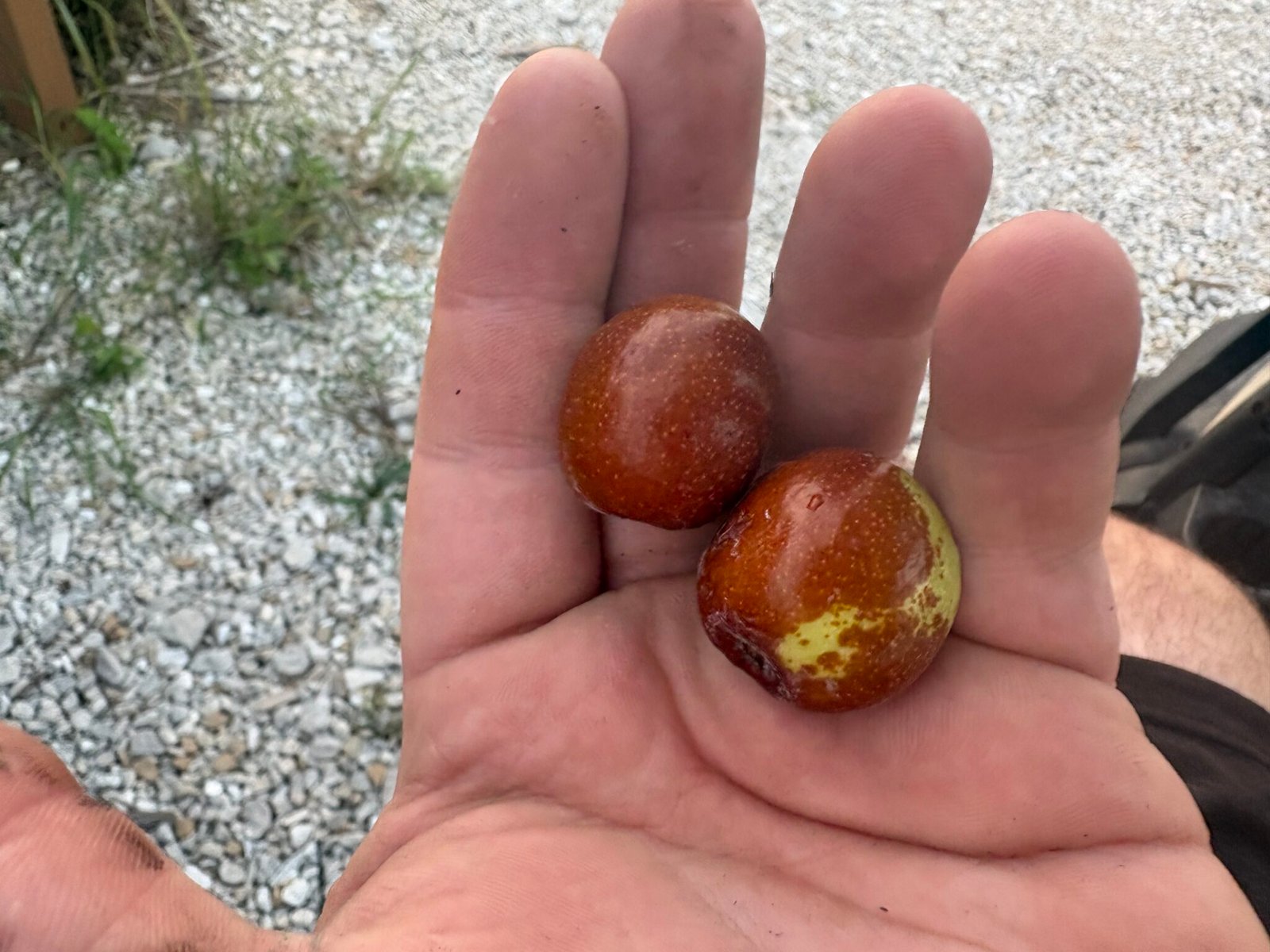
Here at Weaver Family Farms in Missouri, we grow peaches along with apples, pears, pawpaws, jujubes, berries, and several other kinds of fruit. Having different fruits growing on the same property really makes you appreciate how differently they need to be handled after harvest.
And peaches are definitely one of the more delicate ones.
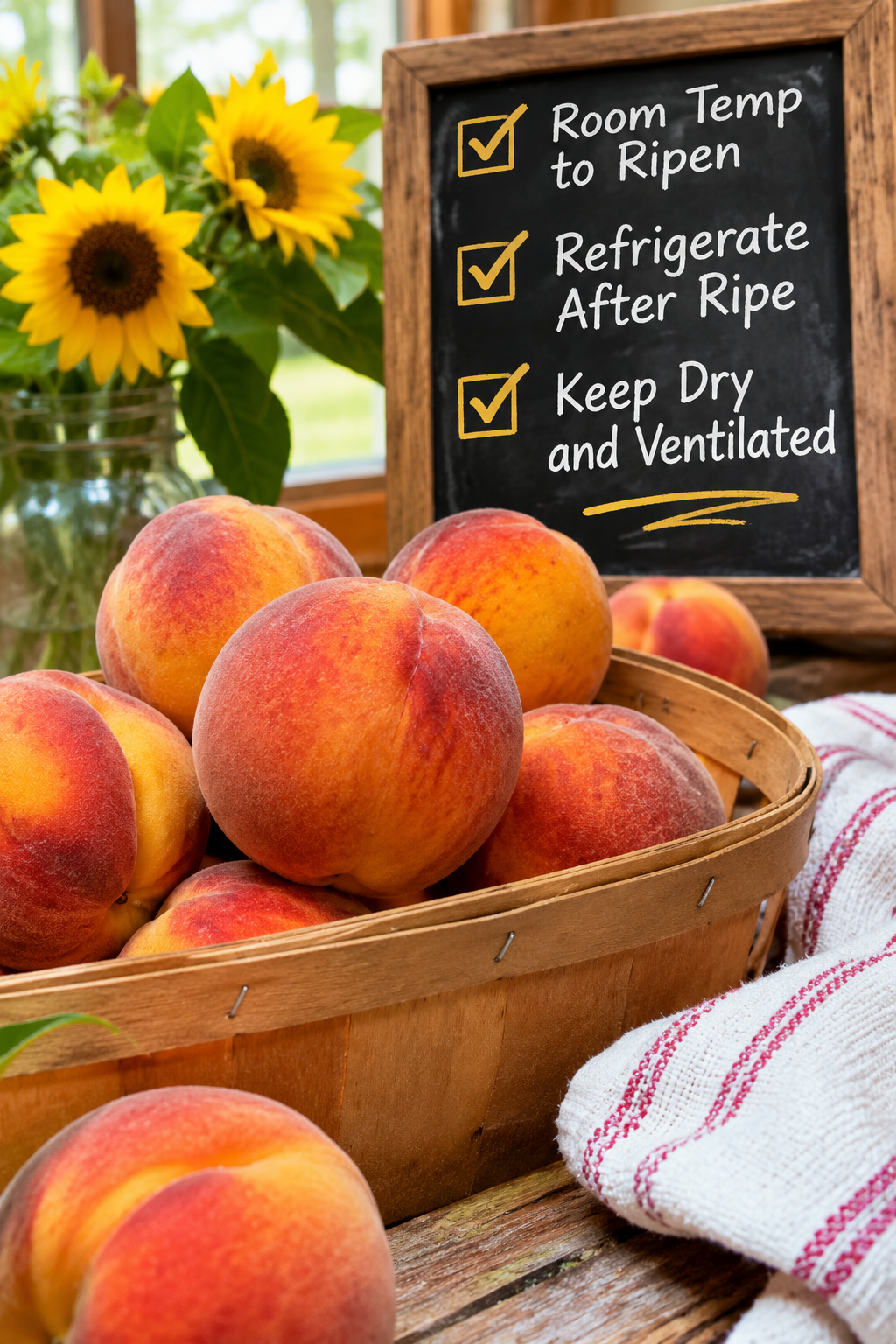
The best way to store fresh peaches depends on how ripe they are. Keep firm peaches at room temperature until they’re ripe, then move them to the refrigerator if you won’t be eating them right away.
That sounds simple enough, but there are several little things that make a difference, including how you arrange them, whether you wash them, and how long you leave them in the refrigerator.
Here’s what I would pay attention to if I wanted to keep a fresh peach harvest tasting good for as long as possible.
Should Fresh Peaches Be Refrigerated?
Yes, but not necessarily right away.
This is probably the biggest mistake people make when storing peaches.
They bring home a bag of peaches, put the entire bag straight into the refrigerator, and expect the fruit to be perfect whenever they’re ready to eat it.
But if those peaches are still hard and need to ripen, refrigeration can slow down the very changes that would make them enjoyable.
The better approach is to separate firm peaches from ripe ones.
If Your Peaches Are Still Hard
Leave mature, firm peaches at room temperature.
They need time to soften and develop their eating quality.
A kitchen counter is generally fine as long as it’s not in direct sunlight or near a heat source.
Check them daily.
Once they’re ripe, you can eat them or refrigerate them.
If Your Peaches Are Already Ripe
This is when refrigeration becomes useful.
Cold temperatures slow down ripening and deterioration.
If you have three ripe peaches and know you’ll eat them today, you probably don’t need to refrigerate them.
But if you have a dozen perfectly ripe peaches and your family won’t finish them immediately, I’d get the extras into the refrigerator.
Utah State University Extension recommends storing ripe peaches in the refrigerator for approximately three to five days.
That’s a reasonable guideline for everyday home storage.
How to Store Peaches on the Counter
If your peaches are still firm, the kitchen counter is generally the best place to start.
But I wouldn’t just dump them into a deep fruit bowl and forget about them.
Peaches bruise surprisingly easily.
Even when the skin looks fine at first, pressure can damage the flesh underneath.
Keep Them in a Single Layer
My preference would be a shallow tray, plate, or other clean surface where the peaches aren’t stacked on top of one another.
That reduces pressure on the fruit.
It also makes it easier to notice which peaches are beginning to soften.
If you have a large harvest, use multiple trays instead of piling all the peaches together.
Keep Them Away From Direct Sunlight
A sunny windowsill might seem like a good place to ripen fruit, but peaches don’t need direct sunlight after picking.
A hot windowsill can cause the fruit to warm excessively.
That may speed up deterioration and lead to uneven softening.
A comfortable indoor room temperature is plenty.
Check Each Peach Daily
Not every peach will soften at the same rate.
Some may already be close to ripe.
Others might need another day or two.
I would gently check the fruit near the stem or shoulder using light pressure.
Don’t squeeze hard enough to leave fingerprints.
As soon as a peach reaches the texture you like, either eat it or move it to the refrigerator.
How Long Can Peaches Sit on the Counter?
That depends on their ripeness when you bring them inside.
A mature but firm peach may need around two to three days at room temperature to soften.
Some will ripen faster.
Others may take a little longer.
A peach that’s already very ripe might only maintain its best quality for a short period at room temperature.
The temperature of your kitchen also matters.
A peach sitting in a warm kitchen during a Missouri summer may soften and deteriorate faster than one sitting in a cooler house.
I wouldn’t treat three days as a guaranteed shelf life.
Instead, I’d use three days as a reason to pay close attention.
What If the Peach Is Still Hard After Three Days?
Don’t automatically assume it’s spoiled.
Some varieties naturally have firmer flesh.
Other peaches may simply need additional time.
However, peaches picked too early may soften without developing good sweetness or flavor.
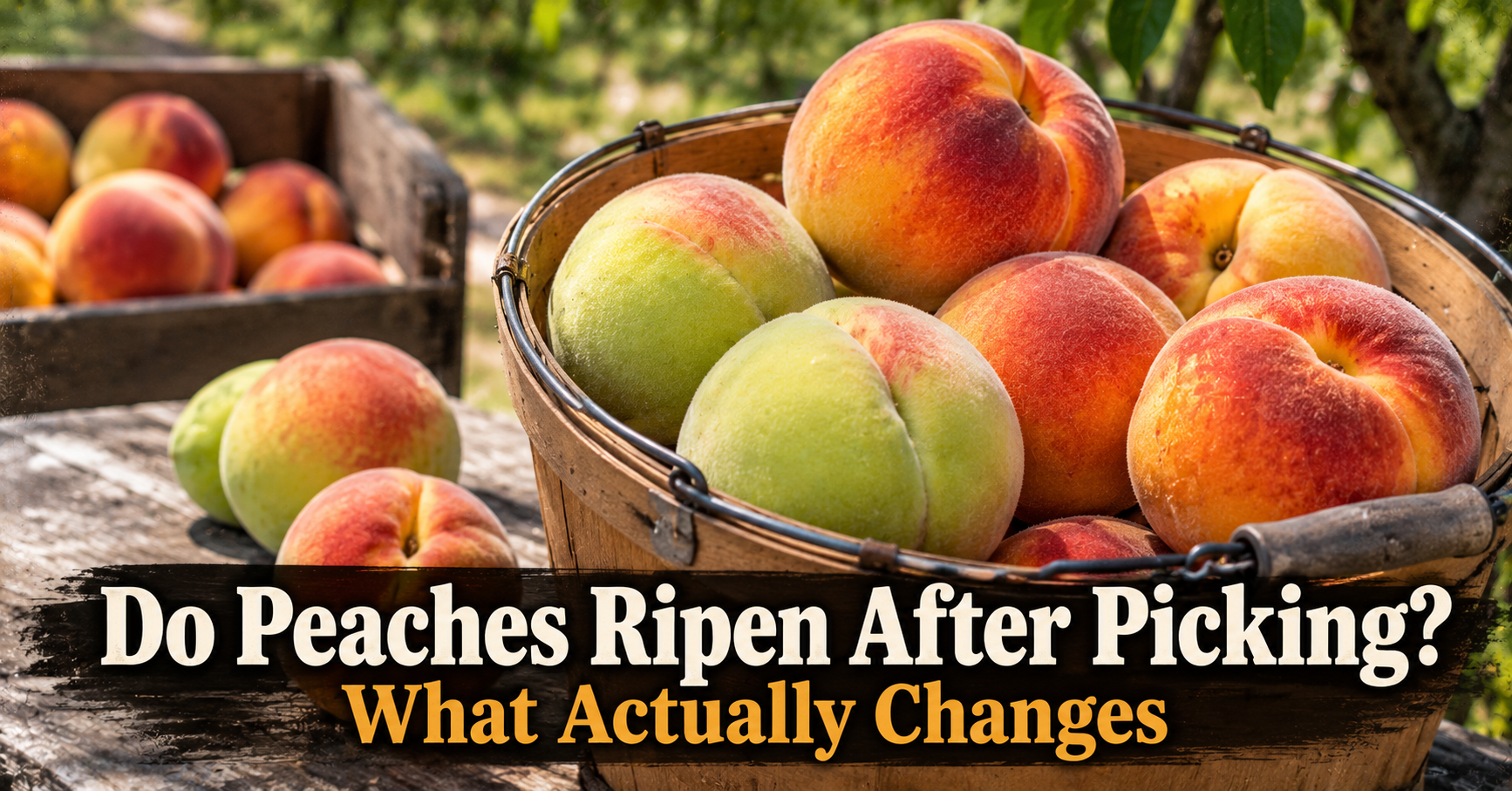
I explain that distinction in more detail in our article about whether peaches ripen after picking.
The important part is that storage can protect a good peach, but it can’t completely make up for fruit harvested before it was mature.
How to Store Ripe Peaches in the Refrigerator
Once your peaches are ripe, proper refrigerator storage can give you several additional days to enjoy them.
I would focus on three things.
Keeping them cold.
Preventing bruises.
And checking them frequently.
Don’t Crush Them in the Produce Drawer
One thing I would avoid is forcing a bunch of soft peaches into an overcrowded produce drawer.
If other fruits or vegetables are pressing against them, you can end up with bruises and damaged skin.
Arrange peaches loosely in a shallow container or a single layer when practical.
If you’re using a produce bag, don’t pack it tightly.
You want to protect the fruit, not squeeze it together.
Use the Refrigerator’s Produce Drawer
The produce drawer can be a convenient place to store ripe peaches.
A refrigerator temperature of 40°F or below is recommended for food safety.
The exact temperature inside a refrigerator can vary depending on the location and how the appliance is adjusted.
For home storage, I’d keep peaches in a reliably cold area and avoid spots where the fruit might accidentally freeze.
Check the Fruit Every Day or Two
Just because peaches are refrigerated doesn’t mean you can forget about them for two weeks.
I’d check for excessive softness, leaking juice, mold, and other signs of deterioration.
If one peach is becoming overripe, use it promptly if it’s still sound.
If it’s spoiled, discard it.
Removing damaged fruit also prevents it from sitting against the other peaches.

How Long Do Fresh Peaches Last in the Fridge?
For fully ripe peaches, three to five days in the refrigerator is a useful general expectation.
Some may remain good longer.
Others may begin deteriorating sooner, especially if they were already very soft or bruised when refrigerated.
A peach picked at just the right stage and handled gently will generally have a better chance of maintaining quality than one that’s been squeezed, dropped, or carried around in a crowded grocery bag.
This is why I wouldn’t promise someone that their ripe peaches will stay perfect for a full week.
It’s possible.
But it depends on the fruit’s condition, variety, temperature, and handling.
Can Peaches Last Two Weeks in the Refrigerator?
Under favorable conditions, certain peaches can remain marketable in cold storage for longer periods.
Commercial growers use carefully controlled temperature and humidity conditions to extend storage life.
But that doesn’t mean a typical household refrigerator will keep every ripe peach in excellent condition for two weeks.
For the average home kitchen, I would plan around using ripe peaches within several days.
If you have too many to eat, preserving them becomes a better option.
Why Do Peaches Sometimes Get Mealy in the Fridge?
This is one of the more frustrating problems with peaches.
You take a beautiful peach out of the refrigerator.
It looks fine.
You cut it open.
But instead of juicy, tender flesh, the texture seems dry, grainy, or almost cottony.
That’s called mealiness.
Peaches can develop a condition known as chilling injury or internal breakdown after extended exposure to certain cold-storage conditions.
According to the University of California Davis Postharvest Center, chilling injury can cause several problems:
- Mealy or woolly flesh.
- Loss of juiciness.
- Internal browning.
- Poor flavor.
- Abnormal ripening.
Here’s the surprising part.
The problem isn’t always caused by the very coldest storage temperatures.
Certain intermediate cold temperatures can be especially problematic during prolonged storage.
Does That Mean You Should Never Refrigerate Peaches?
No.
Refrigeration is still useful for ripe peaches that you aren’t ready to eat.
The concern is more about prolonged or poorly managed storage, particularly with susceptible varieties.
I wouldn’t leave ripe peaches sitting at room temperature for several days just because I’m worried about mealiness.
Instead, I’d let firm peaches finish ripening, refrigerate them once ripe, and use them promptly.
That’s a practical approach for most households.
Can You Fix a Mealy Peach?
Unfortunately, not really.
If the texture has already been damaged, leaving it on the counter won’t reliably bring back that wonderful juicy consistency.
If the fruit is otherwise sound and safely stored, it may still work in a cooked recipe.
But if it smells fermented, shows mold, or has signs of decay, I wouldn’t use it.
Should You Wash Peaches Before Storing Them?
I generally recommend waiting until you’re ready to eat or prepare peaches before washing them.
There’s no benefit to repeatedly getting the fruit wet during storage.
Excess moisture left on the skin can encourage deterioration, especially if the fruit is already soft or damaged.
Instead, I’d keep the peaches reasonably dry and wash them shortly before use.
How to Wash Peaches Properly
When you’re ready to eat a peach:
- Wash your hands.
- Rinse the peach under clean running water.
- Gently rub the skin to remove dirt.
- Dry it with a clean towel if desired.
- Cut or eat the fruit using clean utensils.
You don’t need dish soap, bleach, or special produce cleaners.
The FDA specifically advises washing produce under running water without soap or detergent.
That applies even when you plan to peel the fruit because a knife can transfer contamination from the outside to the flesh.
Can You Store Peaches in a Plastic Bag?
Yes, but I’d handle firm and ripe peaches differently.
Firm Peaches
If firm peaches still need to ripen, I prefer leaving them on a shallow tray or using a loosely closed paper bag.
A sealed plastic bag at room temperature can trap moisture.
That’s not ideal for fruit that still needs several days to ripen.
Ripe Peaches
For ripe peaches in the refrigerator, a produce bag can help protect them from moisture loss.
Utah State University Extension recommends a plastic bag for refrigerated ripe peaches.
However, I wouldn’t tightly compress the peaches or seal wet fruit into a bag where condensation can accumulate.
The goal is to preserve quality without encouraging bruising or excessive moisture.



Do Peaches Last Longer in a Paper Bag?
Not necessarily.
A paper bag is mainly useful for encouraging mature, firm peaches to ripen.
It can help retain some of the ethylene gas that peaches naturally release.
That can speed up softening.
But faster ripening isn’t the same as longer storage.
If you’re trying to keep peaches firm for as long as possible, a paper bag at room temperature isn’t your best long-term storage strategy.
I’d use a paper bag when I wanted the fruit to become ready to eat sooner.
Once ripe, I’d move the peaches to the refrigerator.
Should You Store Peaches With Apples or Bananas?
That depends on what you’re trying to accomplish.
Apples and bananas release ethylene, a natural plant hormone involved in ripening.
Peaches respond to ethylene too.
If your peaches are mature but still hard, placing them near a ripe banana or apple can encourage ripening.
But if your peaches are already ripe and you’re trying to make them last longer, I’d keep them away from those ethylene-producing fruits when practical.
It’s the same basic idea as other climacteric fruits.
Ethylene can help when you want ripening to happen.
It’s less helpful when you’re trying to slow it down.
What’s the Best Way to Store Peaches After Picking Them From a Tree?
If you’re growing peaches at home, your storage choices begin before the fruit ever reaches the kitchen.
That’s something I think people sometimes overlook.
You can do everything correctly in the refrigerator and still end up disappointed if the fruit was badly bruised during harvest.
Pick Peaches Gently
I wouldn’t pull or squeeze peaches aggressively.
Mature peaches can be easily bruised.
Support the fruit with your hand and remove it carefully.
Avoid dropping peaches into buckets or letting them pile up in a deep container.
Keep Harvested Peaches Out of the Sun
Once picked, I wouldn’t leave peaches sitting in a hot vehicle or on a sunny porch.
Fruit can warm up quickly.
Heat speeds deterioration, especially when the peaches are already ripe.
Bring the harvest inside promptly.
Sort the Peaches Before Storing Them
This is the first thing I’d do with a mixed harvest.
Separate the fruit into three groups.
Firm but mature peaches: Allow these to finish ripening at room temperature.
Ripe peaches: Eat soon or refrigerate.
Bruised or damaged peaches: Inspect carefully and prioritize prompt use if still safe.
That simple sorting step helps prevent one very soft peach from being forgotten among several firmer ones.
Don’t Store Damaged Peaches for Later
If a peach has significant bruising or broken skin, I wouldn’t put it into long-term storage and hope for the best.
Damage shortens quality.
For minor bruising, sound fruit may still be usable after removing the affected area.
But moldy, leaking, rotten, or otherwise spoiled peaches should be discarded.
Why Your Peaches Are Going Bad So Fast
Sometimes it feels like peaches spoil almost overnight.
If that’s happening, I’d consider several possible explanations.
They Were Already Very Ripe
A peach that’s perfectly soft when you bring it home may have a relatively short remaining shelf life.
If you won’t eat it soon, refrigerate it promptly.
They Were Bruised During Handling
Peaches can develop internal bruising without dramatic damage to the skin.
A grocery bag full of heavy items isn’t a good place for delicate fruit.
Neither is a deep harvest bucket with several layers of peaches.
They Were Stored Somewhere Warm
Warm temperatures accelerate ripening and deterioration.
That can be especially noticeable during summer.
A peach sitting on a warm kitchen counter may not remain at its best for very long.
Moisture Collected Around the Fruit
Wet or damaged skin can increase the risk of decay.
I’d avoid storing wet peaches in tightly packed containers.
One Spoiled Peach Was Left With the Others
If a peach has mold or is leaking, remove it.
Check the nearby fruit for damage or contamination.
I wouldn’t keep spoiled fruit in the same container as sound peaches.
Is a Soft Peach Still Good to Eat?
Yes, sometimes.
Softness alone doesn’t mean a peach is spoiled.
In fact, many varieties are at their best eating stage when the flesh has softened considerably.
The difference is between pleasantly ripe and deteriorating.
Signs a Soft Peach May Still Be Good
A ripe peach may have tender flesh, a sweet aroma, and juicy texture.
A small bruise doesn’t automatically mean the entire fruit is bad.
But I’d inspect any damaged area before deciding to eat it.
Signs It’s Time to Throw a Peach Away
I’d discard peaches showing:
- Visible mold.
- A fermented or rotten smell.
- Slimy or leaking areas associated with decay.
- Extensive rotten flesh.
- Obvious spoilage or contamination.
I also wouldn’t assume a peach is safe just because it doesn’t smell bad.
Good handling and refrigeration are important even when a fruit appears normal.
Can You Cut Up Peaches and Store Them in the Refrigerator?
Yes, but cut peaches need more careful handling than whole fruit.
Once you’ve sliced a peach, the exposed flesh becomes more vulnerable to oxidation and contamination.
The fruit can also lose moisture or become excessively soft.
I’d place cut peaches into a clean, covered food-safe container and refrigerate them promptly at 40°F or below.
The FDA recommends refrigerating cut or peeled produce within two hours, or within one hour when temperatures are above 90°F.
For the best flavor and texture, I’d use freshly cut peaches as soon as practical.
Why Do Cut Peaches Turn Brown?
Browning is often caused by oxidation.
When peach flesh is exposed to air, enzymes can trigger color changes.
That doesn’t automatically mean the fruit is spoiled.
An ascorbic acid treatment can help slow browning when preparing fruit for preservation.
But I’d still refrigerate cut peaches rather than relying on an anti-browning ingredient to keep them safe.
How to Store a Large Peach Harvest
If you’re fortunate enough to have a peach tree producing more fruit than your family can eat, refrigerator storage alone probably won’t solve the problem.
I’d separate the harvest according to what needs to happen next.
Keep the Best Fresh-Eating Peaches Aside
Choose healthy peaches that are already close to their best eating stage.
Those are the ones I’d plan to enjoy fresh.
Refrigerate the Ripe Extras
Move the ripe fruit that won’t be eaten immediately into the refrigerator.
Remember that this only buys you a relatively short amount of time.
Use Slightly Bruised Peaches Promptly
If the fruit is still safe but has minor bruising, I wouldn’t waste valuable refrigerator space trying to store it for a week.
I’d use it promptly in a suitable recipe after removing damaged areas.
Freeze the Extra Peaches
For a larger harvest, freezing is a much better long-term option.
Frozen peaches are useful for pies, cobblers, smoothies, sauces, and other recipes.
The texture won’t be quite the same after thawing, but you can still preserve a lot of the fruit’s flavor.
Consider Drying or Canning
Peaches can also be dehydrated or canned using research-tested preservation methods.
Canning is especially useful when you’re trying to preserve a large harvest for pantry storage.
However, I’d always follow a current tested recipe from an extension service or the National Center for Home Food Preservation.
Fruit preservation isn’t an area where I’d recommend guessing at processing times or ingredient ratios.
How to Freeze Fresh Peaches for Later
If you’ve got more peaches than you can reasonably store fresh, freezing is worth considering.
For best quality, begin with ripe, healthy fruit.
Don’t wait until the peaches are already fermenting or spoiling.
The National Center for Home Food Preservation provides tested freezing methods for peaches, including syrup packs, sugar packs, and purees.
Preparing Peaches for Freezing
Start by washing the fruit under running water.
Remove the skin if following a preparation that calls for peeling.
Cut the peach and remove the pit.
Prepare slices, halves, or puree according to your intended use.
Preventing Browning
Peaches can darken after cutting.
Ascorbic acid is commonly used to slow that color change.
For a properly tested freezing method, follow the ingredient amounts and preparation instructions supplied by the National Center for Home Food Preservation.
Packaging Frozen Peaches
Use freezer-safe containers or bags.
Leave appropriate headspace where needed and remove excess air when practical.
Label the packages with the date and contents.
Keep the freezer at 0°F or below.
For the best quality, use frozen peaches within the recommended storage period for your chosen method.
Do Different Peach Varieties Store Differently?
Absolutely.
Not every peach variety has the same firmness, skin characteristics, or storage potential.
Some have soft, melting flesh.
Others are naturally firmer.
Certain varieties are more susceptible to chilling injury than others.
That’s why two peaches stored under the same conditions can behave differently.
One might remain delicious for several days.
Another might develop a disappointing texture sooner.
What About White Peaches?
White peaches can be just as delicate as yellow peaches.
Their naturally lower acidity can make them taste especially sweet.
But I wouldn’t assume they automatically last longer because of their color.
Variety, harvest maturity, and handling are still more important.
Do Donut Peaches Need Special Storage?
Flat or donut peaches follow the same general storage principles.
Let mature, firm fruit ripen at room temperature.
Refrigerate once ripe.
Handle gently to avoid bruising.
Their unusual shape doesn’t eliminate the need for careful storage.
Do Nectarines Store the Same Way?
Nectarines are closely related to peaches and have similar ripening and storage needs.
The main visible difference is that nectarines have smooth skin rather than fuzzy skin.
I’d use the same basic approach of allowing firm, mature fruit to ripen and refrigerating it once ripe.
Can You Keep Peaches Fresh for a Whole Month?
For most home situations, I wouldn’t count on it.
Commercial cold storage can extend peach life substantially under carefully controlled conditions.
But a typical household refrigerator isn’t the same as a commercial storage facility.
The peaches may already have spent time in storage and transportation before you bought them.
And once they’re fully ripe, their remaining high-quality storage life is limited.
If I had a large peach harvest and wanted to enjoy it a month later, I’d preserve part of it rather than try to keep everything fresh.
That’s a much more dependable approach.
Frequently Asked Questions About Storing Peaches
Do peaches need to be refrigerated?
Firm peaches that still need to ripen should generally stay at room temperature. Once ripe, refrigerate them if you won’t eat them immediately.
How long do peaches last at room temperature?
Mature, firm peaches may take around two to three days to ripen, sometimes longer. Already-ripe peaches can deteriorate much faster, especially in a warm room.
How long do ripe peaches last in the refrigerator?
A useful general guideline is three to five days for good eating quality, although actual storage life varies.
Should you refrigerate peaches in a plastic bag?
A produce bag can help protect ripe peaches from moisture loss, but avoid crushing the fruit or trapping excessive surface moisture.
Can you refrigerate hard peaches?
Yes, refrigeration slows their ripening. However, if you want to eat them soon, allowing mature, firm peaches to ripen at room temperature first is generally better.
Is it better to store peaches on the counter or in the fridge?
It depends on ripeness. The counter is better for peaches that need to ripen. The refrigerator is better for peaches that are already ripe.
Should peaches be stored stem-side down?
There’s no need to rely on a special stem orientation. The more important considerations are avoiding pressure, minimizing bruising, and keeping the fruit in a shallow arrangement.
Can you store peaches with bananas?
Yes, if you want to speed up ripening. If the peaches are already ripe and you’re trying to extend storage life, keeping them away from ethylene-producing fruit is preferable.
Why do my peaches get wrinkled in the refrigerator?
Wrinkling can indicate moisture loss and declining quality. Check the flesh and overall condition. Severe shriveling, decay, mold, or an unpleasant odor are reasons to discard fruit.
Are peaches supposed to be soft?
Many ripe peach varieties are naturally soft and juicy. However, some cultivars have firmer flesh. Softness should be considered alongside aroma, variety, and signs of spoilage.
Can I leave ripe peaches out overnight?
A sound whole peach may remain fine overnight at normal room temperature, but ripe peaches deteriorate faster when left out. Refrigeration is better when you’re trying to extend freshness. Cut peaches need prompt refrigeration.
Can I freeze peaches with the skin on?
Peaches can be frozen in several forms, but tested preservation methods often recommend peeling them first for better quality. Follow the preparation method appropriate for the recipe.
What I’d Do With a Fresh Basket of Peaches
If I brought a basket of peaches into our kitchen, the first thing I’d do is separate them based on how ripe they are.
The firm ones would stay out where I could check them.
The ripe ones we’d eat soon would be set aside.
And any ripe extras would go into the refrigerator before they started deteriorating.
If there were more peaches than we could finish within a few days, I’d start thinking about freezing or preserving them.
That’s really the key to keeping peaches fresh.
Don’t treat every peach as though it has the same amount of storage life remaining.
Some need time to ripen.
Others need to be eaten or refrigerated immediately.
And a large harvest sometimes needs to be preserved before you lose the chance.
Growing peaches is rewarding, but knowing what to do with them after picking is just as important as getting them to ripen properly in the first place.
About the Author
Daxon Weaver is the owner of Weaver Family Farms Produce, part of Weaver Family Farms in Missouri. He and his family grow peaches, apples, pears, pawpaws, Honey Jar and Sugar Cane jujubes, hardy kiwi, berries, and other fruit crops in USDA Zone 6a. Through the website, he shares practical farm experiences and research-backed information about harvesting, storing, preserving, and enjoying homegrown fruit.