There was a time when I thought growing apples would be one of the easiest things on our farm.
Plant a tree.
Water it.
Wait for apples.
Simple.
At least, that’s what I imagined.
It didn’t take long to realize apple trees have a way of teaching patience.
Not because they’re difficult to grow.
Because they don’t always behave the way I expected.
Over time I’ve learned that apples reward observation far more than rushing.
Every season the trees seem to teach me something new.
Some lessons have saved me frustration.
Others have simply helped me appreciate apple trees more than I ever expected.
If I could go back and talk to myself before planting our first apple tree, these are the things I’d want myself to know.
Apple Trees Don’t Hurry for Anyone
This is probably the biggest lesson.
Fruit trees don’t care that I’m excited.
They don’t care that I keep checking them every morning.
They’re going to grow at their own pace.
When we first planted ours, I found myself measuring every little bit of new growth.
I’d compare them to other trees.
I’d wonder whether they were growing fast enough.
Eventually I realized healthy trees aren’t racing.
They’re building.
Roots first.
Branches second.
Fruit later.
Once I accepted that, growing apples became much more enjoyable.
Every Apple Doesn’t Ripen at the Same Time
One thing that surprised me was how much variation there could be on the very same tree.
I’d assumed harvest day would simply arrive.
Instead, one apple might be ready while another nearby still needed another week.
That taught me not to judge an entire tree by one piece of fruit.
Now I taste several apples before deciding harvest has really started.
Sometimes the best apples are the ones I almost picked a few days too early.
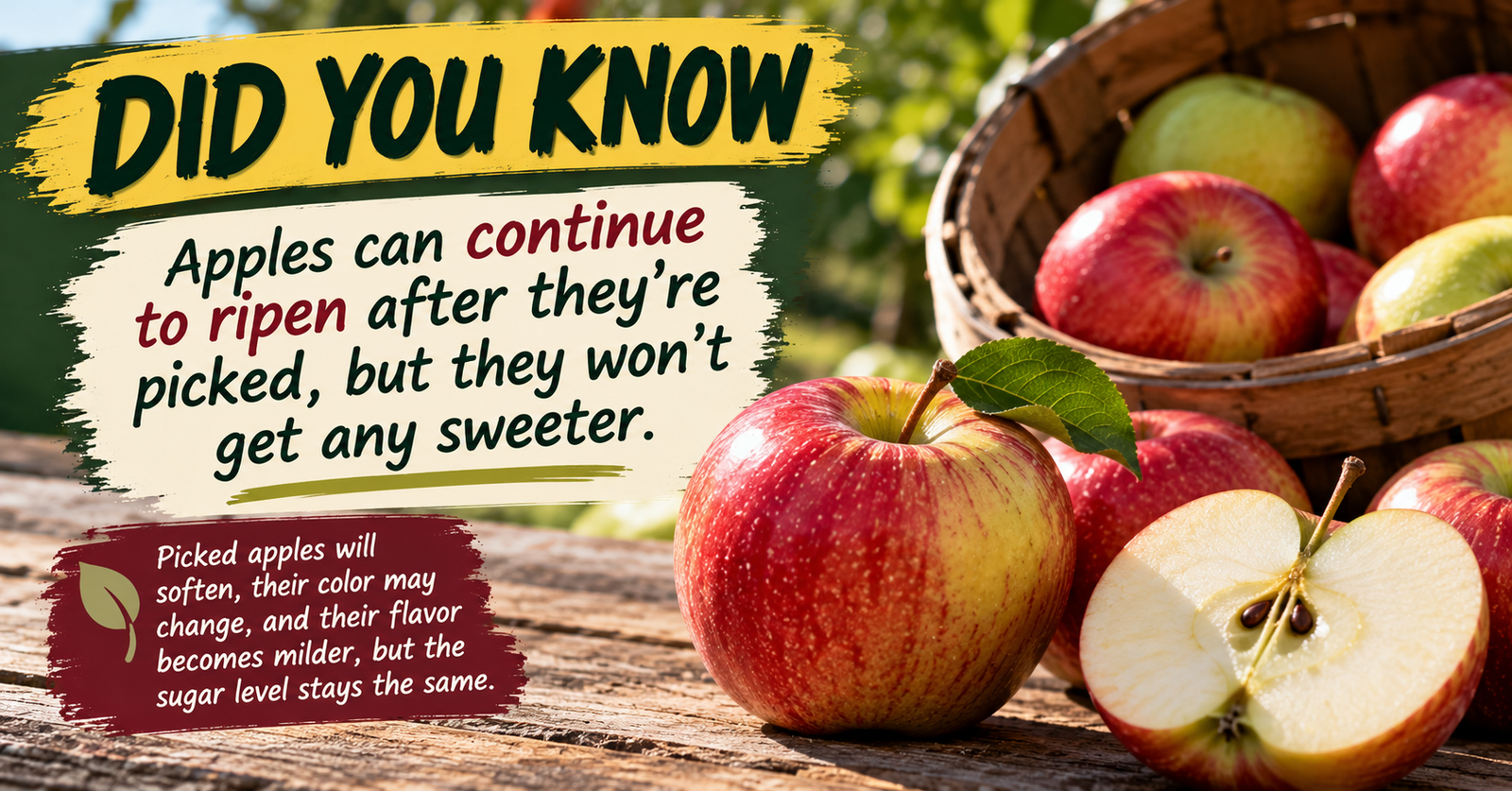
Perfect Apples Mostly Exist in Grocery Stores
This one changed my expectations more than almost anything.
When you buy apples at the grocery store, someone has already sorted them.
The bruised ones.
The insect-damaged ones.
The oddly shaped ones.
They rarely make it to the display.
Growing your own apples is different.
Some will have blemishes.
Some will get scratched by branches.
Some may have a few spots.
That doesn’t automatically make them bad apples.
In fact, some of our sweetest apples have been the least attractive ones.
Growing my own fruit has completely changed how I judge appearance.
Trees Teach You to Watch Instead of Guess
One thing I’ve started doing is paying much closer attention to the trees themselves.
The leaves often tell me something before the fruit does.
The weather tells me something.
Even the insects tell me something.
Instead of reacting to every little problem, I’ve learned to spend a few minutes simply observing.
Sometimes the answer becomes obvious once I slow down.
Not Every Fallen Apple Is Bad News
The first time apples started dropping from one of our trees, I honestly thought something had gone terribly wrong.
I was already wondering what disease had caused it.
Then I learned about natural fruit drop.
Sometimes the tree simply knows it can’t mature every apple it produced.
That changed the way I look at the orchard.
Instead of focusing on the apples on the ground, I pay attention to what’s still hanging in the branches.
Quite often, there’s still an excellent harvest waiting.
Weather Matters More Than I Expected
This may have been my biggest surprise.
I expected the variety to determine everything.
Instead, every season seems to write its own story.
A rainy summer creates different challenges than a dry one.
A late frost changes everything.
A windy week can knock fruit loose.
The apples teach me that farming isn’t about repeating the exact same year over and over.
It’s about adapting.
That’s one reason I enjoy it so much.
No two harvests have ever been identical.
Patience Usually Beats Doing Something
This was probably the hardest lesson for me.
Whenever I noticed something unusual, my first instinct was to fix it immediately.
More water.
More fertilizer.
More pruning.
More…
Eventually I realized trees often need less interference than I wanted to give them.
Sometimes the best decision is simply watching another week before making changes.
That doesn’t mean ignoring problems.
It means making thoughtful decisions instead of emotional ones.
I Started Enjoying the Orchard More
Somewhere along the way, I stopped thinking only about harvesting apples.
Instead, I started enjoying everything leading up to harvest.
The blossoms.
The tiny fruit.
The smell of the trees after rain.
Watching bees move through the orchard.
Even learning about diseases became interesting because every challenge taught me something I didn’t know before.
Growing apples became much more than producing fruit.
It became another reason to spend time outside.
I Wish Someone Had Told Me Apple Trees Aren’t Perfect
One thing I had to get out of my head was the picture of perfect apples.
You know the ones I’m talking about.
Bright red.
Perfectly round.
No spots.
No insect damage.
No blemishes.
That’s what most of us grow up seeing in grocery stores.
When you grow your own apples, you quickly realize that’s not how nature works.
Some apples get scratched by branches during windy days.
Some develop a few spots.
A bird might peck one.
An insect might decide it wants the same apple you do.
For a while, I’d see one imperfect apple and immediately think something was seriously wrong.
Now I don’t.
One thing I’ve learned is that the healthiest tree in the orchard can still produce fruit with a few cosmetic blemishes.
In fact, some of the sweetest apples we’ve picked have been the ones that would never make it onto a grocery store display.
Wildlife Wants the Harvest Too
This was another lesson I didn’t fully appreciate until I started growing fruit.
I wasn’t the only one watching those apples.
The squirrels were.
The birds were.
The deer were paying attention too.
Sometimes I’d walk out expecting to admire a nearly ripe apple only to discover something else had already taken a bite.
At first that frustrated me.
Now I simply accept it as part of growing food outdoors.
We’re sharing the landscape with wildlife, and sometimes that means they discover the fruit before we do.
I’ve learned that keeping an eye on the orchard becomes much more important once harvest gets close.
Every Problem Doesn’t Need an Immediate Solution
There was a time when every little issue made me want to fix something.
One spotted leaf.
I’d start researching diseases.
A couple apples on the ground.
I’d assume the tree was dying.
One branch growing differently than the others.
I’d wonder if I should prune it immediately.
Growing apples has slowly taught me to become a better observer.
Now I spend a little time looking before reacting.
Sometimes a few fallen apples are simply normal fruit drop.
Sometimes a few spots are only cosmetic.
Sometimes the tree is doing exactly what healthy apple trees have always done.
That doesn’t mean ignoring problems.
It means understanding them before trying to fix them.
Good Years and Tough Years Are Part of the Process
One thing I really appreciate now is that every season writes a different story.
Some years seem almost perfect.
The weather cooperates.
Rain arrives when it’s needed.
The apples look fantastic.
Other years feel like one challenge after another.
Late frosts.
Heavy rain.
Long dry spells.
Unexpected insects.
I’ve stopped expecting perfection every season.
Instead, I try to learn something from each one.
That’s probably one of the biggest reasons I enjoy growing fruit so much.
The orchard keeps teaching me.
The Orchard Slows Me Down
Life gets busy.
There always seems to be another project waiting.
Another fence to repair.
Another chore to finish.
One thing the orchard has done for me is force me to slow down for a few minutes.
When I’m walking through the trees, I’m not thinking about emails or work.
I’m looking at blossoms.
Checking apples.
Watching bees move from flower to flower.
Looking for the first signs that harvest is getting close.
Those quiet walks have honestly become one of my favorite parts of owning fruit trees.
I Appreciate Homegrown Apples More Than Store-Bought Apples
Growing apples changed something I wasn’t expecting.
It changed how I shop.
When I walk through the grocery store now, I still appreciate beautiful apples.
But I also know how much work goes into producing them.
I know the weather they may have endured.
I know how many little decisions growers make throughout the season.
Growing my own fruit has given me a completely different appreciation for every apple I eat.
If I Had to Start Over Tomorrow
If someone removed every apple tree from our farm today and told me I had to start over…
I’d plant apples again.
Without hesitation.
Would I make a few different decisions?
Probably.
Would I worry less?
Definitely.
I’d know the trees don’t need me hovering over them every day.
I’d know every season won’t be perfect.
I’d know not every apple has to look flawless.
Most importantly, I’d know that the reward is worth the wait.
My Advice to Someone Planting Their First Apple Tree
If you’re getting ready to plant your very first apple tree, here’s what I’d tell you.
Plant it.
Take care of it.
Learn from it.
Don’t expect perfection.
Don’t compare every season to pictures online.
Don’t panic over every little blemish.
Instead, enjoy the process.
Pay attention.
Take pictures every season.
Taste the fruit at different stages.
Notice what works on your property.
Your orchard will slowly teach you things no article ever can.
The Best Lesson Apple Trees Have Taught Me
When I think about everything our apple trees have taught me, one lesson stands above the rest.
Patience.
Trees don’t rush.
They don’t worry about next week.
They simply keep growing.
One season builds on the one before it.
I think there’s something refreshing about that.
Every spring they bloom again.
Every summer they grow again.
Every fall they reward the work that came before it.
That’s one of the reasons I think every home orchard is more than a collection of fruit trees.
It’s a place where you’re constantly reminded that some of the best things in life simply take time.
And honestly…
I think that’s a lesson worth learning.
About the Author
Daxon Weaver is the owner of Weaver Family Farms Produce, where he shares firsthand experiences growing apples, pawpaws, Honey Jar and Sugar Cane jujubes, peaches, pears, black walnuts, berries, and other homegrown foods on his family’s Zone 6a Missouri farm.