
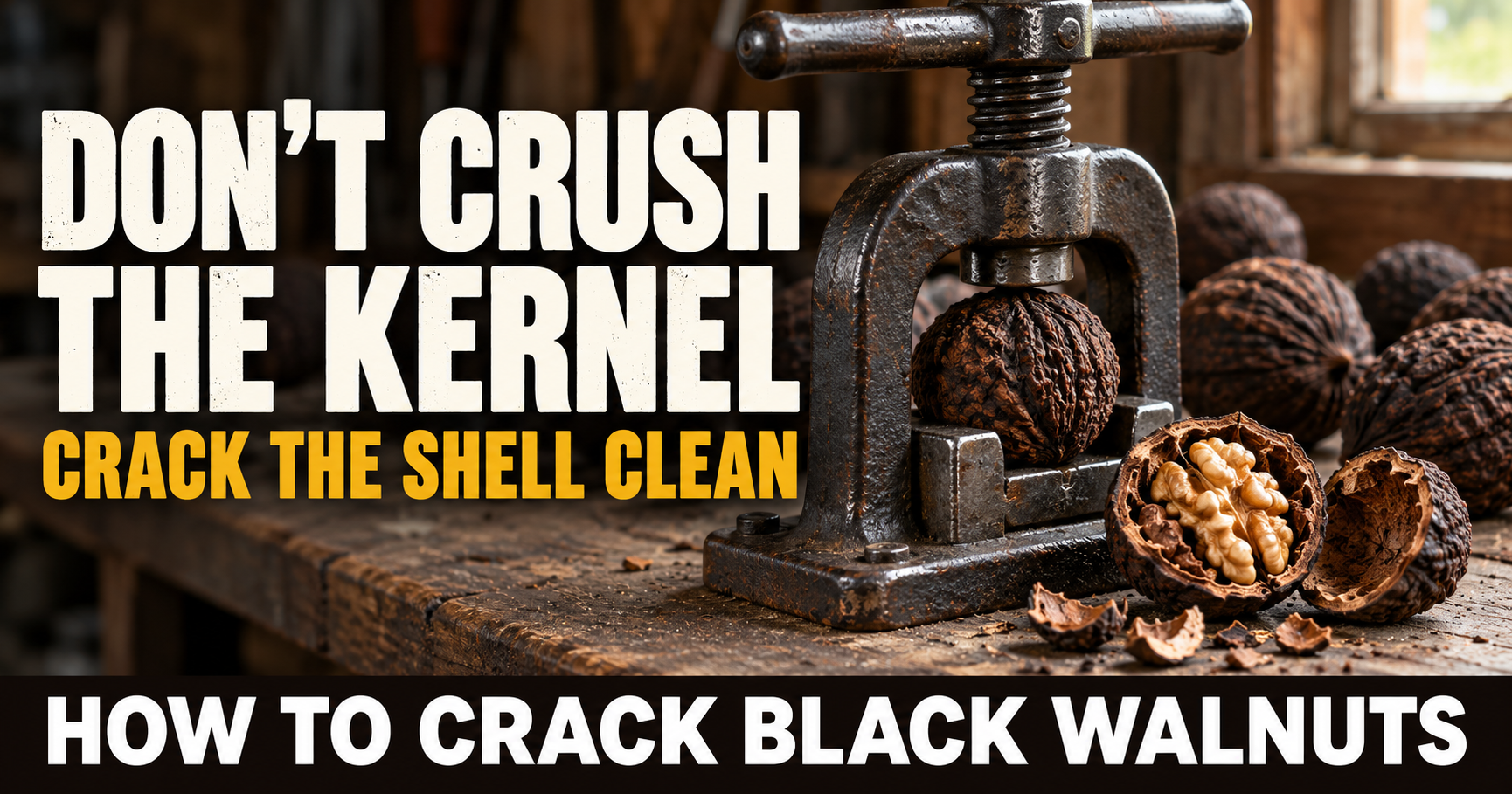
The first time I tried cracking a black walnut, I figured it would be about the same as cracking the English walnuts you buy at the grocery store.
I was wrong.
Very wrong.
Instead of opening neatly, I ended up with shell fragments everywhere and tiny pieces of walnut that were almost impossible to pick out.
That’s when I realized black walnuts are in a completely different league.
They have incredibly tough shells, and getting nice pieces of nutmeat takes a little practice.
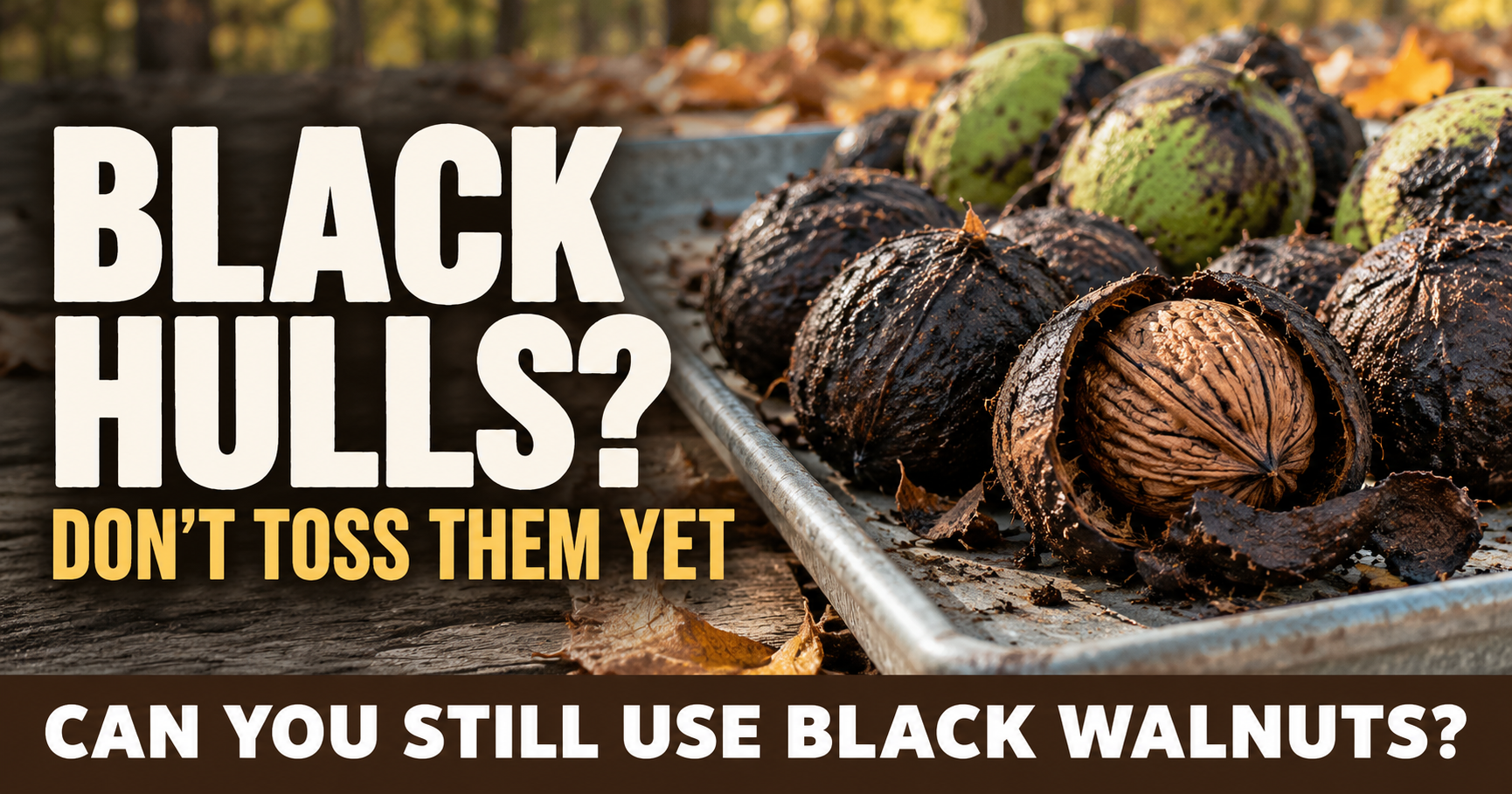
If you’ve made it this far in the process, you’ve already harvested the walnuts, removed the hulls, and let them dry.
Now comes the part that most people either love or absolutely hate.
Cracking them open.
If you’re still drying your walnuts, I’d recommend reading How Do You Dry and Store Black Walnuts After Harvest?before moving on. Proper curing makes cracking much easier.
Why Black Walnuts Are So Difficult to Crack
Black walnuts aren’t like the English walnuts sold in grocery stores.
Their shells are much thicker and harder.
That thick shell is one reason they store so well in nature, but it also means they require considerably more force to open. Extension publications describe black walnut shells as among the toughest of any commonly harvested edible nut.
The challenge isn’t just opening the shell.
It’s opening it without destroying the nutmeat inside.
Don’t Reach for a Regular Nutcracker
This surprised me.
The average kitchen nutcracker usually isn’t designed for black walnuts.
Most simply don’t generate enough pressure.
If they do crack the shell, they often crush it into dozens of tiny pieces.
That usually means the kernels end up shattered too.
I quickly learned there are better options.

Several Methods Work
One thing I like about harvesting your own food is that people become creative.
I’ve seen black walnuts cracked using:
- A heavy hammer.
- A sturdy bench vise.
- Purpose-built black walnut crackers.
- Homemade cracking devices.
Each method has its own advantages.
The best one often depends on how many walnuts you’re processing.
If you’re only cracking a handful, a hammer may be perfectly adequate.
If you’re processing buckets every fall, a dedicated cracker can save a tremendous amount of time.
My Biggest Mistake
When I first started, I hit the walnuts much harder than I needed to.
That usually ended one of two ways.
Either nothing happened…
…or everything happened.
The shell exploded into tiny pieces.
Unfortunately, so did the kernels.
Black walnuts reward patience much more than brute force.
A controlled crack is far better than trying to smash them open in one hit.
Where to Strike the Nut
One thing I learned from experienced growers is that where you strike the walnut matters almost as much as how hardyou strike it.
Instead of randomly hitting the shell, many people place the walnut with the pointed end up and strike that end. That encourages the shell to split along its natural seams rather than shattering into countless small pieces.
Even with that approach, every walnut behaves a little differently.
One Trick That Really Helps
This was probably the best tip I discovered.
If the walnuts have become extremely dry, soaking them in water for an hour or two before cracking can make a noticeable difference.
Some people even let them rest overnight in a closed container after soaking.
The extra moisture helps make the kernels a little more flexible, so they’re less likely to crumble into tiny pieces when the shell breaks.
It’s a simple step, but it can save a surprising amount of frustration.
Getting the Nutmeat Out Is the Real Challenge
Cracking the shell is only half the job.
Now you have to remove the kernels.
I’ve found that patience matters just as much here.
Rather than trying to force everything out at once, I work a little at a time.
Nut picks, small screwdrivers, sturdy dental-style picks, and even needle-nose pliers can all help remove larger pieces without crushing them.
The first few walnuts always seem slow.
After a while, though, you develop a rhythm.
Why I Don’t Worry About Perfect Halves
One thing I had to remind myself was that these aren’t grocery store walnuts.
Black walnuts have a much more complicated shell structure.
Getting perfectly intact halves every time simply isn’t realistic.
If I end up with several large pieces, I’m happy.
Most of the walnuts we use eventually go into baked goods anyway, where smaller pieces work just as well.

Is It Worth All the Work?
People ask me this all the time.
Honestly…
That depends on why you’re harvesting them.
If you’re expecting black walnuts to be as easy as English walnuts, you’ll probably become frustrated.
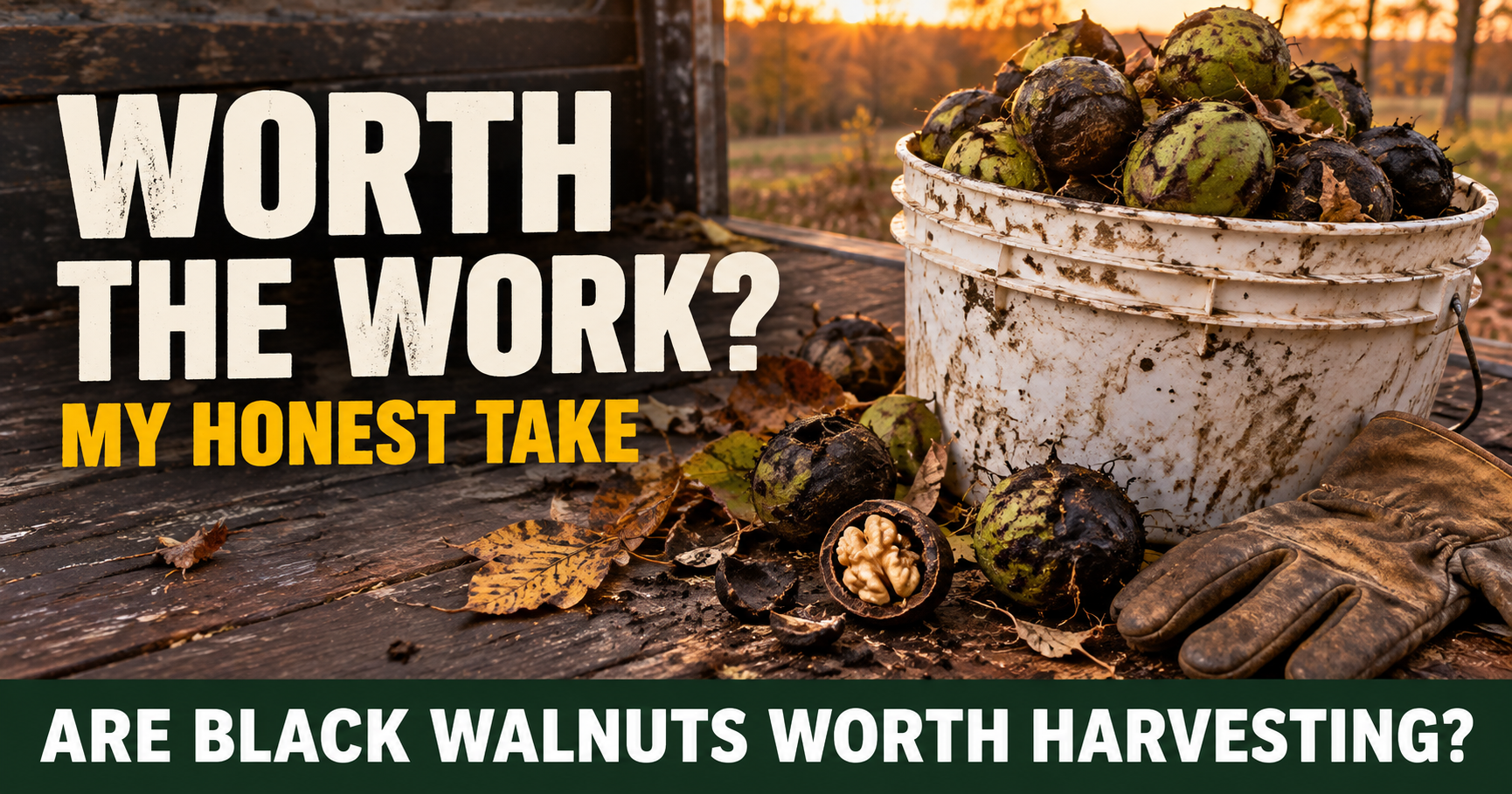
If you’re doing it because you enjoy harvesting your own food and appreciate the unique flavor, the answer becomes much easier. That personal reason for doing the work is central to this honest look at enjoy harvesting your own food.
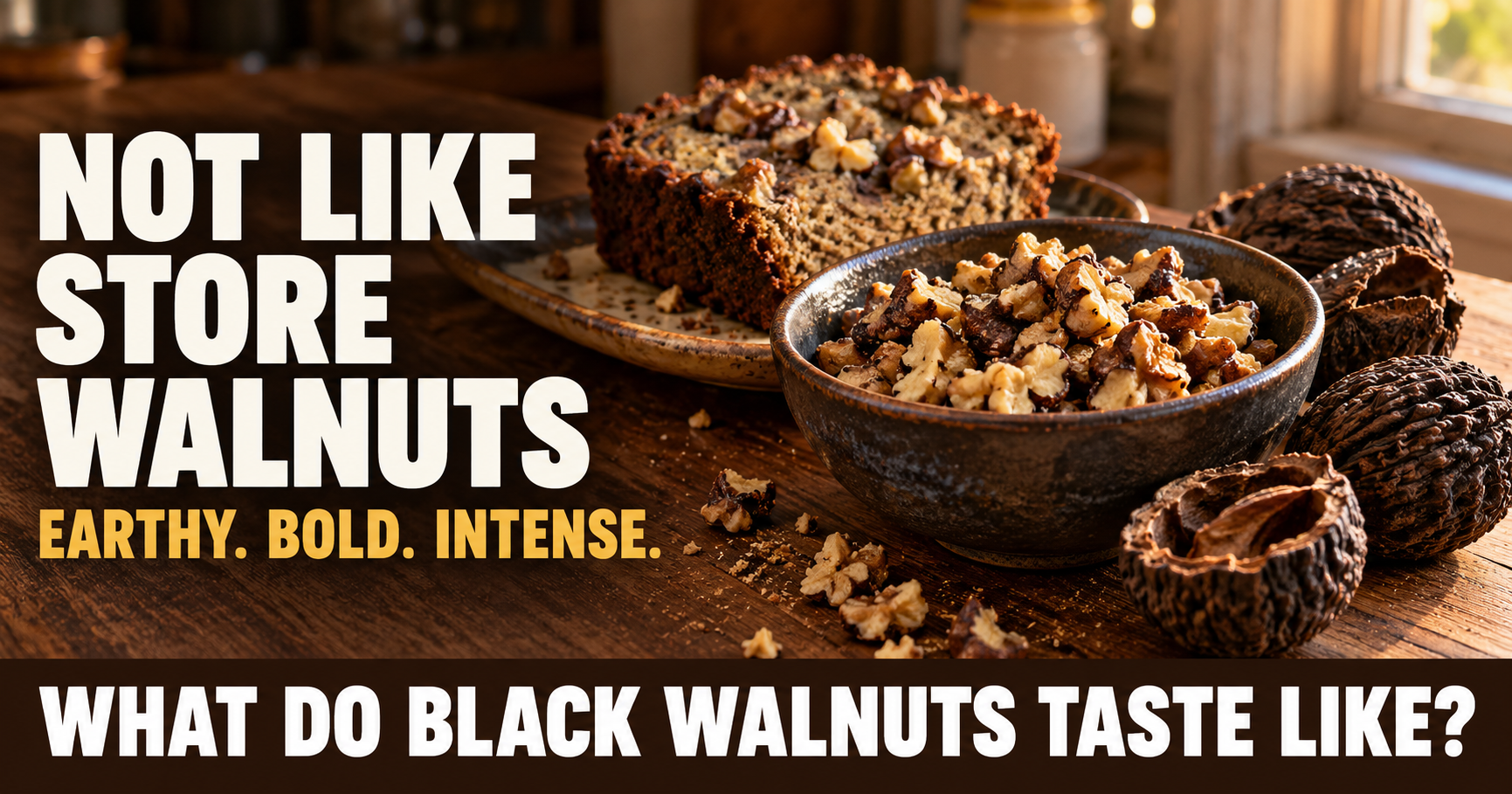
Black walnuts have a bold taste that’s completely different from store-bought walnuts.
For many people, that’s exactly why the extra effort is worthwhile.
My Routine Has Become Pretty Simple
Every fall, the process looks about the same.
I gather freshly fallen walnuts.
I remove the hulls.
I wash and sort them.
I let them cure.
Then, when I have time, I slowly work through cracking them.
I don’t try to finish everything in one afternoon.
Harvesting black walnuts has become less about rushing and more about enjoying the process.
My Honest Opinion
If I could give one piece of advice to someone cracking black walnuts for the first time, it would be this.
Don’t expect perfection.
Expect a learning curve.
Your first few walnuts probably won’t come apart beautifully.
Mine certainly didn’t.
But once you start understanding how the shell breaks, which tools work best for you, and how much force to use, the process becomes much more enjoyable.
Like so many things on the farm, experience is the best teacher.
And once you finally taste fresh black walnut kernels from nuts you harvested yourself, it’s easy to understand why people keep coming back every fall.
About the Author
Daxon Weaver is the owner of Weaver Family Farms Produce, where he shares firsthand experiences growing fruit, harvesting black walnuts, and helping others enjoy homegrown food on his family’s Zone 6a Missouri farm.