When we decided to plant jujube trees, I spent hours researching which varieties were actually worth growing.
The same two names kept showing up.
Honey Jar.
Sugar Cane.
Growers across the country consistently praised both as outstanding fresh-eating jujubes because of their sweetness and crisp texture.
Instead of trying to decide which one was better, we planted both.
Now that we’ve been growing and harvesting them on our family farm, I’m glad we did.
They’re similar enough that you really can’t go wrong with either one, but after eating fruit from both trees season after season, I’ve noticed some differences that I don’t often see mentioned.
If you’re completely new to this fruit, I’d start with What Is a Jujube Fruit and What Does It Taste Like? before comparing varieties. It explains what makes jujubes unique and why they’ve quickly become one of my favorite fruits to grow.
Why We Chose Honey Jar and Sugar Cane
We weren’t looking for the biggest fruit.
We wanted trees that produced delicious fresh fruit our family would actually look forward to eating right off the tree.
As I kept researching, Honey Jar and Sugar Cane were recommended over and over for exactly that purpose. Both have built a reputation among experienced growers for being productive, crisp, and excellent for fresh eating.
Looking back, I don’t think we could have picked two better varieties.
My First Impressions
The first year our trees produced enough fruit to really sample, I kept walking back and forth between them.
I’d eat one Honey Jar.
Then one Sugar Cane.
Then another Honey Jar.
I was trying to decide which one I liked more.
Honestly…
I’m still doing that.
Some days I think Honey Jar wins.
Other days I find myself standing beside the Sugar Cane tree eating “just one more.”
That’s probably the best compliment I can give either variety.
Honey Jar Jujube
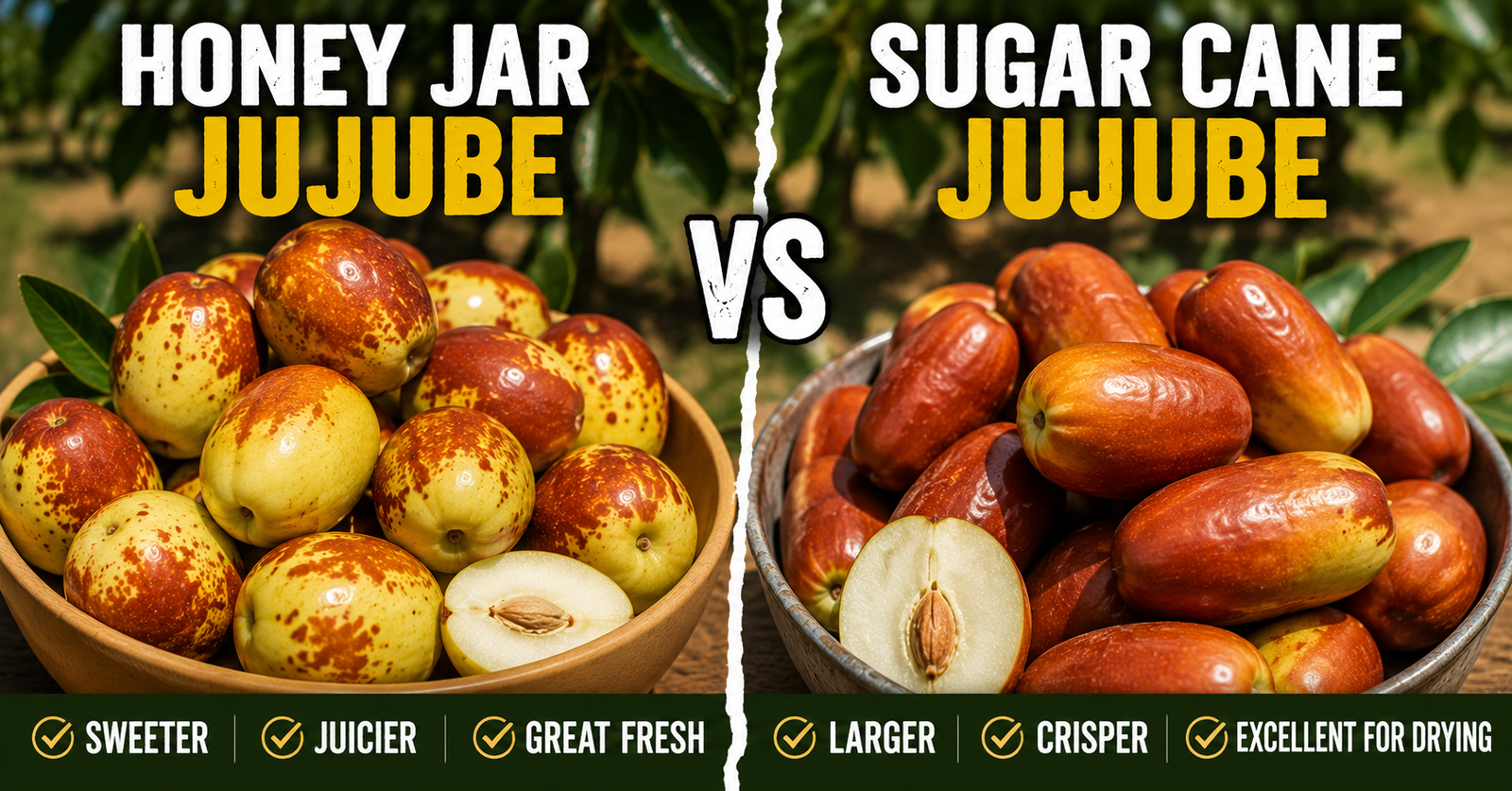
If I had to describe Honey Jar in one sentence, I’d say it’s a small fruit with huge flavor.
The fruit on our tree isn’t especially large, but every bite seems packed with sweetness.
One thing I notice every season is how dense and satisfying the crunch is.
When picked at the stage I like best, it has an incredibly crisp bite that’s almost addictive.
The sweetness is bold from the very first bite, which is one reason Honey Jar is so highly regarded for fresh eating.
Because the fruit is on the smaller side, I usually end up eating several without even thinking about it.
Sugar Cane Jujube
Sugar Cane impressed me for a different reason.
The fruit on our tree generally grows a little larger than Honey Jar, although not dramatically larger.
Its texture is still wonderfully crisp, but I think it has a lighter bite.
Instead of the dense crunch I notice with Honey Jar, Sugar Cane feels a little more delicate while still being very juicy.
The sweetness is excellent.
To me, it comes across as cleaner and a little less intense than Honey Jar, although that’s simply my own experience growing the two side by side.
Interestingly, many experienced growers describe Sugar Cane in similar ways, praising its crisp, juicy texture while noting that Honey Jar often has a denser crunch.
Which One Is Sweeter?
If someone stopped me today and asked which tree produced the sweeter fruit, I’d probably answer…
Honey Jar.
Not by a huge margin.
Just enough that I notice it.
Honey Jar seems to deliver an immediate burst of sweetness.
Sugar Cane is still very sweet, but the flavor feels lighter to me.
That lines up with what many longtime jujube growers have reported, with Honey Jar frequently ranking among the sweetest fresh-eating cultivars.
Of course, weather, soil, and exactly when you harvest the fruit can all influence sweetness, so your experience may not be identical to mine.
Which One Has the Better Crunch?
This is actually one of the hardest questions for me to answer.
Both are incredibly crisp.
Both remind me more of apples than dates when eaten fresh.
If I had to pick a winner, I’d give Honey Jar the slightest edge because I think the flesh feels denser.
Sugar Cane still has an outstanding crunch, but it’s just a little lighter.
It’s the kind of difference you only notice after eating both varieties side by side.
Fruit Size
If fruit size matters to you, Sugar Cane has a slight advantage on our farm.
Honey Jar stays fairly small, which is completely normal for the variety.
That smaller size has never bothered me because the flavor is excellent.
In fact, the smaller fruit almost makes them easier to snack on.
I’ll grab one, then another, then another until I’ve eaten a handful without realizing it.
Sugar Cane’s slightly larger fruit feels a little more substantial, especially if you’re sharing them with someone who’s never tried a jujube before.
How the Flavor Changes as They Ripen
One thing I hope more people realize is that comparing varieties only tells part of the story.
Ripeness changes the flavor just as much as genetics.
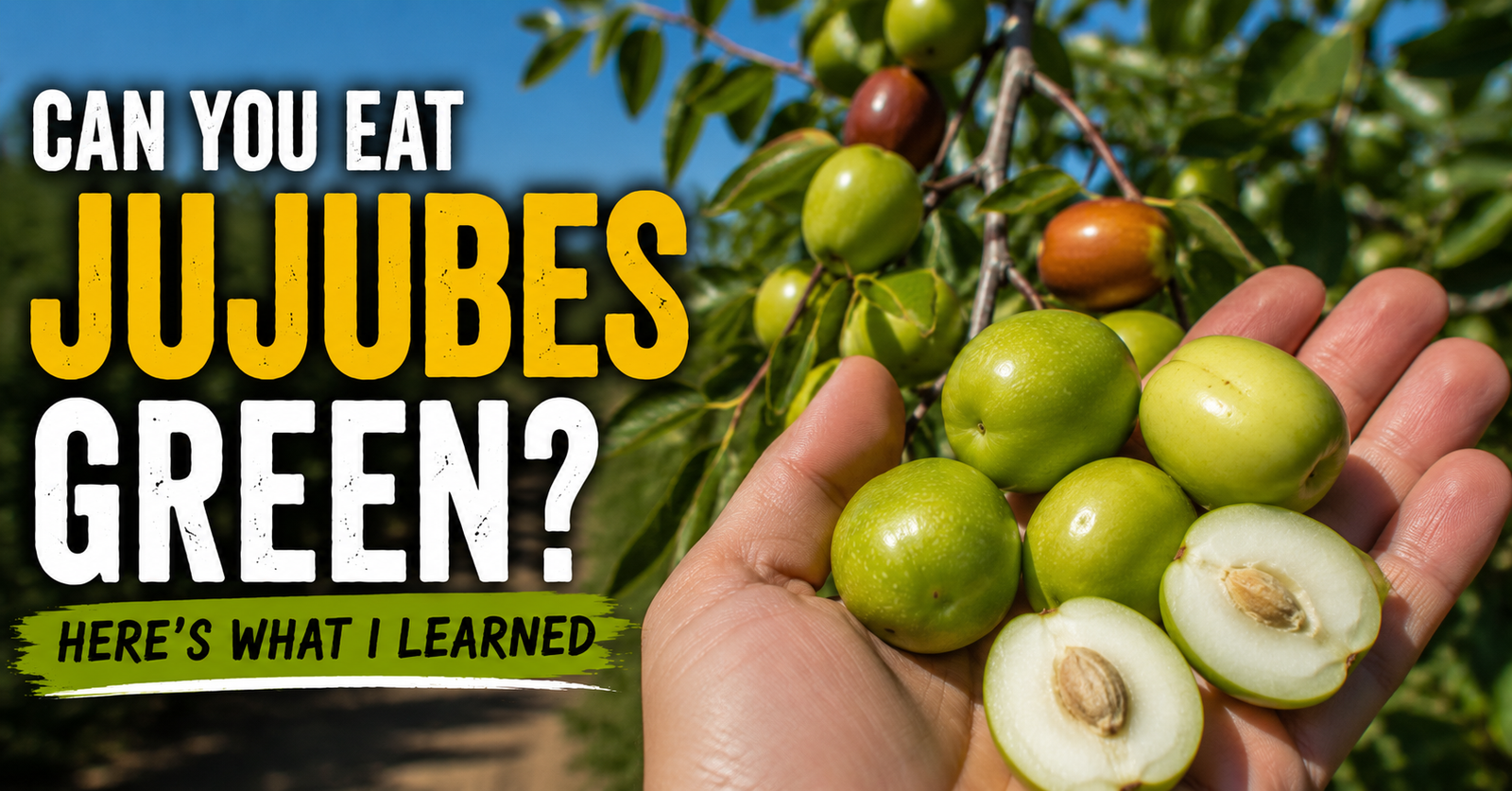
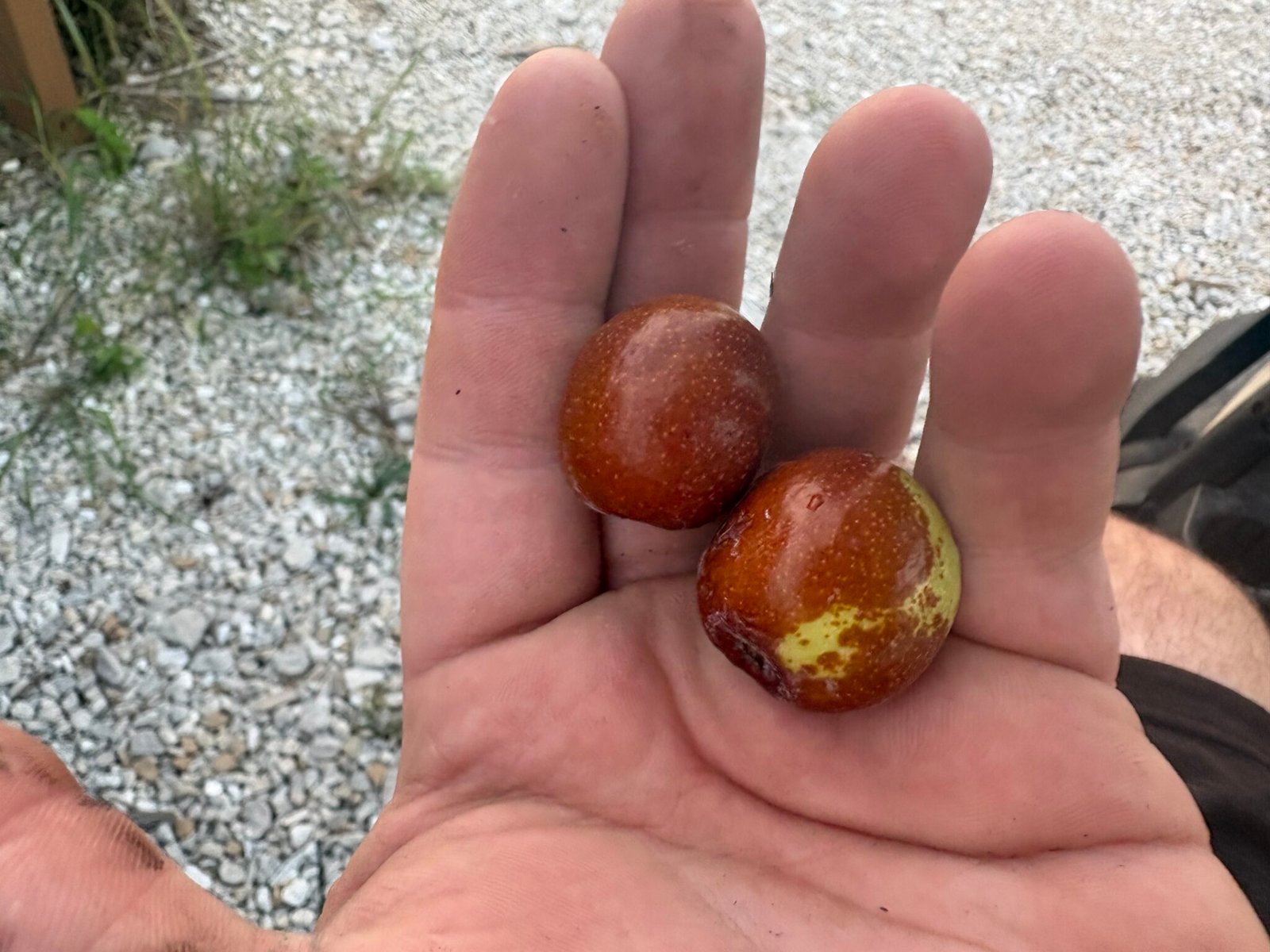
A green Honey Jar tastes completely different than one that’s mostly brown.
The same is true for Sugar Cane.
That’s why I encourage anyone growing jujubes to taste them throughout the season instead of deciding whether they like them after eating only one fruit.
If you’re still figuring out the best time to harvest, How Do You Know When a Jujube Is Ripe? Signs It’s Readyexplains exactly what I look for before picking ours.
My Favorite Ripeness Stage
This is where both varieties become really interesting.
I know plenty of people enjoy them while they’re still firm and only partially brown.
Personally, I usually wait a little longer.
Once the fruit has turned mostly brown and just begins softening, I think both Honey Jar and Sugar Cane develop a much richer flavor.
I start tasting notes that remind me of caramel, dates, and even a little molasses while still keeping that unique jujube character.
That’s the stage I look forward to every season.
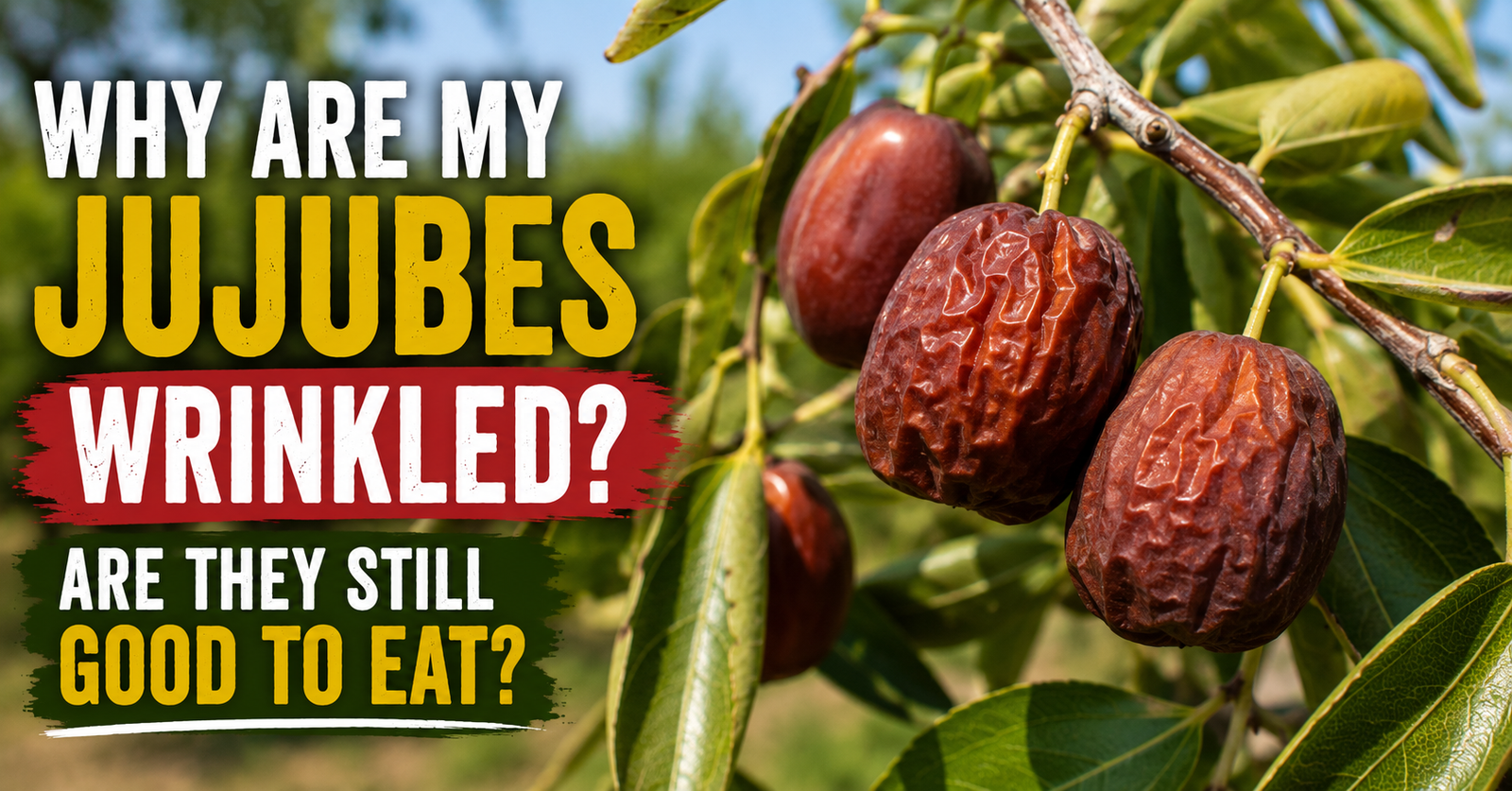
If you’ve noticed your fruit beginning to wrinkle, don’t assume it’s overripe. In fact, I usually reach for those first. I explain why in Why Are My Jujubes Wrinkled? Are They Still Good to Eat?.
My Family’s Opinion
One thing that’s been fun is seeing how everyone in our family develops their own favorite.
Some immediately grab Honey Jar.
Others head straight for Sugar Cane.
Nobody stands around comparing flavor notes or trying to sound like a fruit judge.
We just eat them.
When a bowl of freshly picked jujubes disappears within minutes, that’s usually all the review I need.
They’re Easier to Compare Than to Rank
People often ask me which variety they should plant.
I honestly struggle to answer because I don’t think one clearly dominates the other.
Honey Jar gives me incredible sweetness and a dense crunch.
Sugar Cane gives me slightly larger fruit with a crisp, refreshing bite.
Both trees have been productive.
Both have been enjoyable to grow.
Both have earned a permanent place in our orchard.
If someone only had room for one tree, I’d probably ask what they value most.
If absolute sweetness is the priority, I’d lean toward Honey Jar.
If slightly larger fruit with outstanding crispness sounds more appealing, Sugar Cane would be an excellent choice.
Personally, I’m glad I never had to choose.
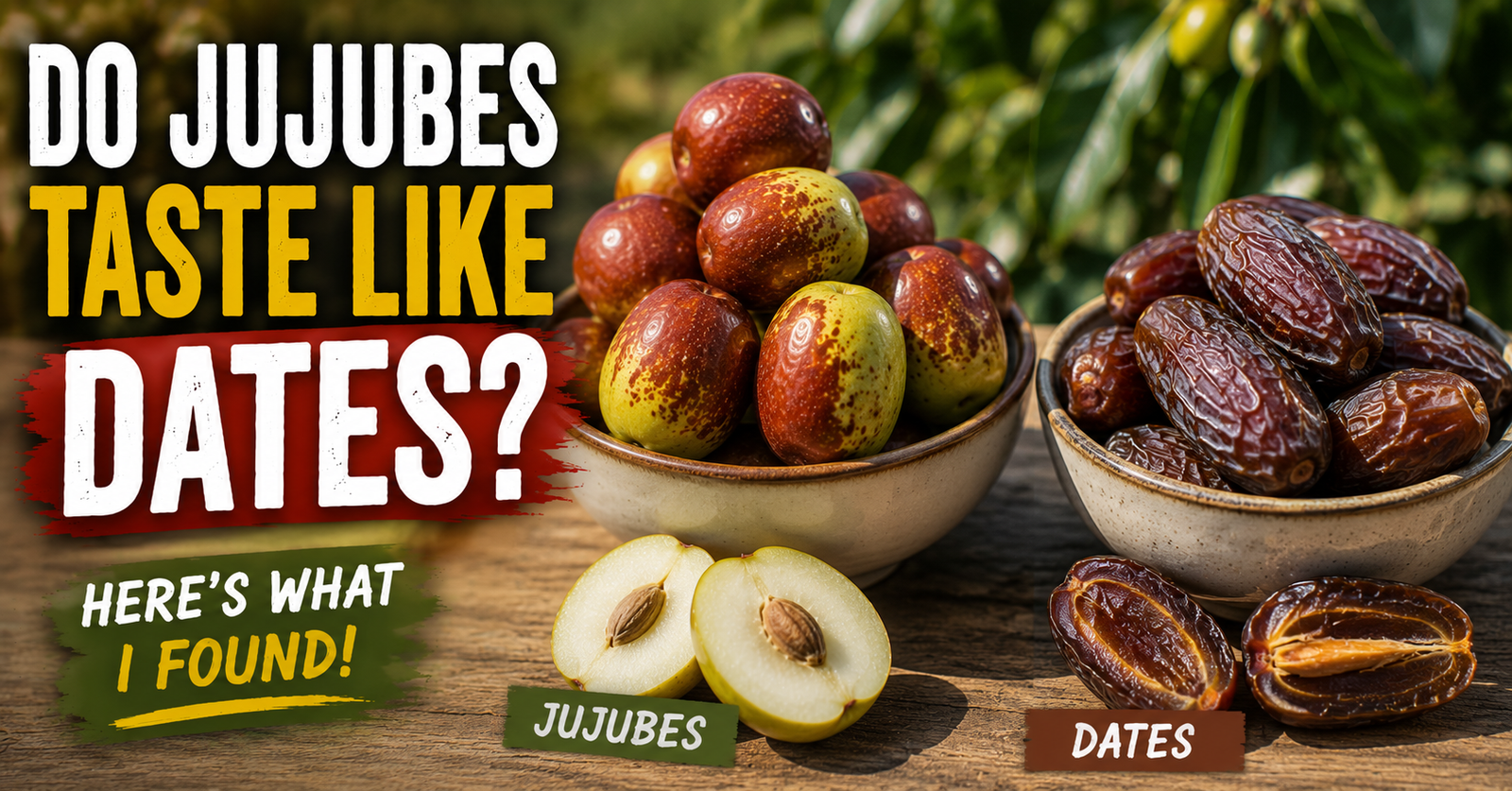
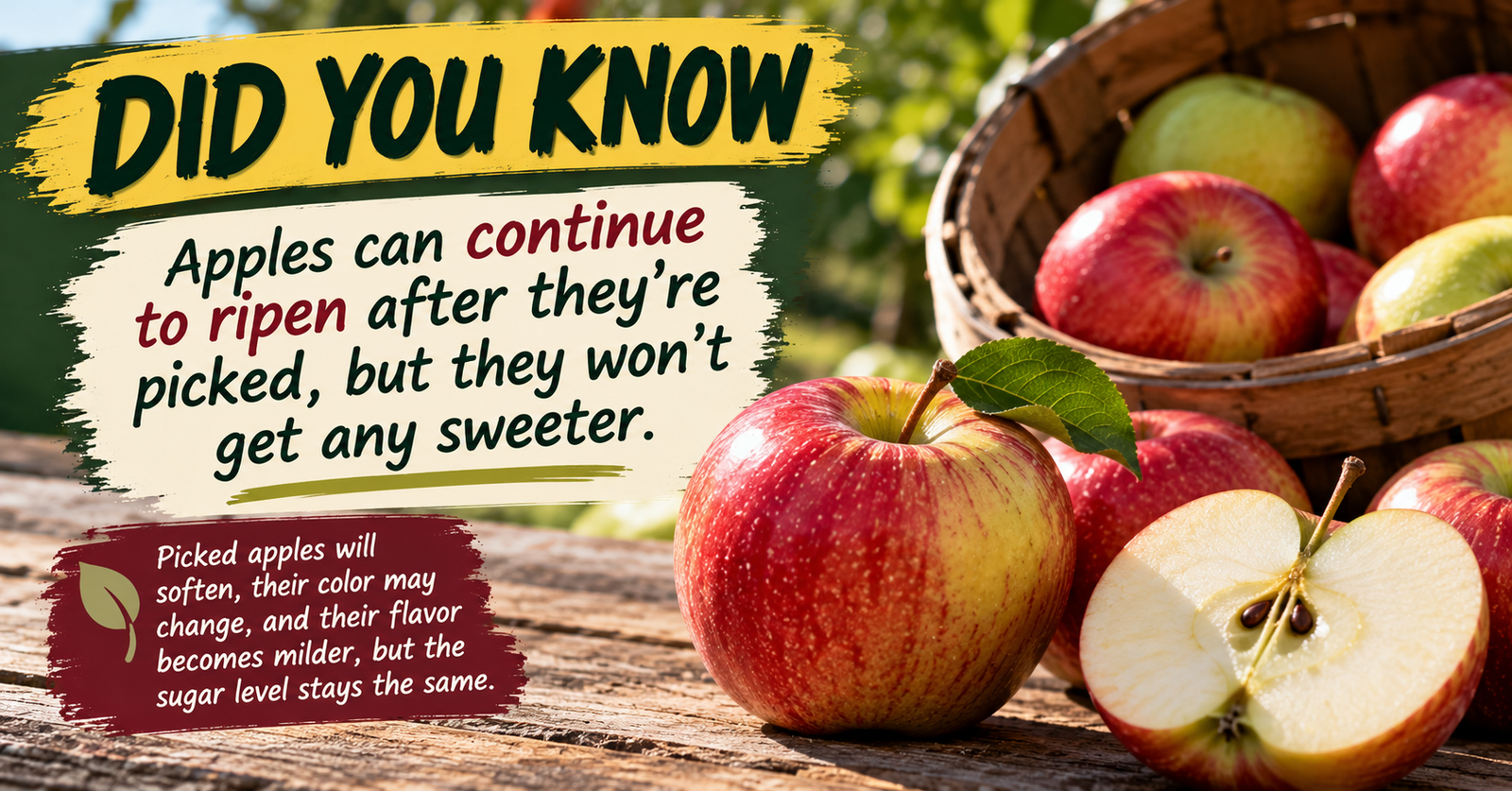
If you’re still learning about this unique fruit, I’d also recommend reading Do Jujubes Taste Like Dates? Here’s My Honest Comparison and Can You Eat Jujubes Green? Here’s What I Learned because the stage of ripeness changes the eating experience almost as much as the variety itself.
About the Author
Daxon Weaver is the owner of Weaver Family Farms Produce, where he shares firsthand experiences growing fruit, harvesting seasonal crops, and helping others enjoy the rewards of a family farm.