When someone tries a fresh jujube for the first time, one of the next questions is usually about what’s inside.
Do they have seeds?
Can you eat the whole thing?
Is there just one pit like a peach, or several small seeds like an apple?
Those are all questions I had before we ever planted our own jujube trees.
Now that we’ve been growing both Honey Jar and Sugar Cane jujubes here on our family farm, I don’t really think about it anymore.
I simply bite around the pit and enjoy the fruit.
If you’ve never eaten one before, though, it’s helpful to know what to expect before taking that first bite.
If you’re still getting familiar with this unusual fruit, I’d recommend reading What Is a Jujube Fruit and What Does It Taste Like? first. It explains why fresh jujubes surprise so many people the first time they try one.
Yes, Jujubes Have a Pit
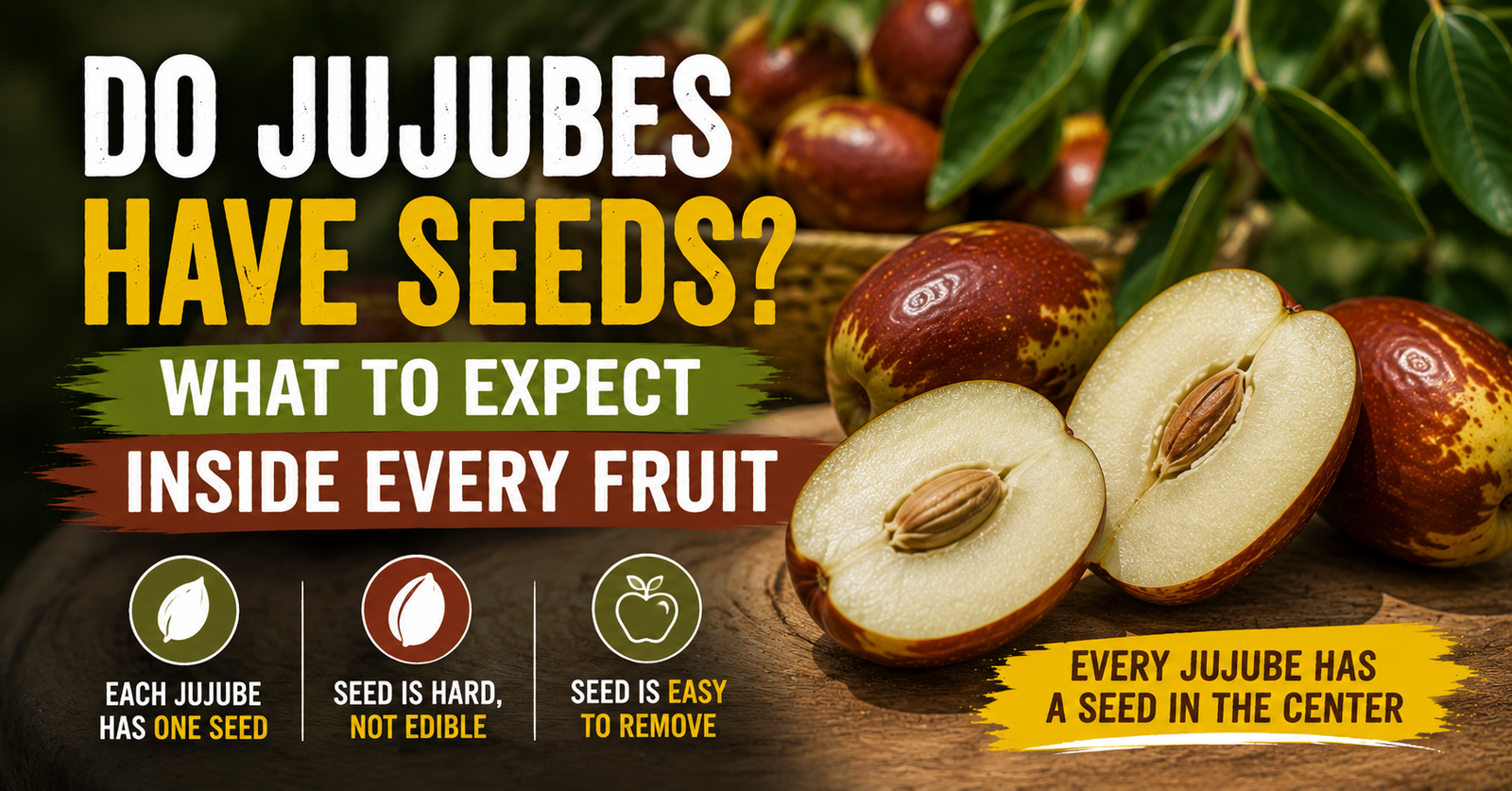
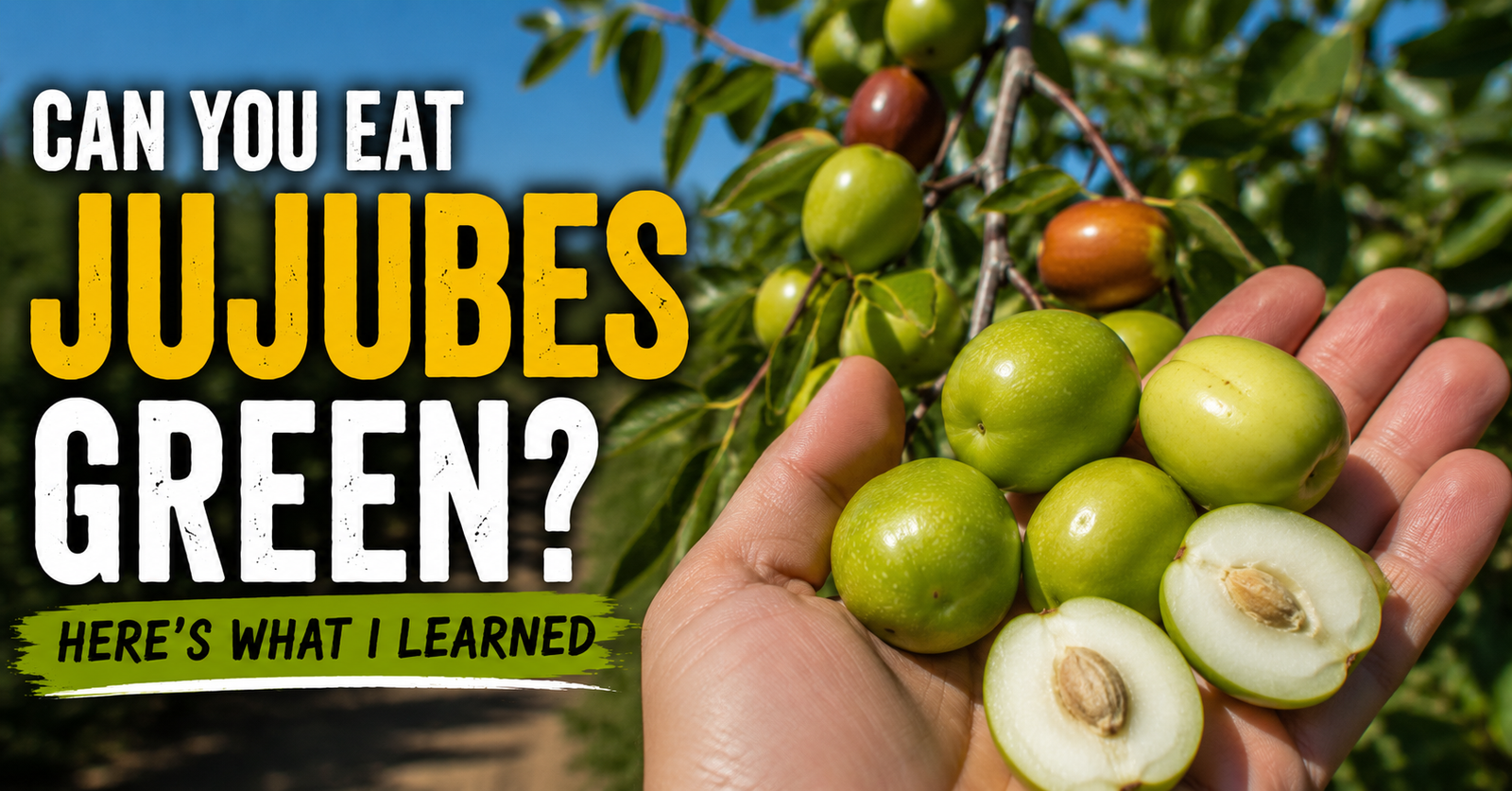
One of the biggest surprises for many first-time eaters is that a jujube doesn’t contain several little seeds like an apple.
Instead, it has one hard pit in the center.
That pit protects the seeds inside and is very similar to what you’d find in fruits like peaches, cherries, olives, and plums.
Because jujubes belong to the drupe family, that hard stone in the middle is completely normal.
How Big Is the Pit?
Compared to the size of the fruit, the pit is fairly noticeable.
In our Honey Jar jujubes, the pit usually runs right down the middle.
Sugar Cane is very similar.
After you’ve eaten a few, you quickly learn how much fruit surrounds it, and removing the pit becomes second nature.
The pit has never been an annoyance to me.
It’s simply part of eating fresh jujubes.
Can You Eat the Pit?
No.
The flesh is what you eat.
The hard pit in the center isn’t meant to be eaten.
It’s extremely hard and could easily damage a tooth if you bite down on it unexpectedly.
Whenever I’m introducing someone to jujubes for the first time, I always mention the pit before they take their first bite.
What’s the Easiest Way to Remove It?
If I’m just snacking outside while picking fruit, I usually eat around the pit.
It’s quick and easy.
If I’m slicing jujubes for a fruit salad or another recipe, I’ll cut the fruit lengthwise with a small knife and twist the two halves apart before removing the pit.
Once you’ve done it a few times, it only takes a few seconds.
Are There Seeds Inside the Pit?
Yes.
Inside that hard pit are the actual seeds.
Most people never see them because the pit is so hard that it isn’t normally opened before the fruit is eaten.
For practical purposes, I simply think of the pit as the seed because that’s the part you’re dealing with while eating fresh fruit.
Does Every Jujube Have One?
Almost every fresh jujube I’ve picked has contained a pit, although its size can vary a little from fruit to fruit.
That’s perfectly normal.
It’s just another reminder that every harvest is a little different.
Does the Pit Mean the Fruit Isn’t Ripe?
Not at all.
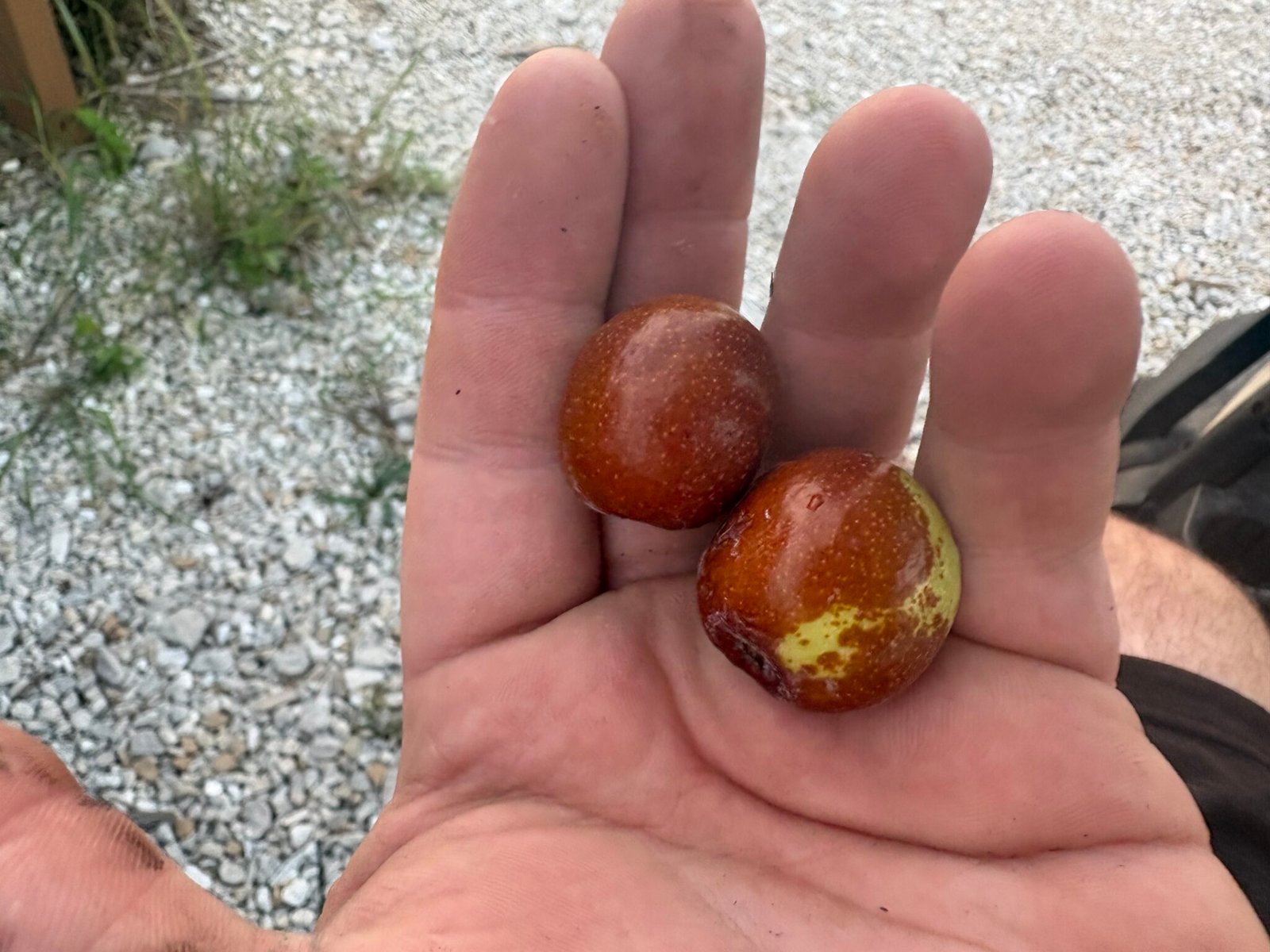
Green jujubes have a pit.
Brown jujubes have a pit.
Wrinkled jujubes have a pit.
The ripeness changes the sweetness and texture of the fruit, but it doesn’t change what’s inside.
If you’re still learning when to harvest, How Do You Know When a Jujube Is Ripe? Signs It’s Ready explains the stages I look for before picking ours.
My Advice for First-Time Jujube Eaters
If you’re trying a jujube for the first time, don’t overthink the pit.
Take a bite.
Enjoy the crisp, sweet flesh.
Work your way around the center.
Before long, you’ll hardly notice it’s there.
Honestly, the pit has never kept me from enjoying jujubes. If anything, it’s just part of the experience, much like eating a fresh cherry or peach.
If you’ve also noticed some of your fruit beginning to wrinkle, don’t throw it away. Some of my favorite jujubes are the darker, slightly wrinkled ones because of how much sweeter they become. I explain why in Why Are My Jujubes Wrinkled? Are They Still Good to Eat?.
As we continue growing Honey Jar and Sugar Cane jujubes on our farm, I’ll keep updating these guides with the little things we learn each season. Sometimes those details are the ones that end up helping new growers the most.
About the Author
Daxon Weaver is the owner of Weaver Family Farms Produce, where he shares firsthand experiences growing fruit, harvesting seasonal crops, and helping others enjoy homegrown food through practical advice from his family’s farm.