There’s something a little frustrating about pawpaw season. You spend all that time growing the trees, watching the fruit develop, and waiting for the first ripe pawpaws to finally come off the branches. Then, once they’re ripe, you suddenly have very little time to enjoy them.
Unlike apples, which can sit in cold storage for quite a while, pawpaws don’t give you much breathing room.
One day they’re firm and green. Before long, they’re soft, fragrant, and ready to eat. Wait too much longer, and the same beautiful fruit you were excited about can become an overripe mess.
We’ve experienced just how quickly pawpaws reach that perfectly ripe stage here on our Missouri family farm. Some of ours have even let us know they’re ready by naturally dropping from the tree.
That brings up an important question, especially when you’ve grown more fruit than you can eat right away.
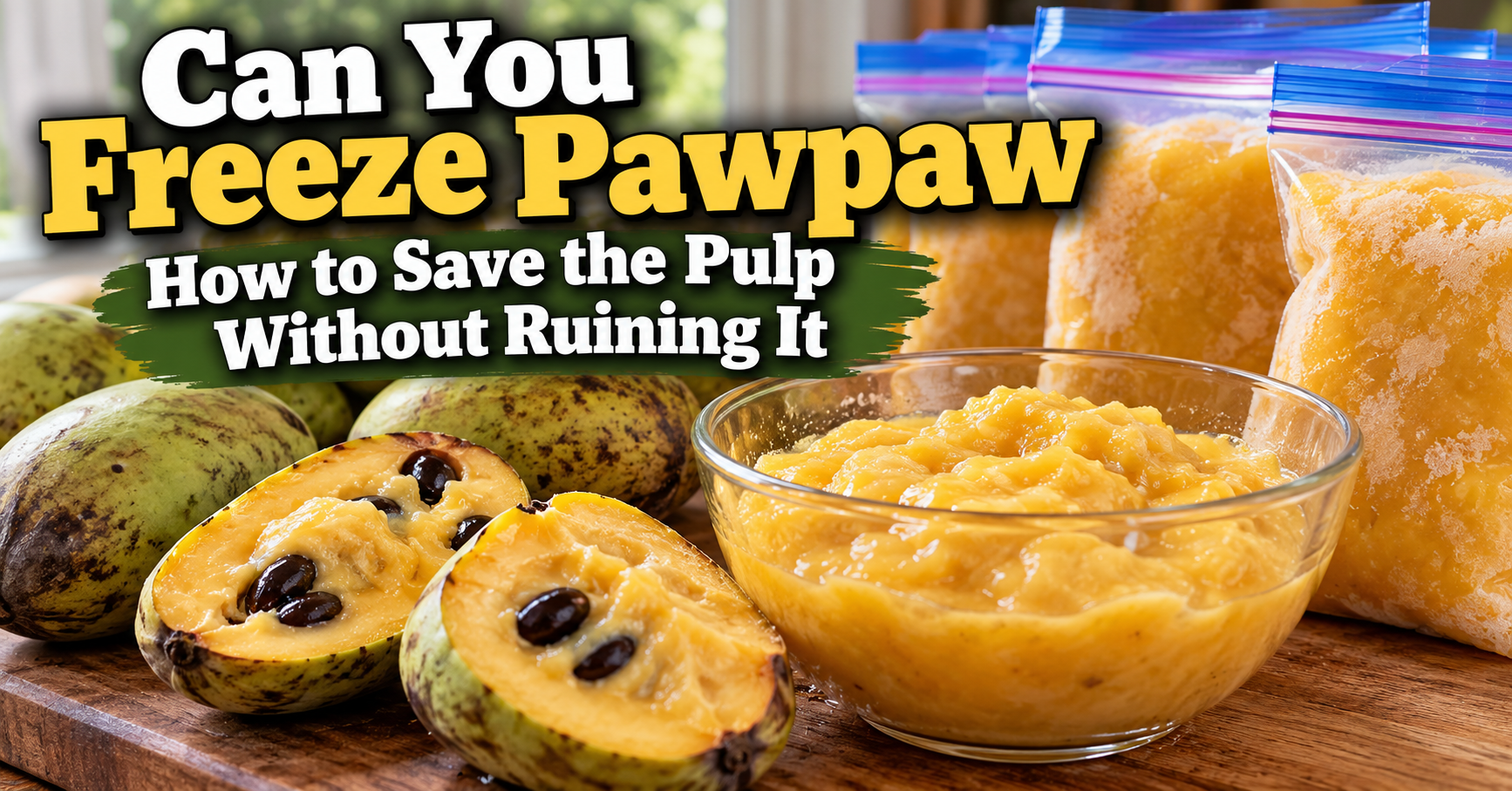
Can you freeze pawpaw fruit?
Yes, absolutely. In fact, freezing the pulp is one of the best ways to preserve ripe pawpaws without losing the opportunity to enjoy their unique tropical flavor later.
The trick is knowing what to freeze, what to remove, how to package it, and what to expect when you thaw it.
I want to walk through the process carefully because pawpaws are a little different from the typical fruit most Americans are familiar with.
Yes, You Can Freeze Pawpaw Fruit, but I Would Freeze the Pulp
If I had a basket of perfectly ripe pawpaws sitting on the kitchen counter, I wouldn’t put the entire fruit into freezer bags and call it good.
I’d take a little time to prepare them first.
Pawpaws have three main parts:
- A thin outer skin.
- Soft, creamy, edible flesh.
- Large, hard seeds throughout the center.
The flesh is what you want to preserve.
The skin and seeds should be removed before freezing the pulp for eating.
Freezing the prepared pulp makes it much easier to use later in smoothies, ice cream, desserts, and other recipes.
You also avoid having to dig seeds out of a partially thawed, slippery piece of fruit.
Purdue University Extension recommends removing the seeds, scooping out the pulp, and freezing it in a flattened freezer bag with as much air removed as possible.
Purdue Extension
That’s the approach I’d recommend for most home growers.
Why Pawpaws Are So Difficult to Store Fresh
One thing I’ve noticed about pawpaws is how quickly they move through their final stages of ripening.
You can have a fruit hanging on the tree that looks perfectly green.
Then it begins softening.
Before long, you notice that distinctive sweet, tropical aroma.
Eventually, the fruit may drop on its own.
That’s exactly what happened with some of the pawpaws we’ve photographed from our orchard.
The problem is that pawpaws have exceptionally soft flesh once they’re ripe.
Their delicate skin doesn’t provide much protection against bruising, and the fruit continues deteriorating after harvest.
According to the University of Missouri Extension, ripe pawpaws harvested in Missouri generally have a shelf life of less than five days after picking. Refrigeration can slow deterioration, but it doesn’t make them long-lasting fruit.
extension.missouri.edu
That’s a big difference from some of the apples we grow.
With apples, you can often pick a good harvest and enjoy them gradually.
With pawpaws, once they’re ripe, you need a plan.
And if you don’t have one, you can end up wasting some really good fruit.
How to Freeze Pawpaw Pulp Step by Step
This is the method I’d recommend based on university food preservation guidance. It’s intended to preserve clean, ripe fruit, not to rescue pawpaws that have already started spoiling.
Step 1: Start With Ripe, Healthy Pawpaws
The first step is choosing good fruit.
I wouldn’t freeze pawpaws that are still extremely hard and immature.
I’d wait until they reach the stage where the flesh has developed its characteristic creamy texture and sweet aroma.
A ripe pawpaw will often:
- Give slightly when pressed gently.
- Have a noticeable fruity smell.
- Show some yellowing or darkening of the skin, depending on the variety.
- Release easily from the tree or occasionally fall naturally.
Color isn’t always reliable.
We’ve had ripe pawpaws that were still mostly green on the outside.
That’s why I pay much more attention to softness and the condition of the fruit than whether the skin has turned yellow.
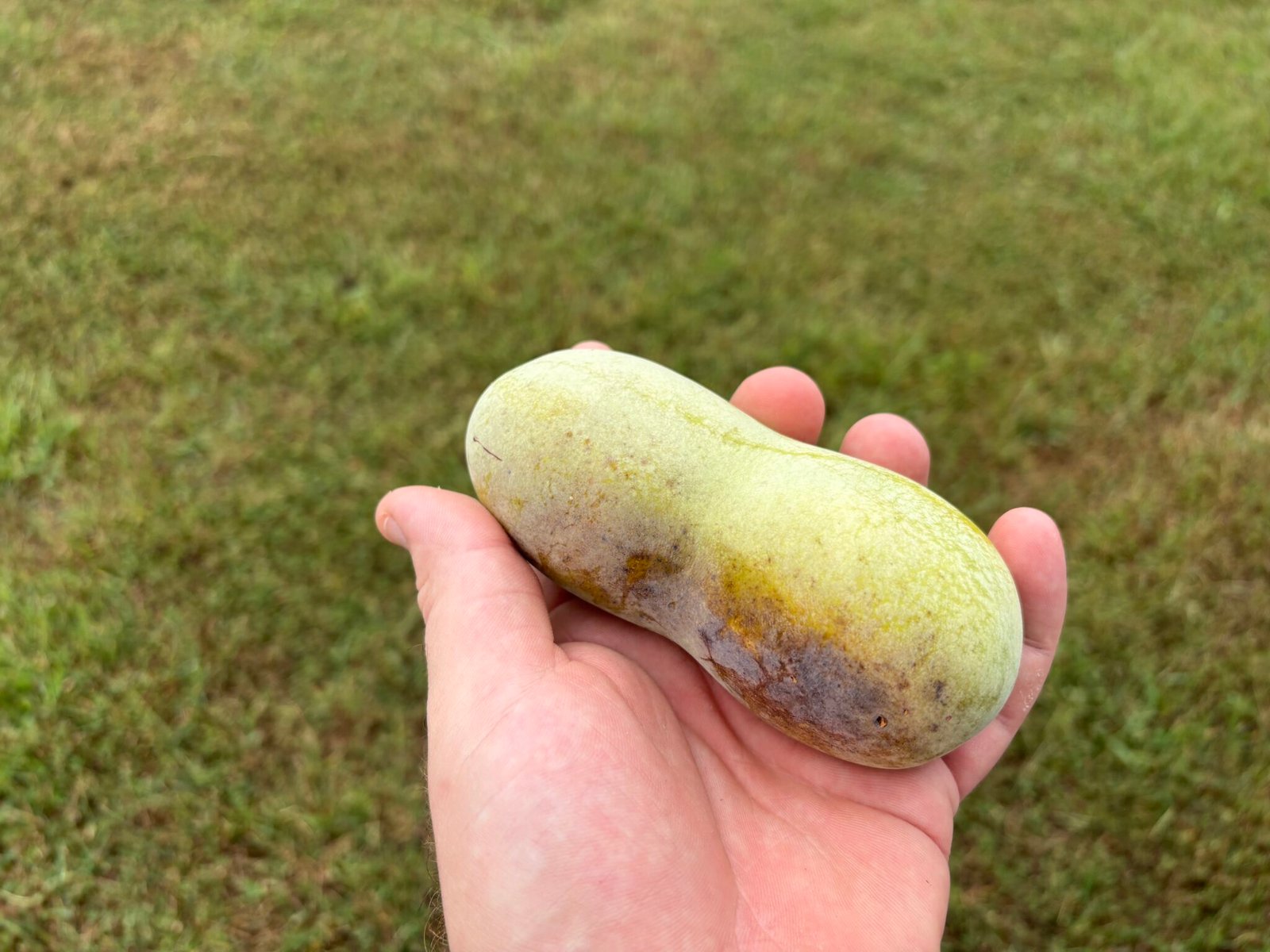
I actually documented one of our freshly fallen pawpaws in my article about what a ripe pawpaw looks like.
The fruit was an excellent reminder that pawpaws don’t always look ripe the way most people expect.
Step 2: Wash the Fruit Before Cutting It
Even though you won’t be eating the skin, wash the pawpaw before opening it.
That helps prevent dirt and other contaminants on the outside from being transferred into the flesh when your knife passes through.
Rinse the fruit under clean running water.
Avoid using soap or household cleaners.
If the pawpaw has visible dirt, gently remove it while rinsing.
Then dry the outside with a clean towel.
I would also wash my hands and make sure the knife, cutting board, and containers are clean before starting.
Step 3: Cut the Pawpaw Open
Lay the fruit on a clean cutting board.
Using a sharp knife, carefully cut lengthwise through the flesh, working around the large seeds rather than forcing the blade through them.
Pawpaws aren’t like apples with a neat little seed core.
Their large seeds are scattered through the creamy flesh, often in rows.
Once opened, you should see soft yellow to golden-orange pulp surrounding the dark seeds.
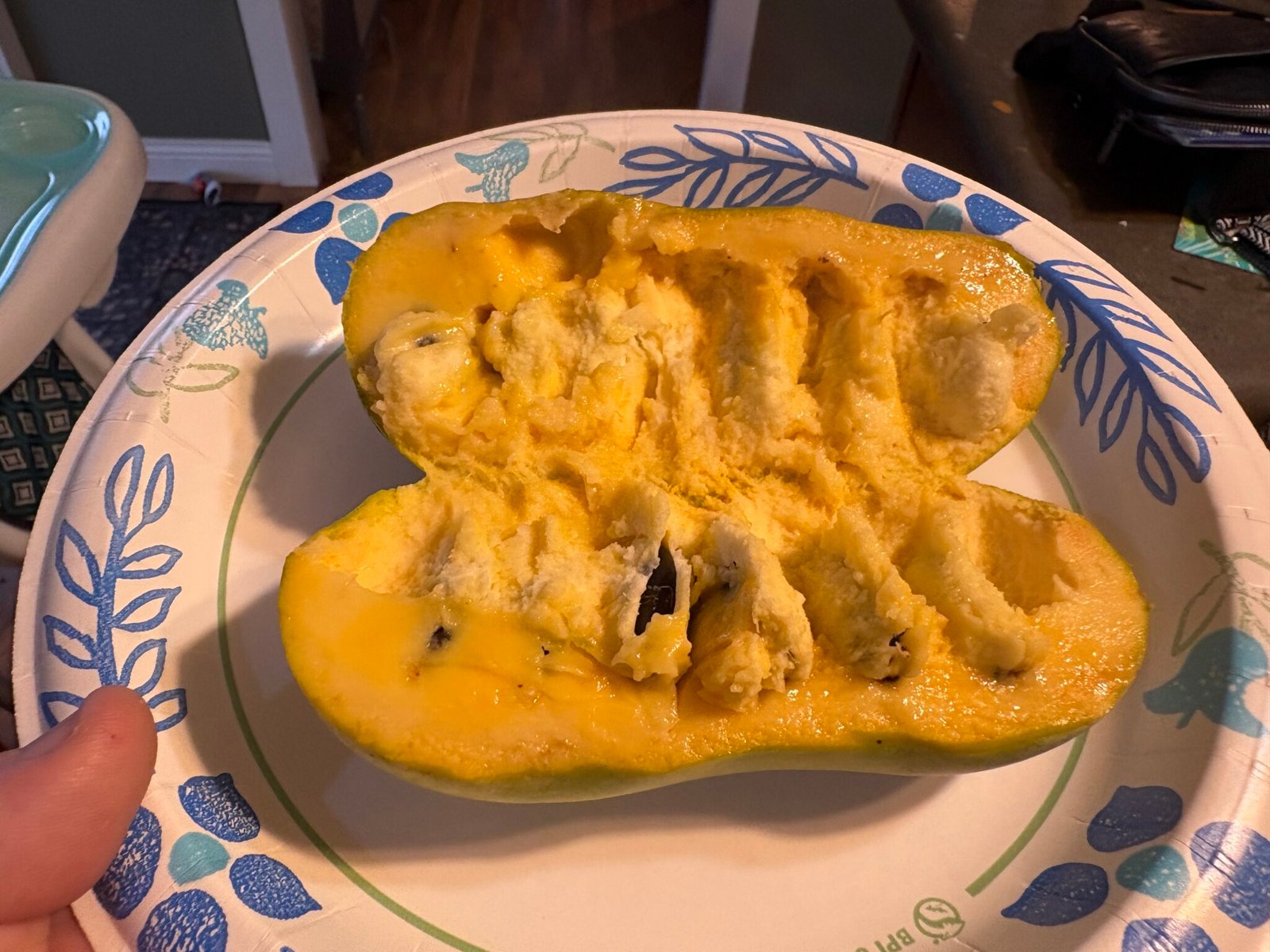
If you’ve never opened a pawpaw, I have a separate article showing what the inside of a fresh pawpaw looks like, using an actual fruit from our farm.
That photo is also useful for seeing how much edible flesh surrounds the seeds.
Step 4: Remove Every Seed
This is probably the most tedious part of preparing pawpaw pulp.
Those large seeds take up more room than you might expect.
Use a spoon or your fingers to separate them from the flesh.
I would take my time and make sure none get mixed into the pulp you’re planning to freeze.
Do not blend whole pawpaws with the seeds still inside.
The seeds are not edible, and grinding them into the pulp is something you should avoid.
Purdue Extension specifically advises consuming the pulp only and not eating pawpaw seeds or skin.
Purdue Extension
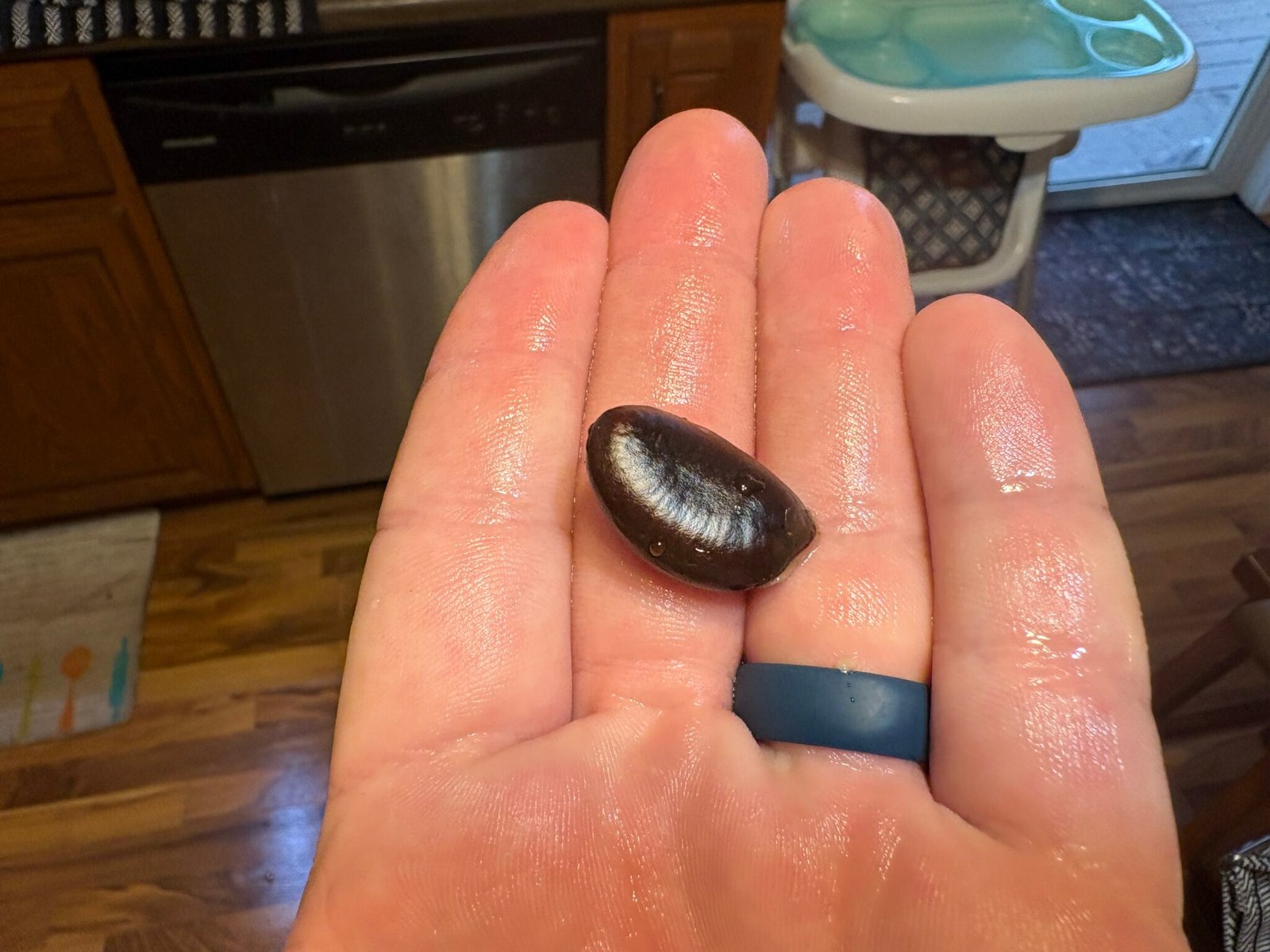
If you’re interested in how unusual those seeds really are, I’ve also photographed and explained what cleaned pawpaw seeds look like.
They’re much larger than the seeds in most other fruits we grow.
Step 5: Scoop the Flesh Away From the Skin
Once the seeds are removed, use a spoon to separate the creamy pulp from the outer skin.
You want as much clean, edible flesh as possible without scraping pieces of peel into the mixture.
If the fruit is perfectly ripe, this should be fairly straightforward.
The texture is almost custard-like, so the pulp comes away much more easily than the flesh of a firm apple or pear.
At this point, you’ll have a bowl of fresh pawpaw pulp ready to package.
You can leave it somewhat chunky or gently mash it.
For a smoother result, use a blender or food processor only after all the seeds and skin have been removed.
Personally, I think the important part is getting the pulp clean and ready to use, rather than worrying about making it look absolutely perfect.
Step 6: Measure the Pulp Before Freezing
Here’s a step that’s easy to overlook.
Before filling your containers, measure how much pawpaw pulp you have.
I would freeze it in convenient portions rather than one giant container.
For example:
- Half-cup portions for small recipes.
- One-cup portions for smoothies and desserts.
- Two-cup portions for recipes requiring larger quantities.
That way, when you’re ready to make something, you already know how much fruit you’re working with.
You don’t have to thaw three cups just because you need one.
Penn State Extension specifically recommends measuring the pulp before freezing and labeling each package with the amount and date.
extension.psu.edu
I think that’s excellent advice for any fruit you regularly preserve.
Step 7: Pack the Pulp Into Freezer-Safe Bags
For most home growers, freezer bags are probably the easiest option.
Spoon the measured pulp into a freezer-quality bag.
Gently spread it into a thin, even layer.
Then press out as much air as possible before sealing.
Don’t fill the bag so much that it’s difficult to close or handle.
Flattening the bag has several advantages.
It takes up less freezer space, freezes more evenly, and is easier to stack.
It can also thaw more quickly than one large frozen block.
If you’re freezing the pulp in a rigid freezer-safe container instead, leave the recommended headspace to allow for expansion.
Step 8: Label and Freeze Immediately
Once everything is packaged, label each bag.
I would write down:
- Pawpaw pulp.
- The freezing date.
- The amount inside.
- The variety, if known.
That last one can be particularly useful if you’re growing several pawpaw varieties and want to compare them later.
Place the packages in a freezer maintained at 0°F or colder.
Try to arrange the bags flat while they freeze.
After they’re solid, you can stack or organize them however you prefer.
Can You Freeze Pawpaws Whole?
Yes, whole pawpaws can be frozen, but that doesn’t mean it’s the best way to preserve them.
Kentucky State University acknowledges that some people freeze whole fruit.
However, Michigan State University Extension recommends freezing pawpaw puree instead because whole fruit doesn’t maintain the best quality.
kysu.edu+1
I agree with the reasoning behind freezing the pulp.
Think about what happens when you thaw a whole pawpaw.
The flesh becomes softer.
The skin may darken.
You still have to remove those large seeds.
And now everything is slippery and more difficult to handle.
Preparing the pulp while the fruit is fresh avoids most of that trouble.
If your goal is convenience and good-quality fruit for future recipes, pulp is the better choice.
How Long Does Frozen Pawpaw Pulp Last?
This is one of the biggest reasons freezing makes sense.
Fresh pawpaws spoil relatively quickly.
Frozen pulp can last considerably longer.
Purdue and Penn State Extension recommend using frozen pawpaw pulp within approximately 12 months for best quality. Michigan State Extension gives a quality guideline of 6 to 12 months.
Purdue Extension+2
That doesn’t mean it suddenly becomes unsafe when the calendar reaches one year.
Food kept continuously frozen at 0°F remains safe from microbial growth, but flavor, texture, and aroma can slowly deteriorate during extended storage.
Here’s what I’d keep in mind.
- First few months: Generally a good window for retaining quality when packaged properly.
- Six to twelve months: Still within the recommended quality period for properly frozen pulp.
- Beyond twelve months: Quality becomes less predictable, even if the pulp has remained continuously frozen.
For a fruit with such a short fresh season, being able to preserve it for months is a pretty big advantage.
Will Pawpaw Pulp Turn Brown in the Freezer?
It can.
Pawpaw flesh is prone to discoloration, especially when exposed to oxygen.
This is similar to what happens when you cut an apple and leave it sitting on the counter.
The flesh gradually becomes darker.
With pawpaws, that change can happen fairly quickly after opening the fruit.
Freezing slows deterioration, but it doesn’t completely prevent all color changes.
That’s why I recommend preparing and freezing the pulp promptly.
Removing air from the packaging helps reduce exposure to oxygen.
Should You Add Lemon Juice to Pawpaw Pulp Before Freezing?
You may come across recommendations to add lemon juice or ascorbic acid to reduce browning.
Ascorbic acid is commonly used to help prevent discoloration in frozen fruit purees.
Missouri Extension includes ascorbic acid in its general fruit-puree freezing guidance.
MU Extension
However, I wouldn’t automatically add an arbitrary amount of lemon juice to pawpaw pulp.
Lemon juice can change the fruit’s flavor, especially if you later want to use the pulp in a delicate dessert.
For plain pawpaw pulp, my first priority would be working quickly, using airtight freezer packaging, and minimizing air exposure.
If you decide to use an anti-browning treatment, follow a reliable food preservation recipe that specifies the amount.
Does Frozen Pawpaw Taste the Same as Fresh?
Not exactly.
And I think it’s important to set realistic expectations.
One of the things that makes fresh pawpaw fruit so enjoyable is its unusual combination of flavor and texture.
The flesh is creamy and smooth, with a flavor often compared to banana, mango, vanilla, and other tropical fruits.
Freezing is excellent for preserving that pulp, but some changes are normal.
You may notice:
- Slightly less intense aroma after thawing.
- A softer or looser consistency.
- Some liquid separation.
- Darkening of the pulp.
- Subtle flavor changes over longer storage.
These changes don’t necessarily mean anything went wrong.
That’s simply part of freezing delicate fruit.
I’d still choose a perfectly ripe, freshly opened pawpaw if I wanted to experience the fruit at its absolute best.
But frozen pulp is much more practical when you want to enjoy pawpaw flavor outside harvest season.
How to Thaw Frozen Pawpaw Pulp
I would thaw pawpaw pulp in the refrigerator rather than leaving it on the kitchen counter for several hours.
Take out the amount you need.
Place the sealed bag or container in a bowl to catch any leaks.
Then allow it to thaw in the refrigerator.
Small, flat packages will generally thaw faster than large containers.
Once thawed, give the pulp a gentle stir if liquid has separated.
Use it promptly.
I wouldn’t leave thawed pulp sitting around for days, especially since pawpaw fruit is already so perishable.
Penn State Extension also recommends refrigerator thawing for frozen pawpaw pulp.
extension.psu.edu
Can You Use Frozen Pawpaw Without Thawing It?
For certain recipes, yes.
If you’re making a frozen dessert or smoothie, frozen pulp may be useful directly from the freezer.
You may need to break it into smaller pieces depending on the equipment you’re using.
For recipes requiring measured, soft puree, thawing first is usually easier.
What Can You Make With Frozen Pawpaw Pulp?
This is where freezing becomes worthwhile.
Fresh pawpaw season doesn’t last very long, but frozen pulp gives you opportunities to experiment long after the trees have finished producing.
Pawpaw Ice Cream
This is one of the most natural uses.
Pawpaw already has a creamy texture, so it works well in frozen desserts.
The flavor can be especially good when paired with vanilla or other mild ingredients that don’t overpower the fruit.
Pawpaw Smoothies
Pawpaw pulp can be used in smoothies much like banana.
Its naturally thick texture can help create a creamy drink.
I would start with a small amount because pawpaw flavor can be surprisingly rich.
Pawpaw Milkshakes
A little pawpaw pulp blended with milk and vanilla ice cream could make a wonderfully rich milkshake.
It’s also a good option when you want to enjoy the fruit without spending much time preparing a complicated recipe.
Pawpaw Pudding and Mousse
Since pawpaw has a custard-like texture, it naturally fits desserts that are supposed to be smooth and creamy.
Purdue Extension notes that pawpaw is especially suited to recipes requiring little or no heat because prolonged heating can diminish its characteristic flavor.
ag.purdue.edu
That’s worth remembering when choosing recipes.
Pawpaw Bread
You can also use pawpaw pulp in certain quick breads.
The texture is similar enough to mashed banana that it can work in some banana-bread-style recipes.
However, don’t assume it will behave identically in every baked recipe.
If I were developing a pawpaw bread recipe, I’d test the moisture balance and flavor carefully before publishing it.
Pawpaw Popsicles
Frozen pawpaw pulp could also be incorporated into homemade frozen pops.
You can combine it with other fruit ingredients in a recipe designed for frozen desserts.
This may be especially useful when you’re trying to preserve smaller amounts of pulp.
Can You Make Pawpaw Jam From Frozen Pulp?
Potentially, but this is where I’d be careful.
You can find recipes for pawpaw freezer jam, but there aren’t established research-tested recipes for shelf-stable home canning of pawpaw fruit.
Penn State Extension specifically notes the lack of research-based pawpaw canning recipes.
extension.psu.edu
That means I would not recommend making up a pawpaw jam recipe and processing it in a boiling-water canner.
Freezer jam is a separate option when made and stored according to reliable directions.
If I were experimenting with pawpaw preserves, I’d keep them refrigerated or frozen rather than assuming they’re safe for pantry storage.
That’s an important difference between pawpaws and some of the apple jellies we make or discuss on the site.
Can You Refreeze Pawpaw Pulp After It Thaws?
For best quality, I’d avoid repeated thawing and refreezing.
Every time fruit freezes and thaws, ice crystals can affect its texture.
The result may become more watery or separated.
If pulp has thawed safely in the refrigerator and remained cold, refreezing may be possible from a food safety standpoint, but the quality can suffer.
That’s another reason I recommend freezing small portions from the beginning.
If you know you’ll only need half a cup for certain recipes, why thaw an entire quart?
It’s much easier to divide everything before freezing.
Can You Freeze Pawpaw Seeds for Planting?
This is an important distinction.
Freezing pawpaw pulp for food and storing pawpaw seeds for planting are completely different things.
If you’re saving pawpaw seeds because you want to grow new trees, don’t put them into the freezer.
Kentucky State University warns that allowing pawpaw seeds to freeze can damage or kill the developing embryo.
Seeds intended for germination need appropriate moist, cold stratification, generally in the refrigerator rather than the freezer.
kysu.edu
That’s worth knowing because it’s easy to assume seeds should be stored the same way as fruit pulp.
They shouldn’t.
Common Mistakes That Can Ruin Frozen Pawpaw Pulp
A few simple mistakes can make a big difference.
Freezing Fruit That’s Already Spoiling
Freezing doesn’t reverse spoilage.
If the fruit has a fermented smell, mold, or clear signs of decay, it doesn’t belong in the freezer.
Start with healthy fruit.
Leaving the Seeds Inside
I wouldn’t freeze pulp with seeds mixed through it.
Remove them before packaging, and never grind them into the edible pulp.
Using Thin Storage Bags
Ordinary lightweight sandwich bags aren’t ideal for long-term freezing.
They can allow more air and moisture transfer than freezer-quality packaging.
That increases the chance of freezer burn and flavor loss.
Forgetting to Label the Pulp
A bag of frozen pawpaw pulp can look surprisingly similar to other frozen fruit purees.
Label everything before freezing.
Include the amount and date.
Freezing One Giant Container
Large frozen portions are inconvenient.
You may have to thaw much more pulp than you actually need.
Smaller portions make future recipes easier.
Waiting Too Long After Cutting the Fruit
Once pawpaw flesh is exposed to air, discoloration can begin.
Prepare the fruit efficiently and get the pulp into the freezer promptly.
How Can You Tell if Frozen Pawpaw Pulp Has Gone Bad?
Freezer burn and spoilage aren’t the same thing.
Freezer burn usually affects quality.
It may cause dried-out areas, discoloration, or changes in flavor.
If the fruit has remained continuously frozen, freezer burn alone doesn’t necessarily make it unsafe.
However, if the pulp thawed during a power outage, was left at room temperature too long, or shows mold or signs of fermentation after thawing, I wouldn’t risk using it.
A sour, alcoholic, or otherwise unpleasant smell is another reason to discard it.
And remember, harmful contamination isn’t always detectable by smell or appearance.
Proper handling matters just as much as how the fruit looks.
Frequently Asked Questions About Freezing Pawpaws
Can you freeze ripe pawpaw fruit?
Yes. Ripe pawpaw pulp freezes well when the skin and seeds are removed and the pulp is stored in appropriate freezer packaging.
Is it better to freeze pawpaw whole or as pulp?
For convenience and quality, I’d recommend freezing the pulp. Whole fruit is more difficult to prepare after thawing, and Michigan State Extension recommends puree rather than whole-fruit freezing.
Do you need to add sugar before freezing pawpaw?
No. Sugar isn’t required for safe freezing. Plain pawpaw pulp can be frozen without added sugar.
Does pawpaw pulp lose its flavor after freezing?
Some aroma and flavor changes are possible, especially during long storage. Good packaging and prompt freezing help preserve quality.
How long can pawpaw pulp stay in the freezer?
University extension guidance generally recommends using frozen pawpaw pulp within 6 to 12 months for the best quality.
Should you blend pawpaw pulp before freezing?
You can gently mash or puree the edible flesh if you want a smoother consistency. Remove every seed and all the skin first.
Can you freeze pawpaw in ice cube trays?
Yes. Freezing small portions in trays and transferring the frozen cubes to freezer-safe bags can be useful when you only need a little pulp at a time.
Can you eat thawed pawpaw pulp by itself?
Yes, if the fruit was prepared and stored safely. However, its texture may be softer or more watery than freshly opened pawpaw.
Why did my frozen pawpaw turn brown?
Browning can result from oxidation and other quality changes. Work quickly during preparation, reduce air exposure, and freeze promptly to minimize discoloration.
Can you can pawpaw pulp instead of freezing it?
I wouldn’t recommend home-canning pawpaw pulp without a research-tested recipe. Freezing is the established preservation option supported by university extension guidance.
Saving a Pawpaw Harvest Is Worth the Extra Work
One thing I appreciate about growing unusual fruit is that every harvest makes you think a little differently.
With our apples, we have plenty of familiar ways to use the fruit.
Pawpaws are different.
They’re soft, delicate, and have a surprisingly short window between perfectly ripe and past their best.
That’s why learning how to freeze the pulp is so useful.
Even if you’re only harvesting a few pawpaws at a time, those small amounts can add up over the season.
And instead of feeling rushed to eat everything immediately, you can save the extra pulp for something special later.
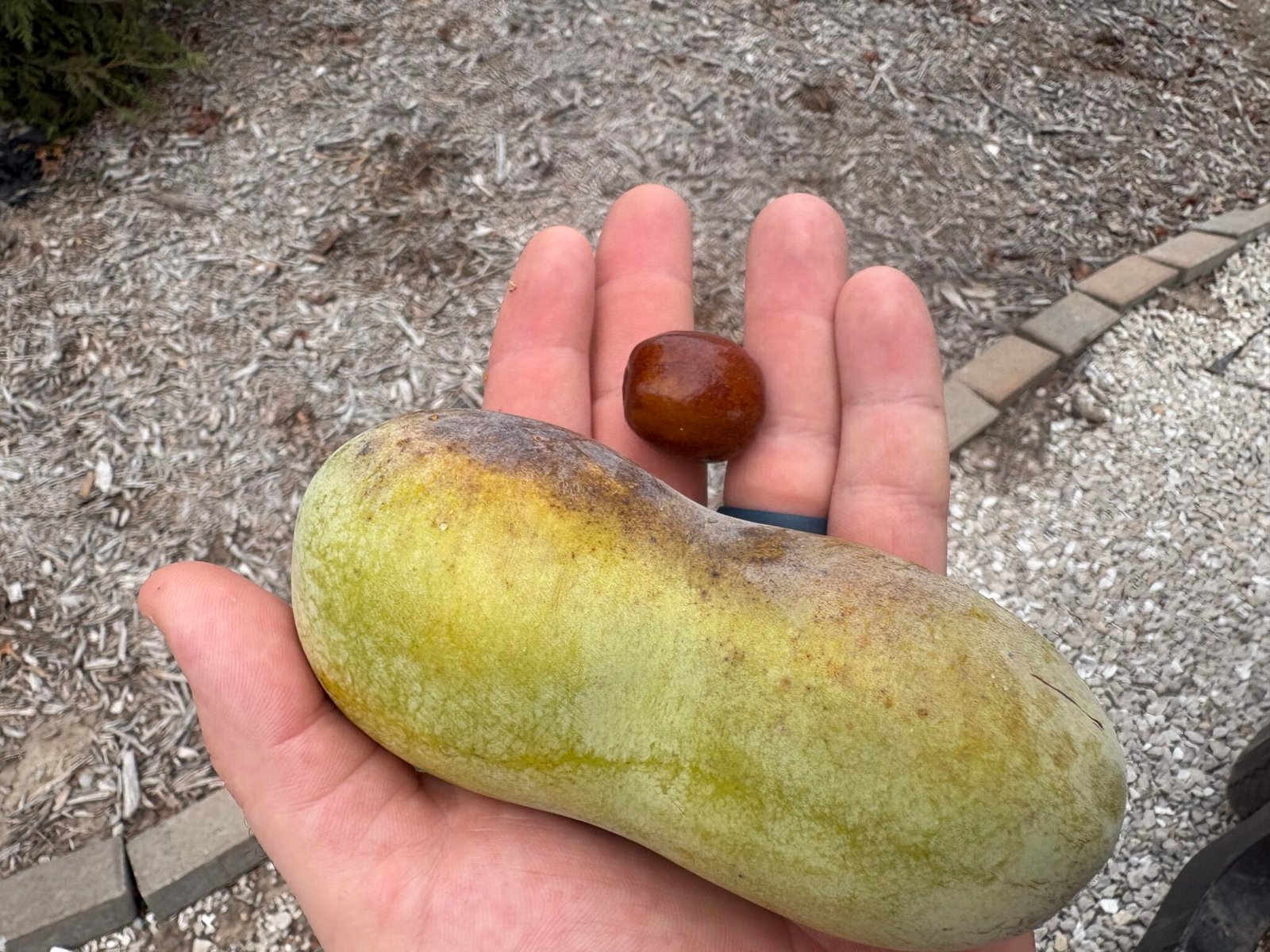
If you’re new to pawpaws, you might also enjoy our jujube and pawpaw comparison, where I explain just how different these two unusual fruits are after growing both here on our farm.
For me, the biggest appeal of freezing pawpaw pulp isn’t just preventing waste.
It’s being able to enjoy something we spent all season growing long after harvest is finished.
A pawpaw that ripened in September can become part of a homemade dessert in the middle of winter.
That’s a pretty good reward for spending a few extra minutes removing seeds and filling freezer bags.
About the Author
Daxon Weaver is the owner of Weaver Family Farms Produce, where he shares firsthand experiences growing pawpaws, Honey Jar and Sugar Cane jujubes, apples, peaches, pears, berries, and other fruit on his family’s Zone 6a Missouri farm. He focuses on practical advice about growing, harvesting, storing, and enjoying homegrown food.