When we first started looking at jujube trees, I spent a lot of time reading about different varieties before deciding which ones to plant. That early research is easier with a guide covering what to know before planting from firsthand growing experience.
Some articles talked about how productive they were.
Others focused on the fruit.
Then I kept running across another topic.
Thorns.
That immediately made me wonder whether I really wanted one growing in our orchard.
Would harvesting be miserable?
Would the branches constantly scratch me?
Would they be dangerous around kids?
Now that we’ve been growing both Honey Jar and Sugar Cane jujube trees on our family farm, I can honestly say the answer isn’t nearly as scary as I imagined.
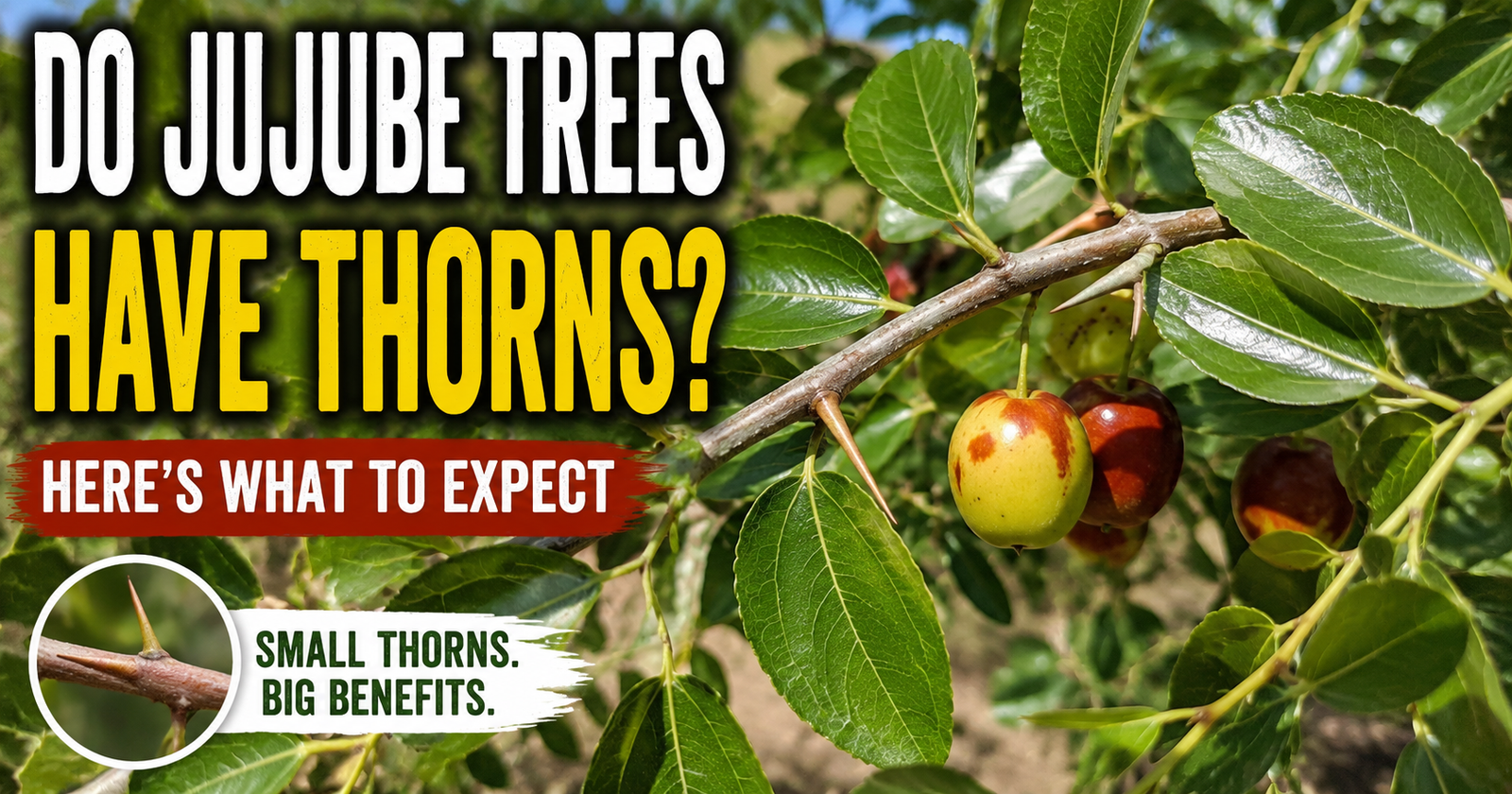
Yes, jujube trees can absolutely have thorns.
But that’s only part of the story.
If you’re still getting familiar with this unique fruit tree, I’d recommend reading What Is a Jujube Fruit and What Does It Taste Like? after this article. It explains why I think jujubes deserve a place in far more American backyards.
Yes, Jujube Trees Have Thorns
Let’s answer the biggest question first.
Yes.
Most jujube trees produce thorns.
Some varieties have more than others, and even the same tree can have branches that are much thornier than the rest. Younger growth is usually the thorniest, while older branches often become much less thorny as the tree matures.
The first time I noticed them on our trees, I remember thinking they looked much sharper than I expected.
They’re not huge like honey locust thorns, but they’re certainly sharp enough that you’ll notice if you grab the wrong branch.
Our Honey Jar and Sugar Cane Trees
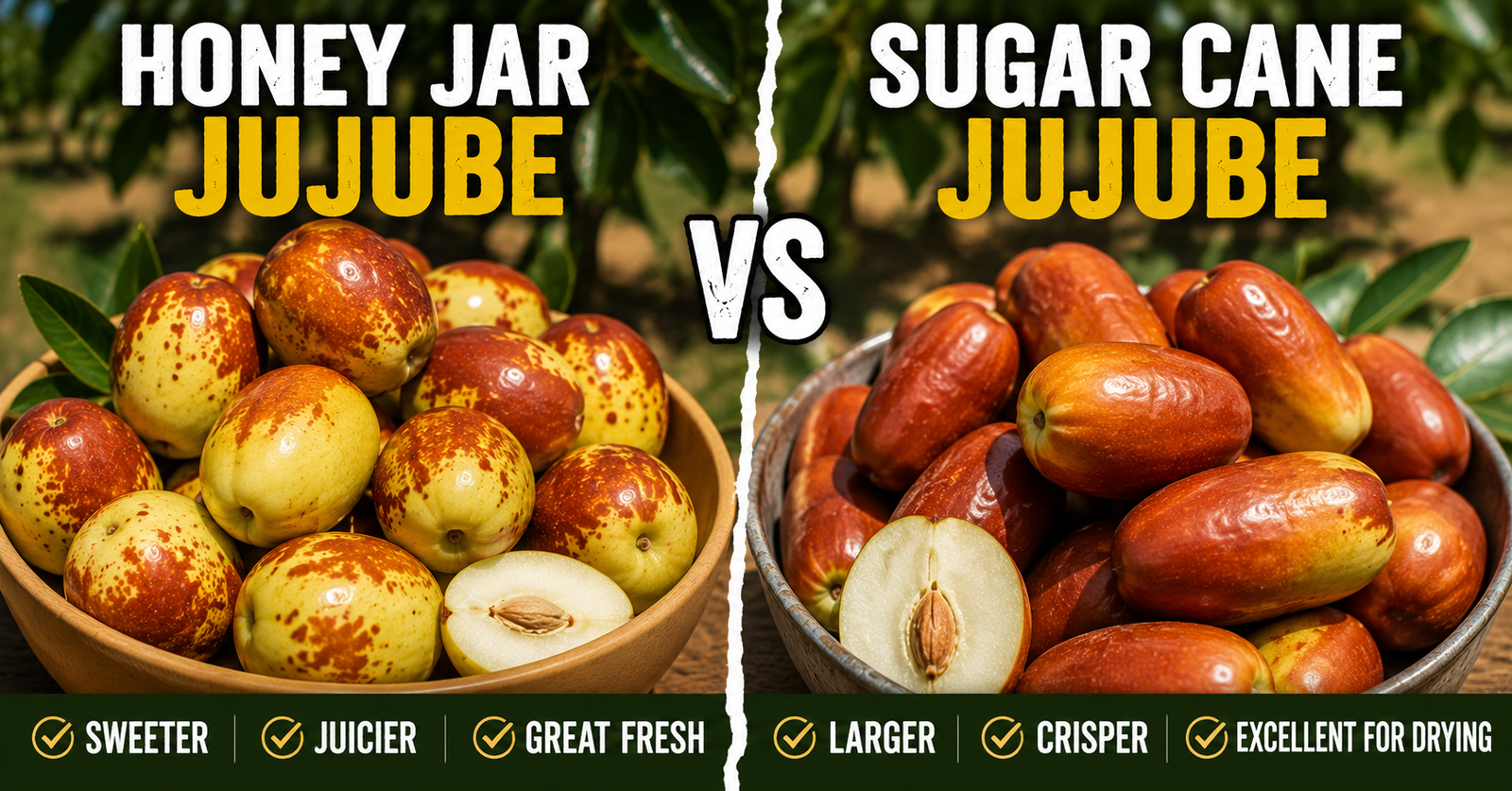
Since we grow both Honey Jar and Sugar Cane, I’ve been able to compare them side by side.
One thing I’ve noticed is that neither tree is covered in thorns from top to bottom.
Instead, they tend to appear on certain shoots more than others.
I’ve also found that paying attention while harvesting is usually all it takes. For extra hand protection around thorny branches, custom farm work gloves can be useful during harvest.
I’m not constantly getting scratched.
I’m not dreading harvest season.
Honestly, after a while I barely think about the thorns because I’m focused on picking fruit.
One interesting thing researchers have found is that Honey Jar is generally considered one of the less thorny cultivars when young, while Sugar Cane can produce noticeably more spines depending on the age and vigor of the shoots.
That lines up fairly well with what I’ve observed on our own trees.
Why Do Jujube Trees Have Thorns?
When you look at a wild plant growing in nature, there’s usually a reason for its defenses.
Thorns help discourage animals from browsing tender new growth.
For a tree that’s native to dry regions where grazing animals have always been part of the landscape, those sharp points make a lot of sense.
Even though our cultivated varieties produce delicious fruit, they haven’t completely lost that natural defense system.
It’s simply part of what makes a jujube a jujube.
Are Young Trees Thornier?
This is something I’ve definitely noticed.
The younger, more vigorous shoots seem much more likely to have noticeable thorns.
As branches age and become more established, they generally become less intimidating.
University horticulture guides make the same observation, noting that young stems are often thorny while mature wood may become nearly thornless depending on the variety.
That’s encouraging because it means the tree often becomes easier to work around as the years go by.

Root Suckers Usually Have More Thorns
One thing I pay attention to is the little shoots that occasionally pop up from the ground around the tree.
These root suckers are often some of the thorniest growth you’ll find.
They’re vigorous, grow quickly, and can surprise you if you’re reaching down without looking.
That’s one reason I don’t let them stick around very long.
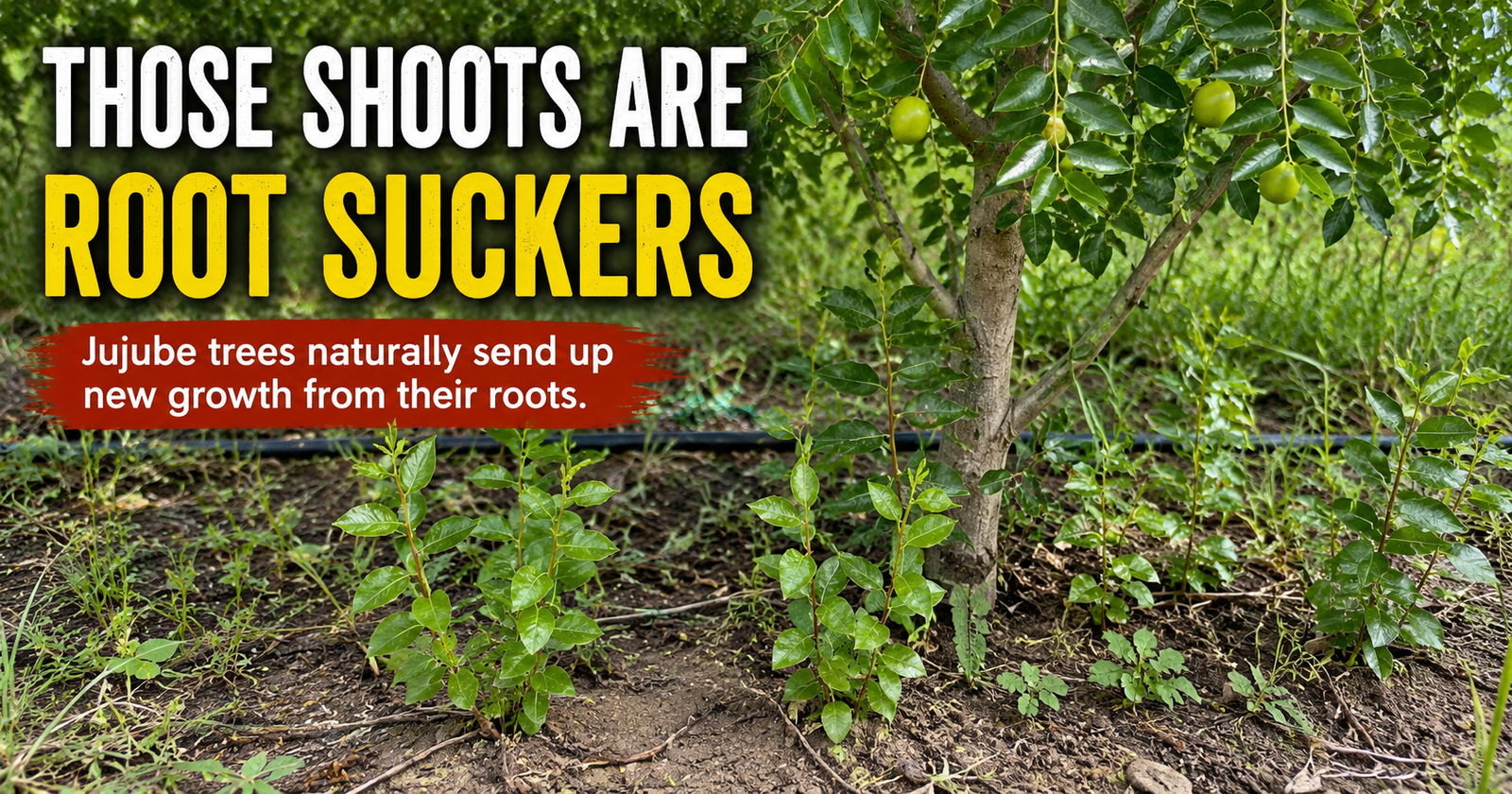
I explained exactly how I handle them in Why Is My Jujube Tree Growing Shoots From the Ground? because removing them while they’re small is much easier than waiting until they’ve become thick woody stems.
Are the Thorns Dangerous?
I’d never call them dangerous in the sense that they make the tree unsafe to grow.
But I also wouldn’t ignore them.
If you run your hand quickly down a thorny branch, you’ll probably get scratched.
If you’re carrying a ladder through the orchard without paying attention, you’ll notice them.
To me, they’re more of a reminder to slow down than a real problem.
I treat them the same way I treat the spurs on some apple trees or the thorns on blackberry canes.
Respect them, but don’t let them scare you away from growing a fantastic fruit tree.
Harvesting Around the Thorns
Before our trees produced their first good crop, I wondered whether picking fruit would be frustrating.
It hasn’t been.
By harvest time, I’m paying more attention to the fruit than the branches.
Most jujubes come off the tree easily once they’ve reached the stage I like, so I spend more time looking for ripe fruit than worrying about where every thorn is.
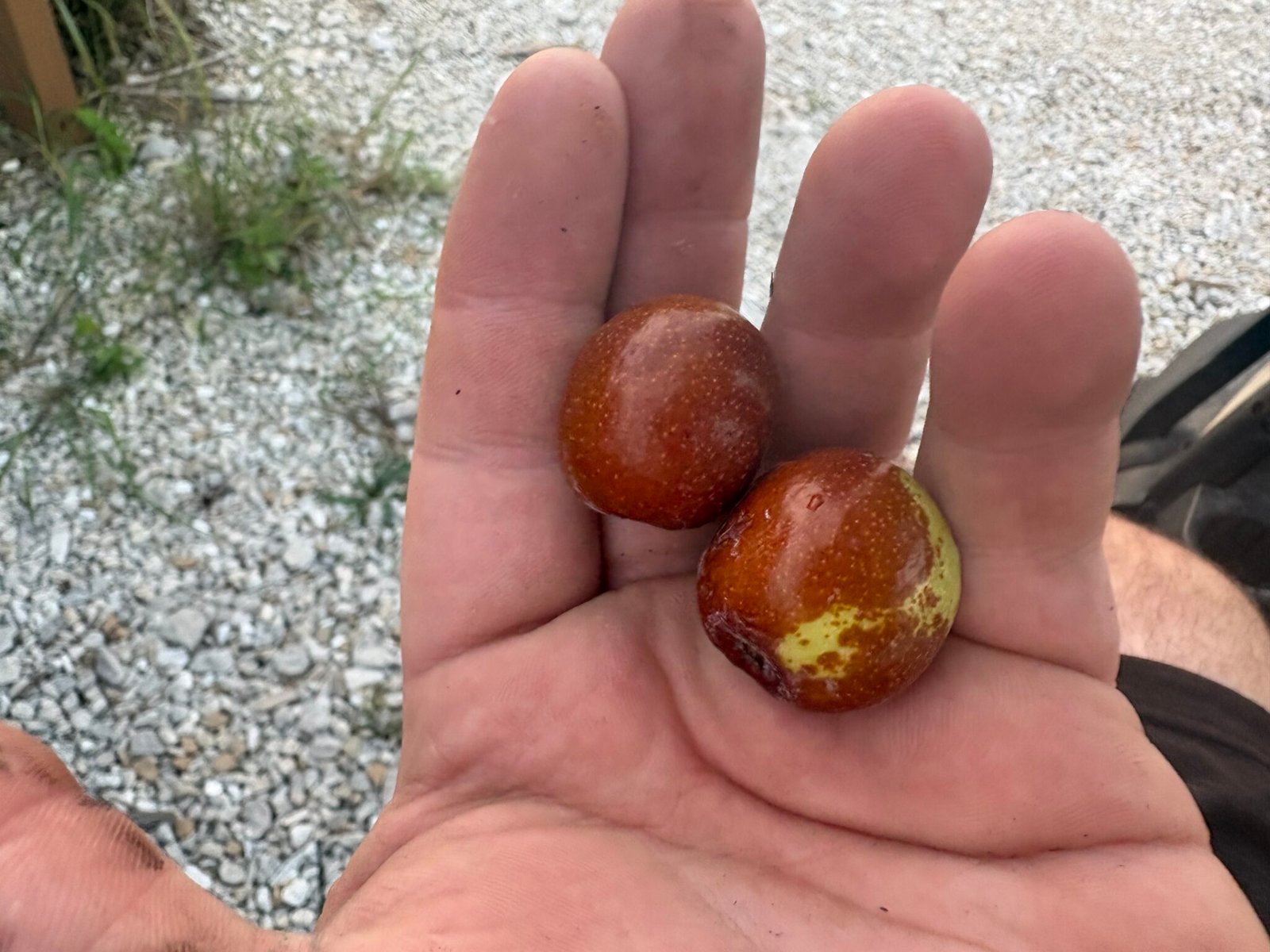
If you’re still learning the best time to harvest, you’ll probably find How Do You Know When a Jujube Is Ripe? Signs It’s Ready helpful. Waiting until the fruit is ready makes picking quicker and more enjoyable.
Should You Wear Gloves?
Sometimes I do.
Sometimes I don’t.
If I’m pruning or reaching deep into the canopy, a good pair of gloves is a nice idea.
If I’m simply picking a handful of ripe fruit from the outside of the tree, I usually don’t bother.
After a while, you naturally learn where to grab the branch and where not to.
It’s no different than harvesting raspberries or working around rose bushes.
Experience quickly builds confidence.
Will Pruning Reduce the Number of Thorns?
Pruning won’t magically make a thorny variety become thornless.
However, it can make the tree much easier to manage.
Removing crowded branches improves visibility and gives you better access to the fruit.
It also helps keep the tree at a comfortable harvesting height.
One thing I’ve noticed is that vigorous new water sprouts are often among the thorniest shoots on the tree.
Researchers have observed the same pattern, with fast-growing shoots frequently producing longer or more noticeable thorns than slower-growing branches.
Should Thorns Keep You From Planting a Jujube Tree?
Not even close.
If someone asked me today whether the thorns were enough to make me choose a different fruit tree, my answer would be no without hesitation.
The fruit is excellent.
The trees have been surprisingly low maintenance.
They tolerate our hot Missouri summers well.
Once established, they don’t seem nearly as demanding as some of our other fruit trees.
Every fall when I’m standing under the tree eating sweet Honey Jar and Sugar Cane jujubes, I honestly forget the thorns are even there.
The rewards far outweigh the occasional scratch.
What Surprised Me the Most
The biggest surprise wasn’t that the trees had thorns.
It was how quickly I stopped thinking about them.
Before planting, the thorns seemed like they might be a major drawback.
After living with the trees for several seasons, they’re just another characteristic of the plant.
Instead of remembering the scratches, I remember late summer evenings walking out to the orchard, picking a handful of ripe jujubes, and comparing the flavor of our Honey Jar tree to our Sugar Cane tree.
Those are the memories that stick with me.
If you’re considering planting a jujube tree, I wouldn’t let the thorns make the decision for you.
They’re real.
They’re sharp.
But they’re also a very small part of growing one of the most enjoyable fruit trees we’ve added to our farm.
About the Author
Daxon Weaver is the owner of Weaver Family Farms Produce, where he shares firsthand experiences growing fruit, harvesting seasonal crops, and helping others enjoy the rewards of homegrown food from his family’s Missouri farm.