Until a few years ago, I’d never tasted either one.
If someone had asked me what a jujube was, I probably couldn’t have answered.
The same goes for pawpaws.
Now they’re two of the fruits I look forward to harvesting every year on our Missouri farm.
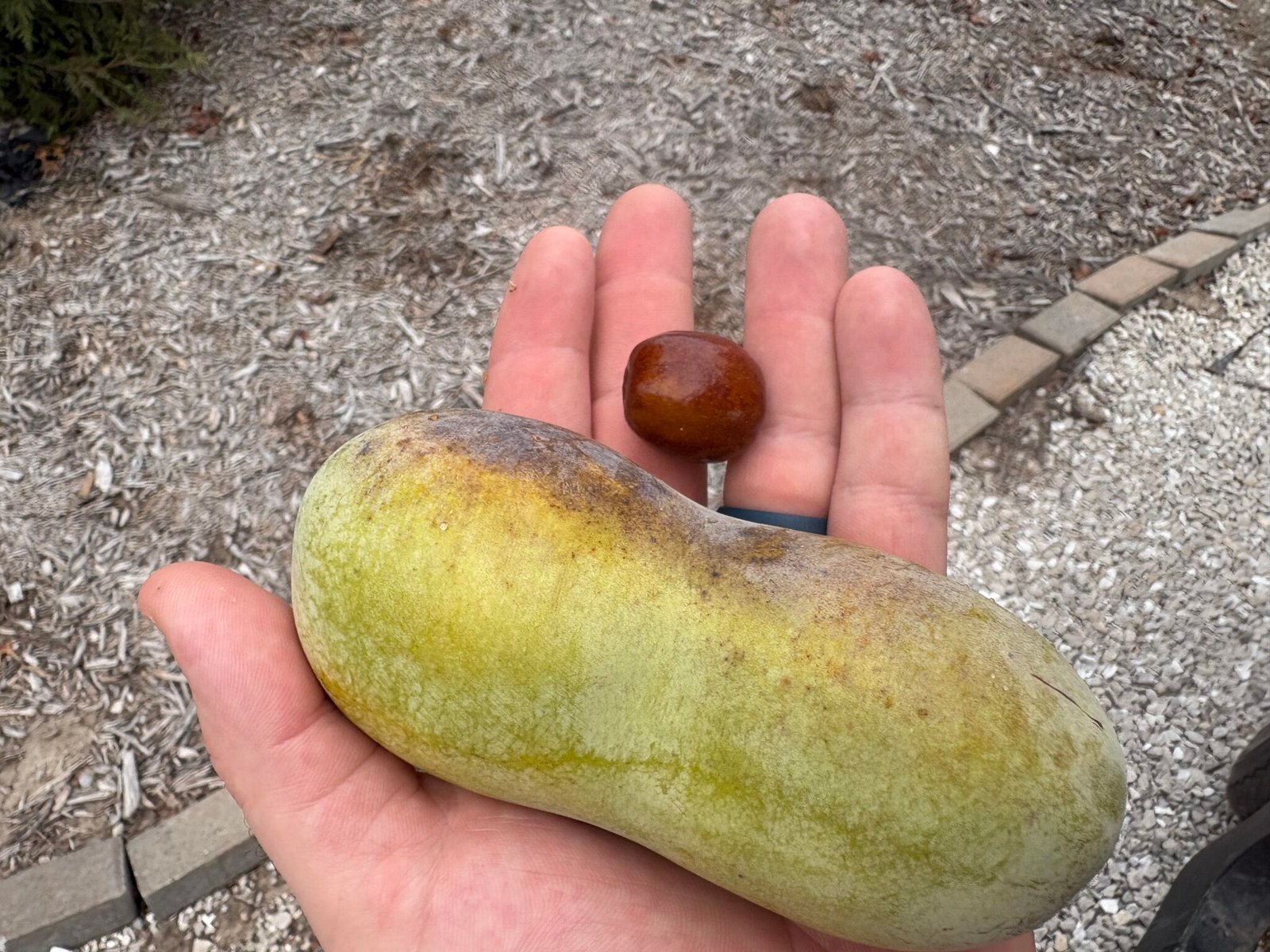
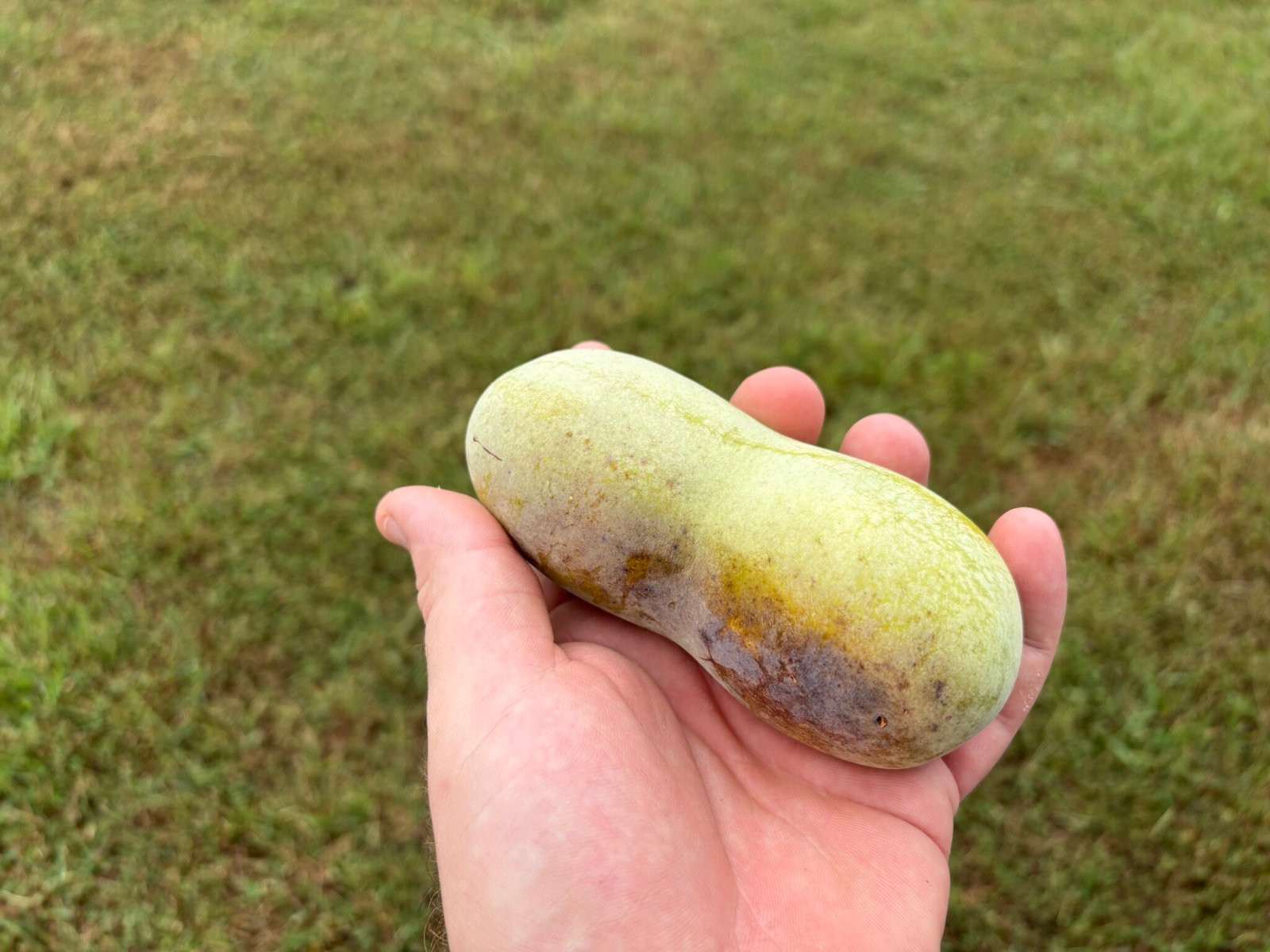
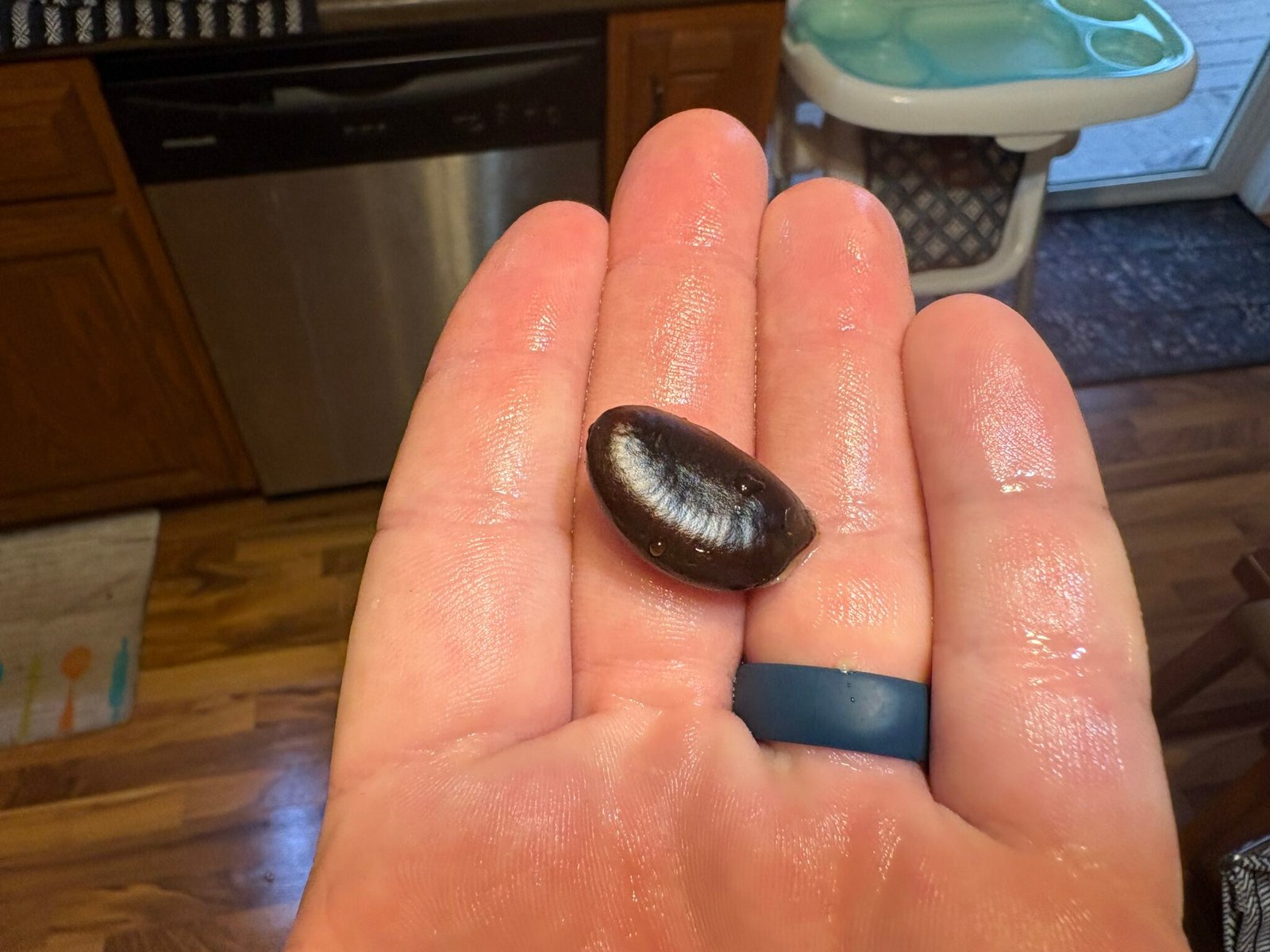
One afternoon this season, I picked up a freshly fallen ripe pawpaw and a ripe Honey Jar jujube that had just finished turning brown.
Holding them together in my hand really made me appreciate how different they are.
They’re both delicious.
They’re both unusual.
And yet they’re almost nothing alike.
If you’re wondering which one is better, here’s my honest comparison after growing both.
The Size Difference Isn’t Even Close
The first thing everyone notices is the size.
A ripe jujube easily fits between two fingers.
A ripe pawpaw can completely fill your hand.
When I held these two fruits together, it almost looked like comparing a grape to a mango.
Photos online don’t always show scale very well, but seeing them side by side makes the difference obvious.
If someone handed you both fruits without telling you anything about them, you’d probably never guess they’re both growing in the same orchard.
They Taste Nothing Alike
This is where things get interesting.
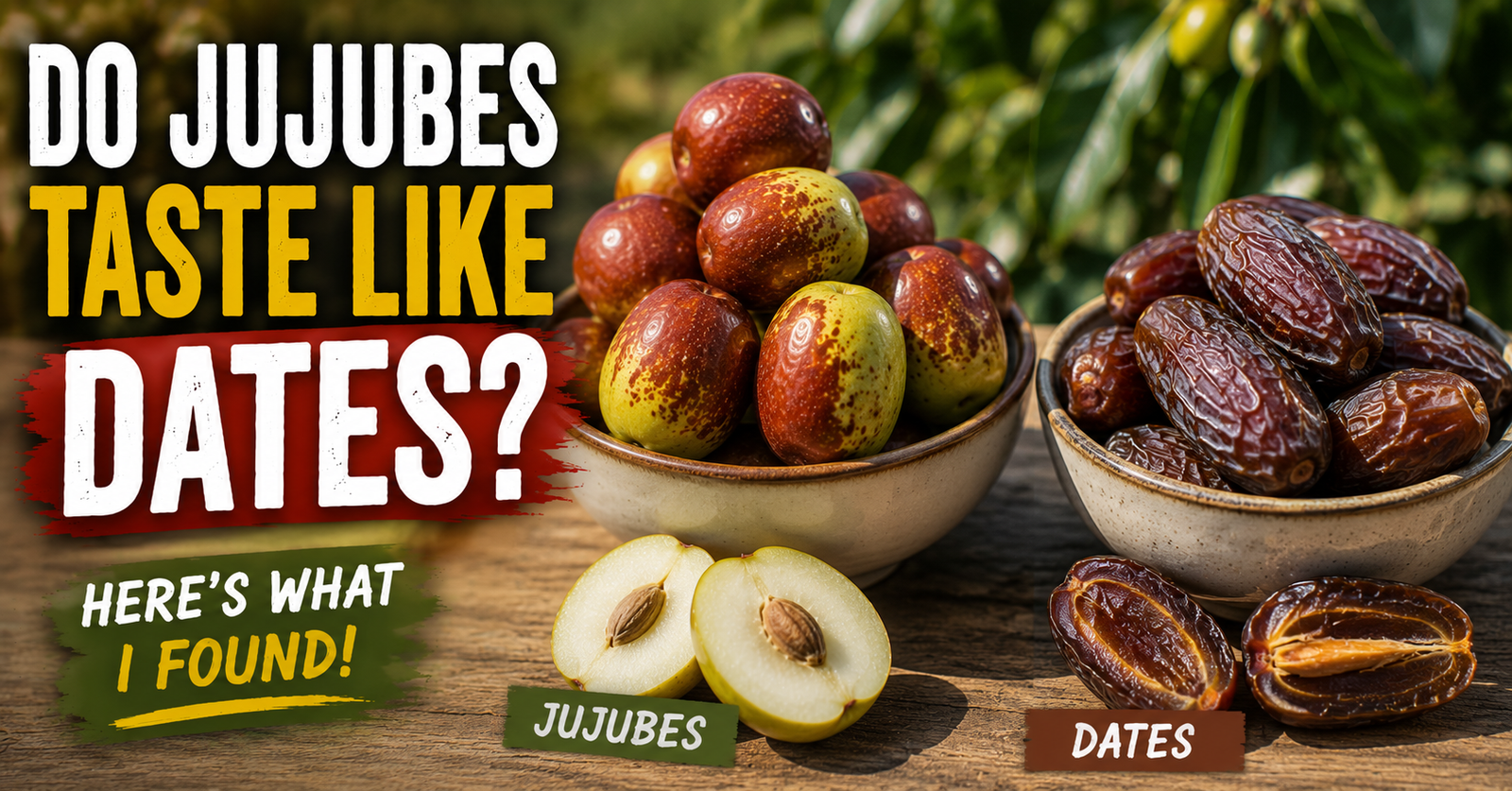
Our ripe Honey Jar jujubes remind me of a crisp, sweet apple.
As they continue turning brown and begin softening slightly, they develop richer notes that remind me of dates and molasses.
Pawpaws go in a completely different direction.
A ripe pawpaw is soft, creamy, and tropical.
To me, the flavor reminds me of a blend of banana, mango, vanilla, and a little melon.
If someone asked me whether they taste similar…
I’d honestly say not at all.
They’re about as different as two fruits can be.
The Texture Is Completely Different
Texture might actually be the biggest difference.
Jujubes stay firm.
Even when fully ripe, they still have a pleasant bite to them.
Pawpaws couldn’t be more different.
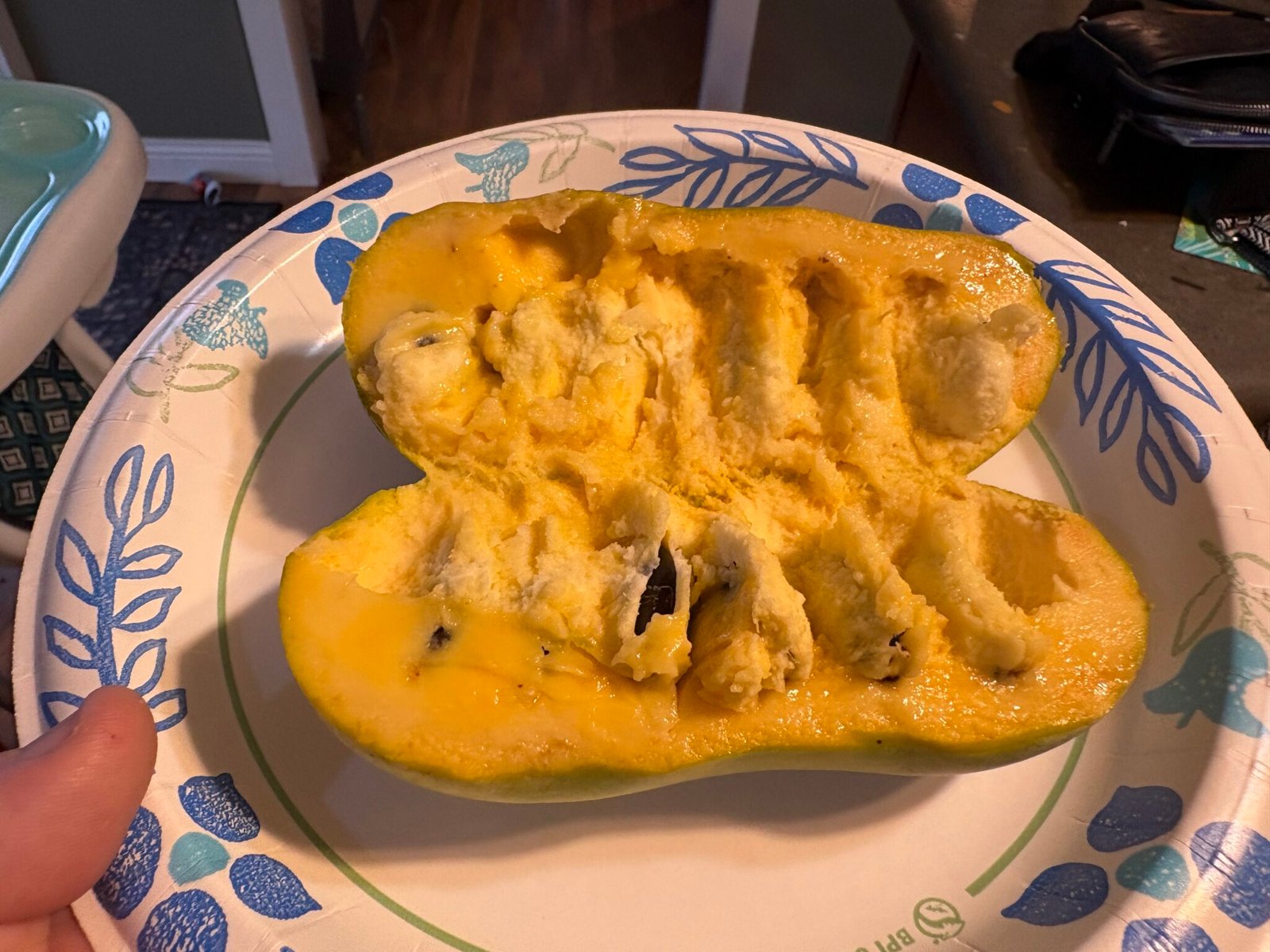
Once ripe, the flesh becomes soft enough that I usually scoop it out with a spoon. That texture is shown in more detail in the pawpaw's soft interior.
You don’t really bite into a pawpaw the way you do an apple or a jujube.
Instead, it’s almost like eating custard straight from the peel.
One Travels Well. One Doesn’t.
This surprised me after growing both.
Jujubes are incredibly easy to handle.
I can pick them, carry them around the orchard, and they rarely bruise.
Pawpaws require much more care.
Once they’re ripe enough to fall from the tree, they’re also delicate.
If they hit a rock or stay in the sun too long, they can bruise quickly.
I think that’s one reason you almost never see fresh pawpaws in grocery stores.
Jujubes have a much better chance of handling shipping.
Which One Is Sweeter?
This depends on when you eat them.
A green jujube isn’t nearly as sweet as one that’s fully brown.
In fact, I’ve learned not to judge them too early.
I actually prefer ours after they’ve turned mostly brown and softened just a little.
That’s when I think they reach their best flavor.
Pawpaws are different.
Once they’re ripe, they’re naturally very sweet from the beginning.
If I had to choose one purely on sweetness, I’d probably give a slight edge to the pawpaw.
But the sweetness is completely different.
Jujubes have a clean, apple-like sweetness.
Pawpaws have a rich, tropical sweetness.
Which One Is Easier to Grow?
So far, I’d say jujubes.
Our Honey Jar and Sugar Cane trees have been remarkably low maintenance.
They’re drought tolerant, don’t seem bothered by many pests, and have handled our Missouri weather well.
Pawpaws haven’t been difficult, but they’ve definitely required a little more patience.
They’re slower to establish, and because they’re less common, there isn’t nearly as much practical growing information available.
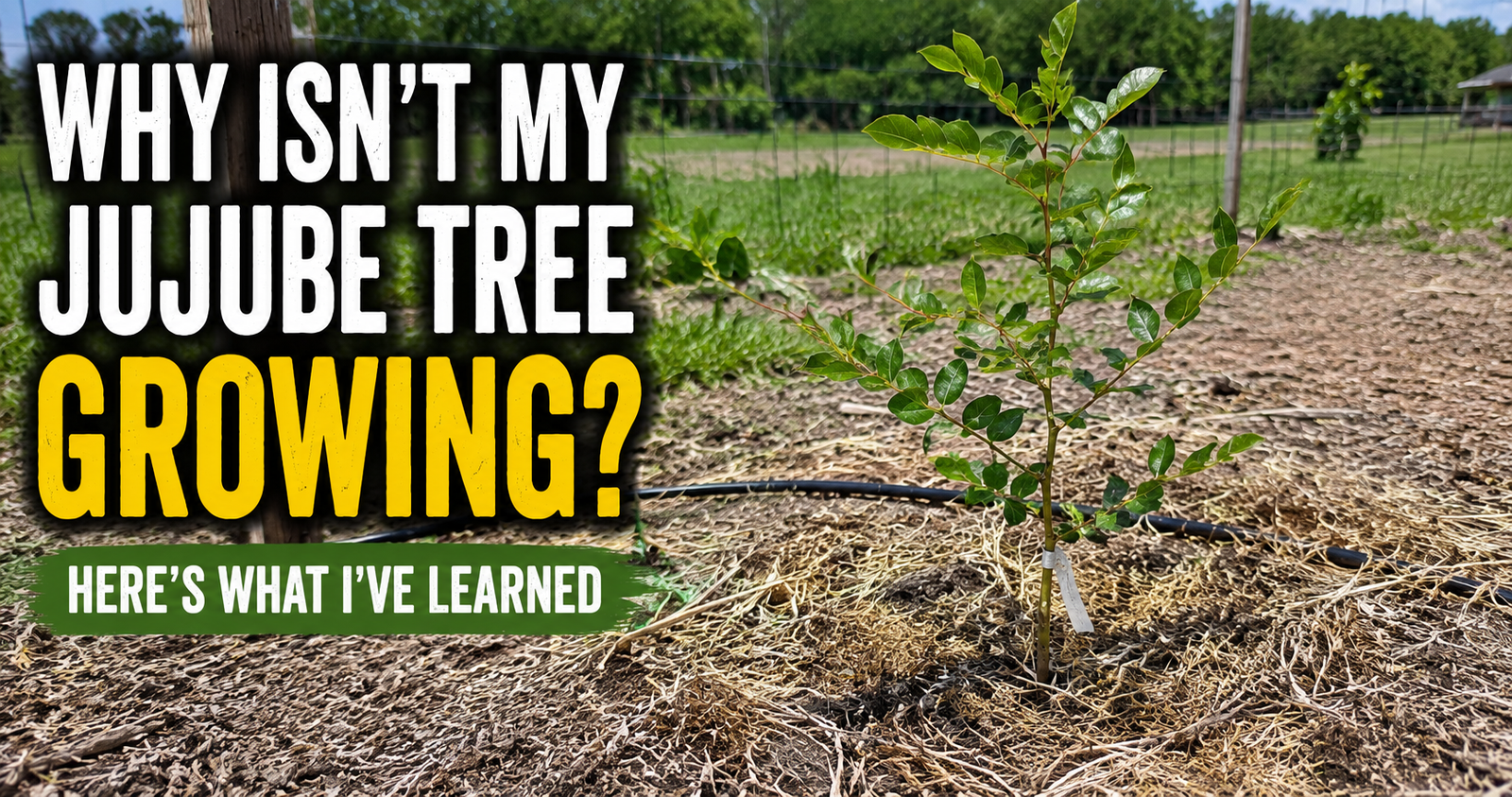
I enjoy growing both, but if someone asked me which tree I’d recommend to a beginner, I’d probably suggest starting with a jujube. Before planting one, it helps to understand what to expect from jujube growth and why early growth may seem slow.
Which One Do My Family Members Reach For?
This one surprised me.
The jujubes disappear first.
I think it’s because they’re so easy.
Walk by the tree.
Pick one.
Eat it.
Keep walking.
Pawpaws are more of an event.
We usually bring them inside, cut them open, remove the seeds, and enjoy the creamy flesh with a spoon. If you're curious about the seeds you remove, what pawpaw seeds look like explains how to recognize them.
Both are delicious.
They’re just enjoyed differently.
If I Could Only Keep One…
This is actually harder than I expected.
The practical side of me says jujube.
The tree is easier to manage.
The fruit stores better.
It’s incredibly productive.
But the fruit lover in me would really miss pawpaws.
There’s simply nothing else that tastes like one.
That’s why I’m glad I don’t have to choose.
Growing both has made our orchard much more interesting.
My Honest Opinion
When I look at that photo of the pawpaw and jujube sitting together in my hand, I don’t see two fruits competing against each other.
I see two of the best decisions we’ve made for our orchard.
One gives us crisp, sweet fruit that we snack on while walking through the trees.
The other rewards us with creamy tropical fruit that still amazes first-time tasters.
They’re completely different.
And that’s exactly why I love growing both.
If someone asked me today whether they should plant a jujube or a pawpaw, my answer would probably be…
Eventually, plant both.
Each one brings something unique to the orchard, and together they’ve become two of the harvests I look forward to the most every single year.
Which Fruit Is More Filling?
One thing I’ve noticed is that these two fruits satisfy me in completely different ways.
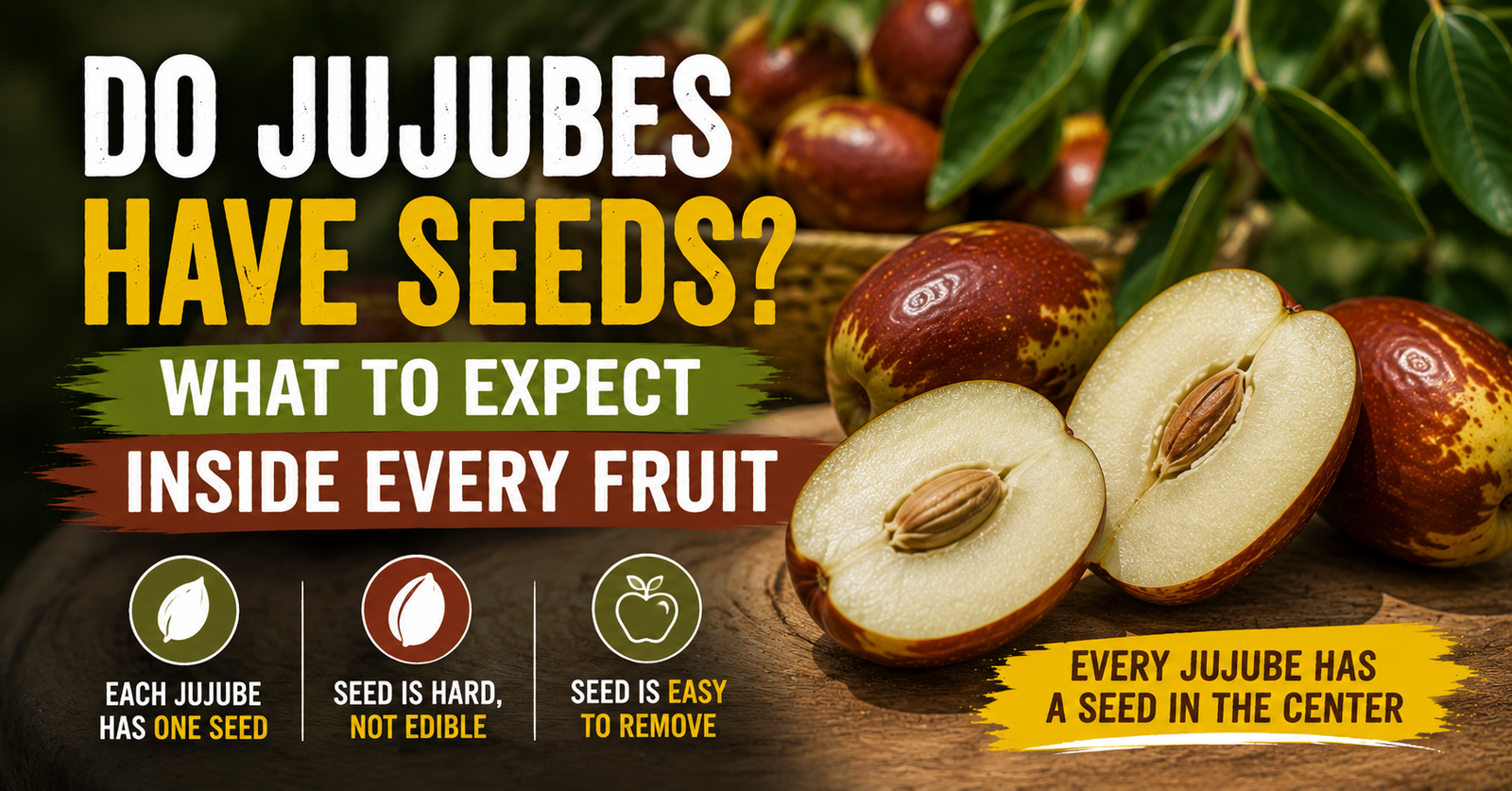
Jujubes are the kind of fruit I snack on while I’m walking around the orchard. I’ll pick one, eat it, then grab another a few minutes later. They’re small enough that it’s easy to keep reaching for “just one more.” Because jujubes are easy to eat straight from the tree, it helps to know what’s inside a jujube before snacking on one.
Pawpaws are different.
One good-sized ripe pawpaw can actually feel like a light meal.
The creamy flesh is much richer, and after eating one, I’m usually finished. I don’t find myself wanting another one right away.
That’s one of the biggest differences between the two.
Jujubes are my grab-and-go fruit.
Pawpaws are the fruit I sit down and enjoy.
Shelf Life Is Completely Different
If I had to give one fruit an advantage, this would probably be it.
Jujubes are much easier to store.
Fresh ripe jujubes can last surprisingly well compared to pawpaws, especially if they’re refrigerated.
Pawpaws, on the other hand, have a very short window once they’re fully ripe.
That’s one reason most people never see fresh pawpaws in grocery stores.
They’re simply too delicate.
When one falls from the tree, I know I need to enjoy it fairly soon.
Jujubes give me much more flexibility.
Which Tree Would I Plant First?
People ask me this more often than I expected.
If someone has room for only one unusual fruit tree, which would I recommend?
For most beginners, I’d probably say a jujube.
Not because I think it’s a better fruit.
It’s because I think it’s the easier tree to start with.
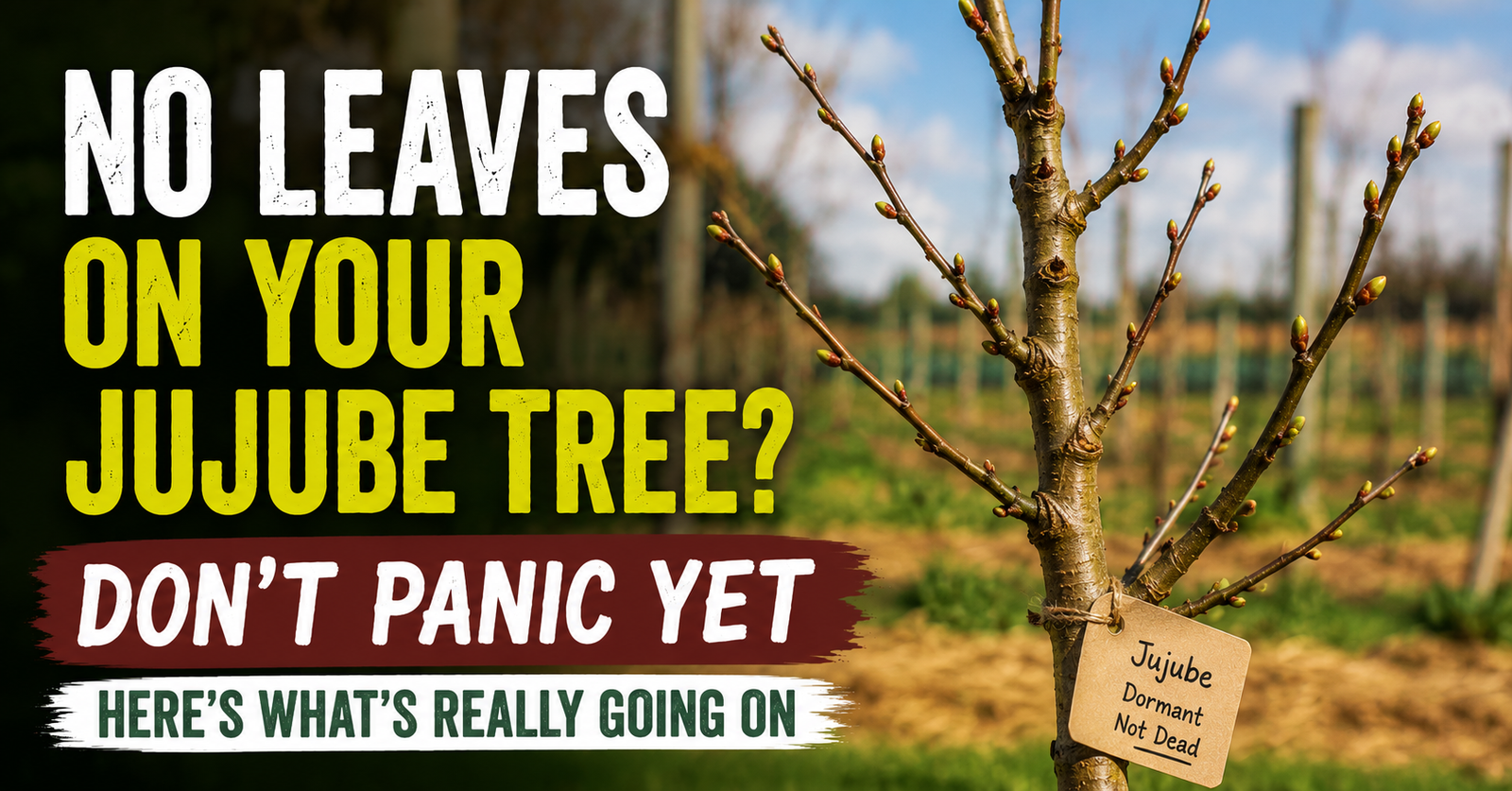
Our Honey Jar and Sugar Cane jujubes have handled Missouri summers well, don’t seem to mind dry weather once established, and have been very rewarding to grow. If you're growing jujubes yourself, jujube trees leaf out late can explain why a bare tree in spring may still be perfectly healthy.
Pawpaws are absolutely worth planting too, but I think they ask for a little more patience.
If someone has room for both, though, that’s exactly what I’d do.
They complement each other beautifully.
Harvest Season Is Something I Look Forward To
One thing I didn’t expect when we started planting unusual fruit trees was how much I’d enjoy harvest season.
Walking through the orchard has become completely different than it was a few years ago.
Some days I’m checking peaches.
Other days I’m looking at apples.
Then late summer arrives, and I’m watching for ripe jujubes turning brown while keeping an eye out for pawpaws that have just fallen beneath the trees.
Finding both on the same day never gets old.
In fact, that’s exactly how the photo at the beginning of this article happened.
I picked up a freshly fallen ripe pawpaw, grabbed one of our ripe Honey Jar jujubes, and realized they perfectly represented two completely different sides of our orchard.
Which One Should You Try First?
If you’ve never tasted either fruit before, I’d honestly encourage you to try both.
Start with a ripe jujube if you enjoy crisp fruit that reminds you of an apple with a sweeter finish.
Try a ripe pawpaw if you enjoy creamy tropical flavors that you simply won’t find in most grocery stores.
Neither one replaces the other.
They’re different experiences.
That’s exactly why I grow both.
What Growing These Fruits Has Taught Me
One of the biggest lessons I’ve learned from our orchard is that not every fruit has to taste like an apple or peach to be worth growing.
Before planting these trees, I honestly didn’t know much about either one.
Now they’ve become two of the fruits I look forward to every single year.
They’ve also reminded me that some of the most rewarding things to grow aren’t always the ones you’ll find in the produce section at the grocery store.
Sometimes they’re the fruits that make visitors stop, point, and ask…
“What is that?”
I enjoy answering that question every single time.
If I Had to Describe Them in One Sentence
If someone gave me only one sentence to describe each fruit, here’s what I’d say.
Jujube: A crisp, sweet fruit that starts out tasting like a fresh apple and becomes richer and almost date-like as it fully ripens.
Pawpaw: A creamy, tropical fruit with a texture like custard and a flavor that’s unlike anything else growing in our orchard.
That’s about as simple as I can make it.
My Honest Opinion
If someone forced me to choose only one of these fruits forever…
I’d probably refuse.
Not because I couldn’t decide.
Because they fill completely different roles in our orchard.
Jujubes are dependable, easy to snack on, and incredibly productive.
Pawpaws feel like a seasonal treat that we genuinely look forward to every year.
Together they’ve become two of the most interesting fruits we grow on our Missouri farm.
Every season when I can hold a ripe jujube and a ripe pawpaw in the same hand, I’m reminded why we started planting unusual fruit trees in the first place.
They start conversations.
They surprise people.
And they prove that some of the best fruit you’ll ever eat isn’t necessarily the fruit you’ll find at the grocery store.
About the Author
Daxon Weaver is the owner of Weaver Family Farms Produce, where he shares firsthand experiences growing apples, peaches, pears, pawpaws, jujubes, persimmons, berries, and other fruits on his family’s Zone 6a Missouri farm.