If you’ve ever bitten into a persimmon before it was ready, there’s a good chance you remember the experience.
Instead of the sweet, almost honey-like flavor you were expecting, your mouth suddenly feels dry, puckered, and strangely coated. It’s the kind of unpleasant surprise that can make someone think persimmons just aren’t worth eating.
But the problem usually isn’t the fruit itself.
It’s the ripeness.
Here on our Missouri family farm, we grow a pretty wide variety of fruit, including apples, peaches, pawpaws, jujubes, pears, and persimmons. One thing I’ve learned is that knowing when to pick something is just as important as knowing how to grow it.
Persimmons deserve special attention because they don’t all behave the same way.
Some can be eaten while they’re still firm. Others need to become extremely soft before they’re enjoyable. And if you’re growing native American persimmons here in Missouri, the signs of ripeness can be quite different from the large Asian persimmons sold in grocery stores.
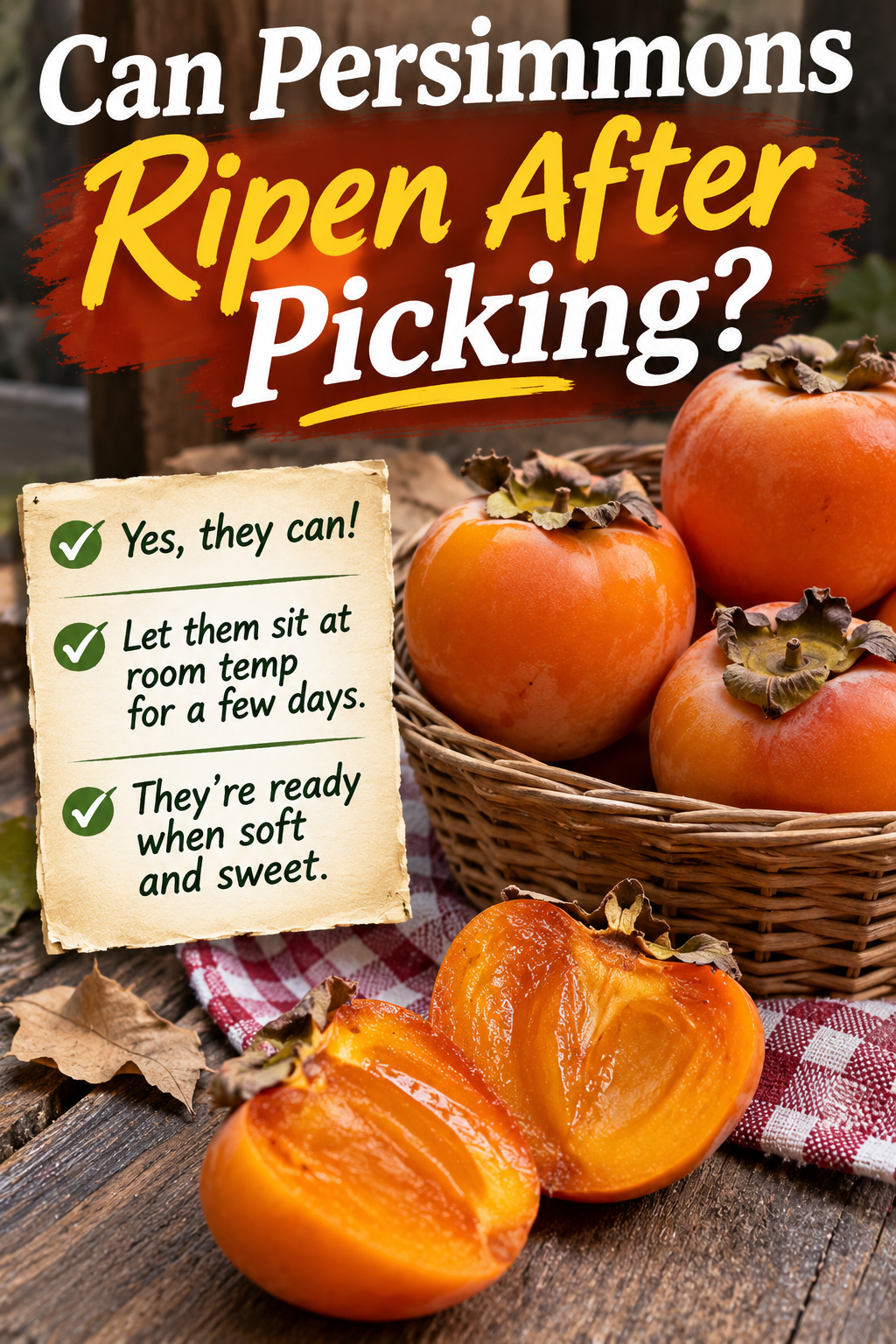
Yes, persimmons can continue ripening after they’re picked, as long as they’ve reached the proper stage of maturity. A mature persimmon can soften and become sweeter-tasting indoors, but picking an immature green fruit too early may leave you with something that never develops good eating quality.
There’s also a common belief that persimmons must experience a frost before they’re sweet enough to eat.
That’s not actually true.
Let’s look at what happens after you pick a persimmon, how to ripen one properly, and why the type you’re growing makes such a big difference.
Yes, Persimmons Can Ripen After Picking
Persimmons can continue the ripening process after they’re removed from the tree.
That’s true of many American and Asian persimmon varieties.
But there’s an important distinction between a fruit that’s mature and one that’s fully ripe.
A mature persimmon has developed far enough on the tree to continue ripening properly after harvest.
It may still be firm.
It may not taste good yet.
But it has reached the stage where additional softening and other ripening changes can take place.
An immature persimmon is different.
If you pick it far too early, especially while it’s still green and poorly developed, leaving it on the counter won’t necessarily turn it into delicious fruit.
That’s the mistake I’d try to avoid.
What Happens as a Persimmon Ripens?
Several changes can take place.
The flesh softens.
The color may deepen.
Flavor and aroma develop.
And with astringent persimmons, the mouth-drying effect of soluble tannins decreases as the fruit reaches the proper ripeness.
Those tannins are the main reason an unripe persimmon can taste so unpleasant.
According to University of Georgia Extension, persimmons continue ripening after harvest, although many varieties need to become completely soft before they’re pleasant to eat.
The biggest exception is the non-astringent group, which includes varieties such as Fuyu.
Why Some Persimmons Make Your Mouth Feel Dry
Before getting into the different varieties, I think it’s worth explaining why unripe persimmons taste so strange.
Persimmons naturally contain compounds called tannins.
Tannins are responsible for the astringent sensation you experience when eating certain unripe fruits.
Astringency isn’t exactly the same thing as bitterness or sourness.
It’s more of a drying, puckering feeling.
Your tongue and the inside of your mouth can feel coated, almost as if all the moisture suddenly disappeared.
And an astringent persimmon doesn’t need to look green for that to happen.
Some fruits can appear beautifully orange and still be unpleasantly astringent.
Why Does the Astringency Go Away?
As an astringent persimmon ripens, changes occur that make its tannins less able to produce that mouth-drying sensation.
The fruit becomes much more enjoyable.
That’s why a persimmon can taste absolutely terrible when firm but wonderfully sweet when fully soft.
University of Missouri horticultural experts specifically identify tannins as the reason unripe native persimmons cause that memorable puckering sensation.
For anyone trying persimmons for the first time, understanding this one difference can completely change the experience.
American Persimmons vs. Asian Persimmons
This is where I want to spend a little extra time because our website focuses on fruit that can actually grow here at Weaver Family Farms in Missouri Zone 6a.
When most Americans see persimmons at the grocery store, they’re often looking at large Asian varieties.
Those aren’t necessarily the same persimmons growing wild along roadsides, wooded areas, and old farms here in Missouri.
American Persimmons
The American persimmon, Diospyros virginiana, is native to much of the eastern and central United States.
That includes Missouri.
Its fruit is generally smaller than the common Asian varieties.
Many are around the size of a golf ball or somewhat smaller, although fruit size varies.
The color can range from yellow-orange to deep orange and other shades depending on the variety.
Most importantly, native American persimmons are generally astringent until they’re extremely ripe.
When they’re ready, the flesh can become very soft and almost pudding-like.
They’re also adapted to much colder winters than many common Asian persimmon varieties.
Asian Persimmons
Asian persimmons, commonly Diospyros kaki, include many familiar grocery-store varieties.
Fuyu and Hachiya are two of the best-known examples.
But these two aren’t interchangeable.
Fuyu is generally non-astringent.
Hachiya is astringent.
That means one can be enjoyable while still firm, while the other needs substantial softening before eating.
For a grower, knowing which kind you have is essential.
Can American Persimmons Ripen Off the Tree?
Yes, mature American persimmons can continue ripening after harvest.
However, I would be more cautious about picking American persimmons early than I would be with certain Asian cultivars.
Native American persimmons are famous for their strong astringency before they’re fully ripe.
Just because a fruit has turned orange doesn’t mean it’s ready to eat.
How to Tell When an American Persimmon Is Ripe
The most dependable signs include:
- Very soft flesh that yields easily to gentle pressure.
- Fully developed orange or reddish-orange coloring appropriate for the variety.
- A sweet, developed aroma.
- Skin that may appear slightly wrinkled.
- Fruit that releases easily or drops naturally when fully ripe.
University of Missouri describes a ripe American persimmon as extremely soft, almost like a small water balloon.
That’s much softer than most people would expect from ordinary grocery-store fruit.
If I were judging a native persimmon’s eating ripeness, I’d put much more weight on softness than color alone.
What If You Pick an American Persimmon While It’s Still Firm?
If the fruit is sufficiently mature, it may continue softening after harvest.
Place it somewhere safe at room temperature and check it regularly.
But I wouldn’t assume that every hard, orange American persimmon is going to develop perfect flavor indoors.
The fruit needs to have reached an appropriate maturity stage first.
If it’s still green and immature, the outcome is much less dependable.
Is It Better to Let American Persimmons Ripen on the Tree?
For immediate eating, I’d generally favor allowing native American persimmons to get very close to full ripeness on the tree.
The main problem is that wildlife enjoys them too.
Birds, opossums, raccoons, and other animals may reach the fruit before you do.
And once fully ripe American persimmons start falling, you may have a relatively short window to gather sound fruit.
That creates a trade-off.
Pick too early, and the fruit may be unpleasantly astringent.
Wait too long, and some of the harvest may end up on the ground or in the mouths of wildlife.
Can Fuyu Persimmons Ripen After Picking?
Yes, but Fuyu is different from the American persimmons we’re discussing.
Fuyu is a non-astringent Asian persimmon.
That means it can be eaten while the flesh is still fairly firm, provided the fruit has reached the proper maturity stage.
You don’t have to wait until it turns into soft jelly.
What Does a Ripe Fuyu Persimmon Feel Like?
A properly mature Fuyu can have a texture somewhat similar to a firm apple.
It should have developed the color associated with its variety, usually a rich orange.
Some people enjoy eating Fuyu persimmons firm.
Others prefer allowing them to soften more.
Both can be reasonable.
Should You Put Fuyu Persimmons on the Counter?
If the fruit is mature but you want a softer texture, room-temperature storage can encourage additional softening.
However, there’s no need to deliberately make a good firm Fuyu mushy.
UC Davis notes that exposing Fuyu persimmons to ethylene from other ripening fruit encourages softening, but that may be undesirable when you want to preserve their crisp texture.
That’s why I wouldn’t automatically use a banana or apple to ripen every persimmon I brought home.
First, figure out what kind you have.
Can Hachiya Persimmons Ripen After Picking?
Yes, and this is one of the most useful things to know about Hachiya persimmons.
Hachiya is an astringent Asian variety.
It generally needs to become extremely soft before eating.
A firm Hachiya may look beautiful, but eating it before it’s ready can be an unpleasant experience.
What Does a Ripe Hachiya Feel Like?
Think of a fruit with a very soft, almost pudding-like interior.
That’s the consistency you’re looking for.
A fully ripe Hachiya is much softer than the firm Fuyu persimmons commonly sold for fresh eating.
Can You Pick Hachiya While It’s Still Firm?
Yes, if the fruit has reached the appropriate harvest maturity.
Mississippi State University Extension recommends harvesting mature astringent Asian persimmons once their color has fully developed, even if they’re still firm.
They can then finish ripening at room temperature.
This is a much better strategy than waiting for every Hachiya to become completely soft while hanging on the tree.
The soft fruit can be difficult to handle without bruising or tearing the skin.
How to Ripen Persimmons After Picking
If you’ve harvested mature persimmons that still need additional ripening, the process is fairly simple.
You don’t need complicated equipment.
You mainly need the right type of fruit, a safe place to keep it, and some patience.
Step 1: Identify the Type of Persimmon
This is where I’d start.
If you’re dealing with a firm Fuyu, it might already be ready to eat.
If it’s a Hachiya or a native American persimmon, firmness could mean the fruit still needs substantial ripening.
Don’t assume every persimmon should be treated the same way.
Step 2: Inspect the Fruit for Damage
Before setting fruit aside, check for mold, broken skin, leaking juice, or obvious rot.
A small cosmetic mark isn’t necessarily a serious problem.
But fruit that’s already deteriorating shouldn’t be left on the counter for several more days.
I would separate damaged fruit from sound fruit and discard anything showing clear signs of spoilage.
Step 3: Arrange the Persimmons in a Single Layer
I’d use a shallow tray or plate.
Avoid piling several layers of fruit into a bowl.
Persimmons can bruise easily, especially when they’re beginning to soften.
You don’t want the weight of other fruit pressing into the ones at the bottom.
For very soft varieties, gentle handling is particularly important.
Step 4: Keep Them at Room Temperature
Place the tray somewhere indoors, away from direct sunlight and excessive heat.
A normal kitchen temperature is generally appropriate for ripening mature persimmons.
I wouldn’t leave them on a hot windowsill.
And I wouldn’t assume heating the fruit in an oven is an acceptable substitute for ripening.
You want normal ripening changes to take place gradually.
Step 5: Check Them Every Day
Look for changes in softness, aroma, and condition.
For an astringent variety, you’re generally waiting for substantial softening before eating.
For a non-astringent variety, that may not be necessary.
Check each fruit individually because they may not all ripen at exactly the same rate.
Step 6: Refrigerate or Use the Fruit Once It’s Ripe
Once the fruit reaches the proper eating stage, use it promptly.
Fully ripe astringent persimmons can be extremely delicate.
If you won’t eat them immediately, refrigeration can slow deterioration.
But I wouldn’t expect soft persimmons to last nearly as long as firm apples.
For larger quantities, freezing the edible pulp may be a better preservation option.
How Long Does It Take Persimmons to Ripen After Picking?
There’s no single number that applies to every persimmon.
A mature fruit that’s already beginning to soften may be ready within a few days.
A firmer fruit may need longer.
University of Florida guidance notes that mature astringent Asian persimmons can often be picked approximately 7 to 10 days before they would naturally soften on the tree and finish ripening indoors.
But that doesn’t mean every American persimmon, Fuyu, or Hachiya will be ready in seven days.
Several factors matter.
How Mature Was the Fruit at Harvest?
This is probably the biggest consideration.
A mature fruit can continue ripening.
A very immature fruit may never develop proper eating quality.
What Variety Are You Growing?
Fuyu, Hachiya, and native American persimmons have different expectations for firmness and astringency.
That’s why a hard Fuyu can be perfectly enjoyable while a hard Hachiya is not.
How Warm Is Your Home?
Warmer room temperatures generally encourage faster ripening and deterioration.
Cooler temperatures slow those processes.
I wouldn’t put fruit in an excessively hot area just to speed things up.
Was the Fruit Damaged?
Bruised or injured persimmons can soften unevenly or begin rotting before reaching their ideal eating stage.
That’s another reason careful harvesting and storage are so important.


Can You Ripen Persimmons Faster With an Apple or Banana?
Yes, for certain mature persimmons.
Persimmons are sensitive to ethylene, a natural plant hormone associated with ripening.
Apples and bananas release ethylene.
Keeping a mature persimmon near one of those fruits can encourage softening.
But I would use that approach selectively.
When I’d Consider the Apple or Banana Method
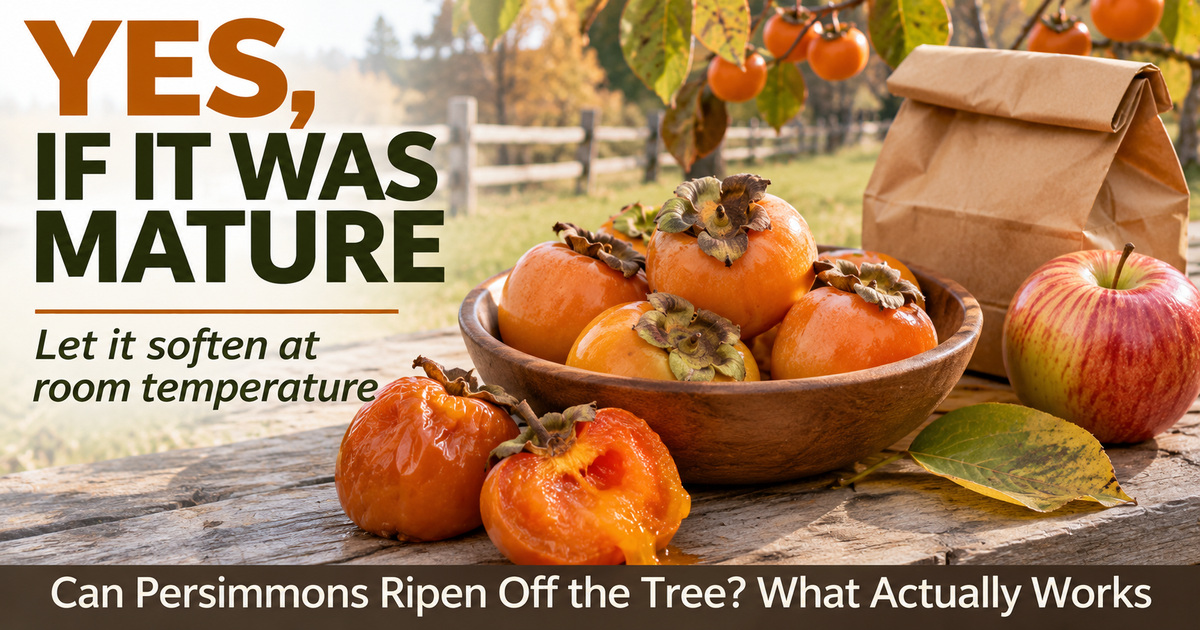
If I had mature, firm astringent persimmons that needed to soften, I might consider using a loosely closed paper bag with a ripe apple.
Then I’d check the fruit frequently.
The goal would be to encourage normal ripening, not trap the fruit in a wet, airtight container.
When I Wouldn’t Use It
If I had a nice, mature Fuyu persimmon that I wanted to enjoy while still crisp, I wouldn’t deliberately encourage rapid softening.
I’d also avoid trying to force very immature green persimmons to ripen this way.
Ethylene can encourage ripening in mature fruit, but it doesn’t replace development that should have happened on the tree.
Will Green Persimmons Ripen Off the Tree?
Sometimes people ask this because they have green persimmons on the tree and cold weather is approaching.
I understand the temptation to pick everything before a freeze.
But a green persimmon isn’t necessarily mature enough to develop good eating quality after harvest.
This is especially true for native American persimmons and astringent Asian varieties.
If the fruit is still immature, picking it early may leave you with something that stays unpleasantly astringent.
What If the Fruit Is Full-Sized but Still Green?
Full size isn’t proof of maturity.
The fruit may still need time to develop its mature color and internal characteristics.
I’d identify the cultivar and consult its expected harvest stage before deciding to pick.
For astringent Asian varieties, fully developed color is often an important harvest clue.
For native American persimmons, the signs can be more variable, and extreme softness is an especially reliable indicator of eating ripeness.
Can You Save Green Persimmons Before a Freeze?
That depends on how mature they are.
A mature fruit may ripen after picking.
An immature fruit may not.
I wouldn’t harvest a whole tree of green persimmons based on the assumption that a week indoors will fix everything.
If possible, sample a few fruits first and evaluate their maturity.
Do Persimmons Need Frost Before They’re Sweet?
This is one of the biggest myths about persimmons.
No, persimmons don’t need frost to become sweet and edible.
It’s a belief that’s especially common here in Missouri, where native persimmons often finish ripening around the time fall weather becomes colder.
But the frost isn’t what removes their astringency.
Time and the natural ripening process are responsible.
University of Missouri horticulturist David Trinklein specifically explains that freezing temperatures aren’t responsible for eliminating persimmon astringency.
University of Georgia Extension also notes that persimmons can become fully ripe before frost and that freezing weather can damage immature fruit.
Why Do So Many People Believe Persimmons Need Frost?
Because the timing often overlaps.
Native persimmons ripen in fall.
Fall brings colder temperatures.
Some fruit remains on the trees after the leaves have dropped.
So it’s understandable that people associate the first frost with sweet persimmons.
But correlation isn’t the same thing as cause.
An American persimmon can be perfectly ripe before frost if the fruit has completed its normal ripening process.
Can Frost Damage Persimmons?
Yes.
Especially if the fruit is immature.
A freeze can damage plant tissues and change fruit texture.
It isn’t a reliable method for turning hard, immature fruit into sweet persimmons.
I wouldn’t deliberately wait for frost as a substitute for checking actual ripeness.
When Do American Persimmons Ripen in Missouri?
This is especially relevant to our Zone 6a farm.
According to the Missouri Department of Conservation, native American persimmons generally ripen from September through November.
The exact timing depends on weather, location, and the individual tree.
Some fruit becomes ripe while leaves are still on the branches.
Other fruit may remain hanging after the leaves fall.
That’s one reason wild persimmon trees can be interesting to watch through autumn.
Does Zone 6a Change the Ripening Date?
It can influence the growing season, but USDA hardiness zones primarily describe average annual extreme minimum winter temperatures.
They don’t provide exact fruit-ripening dates.
Two orchards in the same hardiness zone may experience different harvest timing because of sunlight, rainfall, seasonal heat, and local weather.
I wouldn’t tell someone that every Missouri persimmon will ripen on October 15 simply because that’s the middle of fall.
Instead, I’d begin checking fruit as the season progresses.
What If Persimmons Are Still Hard in November?
That isn’t automatically unusual.
Some trees or cultivars ripen later than others.
The question is whether the fruit has reached an appropriate maturity stage.
If it’s a native American persimmon, I’d be looking for more than orange color before eating.
For astringent varieties, the fruit needs to become very soft and lose its mouth-puckering character.
Can You Pick Persimmons Before They Fall?
Yes.
You don’t necessarily have to wait for persimmons to fall naturally.
In fact, harvesting mature fruit before it drops can help protect it from damage and wildlife.
But the correct timing depends on the variety.
Picking American Persimmons
For native American persimmons, I’d be careful about harvesting too early.
Fully ripe fruit is extremely soft, and fruit that falls naturally may be ready to eat.
However, you don’t want to collect old, rotten, or contaminated fruit from the ground.
If you’re harvesting directly from the tree, look for the appropriate color, softness, and maturity.
Picking Asian Persimmons
For mature Asian varieties, harvesting while firm is common.
Mississippi State Extension recommends cutting the fruit from the tree with a short stem and the leafy calyx attached.
Pulling or twisting aggressively can damage the fruit.
I would use clean pruning shears and handle the fruit gently.
What About Persimmons That Fall Off the Tree?
A fallen persimmon may be ripe, but falling isn’t proof that every fruit is safe or ready to eat.
Fruit can drop because of ripeness, wind, pests, damage, or growing stress.
For native American persimmons, naturally fallen fruit is commonly associated with full ripeness.
But I’d still inspect it.
Can You Eat Persimmons That Fell on the Ground?
I would be cautious.
Fruit that’s been lying on soil can become contaminated, damaged, or spoiled.
If it’s split open, moldy, leaking, or visibly dirty inside, I wouldn’t use it.
I also wouldn’t collect fruit from areas where animals have been feeding or where contamination is likely.
For the best quality, I’d favor sound fruit harvested directly from the tree at the appropriate stage whenever practical.
Why Are My Persimmons Orange but Still Bitter?
This is one of the most common problems with astringent persimmons.
The outside looks ready.
The fruit has turned orange.
So naturally, you take a bite.
Then your mouth feels like it’s full of cotton.
The reason is that color and astringency don’t always change at exactly the same time.
Astringent persimmons can develop attractive orange coloring before their tannins have become sufficiently insoluble to stop producing that drying sensation.
Should You Wait Until They’re Soft?
For ordinary astringent American persimmons and Hachiya-type Asian persimmons, yes.
They generally need to become very soft before eating.
Don’t rely on color alone.
A fully ripe astringent persimmon should have a soft, almost custard-like texture and no strong mouth-puckering sensation.
Why Does Fuyu Taste Good While Still Firm?
Because Fuyu belongs to the non-astringent group.
Its tannin characteristics are different.
That allows the fruit to become enjoyable while it still has a relatively crisp texture.
This is one reason knowing the cultivar is so important.
Why Won’t My Picked Persimmons Ripen?
If persimmons have been sitting indoors for days and don’t seem to improve, I’d investigate several possibilities.
They Were Picked Too Early
This would be my first concern.
Immature fruit may not develop proper flavor or texture after harvest.
The earlier it was picked relative to maturity, the less dependable the result.
The Variety Has Different Ripening Characteristics
A mature Fuyu doesn’t need to become pudding-soft.
If you’re waiting for that texture, you may be misunderstanding the normal eating stage.
Meanwhile, a Hachiya may need considerable softening before it becomes pleasant.
They’re Being Stored Too Cold
Refrigeration slows ripening.
If your goal is to soften mature persimmons quickly, room temperature is generally more effective.
The Fruit Was Damaged
Bruising, broken skin, or other injuries can cause localized softening or decay.
That isn’t the same thing as normal ripening.
If the fruit begins molding or rotting, discard it.
How to Store Persimmons After They’re Ripe
The correct storage method depends on the fruit’s condition and variety.
Firm, mature persimmons can sometimes be stored longer than fully soft fruit.
But once an astringent persimmon becomes extremely soft, it’s much more delicate.
Storing Firm Persimmons
If they’re mature and you want them to ripen, room temperature is appropriate.
If you’re trying to delay ripening, refrigeration can help, depending on the variety and its storage tolerance.
Keep the fruit in a shallow arrangement and protect it from bruising.
Storing Soft Persimmons
Fully ripe astringent persimmons should be handled carefully.
I would refrigerate them if they won’t be eaten promptly.
But I wouldn’t assume they’ll stay in excellent condition for weeks after becoming soft.
Check them regularly for leaking, fermentation, or spoilage.
Can You Freeze Persimmon Pulp?
Yes.
Freezing is a useful option for excess ripe persimmon pulp.
It’s particularly appealing for native American persimmons because the ripe flesh is naturally soft.
The important thing is starting with sound, fully ripe fruit and removing the seeds, skin, and other inedible parts as appropriate for the intended recipe.
For best results, use a research-based freezing method and freezer-safe packaging.
And just like with pawpaws, I would freeze smaller portions rather than one enormous container.
That makes the fruit easier to use later.
What Can You Make With Ripe Persimmons?
Persimmons can be used in quite a few ways once they’ve reached the right ripeness.
For native American persimmons, the soft pulp is particularly useful.
Persimmon Pudding
This is one of the classic ways to enjoy persimmon pulp.
A ripe astringent persimmon has a naturally soft texture that works well in pudding-style desserts.
The important part is making sure the pulp isn’t still astringent.
Persimmon Bread
Persimmon pulp can be incorporated into quick breads.
It’s an appealing option when you have several ripe fruits and want something different from eating them fresh.
I’d use a reliable tested recipe rather than assuming persimmon pulp can replace mashed banana in exactly the same proportions.
Persimmon Cookies
Soft persimmon pulp is also commonly used in cookies.
Depending on the recipe, the result can be moist and cake-like.
Smoothies
Fully ripe, non-astringent pulp can also be blended into smoothies.
I’d start with a small amount because the flavor and texture can be quite rich.
Frozen Persimmon Pulp
If you have more fruit than you can use immediately, freezing the pulp can help preserve it for later recipes.

This is similar to the approach I recommend in our guide on freezing pawpaw pulp without wasting the harvest.
Pawpaws and persimmons are very different fruits, but both can become soft and highly perishable when ripe.
How Persimmons Compare With Other Fruit We Grow
One thing I like about growing a variety of fruit is seeing how differently each type behaves after harvest.
Our peaches can continue ripening after they’re picked, provided they were mature enough to begin with.
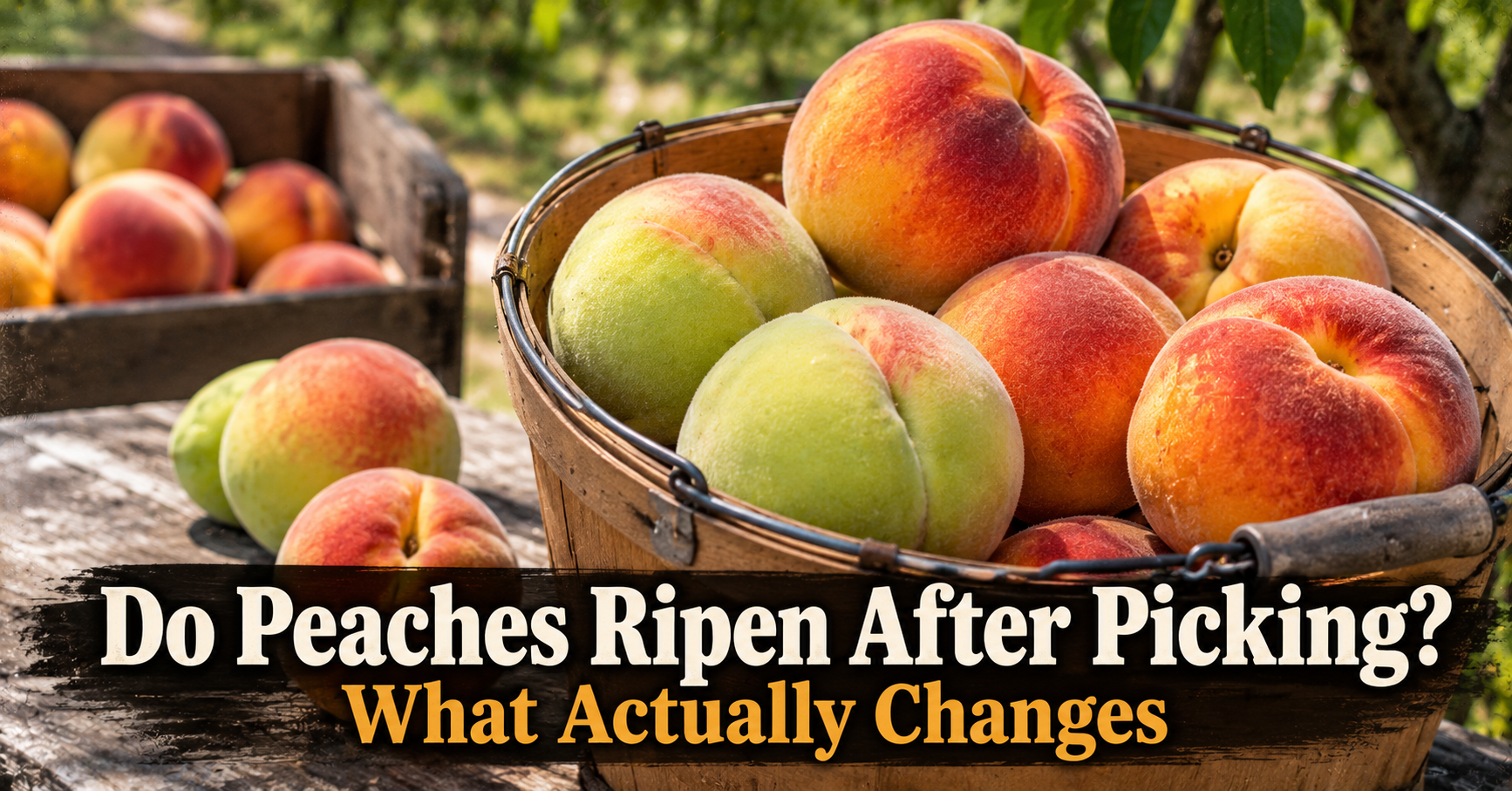
I covered that in our article about how peaches ripen after picking.
Apples also continue undergoing certain ripening changes during storage.
And pawpaws can become extremely soft once they reach their best eating stage.
Persimmons add another twist because their astringency matters so much.
A perfectly mature Fuyu can be enjoyable while firm.
A mature Hachiya might still need several days of softening.
And a native American persimmon may not be enjoyable until it’s almost jelly-like.
That’s why I don’t think every fruit should be judged by the same squeeze test.
Knowing the variety matters.
Frequently Asked Questions About Persimmons Ripening After Picking
Do all persimmons ripen after being picked?
Many persimmons can continue ripening after harvest if they’re mature enough. However, not all varieties need to become soft before eating, and immature fruit may never develop good flavor.
Can you ripen hard persimmons on the counter?
Yes. Mature persimmons can continue softening at room temperature. For astringent varieties, wait until the flesh reaches the appropriate very soft stage before eating.
How long do persimmons take to ripen indoors?
It depends on the variety, harvest maturity, and room temperature. Some may soften in a few days, while others need longer.
Do green persimmons turn orange after picking?
Some color changes may continue, but very immature green persimmons may never develop proper eating quality. Don’t assume every green fruit will ripen successfully indoors.
Do persimmons have to freeze before they’re edible?
No. Natural ripening removes the unpleasant astringency of mature persimmons. A frost isn’t required.
Can you eat an American persimmon while it’s still firm?
Most native American persimmons are strongly astringent until very soft. I’d wait for full eating ripeness rather than treating them like firm Fuyu persimmons.
Can you eat Fuyu persimmons while they’re crunchy?
Yes. Fuyu is a non-astringent variety and can be enjoyable while firm and crisp once mature.
Can you eat Hachiya persimmons while they’re hard?
Generally, no. Hachiya is an astringent variety and normally needs to become extremely soft before eating.
Will a banana help ripen persimmons?
Ethylene released by ripe bananas can encourage softening in mature persimmons. However, this isn’t necessary for firm Fuyu persimmons that are already ready to eat.
Why does my persimmon make my mouth dry?
That’s astringency caused by soluble tannins. It’s especially common in unripe American persimmons and astringent Asian varieties.
Can persimmons ripen in the refrigerator?
Ripening can continue slowly under some cold-storage conditions, but refrigeration generally delays softening. Room temperature is more appropriate when you want mature fruit to ripen soon.
Can you pick persimmons before the first frost?
Yes. Depending on the type and maturity, persimmons may be ready before frost. You don’t need to wait for freezing weather.
Are persimmons ripe when they fall off the tree?
Native American persimmons often drop when ripe, but fruit can also fall for other reasons. Always inspect the fruit and evaluate ripeness rather than assuming every fallen persimmon is ready to eat.
What should I do with persimmons that are too soft?
If they’re fully ripe and still sound, use them promptly in recipes or freeze the pulp. If they’re moldy, fermenting, or rotting, discard them.
What I’d Pay Attention to Before Harvesting Persimmons
If I were checking persimmons on our farm as fall approached, the first thing I’d want to know is exactly which type I was dealing with.
That one detail changes almost everything.
A mature Fuyu can be picked and enjoyed while firm.
A Hachiya can be harvested mature and allowed to soften indoors.
And with American persimmons, I’d be especially careful about judging ripeness because even attractive orange fruit can remain unpleasantly astringent.
I also wouldn’t depend on frost.
Here in Missouri, it’s easy to understand why people associate cold fall weather with ripe persimmons. But the fruit doesn’t need to freeze before it becomes sweet.
What matters is that it has reached the proper maturity and ripening stage.
As our persimmon trees develop and we get more opportunities to document their harvests, I’m looking forward to comparing the fruit’s appearance, softness, and timing with the other unusual fruits we’re growing.
For now, the most useful thing I can tell someone is not to pick a green persimmon and assume it’ll automatically become delicious on the kitchen counter.
Let the fruit mature.
Know whether you’re growing an astringent or non-astringent variety.
And give it the time it actually needs.
A fully ripe persimmon can be a wonderfully sweet fruit.
But getting there is all about knowing when to pick it and when to leave it alone.
About the Author
Daxon Weaver is the owner of Weaver Family Farms Produce, part of Weaver Family Farms in Missouri. He and his family grow apples, peaches, pears, pawpaws, persimmons, Honey Jar and Sugar Cane jujubes, hardy kiwi, berries, and other fruit crops in USDA Zone 6a. He shares practical farm observations alongside research-based advice about growing, harvesting, storing, and preserving homegrown fruit.