The first time one of our pawpaws fell from the tree, I wasn’t completely sure what I was looking at.
It was still mostly green.
It had a few dark patches on the skin.
If I’d never grown pawpaws before, I probably would have assumed it wasn’t ripe yet or that something was wrong with it.
Instead, I took it inside, cut it open, and found beautiful golden-yellow flesh that was perfectly ready to eat.
That’s one thing I’ve learned about growing pawpaws on our Missouri farm.
They don’t ripen the way most people expect.
If you’re trying to decide whether a pawpaw is ready to pick or eat, here’s exactly what I look for.
A Ripe Pawpaw Is Often Still Green
This is probably the biggest surprise for first-time growers.
Most people expect ripe fruit to turn bright yellow, orange, or red.
Pawpaws don’t always do that.
Many ripe pawpaws remain mostly green, even when they’re ready to eat.
Some develop a slight yellow tint.
Others stay almost entirely green with just a few darker patches.
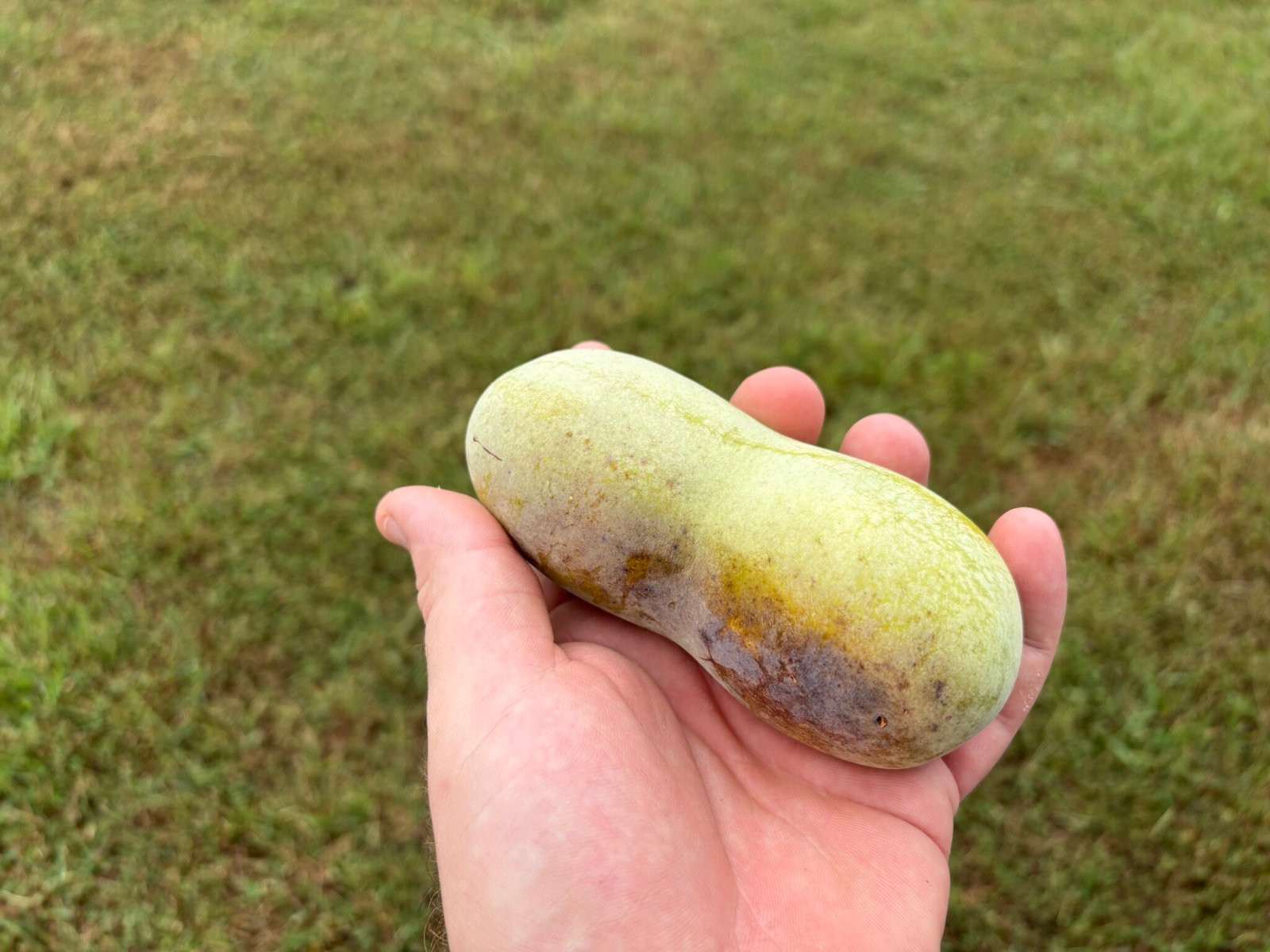
The pawpaw in the photo above had naturally fallen from our tree and was fully ripe, even though it still looked mostly green from the outside.
That’s why I never judge ripeness by color alone.
Slight Brown or Black Marks Are Often Normal
The dark patches on the skin worry a lot of people.
They worried me too at first.
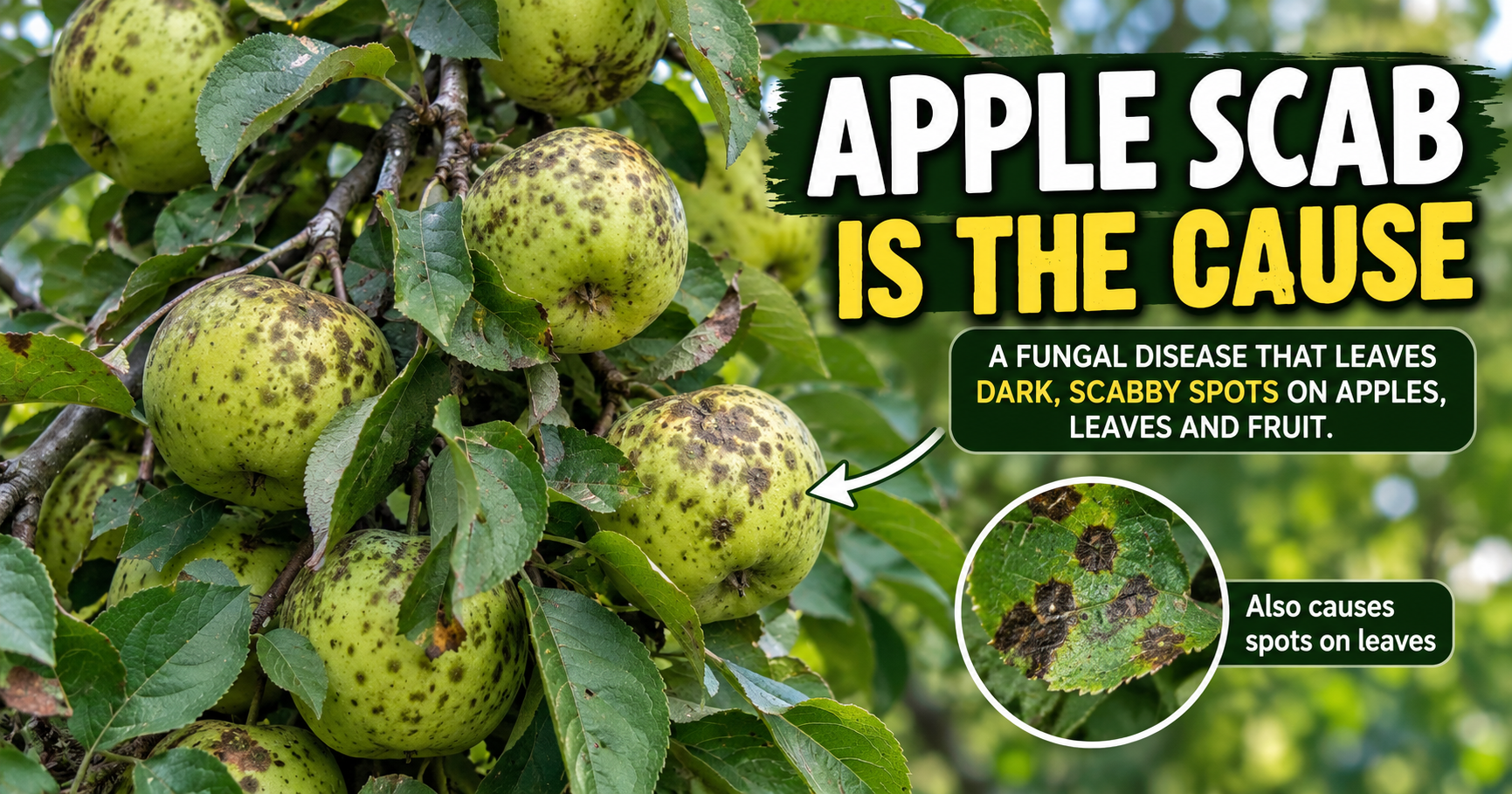
I’ve found that minor brown or black areas are often perfectly normal, especially after a ripe pawpaw has fallen from the tree. Because dark marks can have different causes on different fruit, common causes of black spots on apples offers a useful comparison for apple growers.
The skin bruises easily because the fruit is so soft inside.
A few marks don’t automatically mean the fruit has spoiled.
What matters much more is what the fruit feels like and what it looks like once it’s opened.
A Ripe Pawpaw Should Feel Slightly Soft
Instead of focusing only on color, I gently squeeze the fruit.
I’m not trying to mash it.
Just a light squeeze.
A ripe pawpaw should have a little give, similar to a ripe avocado or peach.
If it feels rock hard, I usually give it more time.
If it feels extremely mushy or is leaking juice, it’s probably past its best.
That slight softness has become one of the most reliable signs I use.
Many Pawpaws Tell You They’re Ready by Falling
One of my favorite things about growing pawpaws is that they often decide harvest day for you.
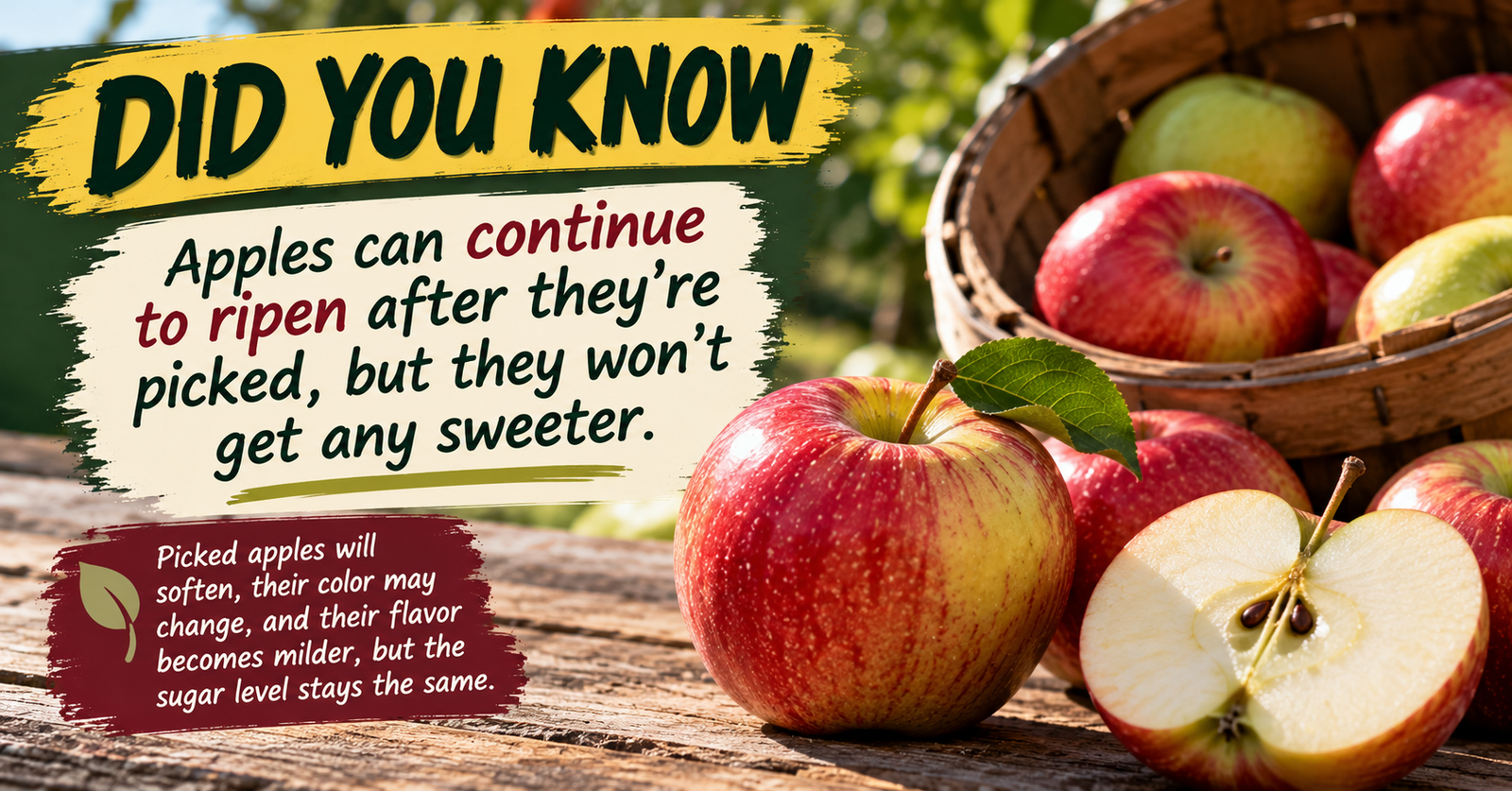
Unlike apples, which I usually pick directly from the tree, ripe pawpaws frequently drop on their own. That difference makes how apples change after picking a helpful next step when comparing harvest timing between pawpaws and apples.
During harvest season, I enjoy walking beneath the trees every morning to see what nature picked overnight.
The fruit in the photo above had done exactly that.
It had just fallen naturally, which was one of my biggest clues it was ready.
Smell Is Another Great Indicator
A ripe pawpaw usually develops a pleasant fruity aroma.
When I pick one up, I often notice a sweet smell before I ever cut it open.
An unripe pawpaw has very little scent.
An overripe one may begin smelling fermented or unpleasant.
Your nose can tell you quite a bit.
If it smells fresh and fruity, that’s usually a good sign.
Don’t Worry If Every Pawpaw Looks Different
One thing I’ve noticed is that no two pawpaws seem exactly alike.
Some are long and narrow.
Others are shorter and rounder.
Some stay greener.
Others develop more yellow.
Even fruit growing on the same tree can look slightly different.
That’s one reason I avoid comparing every pawpaw to a picture online.
Instead, I look at several signs together.
Here’s the Checklist I Use
When I’m deciding whether a pawpaw is ripe, I ask myself a few simple questions.
- Did it fall naturally, or does it come off the tree easily?
- Does it feel slightly soft when gently squeezed?
- Does it have a pleasant fruity smell?
- Is the skin mostly healthy with only minor blemishes?
- Does everything about it simply look fresh?
If I answer yes to those questions, I’m usually excited to take it inside.
What If It Still Feels Hard?
If your pawpaw is still firm, don’t panic.
It may simply need a little more time.
If I accidentally pick one that’s still hard, I’ll often let it sit indoors for a short time and check it again.
Once it begins softening and developing more aroma, it’s much closer to being ready.
Patience usually pays off.
The Real Test Happens After You Cut It Open
Even after growing pawpaws for a while, I still consider the inside the final confirmation.
A ripe pawpaw should reveal creamy yellow to orange flesh with large glossy seeds running through the center.
If the inside looks healthy and smells sweet, I know I picked it at the right time.
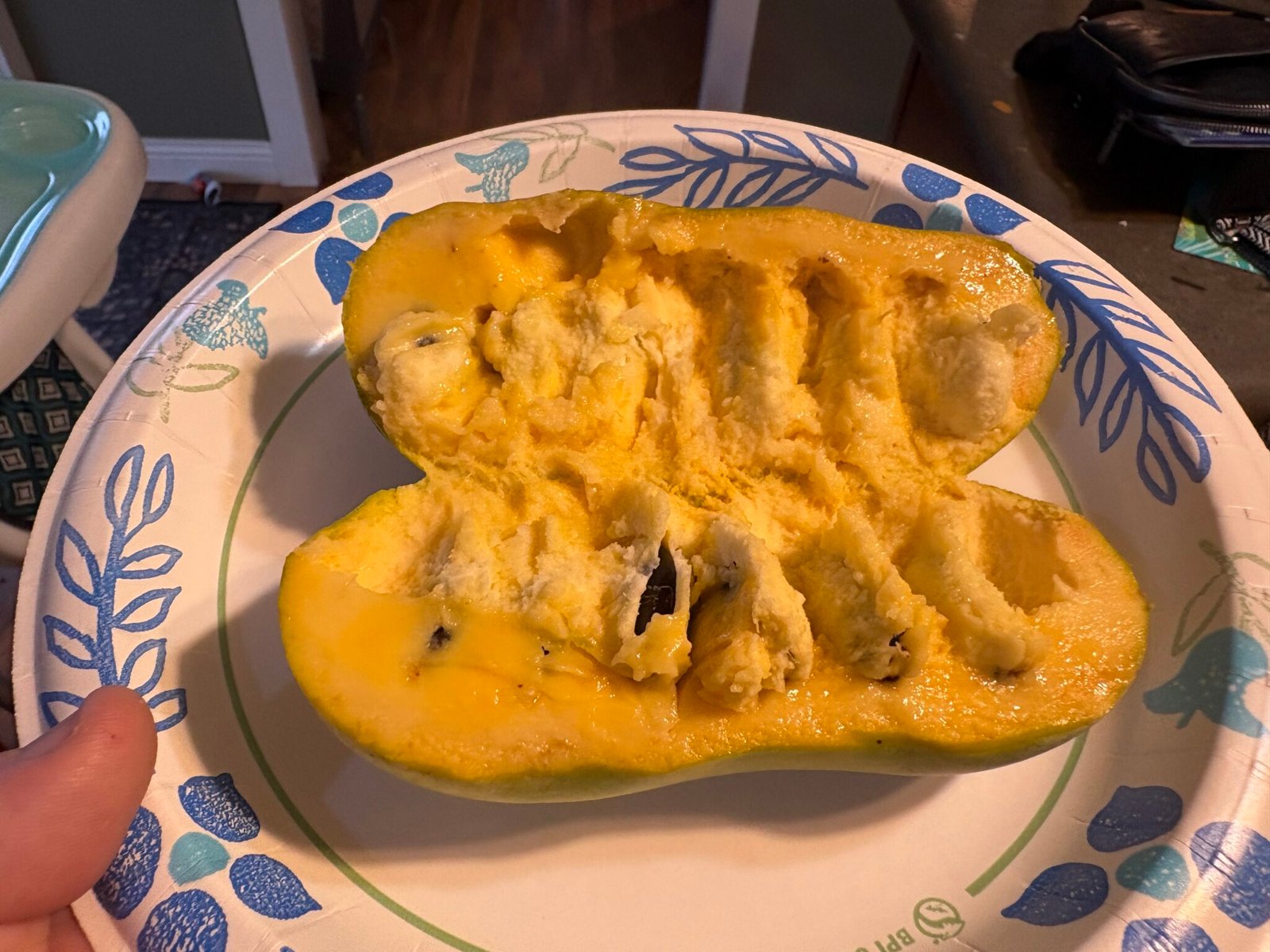
I cover that in much more detail in What Does the Inside of a Pawpaw Look Like?, where I show exactly what I found after cutting open one of our freshly harvested fruit.
Every Season Makes Me Appreciate Pawpaws More
Growing pawpaws has taught me not to rely on appearances alone.
If I had judged the fruit in the photo by its green skin, I probably would’ve left it on the ground.
Instead, it turned out to be one of the best pawpaws we’d picked all season.
That’s one of the reasons I enjoy growing unusual fruit.
They challenge what you think you know.
Every harvest teaches me something new.
My Honest Opinion
If you’re waiting for your pawpaw to turn bright yellow before picking it, you might be waiting longer than necessary.
In my experience, the best signs of ripeness are much simpler.
A little softness.
A pleasant fruity smell.
And very often, a fruit that has naturally let go of the tree.
That’s exactly what happened with the pawpaw in the photo above.
From the outside, it looked ordinary.
Once I brought it inside, though, it reminded me why pawpaws have become one of my favorite fruits to grow.
Sometimes the best fruit doesn’t announce itself with flashy colors.
It simply waits for you to pay attention.
About the Author
Daxon Weaver is the owner of Weaver Family Farms Produce, where he shares firsthand experiences growing pawpaws, Honey Jar and Sugar Cane jujubes, apples, peaches, pears, berries, and other fruits on his family’s Zone 6a Missouri farm.