
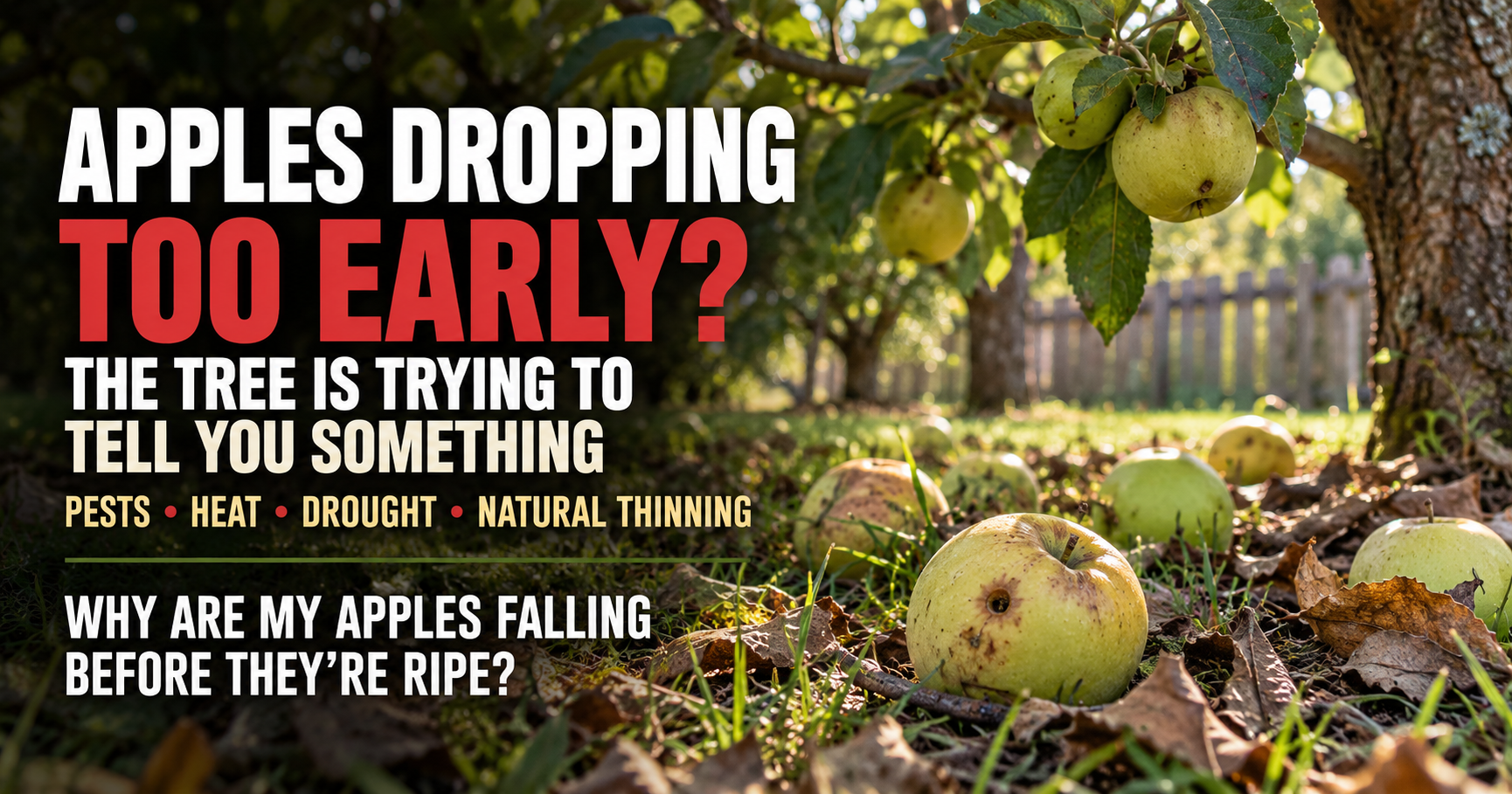
Walking outside and finding apples scattered all over the ground can be frustrating.
I’ve had that moment myself.
You spend months watching blossoms turn into tiny apples.
The fruit keeps growing.
Everything seems to be going well.
Then one morning you walk beneath the tree and find apples everywhere.
Your first thought is usually something like:
“What happened?”
The good news is that early apple drop doesn’t always mean something is seriously wrong.
In fact, sometimes it’s exactly what a healthy apple tree is supposed to do.
Other times, it’s the tree telling you something needs attention.
Learning the difference can save you a lot of unnecessary worry.
Sometimes Apple Trees Drop Fruit on Purpose
This was one of the biggest surprises for me.
Healthy apple trees often produce more fruit than they can realistically mature.
Instead of trying to grow every apple to harvest, the tree naturally sheds some of them.
This is commonly called June drop, even though the exact timing depends on where you live and the weather that year.
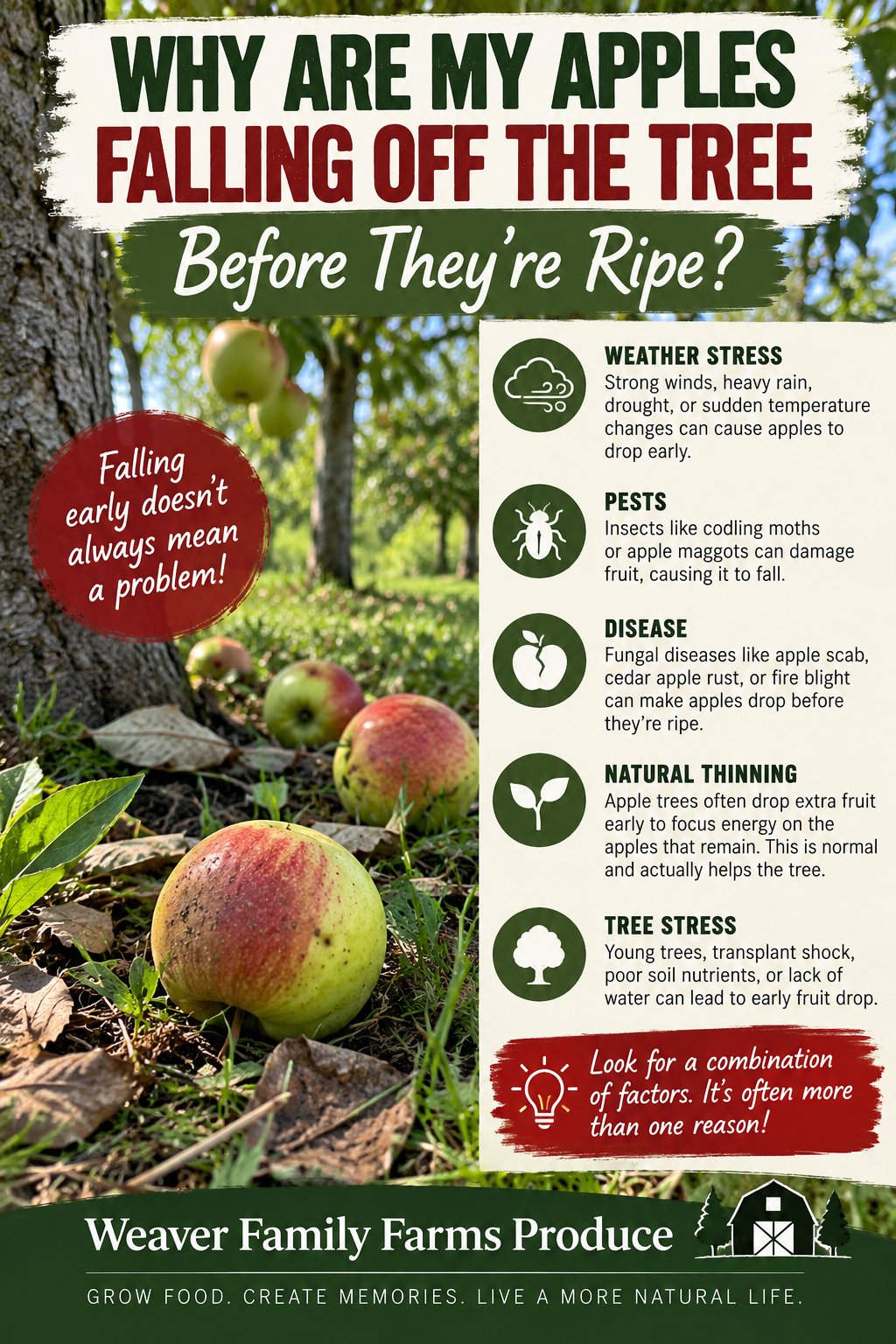
It’s simply the tree thinning its own crop so the remaining apples have enough water, nutrients, and energy to grow larger.
When I first learned this, I stopped panicking every time I saw a few small apples on the ground. Extension publications describe June drop as a normal self-thinning process that helps the tree support the remaining fruit.
How Can You Tell If It’s Normal June Drop?
Normal fruit drop usually has a few things in common.
The apples are still fairly small.
The tree still has plenty of healthy fruit remaining.
The leaves look healthy.
The branches aren’t dying.
The tree doesn’t continue dropping apples for weeks afterward.
If that’s what you’re seeing, I usually don’t worry.
It’s simply part of how apple trees manage a heavy crop.
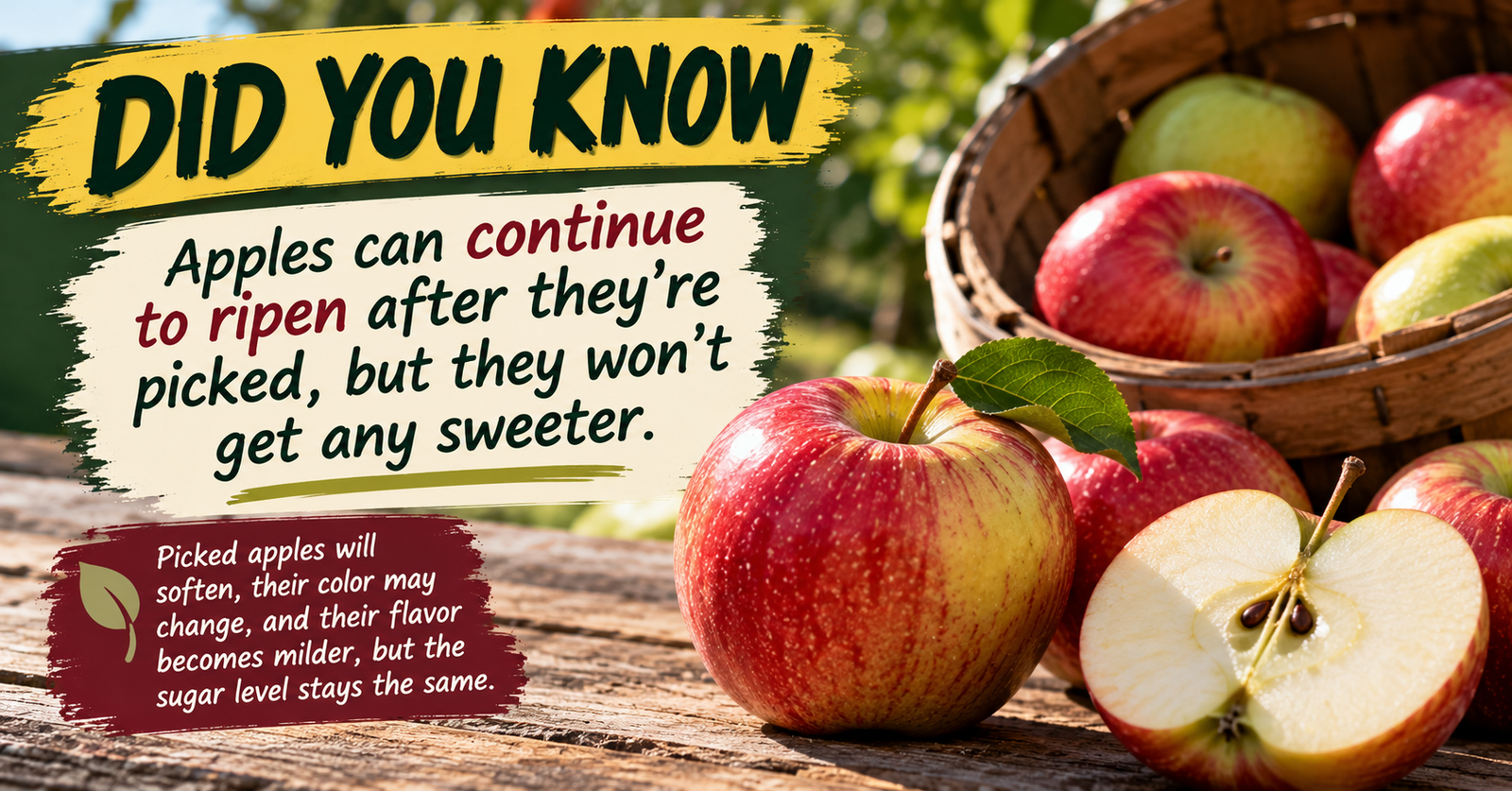
Too Much Fruit Can Cause More Apples to Fall
One thing I’ve noticed is that apple trees can be overly ambitious.
Some years they produce an incredible number of tiny apples.
It looks exciting at first.
But eventually the tree has to make a decision.
Rather than producing hundreds of undersized apples, it sacrifices some of them so the remaining fruit has a better chance of reaching full size.
That’s one reason many experienced orchard growers also thin apples by hand.
They’re simply helping the tree do what it already wants to do naturally.
Drought Stress Can Trigger Fruit Drop
Not every fallen apple is part of June drop.
One thing I’ve learned is that drought can also cause trees to shed fruit.
When water becomes limited, the tree starts making decisions about where its energy should go.
Keeping every developing apple alive requires tremendous resources.
If conditions become too dry, the tree may drop part of the crop to help the rest survive. Drought stress is one of the most common causes of premature fruit drop outside of normal June drop.
Storms and Wind
Sometimes the answer is much simpler.
Strong winds can knock fruit loose before it’s fully mature.
I’ve noticed this especially after heavy summer thunderstorms.
If I find freshly fallen apples immediately after a storm, I don’t automatically assume disease.
Sometimes gravity simply won.
Insects Can Cause Apples to Drop
Several insects damage young fruit.
When enough damage occurs, the tree may simply abort that apple.
Codling moths.
Plum curculio.
Apple maggots.
Stink bugs.
All can contribute to fruit loss depending on your area.
That’s one reason I always look closely at the fallen apples before assuming weather or drought is responsible.
Tiny holes, tunnels, or insect feeding often tell a very different story.
Disease Can Also Be Responsible
Some diseases weaken developing fruit enough that it drops before harvest.
Apple scab.
Black rot.
Cedar apple rust.
Other fungal diseases.
The fruit isn’t always the only clue.
I also inspect the leaves and branches.
If I notice unusual spots, early leaf drop, or cankers, I know I need to investigate further.
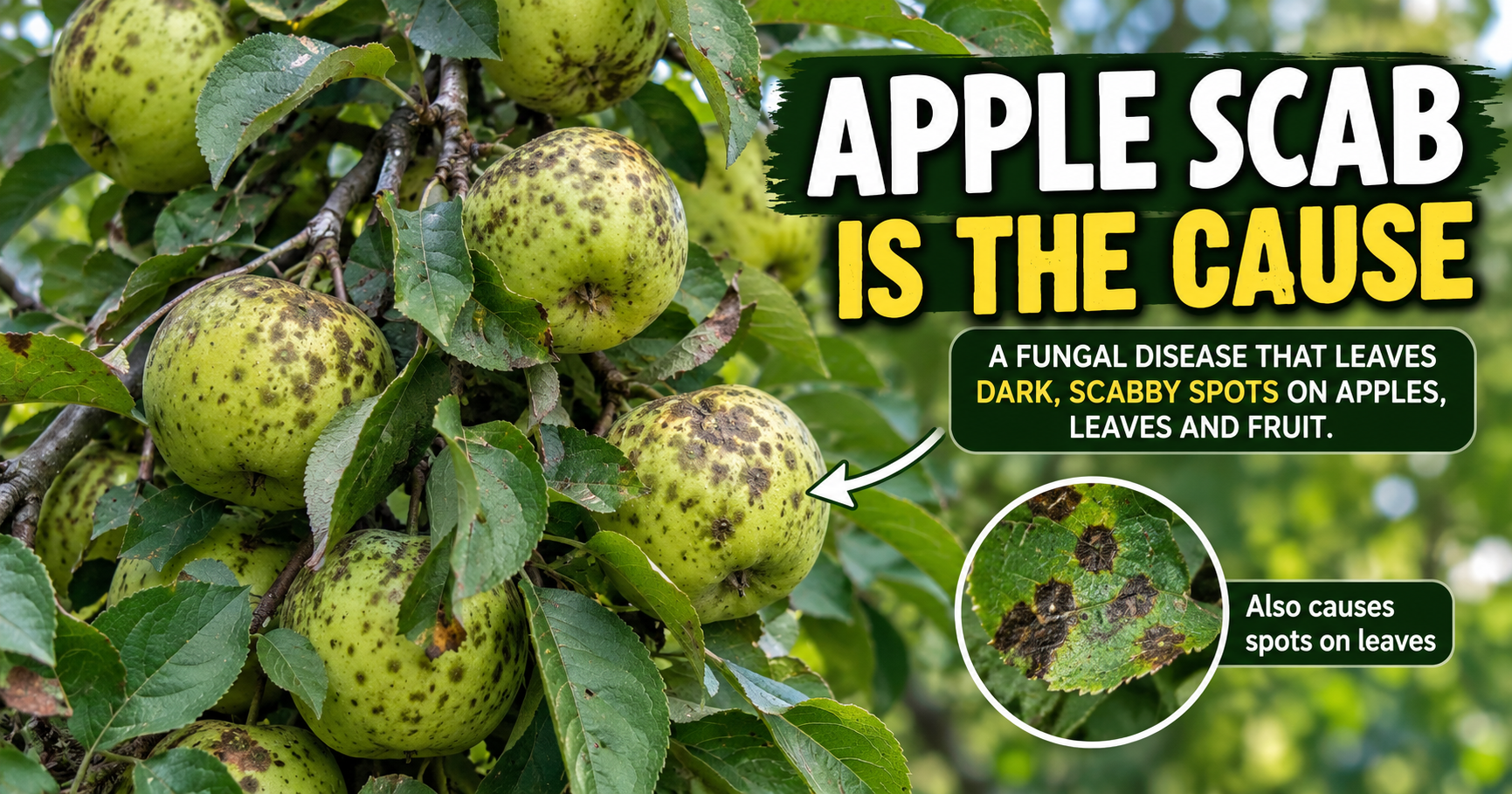
That’s exactly why I put together What Are These Black Spots on My Apples? Common Causes Explained after finding blemishes on some of our own apples.
Young Trees Sometimes Drop More Fruit
Young apple trees are still balancing growth with fruit production.
Sometimes they simply produce more apples than they can support.
I’d rather see a young tree invest energy into developing strong roots and branches than exhaust itself trying to mature every single apple.
A lighter crop today often means a healthier tree tomorrow.

What I Look At First
Whenever I notice apples falling early, I don’t immediately assume one specific cause.
Instead I ask myself a few questions.
- Were the apples still very small?
- Has the weather been unusually hot or dry?
- Did we recently have strong winds?
- Are insects present?
- Do the leaves look healthy?
- Is the fruit damaged?
Those answers usually point me in the right direction much faster than guessing.
My Honest Opinion
Finding apples on the ground can be discouraging.
I’ve certainly had mornings where I wondered whether something had gone wrong.
More often than not, though, the tree was simply doing what healthy apple trees have done for generations.
It was deciding how many apples it could realistically bring to harvest.
I’ve learned not to judge the season by the fruit on the ground.
Instead, I look at what’s still hanging in the branches.
That’s where the real harvest is.
And more often than not, there’s still plenty left to look forward to.
About the Author
Daxon Weaver is the owner of Weaver Family Farms Produce, where he shares firsthand experiences growing apples, pawpaws, Honey Jar and Sugar Cane jujubes, peaches, pears, berries, black walnuts, and other homegrown foods on his family’s Zone 6a Missouri farm.