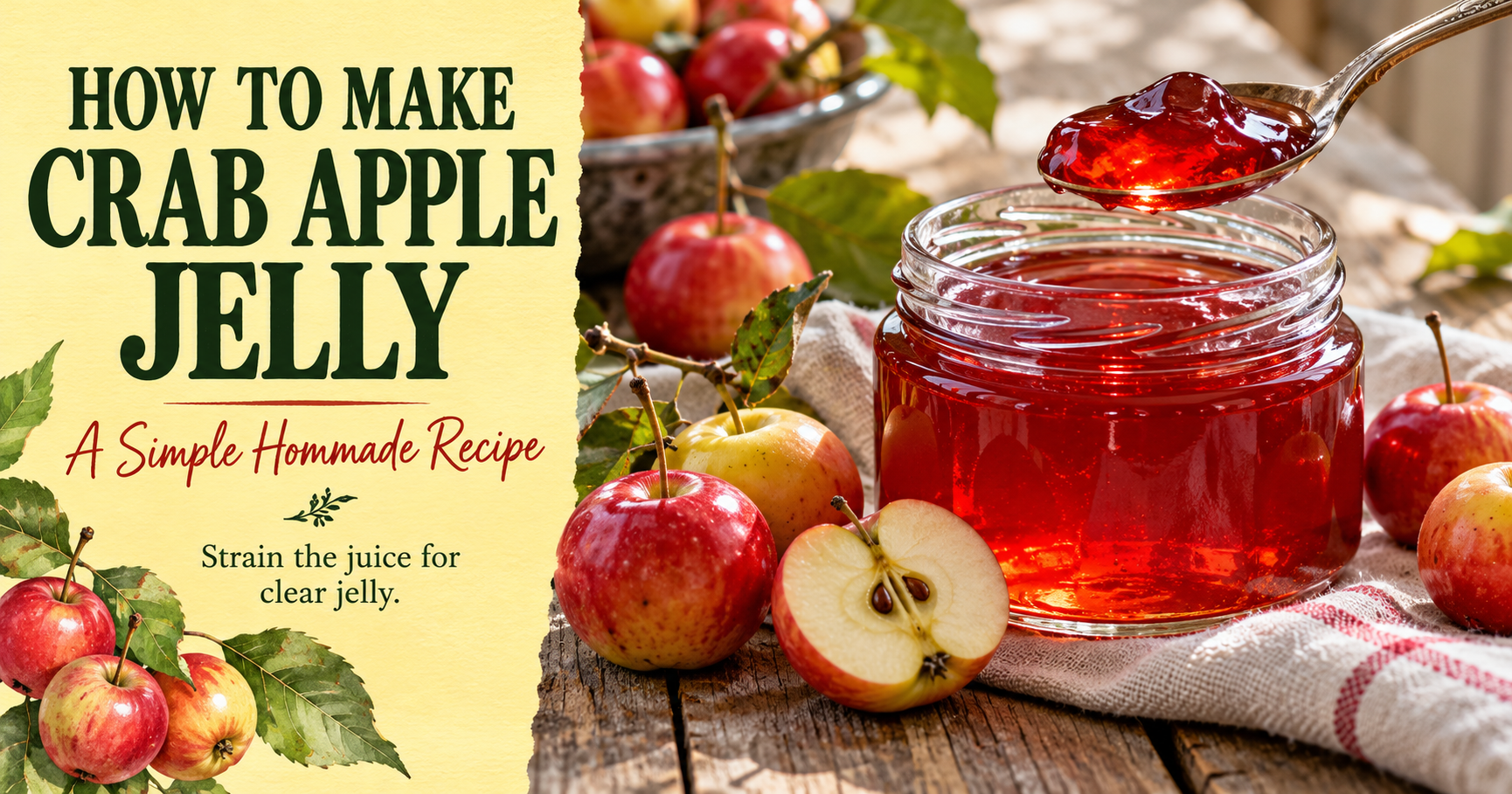
Crab apples might be small, tart, and a little frustrating to eat straight from the tree, but they can make some of the prettiest homemade jelly you’ll ever put in a jar.
One of the best things about crab apple jelly is that you can often make it without adding commercial pectin. Crab apples naturally contain pectin, especially when they’re mature but not overly ripe, which makes them an excellent fruit for traditional homemade jelly.
Here on our Missouri family farm, I’ve come to appreciate how many different ways fruit can be used beyond simply eating it fresh. Apples can become apple butter, jam, jelly, sauce, and all kinds of homemade preserves. The jams, jellies, and preserves archive offers more ideas for using farm-grown fruit in similar ways.
Crab apple jelly fits perfectly into that tradition. It turns a fruit that many people overlook into a beautiful spread with a sweet-tart flavor that works especially well on warm biscuits, toast, and homemade bread.
If you’re wondering how to make crab apple jelly, I’ll walk through the ingredients, preparation, juice extraction, cooking, and setting process. I’ll also explain the mistakes that can leave jelly cloudy, runny, or overly firm. If your batch stays loose after cooking, troubleshoot jelly that stays runny can help you identify the likely cause and next step.
One important note: This guide explains a traditional no-added-pectin jelly method, but the exact sugar-to-juice ratio and canning process should come from a tested preservation recipe. I’ll explain that distinction because making delicious jelly and making safely canned jelly are two different things. For another tested approach using prepared juice, see apple jelly from apple juice.
Why Crab Apples Make Such Good Homemade Jelly
If you’ve ever tasted a crab apple straight from the tree, you probably understand why people don’t always eat them fresh.
Depending on the variety, crab apples can be extremely tart. Some are pleasantly sweet-tart, while others are so sour that one bite is enough.
But that tartness becomes an advantage when you’re making jelly.
Crab apples often contain a useful combination of natural pectin and acid. Together with sugar, these help the juice form the soft gel that gives jelly its familiar consistency.
That’s why crab apples have traditionally been used for homemade jelly without commercial pectin.
Another advantage is their flavor. A good crab apple jelly doesn’t simply taste like sugar. It should still have a noticeable apple flavor with enough tartness to keep it from becoming overly sweet.
And depending on the crab apple variety, the finished jelly can develop a beautiful golden, pink, or reddish color.
What Does Crab Apple Jelly Taste Like?
If you’ve never tried crab apple jelly, I’d describe the typical flavor as sweet apple with a noticeably tart finish.
It’s usually brighter and sharper than ordinary apple jelly made from sweet eating apples.
That difference is part of its appeal.
When I’m thinking about fruit spreads, I like ones where you can still recognize the fruit instead of tasting nothing but sugar.
Crab apples have enough natural acidity to create that balance.
The finished flavor depends on the variety, the maturity of the fruit, and the amount of sugar used in the tested recipe.
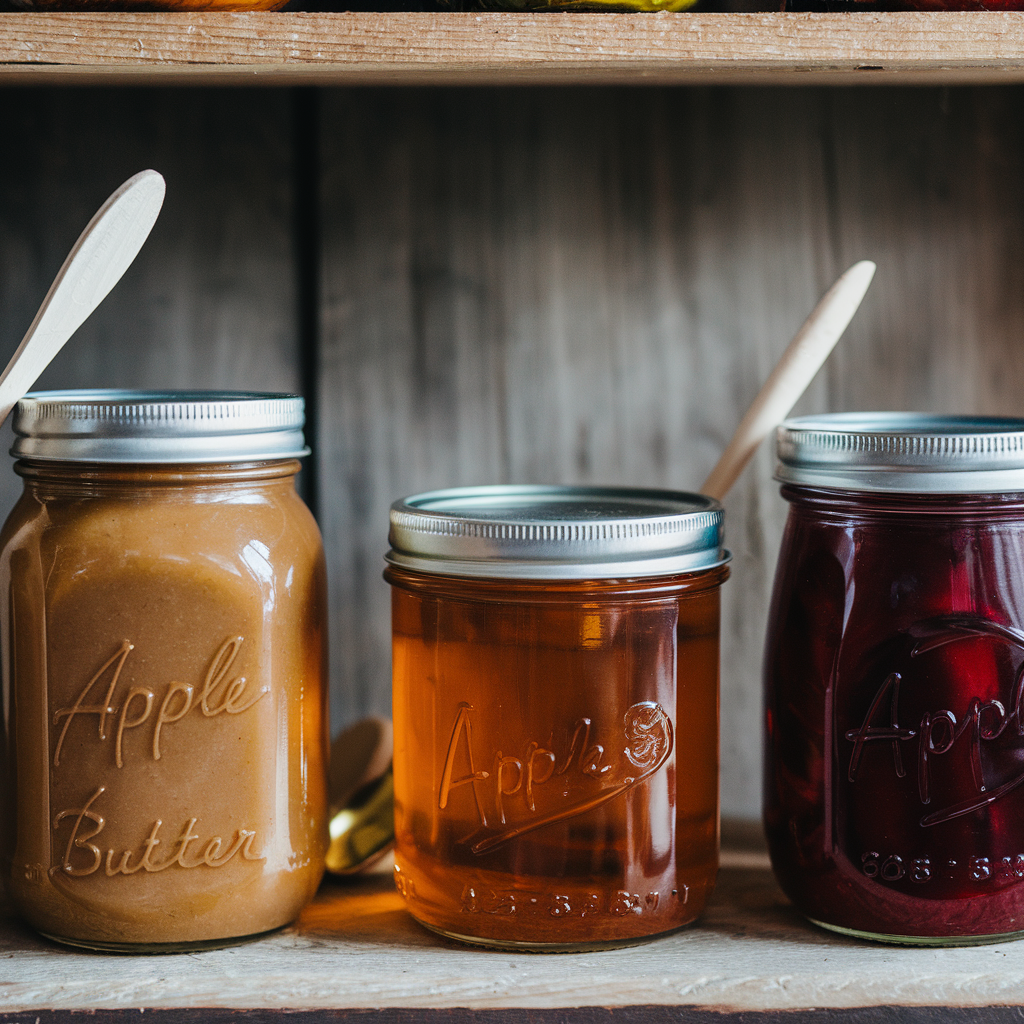
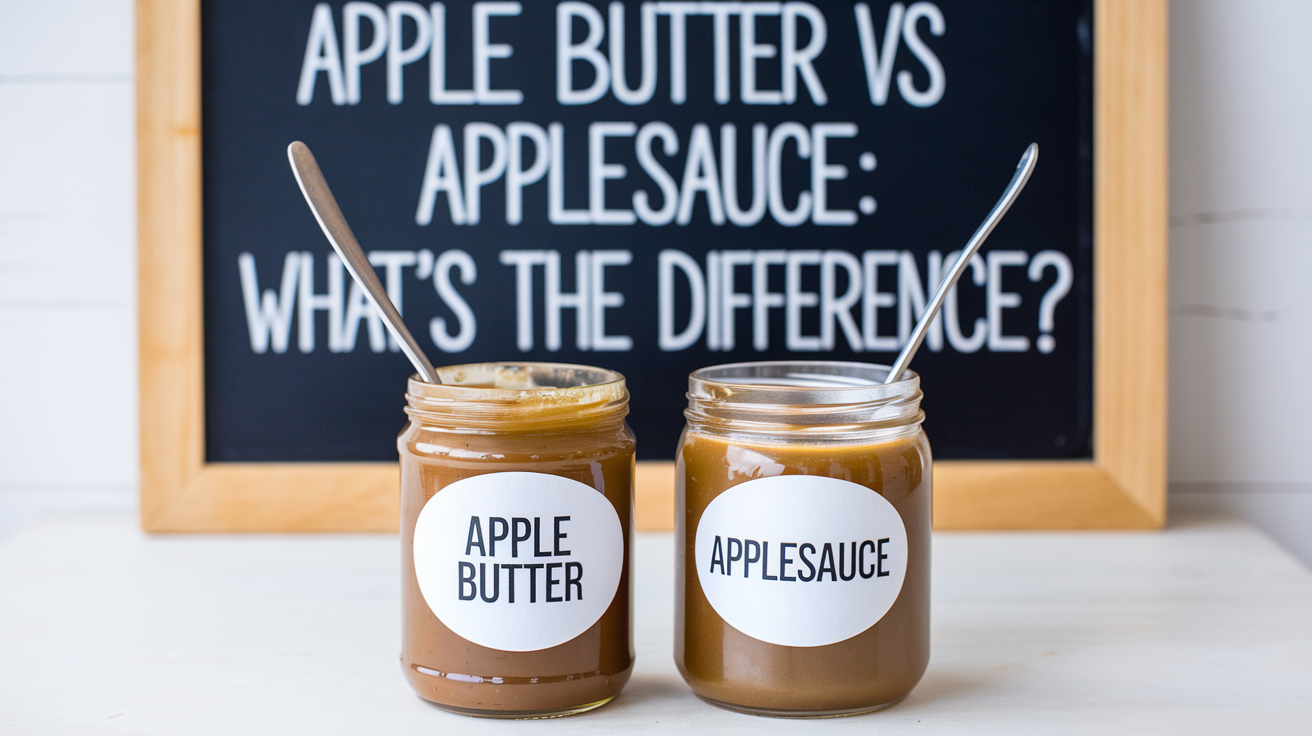
If you’re curious how jelly compares with other apple preserves, I explain the differences in my guide to apple butter, apple jelly, and apple jam.
What Ingredients Do You Need for Crab Apple Jelly?
Traditional crab apple jelly requires very few ingredients.
- Fresh crab apples: Choose sound, mature fruit without mold or rot.
- Water: Used to cook the crab apples and extract their juice.
- Granulated sugar: Helps sweeten the juice and create the proper gel.
Some recipes also use bottled lemon juice, depending on the fruit and the tested formulation. Don’t add or remove acid from a tested canning recipe without checking whether that change is permitted.
For exact measurements: Use the quantities specified in a tested crab apple jelly recipe, such as one from a university extension service or the National Center for Home Food Preservation. The amount of sugar should be matched to the measured quantity of extracted juice.
I don’t recommend guessing at the proportions, especially when you’re planning to can the finished jelly.
What Equipment Do You Need?
You don’t need a kitchen full of expensive equipment to make homemade jelly.
Most of the tools are things you probably already have.
- A large stainless steel saucepan or stockpot.
- A potato masher or sturdy spoon.
- A jelly bag or several layers of clean cheesecloth.
- A large bowl for collecting juice.
- A measuring cup.
- A long-handled spoon.
- A food thermometer, if using the temperature test.
- Clean jars or freezer-safe containers.
- Proper home-canning equipment if following a tested shelf-stable canning recipe.
I prefer a heavy-bottomed pot because fruit mixtures can scorch when they become concentrated.
It’s also helpful to use a pot with plenty of extra room. Jelly can foam and rise considerably as it boils.
Step 1: Choose the Best Crab Apples for Jelly
The quality of the finished jelly starts with the fruit.
I would look for crab apples that are mature, firm, and free from obvious decay.
You don’t need perfect-looking fruit. A few superficial blemishes aren’t necessarily a problem, but moldy, rotten, or badly damaged apples should be discarded.
For naturally set jelly, a mixture of mature and slightly less-ripe fruit can be useful because less-ripe apples often contain more available pectin.
However, completely immature fruit may not have the flavor you’re hoping for.
Can You Use Crab Apples That Have Fallen on the Ground?
I’d be selective.
Freshly fallen fruit may be usable for immediate cooking if it’s sound, clean, and free from contamination. But fruit that’s been lying on wet soil, has animal damage, or has begun rotting isn’t something I’d use.
For canning, follow the fruit-quality requirements of your tested recipe. Don’t use moldy or decomposing fruit.
Do the Crab Apples Have to Be Red?
No. Crab apples come in several colors, including yellow, greenish-yellow, orange, and red.
The variety affects the flavor and appearance of the finished jelly.
Red-skinned varieties may produce pink or reddish jelly, while lighter varieties often make a golden-colored jelly.
Neither color automatically means the jelly is better.
Step 2: Wash and Prepare the Crab Apples
Once you’ve gathered your crab apples, rinse them thoroughly under clean running water.
Remove leaves, stems, and any damaged portions.
Sort through the fruit carefully and discard anything showing mold or decay.
For many traditional crab apple jelly recipes, there’s no need to peel or core every apple. The fruit is cooked and strained, so the solids are removed before the jelly is made.
That’s one of the things that makes crab apple jelly less tedious than it might sound.
However, I would still remove stems and follow the preparation instructions in the tested recipe you’re using.
Step 3: Cook the Crab Apples to Extract Their Juice
Place the prepared crab apples in a large pot and add the amount of water specified by your recipe.
The goal is to use enough water to soften the fruit and extract the juice without unnecessarily diluting it.
Bring the mixture to a gentle boil, then reduce the heat and simmer until the crab apples become soft.
As they cook, the skins may split and the flesh will begin breaking down.
You can gently crush the softened fruit with a potato masher to help release the juice.
There’s no need to puree the mixture completely.
You’re making jelly, so the solids will be strained away.
How Long Should You Cook Crab Apples?
Cooking time depends on the size and firmness of the fruit.
Small crab apples may soften fairly quickly, while larger or firmer varieties can take longer.
Instead of relying only on the clock, I would watch the fruit.
When the crab apples are soft enough to mash easily, they’re generally ready for the straining stage.
Avoid boiling the fruit for an unnecessarily long time because excessive cooking can affect the flavor and the pectin needed for a good set.
Step 4: Strain the Juice Without Making It Cloudy
This is one of the most important steps if you want beautiful, clear crab apple jelly.
Place a jelly bag or several layers of dampened cheesecloth over a large bowl.
Carefully transfer the cooked fruit mixture into the bag.
Allow the juice to drain naturally.
It can take several hours, depending on the amount of fruit and the type of strainer you’re using.
Here’s the biggest tip: Don’t squeeze the jelly bag if you want clear jelly.
I know it’s tempting. You can see juice remaining in the pulp and naturally want to get every last drop.
But squeezing forces tiny particles of fruit pulp through the cloth.
Those particles can make the finished jelly cloudy.
Cloudy jelly isn’t automatically bad, but if you’re hoping for that clear, jewel-like appearance, letting the juice drip without pressure is the better approach.
Can You Leave the Juice Draining Overnight?
Yes, provided you keep the fruit and juice refrigerated during a prolonged draining period.
Don’t leave cooked fruit sitting at room temperature overnight.
Once the juice has finished draining, measure it carefully.
That measurement determines how much sugar you’ll need according to your tested recipe.
Step 5: Measure the Juice Before Adding Sugar
One of the easiest ways to end up with jelly that doesn’t set properly is to guess at the ingredients.
When making traditional jelly without commercial pectin, the balance of fruit juice, sugar, acid, and natural pectin matters.
Too much juice for the amount of sugar can result in a loose set.
Too much sugar or excessive cooking can create an overly stiff jelly.
That’s why I would measure the strained juice instead of assuming that a certain weight of crab apples will always produce the same amount.
Different varieties release different amounts of juice, and the amount of water used during cooking also makes a difference.
Once you know how much juice you have, use the matching sugar quantity from your tested recipe.
Step 6: Cook the Juice and Sugar Until the Jelly Sets
Pour the measured juice into a clean, large saucepan.
Add the sugar and any other ingredients specified in your tested recipe.
Stir until the sugar dissolves, then cook according to the recipe’s directions.
As the mixture boils, water evaporates and the concentration of sugar and pectin increases.
Eventually, the jelly reaches the point where it can form a gel as it cools.
This is where patience and attention matter.
Under-cooking may leave you with syrup.
Over-cooking can create a stiff, rubbery jelly or cause scorching.
I wouldn’t walk away from the stove during this stage.
How Do You Know When Crab Apple Jelly Is Ready?
There are several ways to check the setting point.
One traditional method is the spoon or sheet test.
Dip a cool metal spoon into the boiling jelly mixture, lift it out, and allow the liquid to run off the side.
Early in cooking, the liquid usually drips in separate droplets.
As the jelly approaches its setting point, the droplets begin joining together and falling from the spoon in a sheet.
Another option is a thermometer.
Traditional high-sugar jelly commonly reaches its setting point around 8 degrees Fahrenheit above the boiling point of water at your location, although the exact temperature depends on elevation and the recipe.
At sea level, that is approximately 220 degrees Fahrenheit. At higher elevations, the setting temperature is lower.
I would use these tests alongside the instructions in a tested recipe rather than relying on one number alone.
Does Crab Apple Jelly Thicken as It Cools?
Yes. Jelly often looks considerably thinner while it’s boiling than it will after cooling.
That’s why I wouldn’t judge the finished texture while the mixture is still bubbling in the pot.
Once the jelly has reached the proper setting point, remove it from the heat and proceed with the storage or canning method specified in your recipe.
Some batches may take additional time to reach their final set after cooling.
Don’t immediately assume a batch has failed simply because it’s still soft while warm.
Step 7: How to Store Your Homemade Crab Apple Jelly
Once the crab apple jelly reaches its setting point, the next step is deciding how you’re going to preserve it.
After spending time gathering fruit, extracting juice, and cooking the jelly, the last thing I want is for all that work to go to waste because it wasn’t stored properly.
There are three main options: refrigeration, freezing, and home canning.
Each has advantages, but they’re not interchangeable.
Storing Crab Apple Jelly in the Refrigerator
If you’re making a small batch that your family will enjoy fairly quickly, refrigeration is the simplest option.
Transfer the finished jelly into clean, food-safe containers. Cool it promptly, cover the containers, and place them in the refrigerator.
For traditional full-sugar jelly that hasn’t been canned, I’d plan to use it within about three weeks. Recipes with less sugar or different ingredients may have shorter recommended storage periods.
Always use clean utensils, keep the container covered, and refrigerate it promptly after serving.
Can You Freeze Crab Apple Jelly?
Yes. Freezing can be a convenient option if you don’t want to can your jelly.
Use freezer-safe containers and leave the appropriate headspace for expansion.
I would aim to use frozen jelly within about a year for the best quality. Food kept continuously frozen at 0 degrees Fahrenheit remains safe longer, although quality may gradually decline.
When you’re ready to enjoy it, thaw the container in the refrigerator.
One thing worth knowing is that freezing can occasionally change the texture of jelly. It may become slightly softer or release a little liquid after thawing.
That doesn’t automatically mean it has spoiled.
Step 8: Can You Safely Can Crab Apple Jelly?
Absolutely, but this is one part of jelly making where I wouldn’t take shortcuts.
Homemade jelly that tastes good isn’t automatically safe to store on a pantry shelf.
For shelf-stable crab apple jelly, I recommend following a tested canning recipe from a reliable source such as the National Center for Home Food Preservation or a university extension service.
The tested recipe should specify the exact ingredient proportions, permitted jar sizes, preparation method, and boiling-water processing time.
Important: The traditional no-added-pectin method described in this article is a general cooking guide, not a separately validated shelf-stable canning formula. If you want to can your jelly, follow a complete tested recipe from the beginning rather than adding a processing time to an untested batch.
What Equipment Do You Need for Canning?
For a tested boiling-water canning recipe, you’ll generally need:
- A boiling-water canner with a rack and lid.
- Proper home-canning jars in the sizes permitted by the recipe.
- Compatible canning lids and bands.
- A jar lifter.
- A clean towel and suitable utensils.
- A reliable way to maintain the required boiling-water process.
Before beginning, inspect every jar for cracks or chips and follow the manufacturer’s instructions for preparing the jars and lids.
Why Your Elevation Matters
Water boils at a lower temperature as elevation increases.
Because of that, boiling-water canning instructions often require longer processing times at higher elevations.
Even here in Missouri, I wouldn’t assume every kitchen is at exactly the same elevation.
Check your elevation and use the adjustment specified by the tested recipe.
Can You Just Turn the Jars Upside Down?
No. Turning hot jelly jars upside down isn’t a substitute for proper canning.
A lid may appear to seal without the food receiving the required heat treatment.
The same problem applies to simply filling hot jars and waiting for the lids to pop.
A vacuum seal alone doesn’t prove that a jar was safely processed.
How Do You Know the Jars Sealed?
After processing, follow the recipe’s cooling instructions and leave the jars undisturbed for the recommended period, commonly 12 to 24 hours.
Once they’re completely cool, check each seal according to the lid manufacturer’s directions.
Any jar that failed to seal should be handled according to tested guidance for refrigeration, freezing, or prompt reprocessing.
Properly sealed jars should be labeled with the contents and processing date.
For the best quality, I would plan to use home-canned jelly within about one year.
Why Is My Crab Apple Jelly Not Setting?
Few things are more frustrating than spending time making homemade jelly only to discover it still pours like syrup.
Fortunately, a loose set doesn’t always mean you’ve completely ruined the batch.
There are several reasons crab apple jelly may not thicken properly.
1. The Crab Apples Didn’t Have Enough Pectin
Crab apples naturally contain pectin, but the amount varies depending on the variety and maturity.
Overripe fruit may contain less effective pectin than mature fruit that hasn’t become overly soft.
That’s one reason traditional jelly recipes often recommend using sound, mature fruit rather than fruit that’s beginning to deteriorate.
2. Too Much Water Was Added
When extracting juice, adding excessive water can dilute the mixture.
That means more cooking may be needed to reach the proper concentration.
It can also weaken the finished flavor.
I would rather follow the water measurements in a tested recipe than guess and end up with several cups of unnecessarily diluted juice.
3. The Sugar Proportions Were Wrong
Traditional jelly depends on the correct balance of pectin, sugar, and acid.
Reducing sugar without using a recipe designed for reduced sugar can prevent the jelly from setting.
Adding extra sugar isn’t automatically the answer either. Too much can make jelly overly firm or encourage crystals to form.
Measure the strained juice carefully and use the matching sugar quantity from your recipe.
4. The Jelly Didn’t Reach Its Setting Point
Sometimes the ingredients are correct, but the jelly simply hasn’t cooked long enough.
The mixture needs to reach the concentration where it can form a gel as it cools.
That’s why I prefer checking the setting point instead of relying entirely on a cooking time.
5. The Jelly Was Overcooked
Cooking longer isn’t always better.
Excessive cooking can damage pectin, darken the jelly, and change its flavor.
In some cases, it can even contribute to a poor set.
6. It Hasn’t Finished Cooling
Before assuming your jelly failed, give it time to cool completely.
Some batches take longer than others to develop their final consistency.
I wouldn’t immediately start reheating a batch simply because it still moves slightly while warm.
Can You Fix Crab Apple Jelly That Didn’t Set?
Sometimes you can.
But I wouldn’t recommend randomly adding sugar or repeatedly boiling the same batch.
The proper way to remake jelly depends on whether the original recipe used commercial pectin, the amount of jelly, and the reason it failed.
The National Center for Home Food Preservation provides tested instructions for remaking certain soft jellies.
If a batch doesn’t set, I’d first check whether those instructions apply to the recipe used.
And if the jelly remains soft but was prepared and stored safely, it may still be useful as a refrigerated fruit topping.
Something that pours nicely over pancakes or waffles isn’t necessarily a complete loss.
Why Is My Crab Apple Jelly Cloudy?
One of the prettiest things about crab apple jelly is its appearance.
Depending on the variety, the finished jelly can be golden, pink, or reddish, with a beautiful clear appearance.
But sometimes it turns out cloudy.
The most common reason is squeezing the jelly bag while extracting juice.
When you squeeze the cooked fruit, tiny particles of pulp can pass through the cloth and remain suspended in the juice.
Those particles make the finished jelly cloudy.
If clear jelly is your goal, allow the juice to drip naturally without squeezing the bag.
Cloudiness alone doesn’t necessarily mean jelly is unsafe. However, unexpected cloudiness accompanied by gas, mold, an off odor, or other spoilage signs is a reason to discard it.
Why Did My Crab Apple Jelly Turn Out Too Thick?
Sometimes the opposite happens.
Instead of runny jelly, you end up with something so firm it’s difficult to spread.
Overcooking is one possible cause.
Too much sugar or a particularly high concentration of natural pectin can also contribute to an overly stiff gel.
If you’re adjusting jelly for immediate use, you can gently warm a small portion to make it easier to spread.
I wouldn’t add water directly to jars intended for shelf-stable storage because changing the contents means the original tested preservation process no longer applies.
Why Are There Sugar Crystals in My Jelly?
If your finished jelly feels grainy, sugar crystals may have formed.
This can happen when sugar doesn’t dissolve completely or the mixture becomes overly concentrated.
To help prevent it, dissolve the sugar thoroughly and follow the recipe’s cooking instructions.
Don’t continue boiling long after the jelly reaches its proper setting point.
Does Crab Apple Jelly Need Added Pectin?
Not necessarily.
Crab apples are naturally rich in pectin, especially when they’re mature but not overripe.
That’s one reason traditional crab apple jelly recipes can work without commercial pectin.
However, natural pectin content varies, and not every batch behaves identically.
If you’re new to making jelly without added pectin, I recommend following a tested recipe closely rather than experimenting with ingredient proportions.
Can You Use Regular Apples Instead of Crab Apples?
Yes, regular apples can also make excellent jelly.
However, the flavor and natural pectin content may differ.
Crab apples are often more tart, which gives their jelly a sharper, brighter flavor.
Sweet eating apples generally produce a milder jelly.
Some apple varieties also contain less effective pectin when fully ripe, so the recipe may need to be different.
I wouldn’t automatically substitute regular apples into a tested crab apple jelly canning recipe without checking whether the instructions allow it.
If you’re curious about the different kinds of apple preserves, I’ve also explained how apple butter, apple jelly, and apple jam compare. They may all begin with apples, but their ingredients, textures, and cooking methods can be quite different.
What Can You Eat Crab Apple Jelly With?
Once you’ve made a good batch, the fun part is finding different ways to enjoy it.
Crab apple jelly has a sweet-tart flavor that works particularly well with foods that aren’t already overly sweet.
Warm Biscuits
Fresh biscuits are one of the first foods I’d pair with crab apple jelly.
The rich, buttery flavor of a biscuit balances the tartness of the fruit spread.
It’s simple, but sometimes that’s exactly what makes something taste so good.
Toast and Homemade Bread
Warm toast is another easy option.
A little jelly adds sweetness and fruit flavor without requiring anything complicated.
Homemade bread works especially well because the mild flavor allows the crab apple jelly to stand out.
Pancakes and Waffles
Crab apple jelly can be a nice alternative to traditional pancake syrup.
Spread a little over warm pancakes or waffles, or gently warm a portion until it’s easier to drizzle.
The tart apple flavor can be especially good when paired with butter.
Peanut Butter and Jelly Sandwiches
Most people automatically reach for grape or strawberry jelly.
But crab apple jelly can make an interesting alternative.
Its tartness helps balance the richness of peanut butter.
Glazes for Meat
Crab apple jelly isn’t limited to breakfast foods.
It can also be used in glazes for pork, chicken, and certain roasted meats.
Combining it with ingredients such as mustard or vinegar creates a sweet and tangy sauce.
Cookies and Pastries
Thumbprint cookies are another good option.
A small spoonful of crab apple jelly adds color and flavor to the center of a buttery cookie.
It can also work in pastries and other baked goods designed for fruit preserves.
How Long Does Homemade Crab Apple Jelly Last?
The storage life depends on how it was preserved.
Properly Canned, Unopened Jelly
For the best quality, use properly processed and sealed home-canned jelly within about one year.
Keep the jars in a cool, dry, dark location and inspect the seals before opening.
Opened Jelly
Once opened, refrigerate the jelly.
Traditional full-sugar home-canned jelly is generally best used within about a month after opening, provided it remains refrigerated and shows no signs of spoilage.
Reduced-sugar recipes may have different recommendations.
Refrigerator Jelly
Jelly that wasn’t processed for shelf storage must remain refrigerated.
Use it within the period specified by the recipe. If no validated storage period is available, I would use it promptly rather than assume it lasts as long as commercially canned jelly.
How Can You Tell If Crab Apple Jelly Has Gone Bad?
Even properly prepared jelly can spoil, particularly after opening.
Some warning signs include:
- Mold growing on the surface or around the lid.
- Unexpected bubbling or fermentation.
- A sour, alcoholic, or unpleasant odor.
- A leaking or bulging lid on an unopened jar.
- A broken seal on a jar that should still be sealed.
- Unusual changes accompanied by other signs of spoilage.
If I found mold in a jar of jelly, I wouldn’t scrape it off and eat the rest.
I’d discard the entire jar.
And if a jar shows signs of spoilage, don’t taste it to find out whether it’s still good. Harmful contamination isn’t always visible or detectable by smell.
Common Questions About Homemade Crab Apple Jelly
Can I make crab apple jelly without peeling the apples?
Yes. Many traditional crab apple jelly recipes cook the fruit with the skins intact before straining away the solids.
The skins may also contribute color to the finished juice.
Follow the preparation instructions in your tested recipe, and always remove stems and discard damaged fruit.
Do I have to remove the seeds?
Many traditional jelly recipes cook whole or cut apples before straining the juice, but the preparation instructions vary.
Follow the tested recipe rather than crushing or grinding the seeds. Apple seeds should not be eaten, and the strained pulp and seeds should be discarded.
Can I make crab apple jelly with less sugar?
Yes, but use a recipe specifically developed for reduced-sugar jelly.
Traditional jelly relies on sugar as part of the setting process. Simply cutting the sugar in half can prevent the jelly from setting correctly.
Can I use frozen crab apples?
Frozen crab apples may be suitable for jelly, depending on the recipe.
Use sound fruit that was frozen while in good condition, and follow tested instructions for preparing frozen fruit.
Freezing can soften the fruit, which may make juice extraction easier, but it doesn’t replace proper cooking or preservation.
Why is my crab apple jelly pink?
The color often comes from pigments in the crab apple skins.
Red-skinned varieties may produce pink or reddish jelly, while lighter varieties can produce golden jelly.
Color alone doesn’t determine whether the jelly has set properly.
Can I double a crab apple jelly recipe?
I wouldn’t automatically double a traditional no-added-pectin jelly recipe.
Larger batches can cook differently, take longer to reach the setting point, and produce inconsistent results.
For the most reliable outcome, follow the batch size specified in the tested recipe.
Why does my jelly taste too tart?
Crab apples naturally have a sharper flavor than many sweet eating apples.
The variety, ripeness, and recipe all influence the finished taste.
If you’re using a tested canning recipe, don’t make unapproved changes to sugar or acid levels simply to adjust the flavor.
Can I use crab apple jelly instead of regular apple jelly?
Usually, yes, when you’re using it as a spread or an ingredient